11:10 pm, Sunday, 7 December 2025

JAPAN, AUSTRALIA URGE CALM AFTER CHINESE JET LOCKS RADAR ON JAPANESE FIGHTERS

Sarakhon Report

High-risk encounter near Okinawa sharpens focus on Taiwan tensions

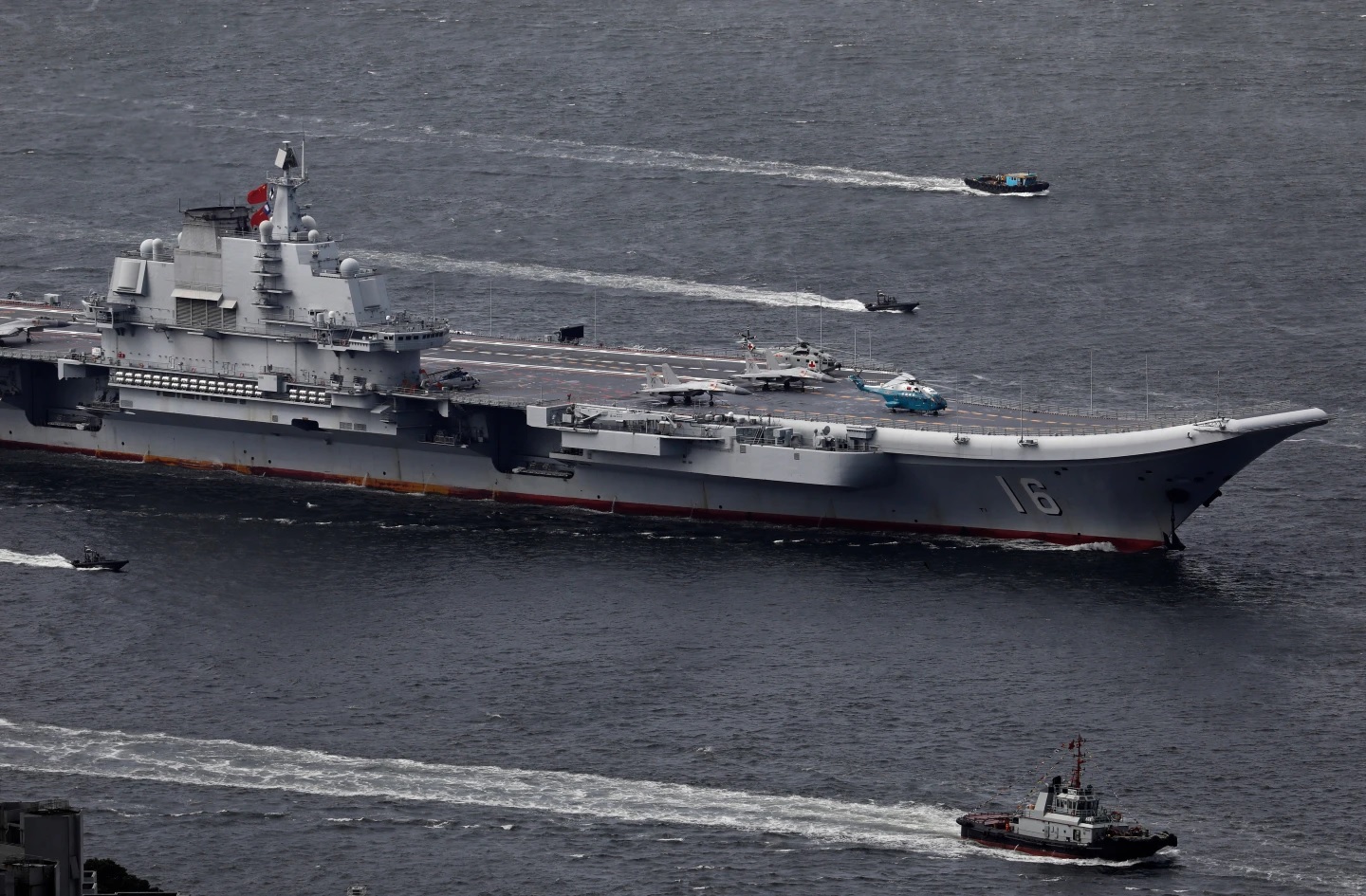
Japan and Australia have called for calm after Japanese fighter jets reported that a Chinese J-15 combat aircraft repeatedly locked its fire-control radar on them during training flights near Okinawa. Tokyo said the Chinese jet, launched from the carrier Liaoning, illuminated Japanese F-15s twice on Saturday over international waters, in what Defence Minister Shinjiro Koizumi condemned as a “dangerous act” beyond what is needed for safe flying. A radar lock from a fire-control system is widely viewed as a precursor to possible missile launch, forcing targeted aircraft to treat it as a serious threat and consider evasive action. Japan lodged a strong diplomatic protest and demanded measures from Beijing to prevent a recurrence, stressing that no airspace was violated and no damage was reported.

Australian Defence Minister Richard Marles, visiting Tokyo for defence talks, backed Japan’s position and warned that such episodes raise the risk of miscalculation in an already tense region. Both ministers reiterated that they do not want to see unilateral changes to the status quo in the Taiwan Strait, even as they strengthen security cooperation. The incident follows sharp words between Tokyo and Beijing after Japanese Prime Minister Sanae Takaichi suggested Japan could intervene if China attacked Taiwan, comments that angered Chinese officials. Against this backdrop, the radar lock is being read in both capitals as a test of resolve and crisis management, as well as a signal to domestic audiences that leaders are prepared to stand firm.

Japan's Defense Minister Shinjiro Koizumi, center, speaks to the media, as Japan announced that a Chinese military aircraft locked its radar on Japanese jets, at the ministry in Tokyo, Sunday, Dec. 7, 2025. (Kyodo News via AP)

Regional allies are watching closely how far Japan will go in publicising and responding to such near-miss encounters. Tokyo has been expanding its Self-Defense Forces’ presence in the southwest islands and deepening interoperability with the United States, Australia and other partners, betting that more visible deterrence will discourage risky behaviour. Yet the same moves can feed Chinese narratives that Japan is encircling or containing Beijing, making every encounter more politically charged. For now, both sides appear to be balancing firm rhetoric with some restraint: Japan released detailed timelines of the radar locks, while Chinese officials insisted their training was legal and accused Japanese aircraft of “harassment,” but neither side has suggested that weapons came close to being fired.

China’s defence ministry maintains that its carrier operations and associated flights near Okinawa were announced in advance and fell within international law. A navy spokesperson said Japanese fighters repeatedly approached and disrupted the drills, and warned Tokyo to “stop slandering and smearing” the Chinese military. Beijing’s account underscores how differently the same events are framed, with each government portraying its pilots as professional and the other side as provocative. This growing gap in threat perception has analysts worried that future incidents could escalate faster, especially if similar radar locks occur closer to disputed islands or in poor visibility.

Japanese Minister of Defense Shinjiro Koizumi, left, and Australian counterpart Richard Marles, right, review an honor guard ahead of a bilateral meeting at the defense ministry Sunday, Dec. 7, 2025, in Tokyo. (AP Photo/Eugene Hoshiko, Pool)

Japan and Australia are using the episode to advance their broader security agenda. In their talks in Tokyo, the two defence chiefs agreed to create a comprehensive framework for strategic defence coordination, building on a security pact that already treats Australia as Japan’s closest partner after the United States. The plan includes more joint exercises, closer cooperation on maritime surveillance and potential sharing of defence technology, signalling to Beijing that any move in the East China Sea or around Taiwan will be scrutinised by a widening network of partners. At the same time, both ministers stressed they want stable relations with China, given deep trade ties and the need for crisis hotlines that actually work when pilots and ships come face to face. Diplomats in the region now see the next few weeks as a test of whether all sides can prevent a repeat of Saturday’s near-miss — or whether this becomes the “new normal” in Asia’s increasingly crowded skies.


Japanese Minister of Defense Shinjiro Koizumi, left, and Australian counterpart Richard Marles, right, ride an Australian-made Bushmaster Mine Resistant Ambush Protected (MRAP) vehicle ahead of a bilateral meeting at the defense ministry Sunday, Dec. 7, 2025, in Tokyo. (AP Photo/Eugene Hoshiko, Pool)


03:41:40 pm, Sunday, 7 December 2025

JAPAN, AUSTRALIA URGE CALM AFTER CHINESE JET LOCKS RADAR ON JAPANESE FIGHTERS

03:41:40 pm, Sunday, 7 December 2025

High-risk encounter near Okinawa sharpens focus on Taiwan tensions

Japan and Australia have called for calm after Japanese fighter jets reported that a Chinese J-15 combat aircraft repeatedly locked its fire-control radar on them during training flights near Okinawa. Tokyo said the Chinese jet, launched from the carrier Liaoning, illuminated Japanese F-15s twice on Saturday over international waters, in what Defence Minister Shinjiro Koizumi condemned as a “dangerous act” beyond what is needed for safe flying. A radar lock from a fire-control system is widely viewed as a precursor to possible missile launch, forcing targeted aircraft to treat it as a serious threat and consider evasive action. Japan lodged a strong diplomatic protest and demanded measures from Beijing to prevent a recurrence, stressing that no airspace was violated and no damage was reported.

Australian Defence Minister Richard Marles, visiting Tokyo for defence talks, backed Japan’s position and warned that such episodes raise the risk of miscalculation in an already tense region. Both ministers reiterated that they do not want to see unilateral changes to the status quo in the Taiwan Strait, even as they strengthen security cooperation. The incident follows sharp words between Tokyo and Beijing after Japanese Prime Minister Sanae Takaichi suggested Japan could intervene if China attacked Taiwan, comments that angered Chinese officials. Against this backdrop, the radar lock is being read in both capitals as a test of resolve and crisis management, as well as a signal to domestic audiences that leaders are prepared to stand firm.

Japan's Defense Minister Shinjiro Koizumi, center, speaks to the media, as Japan announced that a Chinese military aircraft locked its radar on Japanese jets, at the ministry in Tokyo, Sunday, Dec. 7, 2025. (Kyodo News via AP)

Regional allies are watching closely how far Japan will go in publicising and responding to such near-miss encounters. Tokyo has been expanding its Self-Defense Forces’ presence in the southwest islands and deepening interoperability with the United States, Australia and other partners, betting that more visible deterrence will discourage risky behaviour. Yet the same moves can feed Chinese narratives that Japan is encircling or containing Beijing, making every encounter more politically charged. For now, both sides appear to be balancing firm rhetoric with some restraint: Japan released detailed timelines of the radar locks, while Chinese officials insisted their training was legal and accused Japanese aircraft of “harassment,” but neither side has suggested that weapons came close to being fired.

China’s defence ministry maintains that its carrier operations and associated flights near Okinawa were announced in advance and fell within international law. A navy spokesperson said Japanese fighters repeatedly approached and disrupted the drills, and warned Tokyo to “stop slandering and smearing” the Chinese military. Beijing’s account underscores how differently the same events are framed, with each government portraying its pilots as professional and the other side as provocative. This growing gap in threat perception has analysts worried that future incidents could escalate faster, especially if similar radar locks occur closer to disputed islands or in poor visibility.

Japanese Minister of Defense Shinjiro Koizumi, left, and Australian counterpart Richard Marles, right, review an honor guard ahead of a bilateral meeting at the defense ministry Sunday, Dec. 7, 2025, in Tokyo. (AP Photo/Eugene Hoshiko, Pool)

Japan and Australia are using the episode to advance their broader security agenda. In their talks in Tokyo, the two defence chiefs agreed to create a comprehensive framework for strategic defence coordination, building on a security pact that already treats Australia as Japan’s closest partner after the United States. The plan includes more joint exercises, closer cooperation on maritime surveillance and potential sharing of defence technology, signalling to Beijing that any move in the East China Sea or around Taiwan will be scrutinised by a widening network of partners. At the same time, both ministers stressed they want stable relations with China, given deep trade ties and the need for crisis hotlines that actually work when pilots and ships come face to face. Diplomats in the region now see the next few weeks as a test of whether all sides can prevent a repeat of Saturday’s near-miss — or whether this becomes the “new normal” in Asia’s increasingly crowded skies.
Japanese Minister of Defense Shinjiro Koizumi, left, and Australian counterpart Richard Marles, right, ride an Australian-made Bushmaster Mine Resistant Ambush Protected (MRAP) vehicle ahead of a bilateral meeting at the defense ministry Sunday, Dec. 7, 2025, in Tokyo. (AP Photo/Eugene Hoshiko, Pool)