Badal Sircar
How his Third Theatre still flows against the tide like Ol’ Man River

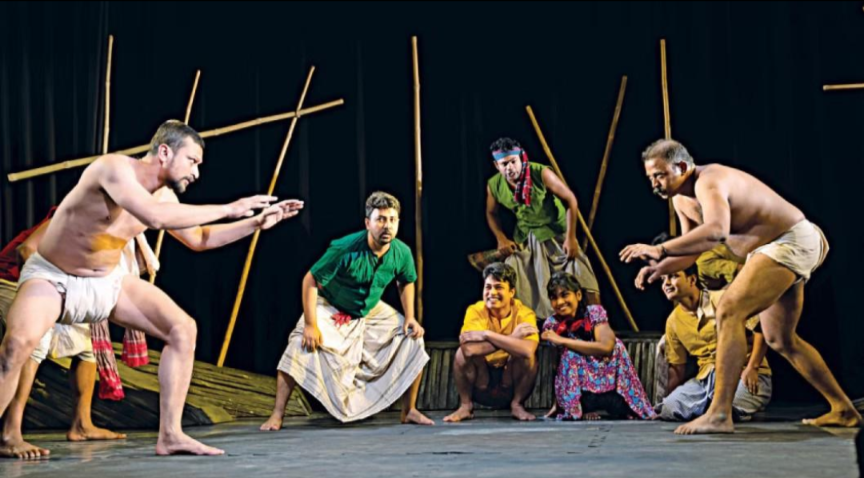
The curtain rises, and your feet touch the wooden floor – a familiar comfort. As the warmth of the spotlight kisses your skin, you feel goosebumps rise. Beyond the glow, you can faintly discern the footlights amid the fourth wall of darkness, a potent reminder of the hundreds of anonymous eyes out there eagerly waiting to see you perform. What more could an actor possibly need to be addicted to theatre?
Badal Sircar, the ‘non-party Left’ theatrician (as he describes himself), however, thought very differently of this apparently mesmerising addiction. He parted ways with the traditional proscenium theatre and its associated grandeur as he spearheaded the Third Theatre movement in India. This was a political decision that Evam Indrajit, the author, made, embracing the very idea of an equal, democratic, and fair society through his practice. Sircar crafted the new political language of theatre, but at the cost of the ever-alluring, illusory proscenium setup that formed the essentials of theatre marketing.
As he turned 100 this year (July 15), Sircar is remembered for his new theatrical voyage, aiming to shape the political narrative democratically and inclusively. Let’s commemorate his legacy briefly.
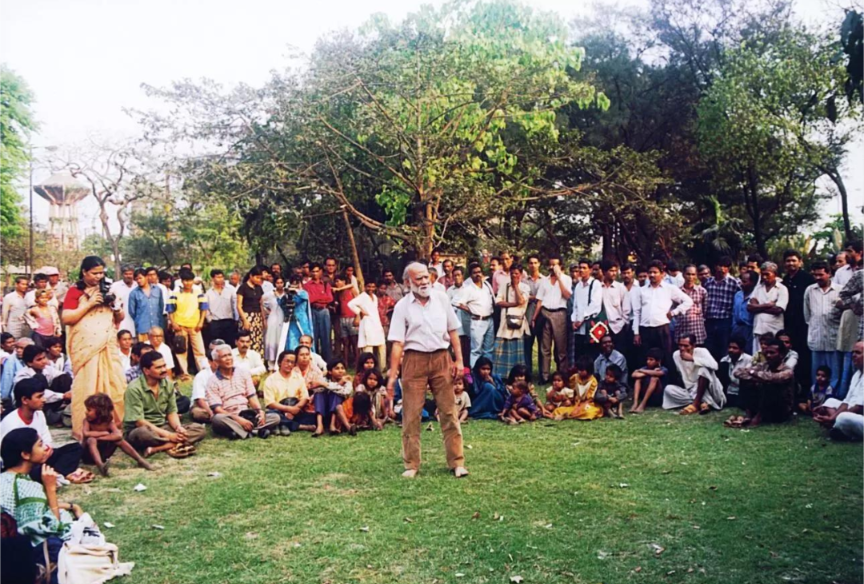
It was Sircar who, through the Third Theatre movement, ensured that the theatre was not confined to the urban elites and the educated. He advocated for and produced feasible, flexible, and portable shows that could easily travel to remote places and speak to the country bumpkins and the downtrodden. He aimed to stoke the radical political consciousness of the masses, who “are constantly in need of emancipation”, such that they can act upon the ideas imparted through theatre to revolutionise their own circumstances. Sircar introduced the term ‘Anganmanch’ for any space that could host third-theatre performances, with audience seating on three sides, sharing the same plane and illumination as the actors. This arrangement, breaking the ‘fourth wall of darkness’, brought actors and audiences closer together, eventually fostering direct communication between them. The Third Theatre’s commitment to feasibility also meant minimal production costs, ensuring its ‘freeness’ by eliminating entry fees and challenging the commercial imperatives of conventional theatre. This is because Sircar believed that “theatre is ‘Human Action’” and “… to ensure human action, the barriers between the performers and the spectators should be removed as far as possible”.
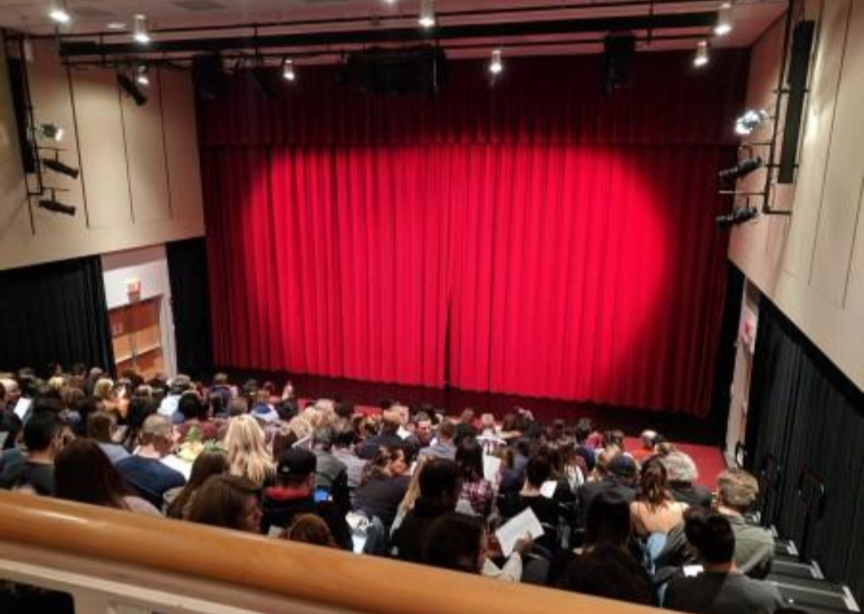 “Proscenium theatre is full of barriers, barriers of distance, of levels, of light and darkness, and hence I do not believe the proscenium theatre to be the proper medium for ‘Direct Communication’… I believe that human action is possible when theatre is ‘Free’. The condition of having to pay for entry…establishes a buyer-seller relationship… certainly not a ‘Human Relationship’,” he wrote.
The Third Theatre practice also profoundly transformed the very process of preparing for a theatrical production. Traditionally, the director plays a central role in developing a theatre production, conceiving and interpreting the play, and guiding its performance towards their imagined design. Actors perform according to the director’s vision. As Samik Bandyopadhyay, an eminent theatre and film critic, describes, it is as if the director knows the “mystical secret”, and it is their duty to instill this in the actors and extract the desirable performance from them. Ultimately, the actors bring the director’s imagination to life.
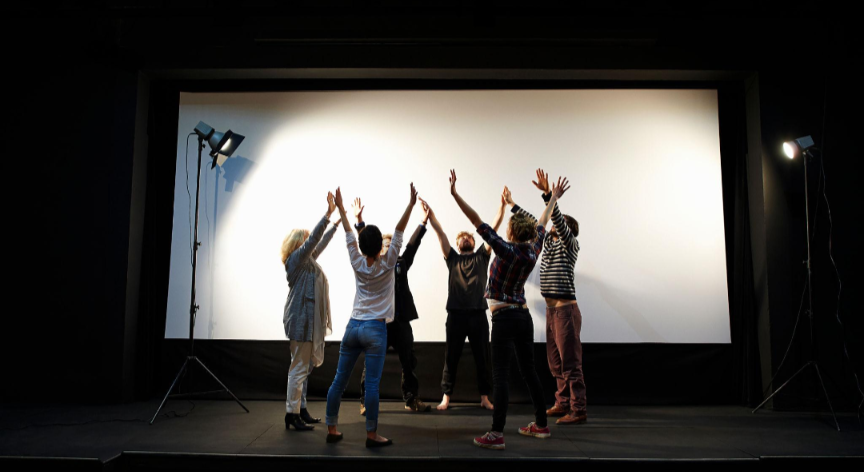
Sircar challenged this director-centric approach, emphasising a participatory, democratic method of preparation known as the workshop. In this model, each participant contributes according to their ability, and the production designer interweaves these contributions into a performance. In a discussion with Sircar, Bandyopadhyay observed, “You are starting from a specific content, and everything else is constructed through the workshop process. As a dramatist-director, you do not even know what form the performance will take. It can only be realized through the workshop experiences.”
Heisnam Kanhailal, an illustrious theatre practitioner from Manipur, in his article “An Encounter with Badal Sircar,” described how the psycho-physical workshop exercises, through intensive training and exploration, helped participants do away with the social conditioning and inhibitions of the human body and mind. Additionally, several exercises and games in the workshop were designed to build a sense of confidence, collectivity, and cooperation among participants, Kanhailal notes. The workshops guided the actors to a ‘state of being’ from where the truthful and honest political pronunciation was articulated through performances, opines a former Third Theatre practitioner, Bishakha Roy.
Knowingly or unknowingly, Sircar’s dream materialised in the form of a theatre praxis. His intended politics was rooted in using participatory and democratic workshops as a methodology, and in bringing the audience closer to and around the actors within a shared space and under shared illumination. But why invoke the “Ol’ Man River” to roll yet again on his hundredth year?
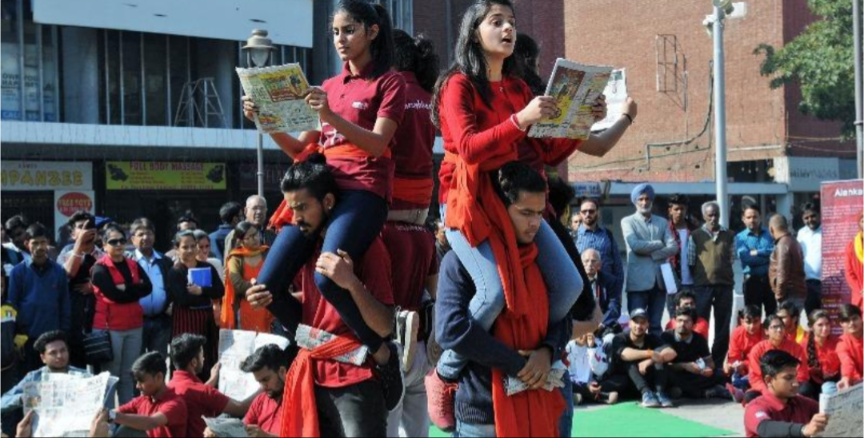
To answer this question, let’s summarise Third Theatre praxis: a portable, feasible, and flexible performance through a participatory, democratic, cooperative, and collective workshop process, aimed at igniting critical consciousness among the deprived masses. As the first quarter of the 21st century approaches its end, individualism, hierarchy, mindless rivalries and triumphs, and deprivation of rights to life are the orders of the day and shaping social behavioural patterns. Human-to-human communication, free from the strictures of quid pro quo, has grown increasingly uncommon. In a world where prosperity is measured on a scale of wealth and command over commodities, ‘cooperation’ and ‘hand-holding’ are just utopic terms and do not fit into any success formula. This is where Sircar’s Third Theatre praxis comes in, speaking of an alternative approach to the world being one of compassion, empathy, and kindness.
Theatre, by nature, is a collective art practice, and workshops enrich this very nature. Third Theatre hence unites people through theatrical participation and cooperation. It breaks the barriers of quid pro quo, engendering direct human communication. In a world overshadowed by greed and ego, a practice like Third Theatre offers a glimmer of hope. If nothing else, it cradles the spirit to endure against the uphill odds. Hence, the “Ol’ Man River” rolls with a splash of sunshine.
Deepro Majumder
A theatre activist, researcher, and
An Assistant Professor in Economics at Kandi Raj College.