
Finance Minister Amir Khosru Mahmud Chowdhury has announced that Bangladesh will cancel its IMF loan program and stand on its own feet. At the same time, however, government documents, public statements by the IMF and reports in international media indicate that the reality is not so straightforward. Bangladesh applied to the IMF last June for a new financing program. In July, an IMF delegation visited Dhaka and held discussions on the possible size of the new program and the reforms involved.
The question, therefore, is whether Bangladesh really wants to move away from IMF lending, or whether it wants to avoid the difficult conditions attached to the previous program and secure a new loan under new terms.
The reality suggests that the second explanation is more plausible.
Cancelling the ‘Old Loan Program’ and Seeking a ‘New Program’ Are Two Different Things

In January 2023, Bangladesh received financing from the IMF under three facilities—the Extended Credit Facility, the Extended Fund Facility, and financing under the Resilience and Sustainability Facility. In 2025, the size of the program was increased, with the core loan assistance raised to around $4.1 billion and climate-related assistance to around $1.4 billion. Altogether, the size of the program stood at approximately $5.5 billion.
The IMF has made no formal announcement that the program has been fully terminated. Instead, on June 3, 2026, the IMF said that Bangladesh had applied for a new IMF-supported program and that discussions were underway on the framework of a possible new arrangement to replace the previous one. The IMF also made clear that any new program would be based on Bangladesh’s balance-of-payments needs, a credible reform program and IMF policies.
Another important point emerged from the IMF’s June briefing: if a staff-level agreement is reached on the new program, it will go to the IMF Executive Board, at which point the cancellation of the previous program would formally come into consideration. In other words, there is still a gap between Bangladesh’s political announcement and the IMF’s institutional process.
Why Does Bangladesh Want a New Program?
Bangladesh’s problem is no longer limited to a shortage of foreign currency. Revenue collection is weak, the banking sector is facing a major capital shortage, inflation remains high, subsidy pressures persist, and the government’s fiscal space is limited.
The IMF’s January 2026 review said that Bangladesh’s economic growth had fallen to 3.7 percent in fiscal year 2025. At the same time, risks remained in revenue collection, the banking sector, exchange-rate management and inflation.
During its July visit to Dhaka, the IMF team described the situation as becoming more difficult. According to the organization, high global commodity prices and supply problems had increased inflation and subsidy costs. Pressure on the banking sector also remained. The IMF warned that without reforms, growth could fall to 3.5 percent in fiscal year 2027 and could decline below 3 percent over the medium term.
In other words, Bangladesh is not in a sufficiently strong financial position to simply walk away from the IMF. That is the central reality.
So Where Does the Objection Lie?
The core of Bangladesh’s objection is largely about the pace of reforms and their social costs.
Among the most important reforms expected by the IMF are increasing revenue collection, reducing fuel and other subsidies to a reasonable level, restructuring the banking sector, making the exchange-rate system more market-oriented, and maintaining tight fiscal and monetary policies to control inflation.
For Bangladesh, the most politically sensitive areas are subsidies and taxation.
The IMF has said that unless subsidies are reduced, it will be difficult for the government to use its limited financial resources for social protection, development spending and infrastructure. At the same time, weak revenue collection could put pressure on the government’s ability to service its debt.
In practice, however, raising taxes or making further adjustments to fuel and electricity prices directly affects people’s cost of living. This is where the greatest tension between economic logic and political realities lies.
The Biggest Problem Is in the Banking Sector
Although taxes and subsidies receive much of the attention in debates over IMF conditions, the banking sector is probably an even greater risk for Bangladesh.
The IMF’s 2026 country report said Bangladesh’s banking sector had developed a substantial capital shortfall and required a comprehensive restructuring strategy. It emphasized assessing the quality of assets held by large and state-owned banks, restructuring weak banks or resolving them where necessary, strengthening corporate governance, and improving supervision by the central bank.
The World Bank’s June 2026 figures paint an even more difficult picture. According to the World Bank, the non-performing loan ratio in Bangladesh’s banking sector had risen to 32.6 percent by March 2026, compared with an average of 7.9 percent for banks across South Asia. At the end of December 2025, the risk-weighted capital ratio for the banking system as a whole stood at negative 2.6 percent.
That is why the World Bank also approved $450 million in financing for banking-sector reforms. In other words, banking reform is not merely an IMF demand; it is also regarded by international development partners as a fundamental problem for Bangladesh’s economy.
How Realistic Is the Finance Minister’s Plan to ‘Stand on Its Own Feet’?
The finance minister has spoken of raising funds through international capital markets, bonds, equities and securitization. In the long term, this is certainly important for Bangladesh. IMF research has also identified deep capital markets as an important means of channeling savings into long-term investment.
But there is a fundamental distinction here.
IMF financing primarily provides support for addressing balance-of-payments pressures and macroeconomic crises, while raising money through international bonds or equity markets constitutes market-based commercial financing.
The two are not direct substitutes for each other.
If Bangladesh wants to borrow large amounts of dollars from international markets, investors will look at the country’s inflation, exchange rate, foreign-exchange reserves, debt-servicing capacity and the health of its banking sector. As a result, maintaining a credible reform program with a multilateral institution such as the IMF could actually strengthen confidence among international investors.
In other words, trying to move into international capital markets while distancing itself from the IMF is not an easy alternative to implementing IMF-backed reforms.
The Sixth Tranche Under the Previous Program Is Now a Key Test
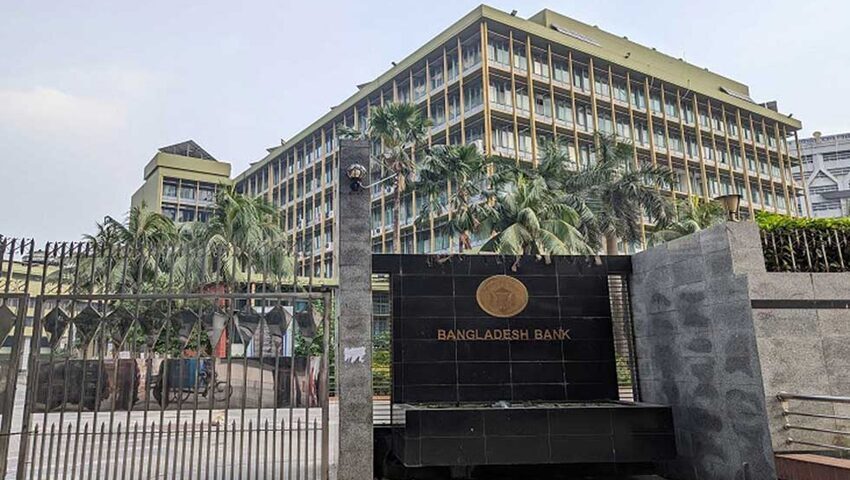
Another immediate question facing Bangladesh is the outstanding financing under the previous program.
Under the structure of the IMF’s 2025 program, disbursements were scheduled alongside the sixth and seventh reviews. But implementation of the program had already fallen short in several areas, particularly revenue collection and banking-sector reform.
The IMF’s 2026 review also said that revenue-collection targets under the previous program had fallen significantly short and that a high-level strategy for restructuring the banking sector remained incomplete.
Therefore, the IMF’s next round of discussions in Dhaka will not be limited to negotiations over a new loan. It will also be important to assess how much of the outstanding commitments under the previous program have been fulfilled.
The Real Negotiation Is Not About ‘How Much Money’ but ‘How Fast to Reform’
This is the most important aspect of the current situation.
The IMF has confirmed that Bangladesh has sought a new program. But the size, duration and conditions of the new program have not yet been finalized. The July visit was primarily an initial stage for assessing the situation and determining policy priorities; the IMF itself said that discussions on the size of the new arrangement and the associated reform commitments would continue in the coming months.
Bangladesh, meanwhile, wants to implement reforms gradually so that the economy and ordinary people are not subjected to sudden pressure. The IMF wants reforms that will rapidly increase revenue, reduce subsidy pressures, address losses in the banking sector and maintain external stability.
So the conflict is not really “the IMF versus Bangladesh.”
The real issue is how quickly and how deeply Bangladesh will implement the reforms needed to address the economy’s long-term weaknesses, even though those reforms may carry political and social costs in the short term.
What Could Happen Next?
Three possibilities are particularly important over the next 12 to 18 months.
First, Bangladesh could exit the previous program and move to a new IMF program. This would create an opportunity to restructure the conditions to reflect the priorities of the new government.
Second, Bangladesh could seek to slow the implementation of some of the more difficult conditions. This could risk prolonging negotiations over new financing.
Third, the government could seek to enter international bond and capital markets while maintaining some form of reform-based engagement with the IMF. From the perspective of the real economy, this appears to be the most likely integrated approach.
That is because Bangladesh is now facing more than simply the question of whether to borrow. It must also address foreign-exchange stability, restructuring of the banking sector, increasing revenue, controlling inflation and restoring investment.
The IMF and World Bank annual meetings are scheduled to take place in Bangkok from October 12 to 18. As a result, discussions over Bangladesh’s new program are likely to become clearer at the international level during this period.
Final Word
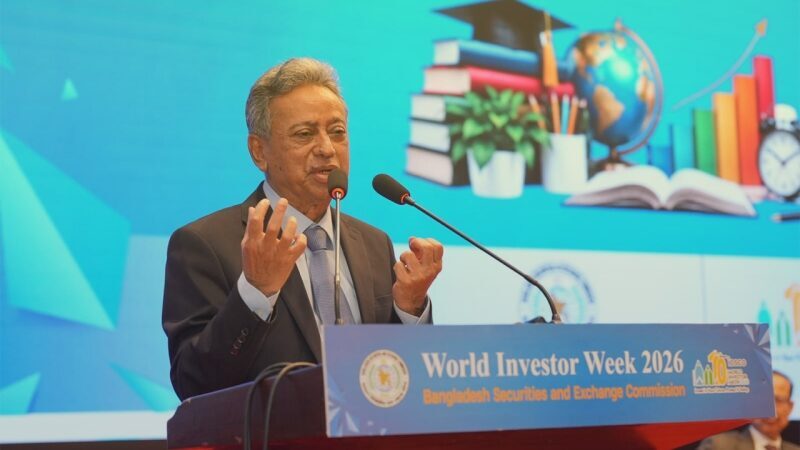
The finance minister’s statement about cancelling the IMF program should therefore not be interpreted simply as Bangladesh’s departure from the IMF.
Bangladesh is not saying that it does not want IMF money; rather, it does not want to proceed under the IMF’s old conditions, old framework and old timetable.
Nor is the IMF’s position that lending should be stopped. The organization has indicated that a new program is possible, but it must be based on Bangladesh’s balance-of-payments needs, credible reforms and macroeconomic stability.
Therefore, the real question in the negotiations ahead will not be whether Bangladesh will take IMF money. The real questions will be: how much money, for how long, under what conditions, and how much of the political and social cost of implementing those conditions Bangladesh is prepared to accept.
That is where Bangladesh’s next chapter with the IMF will be determined.