
10:08 pm, Friday, 26 December 2025

Rare Black Wolves Spotted in Poland, Stirring Debate Over Genetics and Conservation

Sarakhon Report

A striking sight in the wild

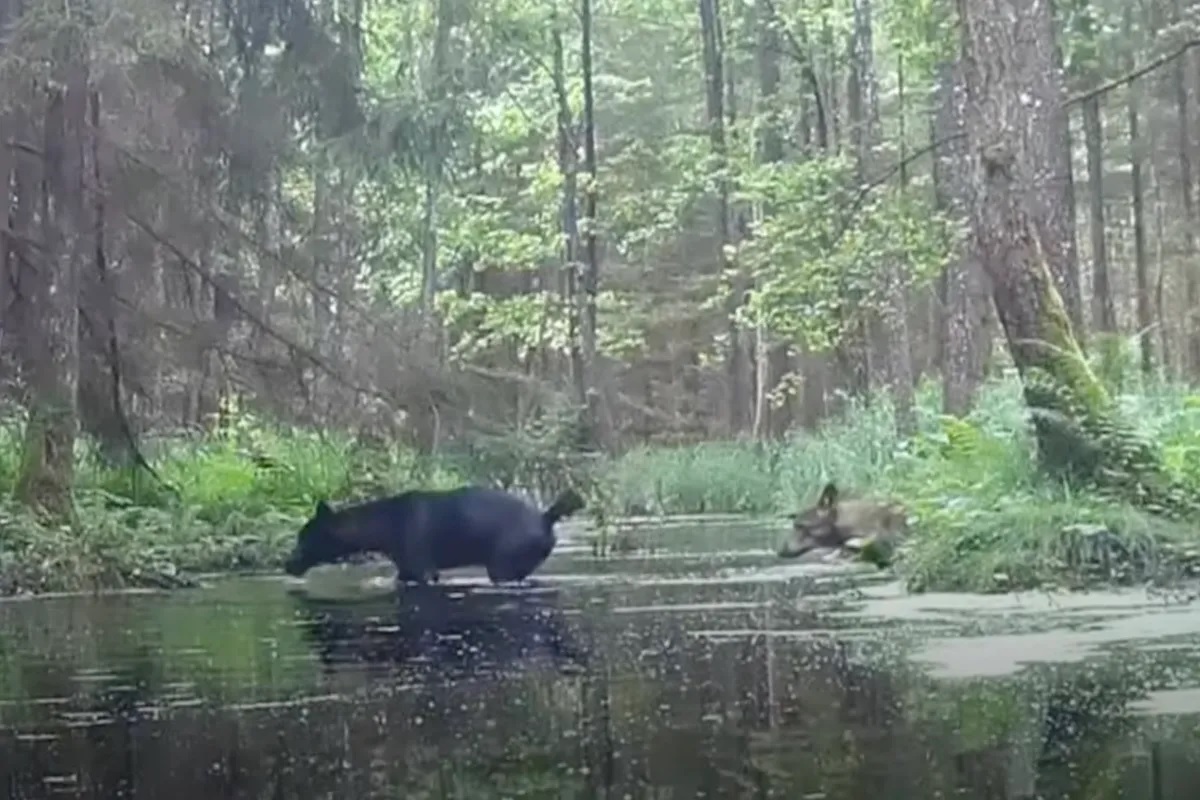
A pair of rare black wolves has been captured on camera in a Polish forest, drawing attention to a color variation that is uncommon in Europe and often associated with specific genetic traits. Conservationists say such sightings matter because they provide real-world clues about pack movement, breeding patterns and long-term biodiversity in recovering wolf populations.

Black coloration in wolves is typically linked to genetic variations that can spread through populations under certain conditions. In many regions, it remains rare, which is why documentation—especially clear photographic evidence—becomes valuable. Researchers and wildlife officials often use these sightings to improve population estimates and understand how wolves are adapting to changing habitats.

This image made from video provided by SAVE Wildlife Conservation Fund Poland shows a rare black wolf crossing a stream in a Polish forest last summer. (SAVE Wildlife Conservation Fund Poland via AP)

What it means for policy and public attitudes

Wolves remain a politically charged species across parts of Europe. In some areas, communities support their return as a sign of ecosystem health. In others, farmers and rural residents worry about livestock losses and safety perceptions, even when actual attacks on people are extremely rare. A visually striking black wolf can amplify the debate, because images travel quickly online and shape public emotions more than technical reports do.
For wildlife managers, the practical questions are about coexistence: how to reduce livestock conflict through fencing, herding practices and compensation schemes, while also protecting an apex predator that plays a role in controlling prey populations. Monitoring also matters. As wolves expand or shift territory, officials need updated data to make decisions about protected zones, hunting rules and cross-border coordination.

Science questions behind the photos

The immediate fascination is the color, but the scientific value goes deeper. If the wolves are part of a stable breeding pack, researchers may track whether the trait persists in offspring. If they are dispersing individuals, it could indicate genetic mixing between subpopulations or movement across large corridors that connect forests and protected areas.
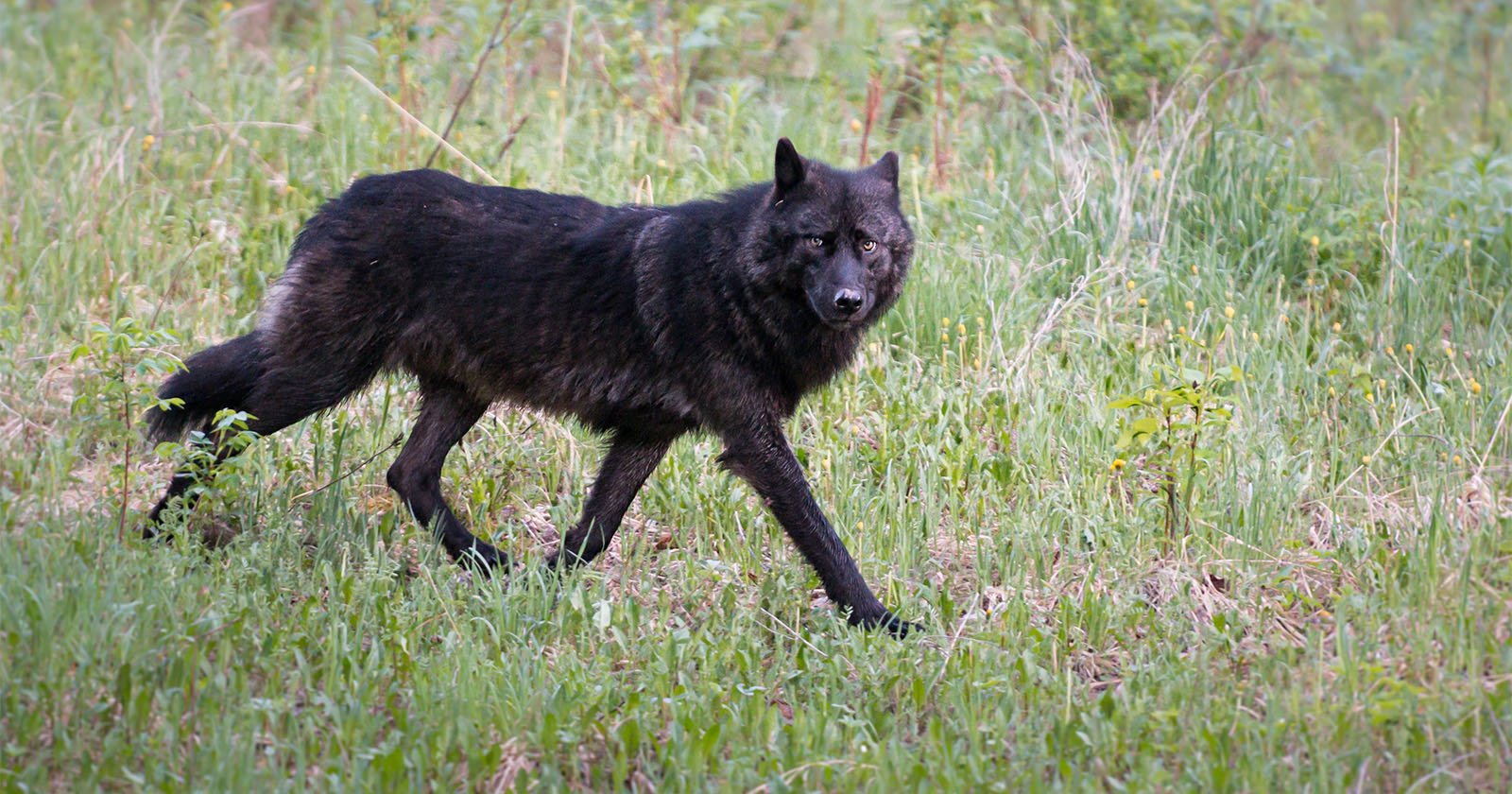
Pair of Rare Black Wolves Caught on Camera in Poland | PetaPixel

The footage can also support broader studies on how wolves navigate human-altered landscapes—roads, farms and fragmented forests—without being detected. Over time, consistent camera-trap evidence helps determine whether wolf numbers are rising, stabilizing or declining, and how those trends correlate with prey availability and human pressure.

For the public, the story is a reminder that European wildlife is not static. Species that disappeared from many regions are returning, and their return forces countries to answer a difficult question: what does coexistence look like when large predators reclaim parts of the map?


Rare black wolves spotted in Poland's forests, sparking international attention - English Section

05:54:27 pm, Friday, 26 December 2025

Rare Black Wolves Spotted in Poland, Stirring Debate Over Genetics and Conservation

05:54:27 pm, Friday, 26 December 2025

A striking sight in the wild

A pair of rare black wolves has been captured on camera in a Polish forest, drawing attention to a color variation that is uncommon in Europe and often associated with specific genetic traits. Conservationists say such sightings matter because they provide real-world clues about pack movement, breeding patterns and long-term biodiversity in recovering wolf populations.

Black coloration in wolves is typically linked to genetic variations that can spread through populations under certain conditions. In many regions, it remains rare, which is why documentation—especially clear photographic evidence—becomes valuable. Researchers and wildlife officials often use these sightings to improve population estimates and understand how wolves are adapting to changing habitats.

This image made from video provided by SAVE Wildlife Conservation Fund Poland shows a rare black wolf crossing a stream in a Polish forest last summer. (SAVE Wildlife Conservation Fund Poland via AP)

What it means for policy and public attitudes

Wolves remain a politically charged species across parts of Europe. In some areas, communities support their return as a sign of ecosystem health. In others, farmers and rural residents worry about livestock losses and safety perceptions, even when actual attacks on people are extremely rare. A visually striking black wolf can amplify the debate, because images travel quickly online and shape public emotions more than technical reports do.
For wildlife managers, the practical questions are about coexistence: how to reduce livestock conflict through fencing, herding practices and compensation schemes, while also protecting an apex predator that plays a role in controlling prey populations. Monitoring also matters. As wolves expand or shift territory, officials need updated data to make decisions about protected zones, hunting rules and cross-border coordination.

Science questions behind the photos

The immediate fascination is the color, but the scientific value goes deeper. If the wolves are part of a stable breeding pack, researchers may track whether the trait persists in offspring. If they are dispersing individuals, it could indicate genetic mixing between subpopulations or movement across large corridors that connect forests and protected areas.

Pair of Rare Black Wolves Caught on Camera in Poland | PetaPixel

The footage can also support broader studies on how wolves navigate human-altered landscapes—roads, farms and fragmented forests—without being detected. Over time, consistent camera-trap evidence helps determine whether wolf numbers are rising, stabilizing or declining, and how those trends correlate with prey availability and human pressure.

For the public, the story is a reminder that European wildlife is not static. Species that disappeared from many regions are returning, and their return forces countries to answer a difficult question: what does coexistence look like when large predators reclaim parts of the map?

Rare black wolves spotted in Poland's forests, sparking international attention - English Section