9:00 pm, Wednesday, 31 December 2025

India’s Rice Dominance Raises Water Risk, Farmers Warn

Sarakhon Report

Agriculture boom and environmental strain

India’s rise to become the world’s largest rice exporter in 2025 has triggered both celebration and concern within the country, agricultural analysts and farmers say. The shift was driven by significant increases in production and exports, overtaking long-time leaders like China. However, the rapid expansion has placed stress on critical water resources in major farming regions, where irrigation demands are outpacing sustainable supply. Many fertile areas rely on groundwater and river systems that face depletion and seasonal variability, leaving farmers vulnerable to drought and heat extremes. Critics argue the current agricultural model, heavily dependent on water-intensive rice cultivation, threatens long-term ecological stability unless accompanied by robust water-management reforms.

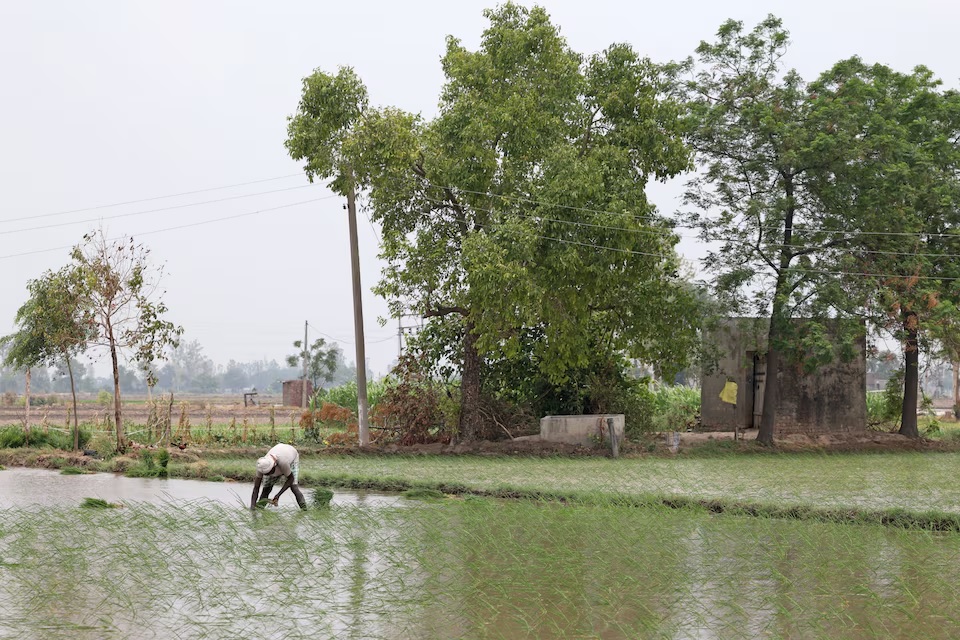
Labourers plant rice saplings in a field

Advocates for reform highlight innovative irrigation technologies and crop diversification as potential pathways to ease pressure on aquifers and surface waters. Transitioning to less water-intensive crops during dry seasons could help balance economic gains with environmental sustainability. Agricultural economists also note that climate change is amplifying heat and rainfall unpredictability, compounding the urgency for systemic adaptation across India’s agricultural sector.

Farmers on the ground express mixed reactions: while export growth has boosted incomes for some, others struggle with rising input costs, declining water tables, and increased climate risk. Local communities reliant on agriculture are watching closely for government policy shifts that might support sustainable practices.

Sacks of harvested wheat are seen at a grain market

The central government and agricultural policymakers may face increased pressure to balance export ambitions with environmental protection and rural livelihoods.

The situation underscores the interconnected risk of economic achievement and natural resource vulnerability in a rapidly changing climate.

05:11:20 pm, Wednesday, 31 December 2025

India’s Rice Dominance Raises Water Risk, Farmers Warn

05:11:20 pm, Wednesday, 31 December 2025

Agriculture boom and environmental strain

India’s rise to become the world’s largest rice exporter in 2025 has triggered both celebration and concern within the country, agricultural analysts and farmers say. The shift was driven by significant increases in production and exports, overtaking long-time leaders like China. However, the rapid expansion has placed stress on critical water resources in major farming regions, where irrigation demands are outpacing sustainable supply. Many fertile areas rely on groundwater and river systems that face depletion and seasonal variability, leaving farmers vulnerable to drought and heat extremes. Critics argue the current agricultural model, heavily dependent on water-intensive rice cultivation, threatens long-term ecological stability unless accompanied by robust water-management reforms.

Labourers plant rice saplings in a field

Advocates for reform highlight innovative irrigation technologies and crop diversification as potential pathways to ease pressure on aquifers and surface waters. Transitioning to less water-intensive crops during dry seasons could help balance economic gains with environmental sustainability. Agricultural economists also note that climate change is amplifying heat and rainfall unpredictability, compounding the urgency for systemic adaptation across India’s agricultural sector.

Farmers on the ground express mixed reactions: while export growth has boosted incomes for some, others struggle with rising input costs, declining water tables, and increased climate risk. Local communities reliant on agriculture are watching closely for government policy shifts that might support sustainable practices.

Sacks of harvested wheat are seen at a grain market

The central government and agricultural policymakers may face increased pressure to balance export ambitions with environmental protection and rural livelihoods.

The situation underscores the interconnected risk of economic achievement and natural resource vulnerability in a rapidly changing climate.