Beyond Symbols: Shailaja Paik on Caste, Education and the Republic’s Unfinished Promise

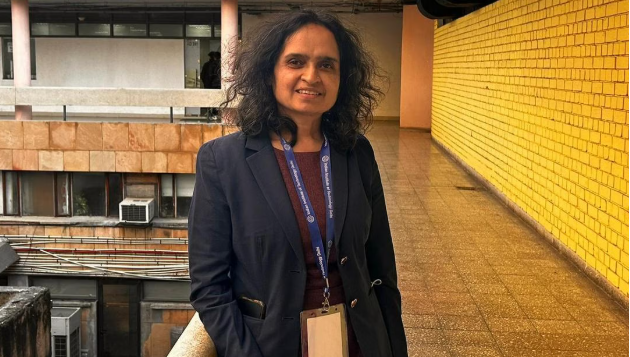
As India marks another Republic Day, historian Shailaja Paik argues that the country must move beyond symbolic gestures and confront the deeper ethical demands of equality.
Paik, recipient of the 2024 MacArthur Fellowship, has spent her academic life documenting the histories of Dalit women—stories long erased from official records. For her, the republic’s promise remains unfulfilled unless it restores dignity and humanity to those excluded from it.
A childhood memory still anchors her work. As an eight-year-old in her ancestral village in Maharashtra, she stood at a community well, stopped by her aunt from drawing water. Women from a dominant caste were approaching. The distance—physical and social—was non-negotiable. “The distance had to be maintained,” she recalls. That moment, she says, taught her how caste operates through space, silence and everyday humiliation.
Education as Escape—and Exposure
Paik grew up between Pune’s slums and her family’s village. Life in the city offered little comfort: overcrowded housing, no private sanitation, unreliable water. Yet education opened doors. Her parents insisted that all four daughters attend English-medium schools, believing the language offered mobility in a society structured against them.
That belief proved true—and incomplete. While English education gave Paik confidence and access, it did not shield her from caste bias. Fee-concession lists publicly identifying Scheduled Caste students, ritual exclusions in school celebrations, and whispered resentments around reservation followed her through adolescence and college.
Later, even as a doctoral scholar, she encountered the same stigma when her daughter’s name appeared on an SC/ST list at school—despite paying full fees. “People still said there was no discrimination,” she notes.
Recovering Dalit Women from Historical Silence
Paik’s scholarship grew from an absence she encountered while researching Dalit women’s education: the archives were largely silent. Official histories recorded neither Dalit women’s organising nor their intellectual labour.
She turned instead to oral histories, documenting women who had founded libraries, led conferences, taught in villages, and openly challenged upper-caste leaders well before independence. Many were invited to women’s conferences only to be segregated during meals—an indignity they resisted publicly.
Her work also interrogates how caste shaped ideas of merit, sexuality and knowledge. Dalit women’s contributions were often stripped of credit, while upper-caste collaborators were elevated as sole intellectual figures. For Paik, this was not incidental—it was structural.
Caste, Language and the Ethics of Equality
Paik is sharply critical of contemporary caste politics. She sees an ethical failure in dominant groups claiming victimhood while ignoring centuries of accumulated privilege. The same concern shapes her views on reservation debates, which she describes as rigid, poorly understood, and detached from lived realities.
On language, she rejects both linguistic chauvinism and false binaries. English, she says, enabled her education. But vernacular languages also carry hierarchies of caste and class. The question is not pride, but power: who is included, and who is excluded, by language politics.
As Ambedkar’s legacy is increasingly invoked across the political spectrum, Paik warns against hollow appropriation. “We need more than symbols,” she says. “We need ethics. Are we following his work, his teachings?”
For Paik, the republic’s task remains unfinished. Equality, she insists, must be lived, not merely proclaimed. “These people are human,” she says of those at the margins. “It is the job of the republic to make sure they are treated as such.”