
Regime Change 2.0
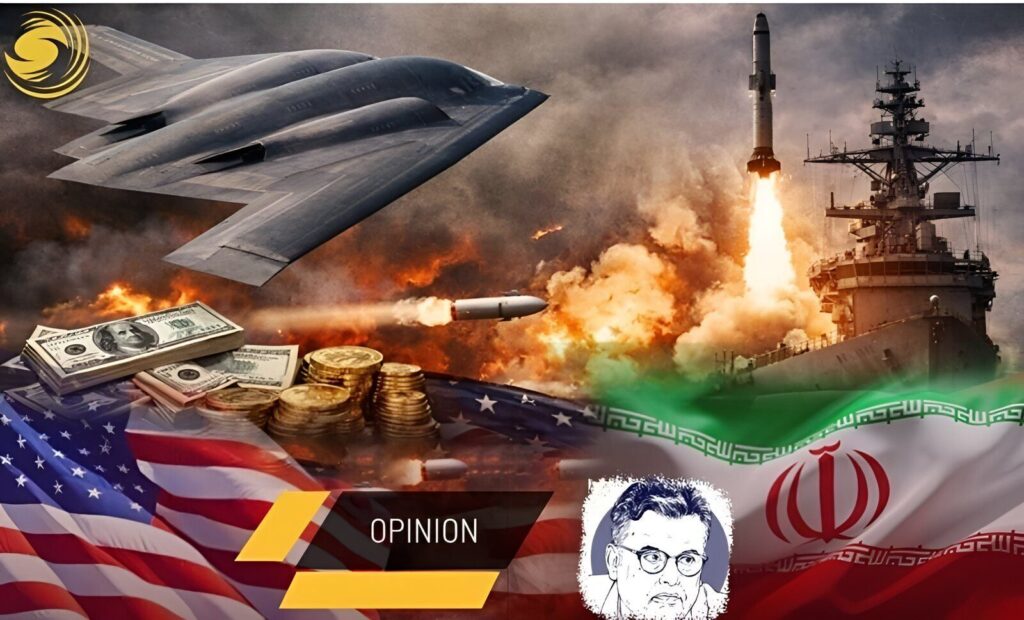
At present, the reasons being put forward for America’s attack on Iran appear to revolve around several issues. First, the continuation of a pattern of civilizational destruction. Second, the decline in Donald Trump’s popularity at home ahead of congressional elections. Third, before sitting down for high level talks with China’s president between March 31 and April 1, discussions that include business deals, Trump may be seeking to alter the state structure of Iran, following earlier moves against Panama and Venezuela, both key economic partners of China. Fourth, within this broader objective, there is the added strategic gain of using Pakistan as a war collaborator to seize Bagram Air Base in Afghanistan.
And for that, Iran faces Regime Change 2.0. What happens to a country after a violent regime change carried out with the direct or indirect support of a foreign power, its allies, or corporate interests is something the people of Bangladesh are now witnessing firsthand in the aftermath of their own “2.0” or “second independence.” GDP has fallen from 6.7 to 2.98, approaching the infamous three zero mark. Therefore, what normally follows a violent or externally imposed regime change is evident not only in Bangladesh but in even starker examples across Iran’s neighboring regions, such as Iraq, Egypt, Libya, and Syria. And these are not merely countries. Each is a civilization.
Why Are Civilizations Destroyed?
In reality, a state is a structure. In response to contemporary necessities, each state builds its own structural framework. But civilization is the intrinsic strength of a territory. It is not a product of the contemporary moment. It has been shaped through thousands of years of practice and continuity. This strength is much like DNA, an organic lineage inherent to a people. That is their natural inheritance. If, for any reason, some people within that territory mistakenly construct a state framework that diverges from that civilization’s organic path, or attempt to impose certain norms and rules upon the population that do not align with that civilization, the people of that land eventually correct it themselves. It may take ten, twenty, or thirty years. An eternity in a single human life, yet merely a moment in the long arc of a civilization. Change, adaptation, refinement, patience. These are the strengths of civilization, not of the state.
Even in distant history, many civilizations were targeted for destruction through war. But the scale of weaponry at that time did not allow for the paralysis of entire populations. In the post Second World War era, however, advances in military technology and the globalization of economies have made it possible to incapacitate entire societies. This is what occurred in Iraq, Egypt, and Syria.
A Collapse in Trump’s Popularity
The tariff based economic policy adopted by Trump might have been appropriate for the world economy of his youth. But after the long trajectory of globalization through which the world economy has evolved, such a policy can now reasonably be described as obsolete. As a result, over the past year and more, the global economy has experienced upheaval. The American economy has also suffered. Furthermore, when new global powers begin to rise, the more rigidly the old power responds, the more it harms itself. Due to these cumulative effects, Trump’s popularity, according to several surveys, has declined to 39 percent.
At a moment when his popularity is falling in this manner, congressional elections stand ahead of him. Historically, when leaders fail domestically, they often seek to reshape their image abroad. They construct a victorious persona in foreign arenas to offset internal weakness. Trump appears to be following that path. Several opinion polls indicate that slightly more than half of Americans do not favor war. At the same time, support for Israel and support for Palestinians within the United States are currently nearly equal.
Ahead of the Summit with China
Upon assuming office, Trump succeeded in removing Chinese influence over the Panama Canal. Through Operation Resolved, he matched Chinese technological leverage and succeeded in arresting Venezuela’s president, effecting regime change there. If he now manages to implement regime change in Iran, another major economic partner of China, before sitting down with President Xi on March 31 or April 1, then Xi would naturally be under pressure. This too may be among Trump’s objectives. It could also serve as a message that China should exercise restraint toward America regarding Taiwan. At the same time, since India and Russia are also significant economic partners of Iran, the same message would reach them.
Bagram Air Base
Pakistan’s central power figure, Field Marshal Asim Munir, is being courted warmly by Trump. Not only to secure Pakistan’s mineral resources under various names and arrangements, but also to deploy Pakistan in other strategic operations. Evidence of this is clear. Just one day before the Iran war, Pakistan was used to carry out strikes inside Afghanistan. Though militants were cited as the pretext, it is now evident that the principal objective was Bagram Air Base.
The Main War and American Israeli Troops on the Ground
As I write this, twelve hours earlier Trump stated that within the next 24 hours the main war would begin. And 24 hours before that, Iran’s supreme leader, Ayatollah Khamenei, was killed along with his family inside his office cum residence. Meanwhile, as I write, twelve hours earlier America announced that it was sending additional troops to the Middle East. The remarks of Israel’s prime minister indicate that the war could shift toward ground operations. The momentum of war moving from strikes toward ground engagement suggests one thing clearly. Even after killing Khamenei, America has not been able to bring Iranians into the streets to accomplish Regime Change 2.0. Perhaps for that reason, the path of Iraq is now being considered as a template.
Why the Miscalculation?
From the information available at this moment, it appears Trump believed that if he succeeded in killing Khamenei, those Iranians who desire a change from Khamenei’s rule would flood the streets in celebration. But that has not occurred. At first glance, one might assume that missile strikes across Iranian streets and installations are deterring people from coming out in fear. After all, if crowds had filled the streets, America might not have continued missile strikes in the same manner. It would have focused instead on the people in the streets.
What information has emerged suggests something else. The strength of Iranian civilization itself. In other words, the killing of Khamenei, a leader of Iran’s land rooted Shi’a culture, may have united rather than divided the Shi’a population. As a result, efforts to create fractures between the Revolutionary Guard and the regular armed forces have failed. Thus attention now turns to ground operations. If the war proceeds down that path, it will prove even more difficult.
At the same time, Russia’s immediate condemnation of Khamenei’s killing on the first day, followed by China’s stronger denunciation on the second day, signals that the war in Iran is moving toward greater intensity. There may be no shortcut for America here.
Iran’s New Method, One That Will Give Even Future Allies Pause
When America, together with its natural ally Israel, attacked Iran, the assumption was that the war would remain confined to Iran, Israel, and America. It was also assumed that the Iranian people would quickly take to the streets and bring about Regime Change 2.0. But even before Khamenei was killed, Iran launched a broader war. Its principal target has been the economies of America’s allies in the Middle East. Through Iranian drone and missile strikes, the economies of Qatar, the United Arab Emirates, Saudi Arabia, Bahrain, and Oman have already been brought to a standstill. The longer the war continues, the more these economies, deeply intertwined with America and the global system, will suffer.
Over the past four years, America has used economic blockade as a weapon against Russia, in addition to direct warfare in the tradition of Julius Caesar. That blockade was formally declared. Iran, however, has extended a form of economic blockade more diffusely by sustaining missile and drone strikes against neighboring American aligned states. The impact has been not only economic but diplomatic. With embassies closed in Saudi Arabia, Qatar, and Kuwait, the functional consequences of this new strategy have been laid bare before the world. America has had little alternative but to confront this reality.
The Strait of Hormuz and Oil Prices
With the Strait of Hormuz either closed or under severe risk, between 8 and 10 million barrels of oil exports per day are in jeopardy. A significant portion of OPEC Plus Gulf oil exports depends upon this corridor. Crude oil prices have already reached 80 dollars per barrel. According to Goldman Sachs, if the conflict continues for another week, oil prices could rise by an additional 20 dollars.
If the Iranian conflict becomes prolonged, and as oil production and exports from other Middle Eastern countries suffer, international energy market experts believe crude oil could reach 150 dollars per barrel.
Oil and the Global Economy
When fire engulfs a city, even temples do not remain untouched. Alongside other global markets, America’s stock market has already felt the impact of the Iran war and rising oil prices. Therefore, if under the banner of creating an Islamic Republic 2.0 Iran is pushed further into complexity, along with the wider Middle East, America’s economy too will fall into crisis, along with the rest of the world. And if the Russian deputy prime minister’s assessment is correct, that as a regional war the conflict in Iran is set to become a long duration war, then the Iran war could become for the post Covid economy what Covid itself was. A larger destabilizing force. A man made disaster. Or an American made one.
Author: Recipient of the Highest State Award. Journalist. Editor, Sarakhon. The Present World.
More by Swadesh Roy
 In 1971, Not Durga but Indira Gandhi; Chinmoy in Prison and Durga, the Village Girl
 Rammohan and Women’s Emancipation: East Bengal’s Brahmo Samaj and Rahul GandhiIs the Ganges Water Treaty Heading Towards a December Deadlock?Can “People-to-People” Diplomacy Exist Where More Than Half the People Are Invisible?