

7:50 am, Friday, 17 April 2026

Ukraine’s Peace Talks Stall as Iran War Absorbs Washington’s Attention

Sarakhon Report

Tripartite negotiations postponed; Russia refuses US venue

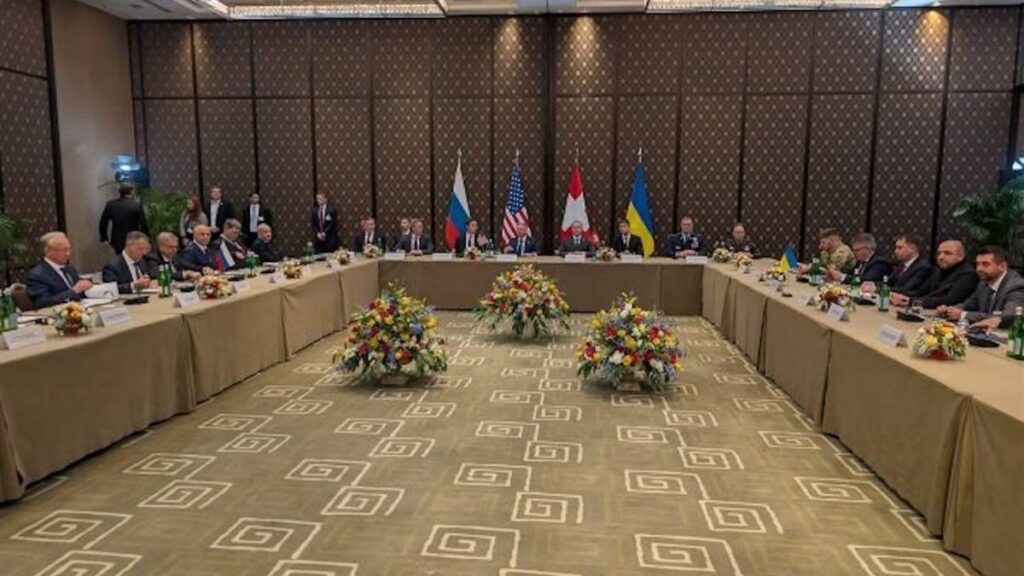
Negotiations aimed at ending Russia’s more than four-year invasion of Ukraine have effectively been put on hold, with the United States postponing the most recent planned round of talks because of its military involvement in the Iran conflict. Three rounds of trilateral discussions involving Ukraine, Russia, and Washington had already taken place this year. The next meeting had been scheduled for Abu Dhabi in early March but was disrupted when the US-Israeli strikes on Iran erupted on 28 February. Ukrainian President Volodymyr Zelensky said on Sunday that Kyiv was ready to meet at any moment and was not blocking negotiations, but that it was up to Washington and Moscow to agree on a venue and a date. The US proposed holding the talks on American soil next week, but Russia refused to send a delegation there. American negotiating envoys Steve Witkoff and Jared Kushner are centrally involved in the process. Kremlin spokesperson Dmitry Peskov acknowledged that scheduling had become difficult because it was unclear when US officials would be free. The postponement draws a direct line between the two simultaneous conflicts, confirming what analysts had long warned: the Iran war would drain Washington’s diplomatic and military bandwidth and reduce the leverage Kyiv holds over both Moscow and its Western partners.

Ukraine’s drone expertise suddenly in demand; Zelensky warns of air defence drain

A sharp irony has emerged from the postponement. The same Iranian Shahed-type drones that Russia has used to devastate Ukrainian cities have now been turned against US forces, Israeli targets, and Gulf state infrastructure across the Persian Gulf. Eleven countries have contacted Ukraine requesting help countering Iranian drone attacks, Zelensky said last week. He confirmed that Ukrainian technical teams had been dispatched to Qatar, the United Arab Emirates, Saudi Arabia, and a US military base in Jordan to conduct assessments and demonstrate defensive tactics. Despite this, President Trump publicly stated Washington did not need Ukraine’s assistance on drone defence. Zelensky pushed back firmly, saying his government had received multiple formal requests from US military institutions, and that those requests had been answered. He had previously proposed a defence cooperation deal worth between $35 billion and $50 billion that would give the US access to technology from approximately 200 Ukrainian drone, AI, and electronic warfare companies, with half of all production earmarked for American partners. The agreement was not signed; Zelensky said he did not know why. He also warned of a serious risk that air defence missiles consumed in the Middle East would diminish the stocks available to Ukraine, and said Kyiv was exploring French SAMP/T systems as a possible substitute for US-made Patriot batteries. Meanwhile, Russia’s oil revenues have surged with crude above $100 per barrel, directly strengthening Moscow’s ability to finance its war effort.


06:37:12 pm, Tuesday, 17 March 2026

Ukraine’s Peace Talks Stall as Iran War Absorbs Washington’s Attention

06:37:12 pm, Tuesday, 17 March 2026

Tripartite negotiations postponed; Russia refuses US venue

Negotiations aimed at ending Russia’s more than four-year invasion of Ukraine have effectively been put on hold, with the United States postponing the most recent planned round of talks because of its military involvement in the Iran conflict. Three rounds of trilateral discussions involving Ukraine, Russia, and Washington had already taken place this year. The next meeting had been scheduled for Abu Dhabi in early March but was disrupted when the US-Israeli strikes on Iran erupted on 28 February. Ukrainian President Volodymyr Zelensky said on Sunday that Kyiv was ready to meet at any moment and was not blocking negotiations, but that it was up to Washington and Moscow to agree on a venue and a date. The US proposed holding the talks on American soil next week, but Russia refused to send a delegation there. American negotiating envoys Steve Witkoff and Jared Kushner are centrally involved in the process. Kremlin spokesperson Dmitry Peskov acknowledged that scheduling had become difficult because it was unclear when US officials would be free. The postponement draws a direct line between the two simultaneous conflicts, confirming what analysts had long warned: the Iran war would drain Washington’s diplomatic and military bandwidth and reduce the leverage Kyiv holds over both Moscow and its Western partners.

Ukraine’s drone expertise suddenly in demand; Zelensky warns of air defence drain

A sharp irony has emerged from the postponement. The same Iranian Shahed-type drones that Russia has used to devastate Ukrainian cities have now been turned against US forces, Israeli targets, and Gulf state infrastructure across the Persian Gulf. Eleven countries have contacted Ukraine requesting help countering Iranian drone attacks, Zelensky said last week. He confirmed that Ukrainian technical teams had been dispatched to Qatar, the United Arab Emirates, Saudi Arabia, and a US military base in Jordan to conduct assessments and demonstrate defensive tactics. Despite this, President Trump publicly stated Washington did not need Ukraine’s assistance on drone defence. Zelensky pushed back firmly, saying his government had received multiple formal requests from US military institutions, and that those requests had been answered. He had previously proposed a defence cooperation deal worth between $35 billion and $50 billion that would give the US access to technology from approximately 200 Ukrainian drone, AI, and electronic warfare companies, with half of all production earmarked for American partners. The agreement was not signed; Zelensky said he did not know why. He also warned of a serious risk that air defence missiles consumed in the Middle East would diminish the stocks available to Ukraine, and said Kyiv was exploring French SAMP/T systems as a possible substitute for US-made Patriot batteries. Meanwhile, Russia’s oil revenues have surged with crude above $100 per barrel, directly strengthening Moscow’s ability to finance its war effort.