2:50 am, Friday, 3 April 2026

How Iran Turned War into an Energy Crisis


Swadesh Roy

The war between America and Iran is a contest between unequal military powers. At this moment, no one can say when this war between two such unequal military forces will end. The war has entered a dark tunnel, and no one can see its far end.

America’s military power and AI

America’s military power is immense and opaque. That is why no one can know with certainty just how vast its military strength really is. Besides, this remains one of the most highly classified matters in the world.

Yet through Venezuela’s Operation Resolved, America has already shown the world that it still has no equal in AI-dependent military power. On the other hand, immediately after America attacked Iran, several Chinese military experts said in that country’s state-run media that they were certain America was fighting this war with AI. And China’s experts would understand this better than anyone else, because many believe that in Venezuela, America was able, in a matter of moments, to completely destroy their AI-dependent systems.

On the other hand, America and Iran are not neighboring countries. And Iran’s objective is not to conquer America. Therefore, America’s geographical power will not be added to its military strength in this war.
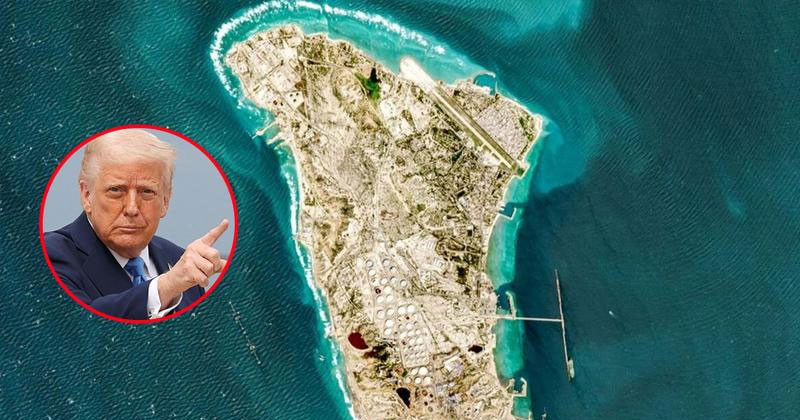
যুক্তরাষ্ট্র ইরানের তেল-খার্গ দ্বীপ দখলে নিতে সক্ষম : ট্রাম্প

Iran’s geographical strength

Iran is under attack. And it is Iran that America seeks to defeat. Therefore, alongside Iran’s military strength stands its geographical strength, or the strength of its geographical formation. After reviewing several thousand years of the history of war, many analysts have said that in terms of natural geographical advantage for defending oneself against an aggressive war, the two most favored countries are Afghanistan and Iran.

Among Iran’s geographical strengths are mountain ranges such as the Zagros and Alborz extending across three sides of the country. On the other hand, the Shatt al-Arab waterway, formed by the confluence of the Tigris and Euphrates rivers, lies along the Iraq-Iran border. In addition, the desert Dasht-e Kavir, or the Salt Desert, is another of its geographical strengths. Thus, like Afghanistan, Iran too possesses a natural fort. Besides, the size of a country is also a major element of its geographical strength. Iran’s size is equal to the combined area of Britain, Germany, and France. So in terms of size as well, Iran is by no means weak.

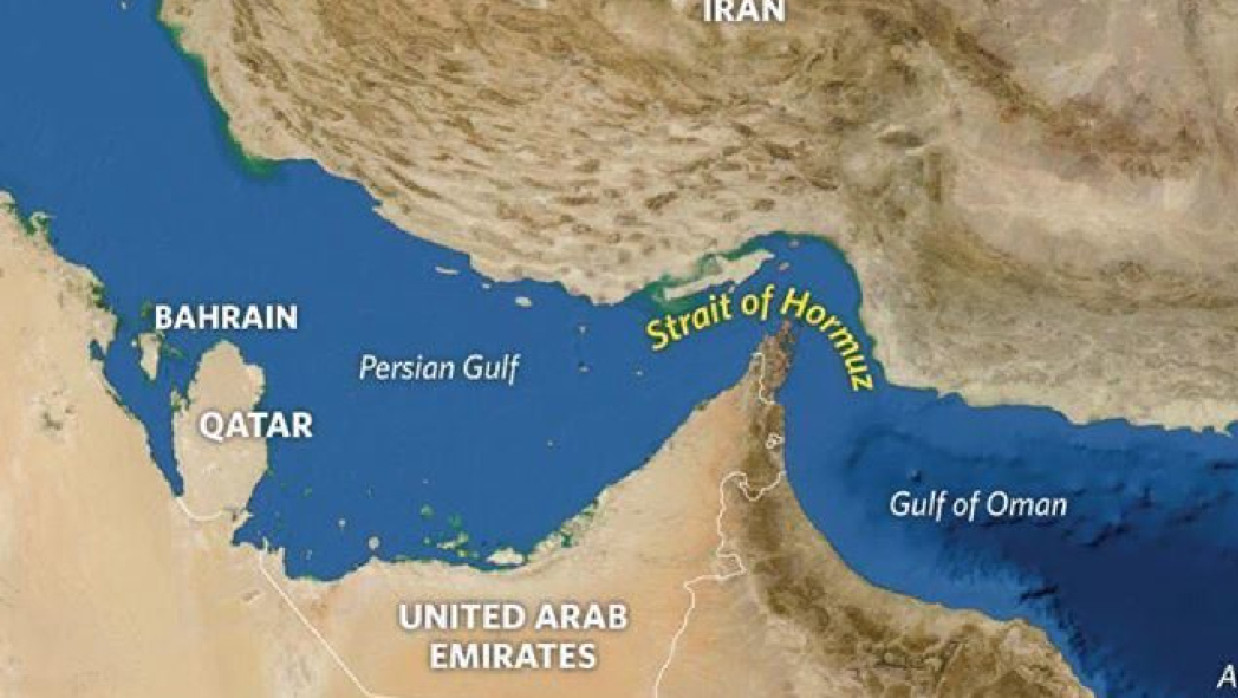
On the other hand, it has already become clear that beyond simply defending itself, Iran possesses another kind of geographical strength capable of shaking the world. That is the Strait of Hormuz under Iran’s control. There is no need to write at length about it. The whole world has already begun to absorb its shock. In addition, in the Red Sea, the Bab el-Mandeb Strait is under the control of the Houthis, the armed group in Yemen allied with Iran. This too, almost like Hormuz, is another supporting geographical strength for Iran in this war.
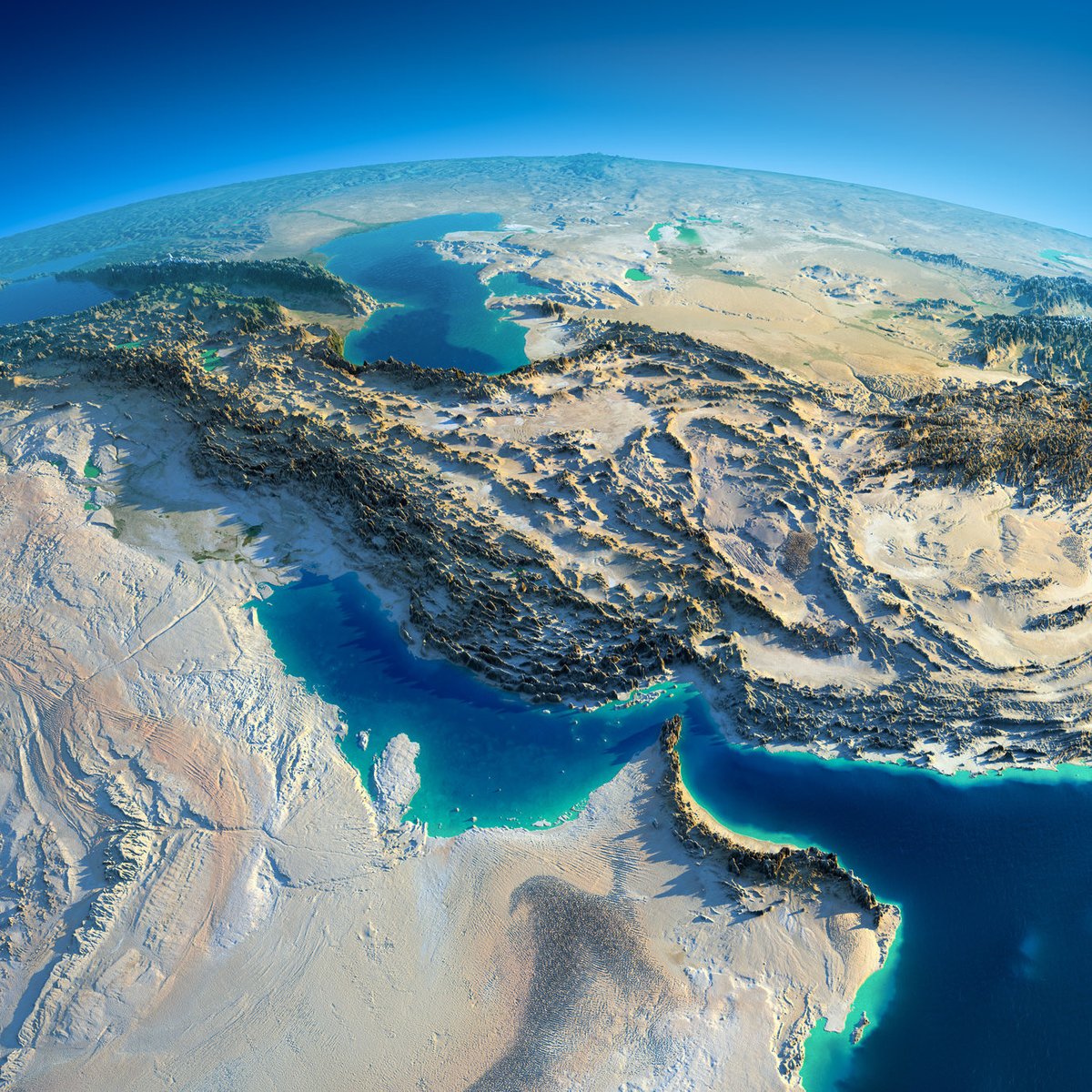
Iran is defended by this geography, with mountains on three sides, swampland and water on the fourth. The Mongols were the last force to make any progress through the territory in 1219-21

Beyond Iran’s geographical strength: military power and AI

There is no doubt that Iran’s military power is far weaker than America’s. Yet even so, how much military power Iran actually has remains unknown. Many unverified sources around the world even suggest that part of Iran’s military capability cannot be fully detected by America or other great powers through satellites or other measuring instruments. Iran’s current rulers have long known that America would attack them. For that reason, through sustained effort, they may have cut into the interiors of mountains and built protected sites there, along with arsenals, for self-defense, for warfighting, and for storing weapons. Many of those sites could very well remain unknown.

Besides, many war experts believe that, like America, Iran too has been fighting this past month with the assistance of AI. As evidence, they point to its selectively precise, target-based attacks. There is another view, that some other major state is assisting Iran with information. That may be so. But without reliance on its own technological base, such precise analysis of information technology is not possible.

The addition of AI to Iran’s military power

Another indication now emerging that Iran has the ability to add AI to its military strength, together with its own information technology, is this: over the past more than ten years, one of the principal targets of Israeli attacks inside Iran has been Iranian scientists. Israel has killed several of them. Moreover, all those who keep track of Iran know that although Iran has indeed joined religion to its state system, it has not abandoned scientific research by the state, nor has it reduced spending on it. Rather, it has increased it.

Besides, in many countries, when religion-based parties or groups come to state power, they end up merging myth and science. Iran has not done that. Therefore, however limited, Iran does possess its own science-based military strength.

A study-driven war

If one observes this war between Iran and America from the beginning, it becomes clear that Iran studied extensively in order to confront America. And it divided its plan into several layers. In contrast, it is also clear that America has a plan to advance its war in several phases. But the plans of the two powers are of entirely different kinds.

ইসরায়েলের নিরাপত্তা মন্ত্রণালয়ে ইরানের ড্রোন হামলা

Iran’s attempt to take the war beyond conventional war

As soon as Iran came under attack, it made the oil resources of America’s allied states in the Middle East, especially the oil-rich states, its primary target. In other words, just as America began the war with the aim of regime change in Iran, Iran responded by taking the war down a path that would damage global energy trade and production. There is still no evidence that America had anticipated Iran would take the war outside the boundaries of conventional war in this way. As a result, the war has moved beyond the character of a conventional war, or a war of regime change, or a war of occupation, and has taken on the character of a war over energy trade. A war causing such enormous economic damage by turning energy into a weapon has not previously been seen in world history. In terms of economic damage, it is even bigger than the energy war of 1973. And in the past, fossil-fuel-dependent energy was not nearly this essential. Now, without fossil-fuel-dependent energy, the world comes to a halt. That is why the intensity of this war is far greater.

Regime change in Iran

Trump has claimed that he has succeeded in bringing about regime change in Iran. Whether as a result of America’s success or through the momentum of the war itself, a kind of regime change has indeed taken place in Iran. In reality, over the past month of war, power has effectively passed from Iran’s civilian leaders into the hands of Iran’s most powerful military force, the Islamic Revolutionary Guard. In 2018, the then commander of this Islamic Revolutionary Guard, Major General Mohammad Ali Jafari, had said, “We will make the enemy understand: either everyone will use the Strait of Hormuz, or no one will.” Now this Islamic Revolutionary Guard stands at the core of Iran’s power. And it has taken exactly that path over Hormuz. Therefore, the second phase of Trump’s war is to reopen the Strait of Hormuz.
প্যারাস্যুটে ইরানে নামতে পারে ২ হাজার মার্কিন সেনা

Using Pakistan and the war over the Strait of Hormuz

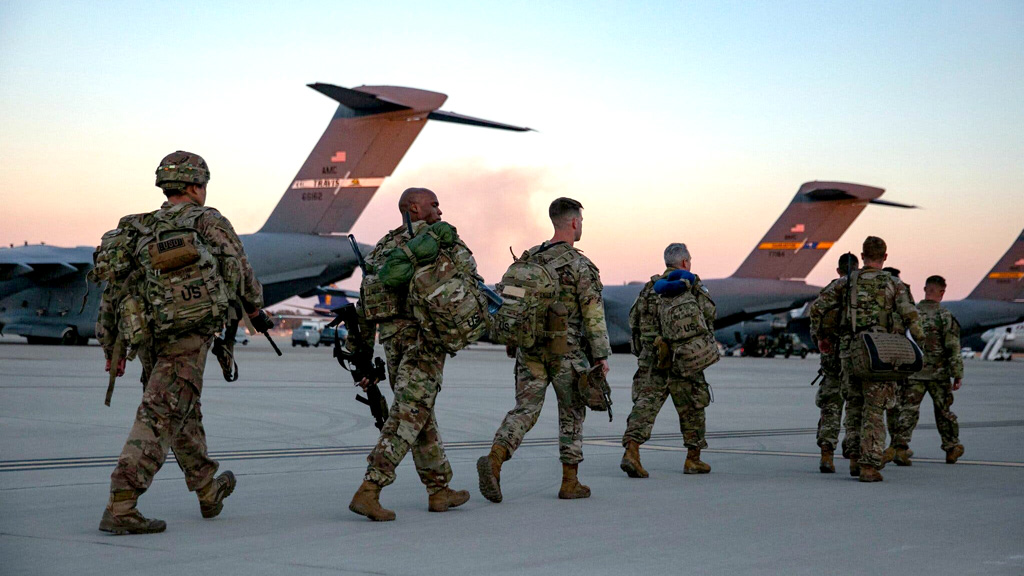
For more than a week now, Trump has been issuing Iran an ultimatum about ending the war. On the other hand, he is using Pakistan as an intermediary to pursue a negotiated settlement. When Trump and Pakistan were saying these things, Tim Marshall wrote, “An amphibious assault-capable military vessel named the USS Tripoli is on its way toward Iran. It could arrive within a week to attack Kharg Island.” That time has now passed. And America’s military ships capable of assault by water and land, along with paratroopers, have already arrived. Therefore, Pakistan’s mediation naturally comes under question. Was the real objective to stop the war, or to create time for America to bring in troops and ships for the second phase of the war?

The war in its second phase

So if the war now enters its second phase, then America will not only seek to free the Strait of Hormuz, it may also seize Kharg Island. That too is a major question. America is a vastly superior power, but neither of these tasks is easy. In the Strait of Hormuz there are Iranian mines, suicide squads, Iran’s missile city built beneath the mangrove forests of Qeshm Island beside Kharg Island, training in how to repel the regular swarms of Iranian missiles there, and, added to all that, new drones, and above all the nearly 3,000-meter vertical face of the Alborz Mountains, which is Iran’s natural strength in a war of resistance.

So, in order to free Hormuz and seize Kharg Island, it would be almost impossible to do so without defeating Iran on its mainland. And then the question will arise: will it be possible to defeat Iran on its mainland? Will Iran’s geographical strength allow that to happen easily? Rather, it would push the war toward a prolonged duration. Even if Iran’s government were ever defeated in the capital, would that stop the war?
হরমুজ প্রণালি বন্ধের ঘোষণা ইরানের, তেলের বাজারে অস্থিরতা | The Daily Campus

The Afghanistan and Turkmenistan border

Even if defeated in the capital, the remaining elements of Iran’s Revolutionary Guard and a large portion of the Iranian people would never accept defeat. Then, just as there are many places inside that vast country suitable for guerrilla war, the greatest natural fort of all is the mountain arc along the Turkmenistan and Afghanistan border, which has created a natural defensive enclosure. They could withdraw there and make the war even more prolonged.

According to 2014 estimates, 5 percent of the world’s total population lives in the Arab world. Yet 45 percent of the world’s terrorist attacks originate from within it. So if Iran’s war turns into guerrilla war, given what the world has already become after one month of energy crisis, what would the world become if, for the purposes of guerrilla warfare, Iran’s trained fighters were to take the path of terrorism?

An economy devastated by one month of war

According to a Gulf News report of April 1, by March 28, one month of war had caused 186 billion US dollars in economic losses across the Arab world. 3.9 million people had lost their jobs. Multiple reports in the March 31 Khaleej Times reflected how, because of the war, everything from the education of children in that region, including Abu Dhabi, to the movement of ordinary people, even to the suffering of the pets of those leaving those countries, had been affected.

Alongside this, major Southeast Asian media outlets such as The Japan TimesNikkei Asia, and The Straits Times of Singapore and Malaysia are reporting that Singapore too is suffering from an energy shortage. Thailand, even after stopping energy sales to everyone except Laos, is also facing an energy shortage. The Philippines has declared an energy emergency. From Indonesia’s palm regions to Japan, Vietnam, Thailand, and Malaysia, all are suffering fertilizer shortages across every kind of agriculture.

যুক্তরাষ্ট্রে অর্থনৈতিক মন্দা কী আসন্ন

Nor is South Asia being spared this energy and fertilizer crisis. In India, the largest country in South Asia, a number of fertilizer and ceramic factories have shut down because of energy shortages. Long lines there for cooking fuel have become daily fare in the world media. Reports in The Indian Express indicate that in Bhopal, because cooking gas is unavailable, demand for wood has risen, causing people to go into forests to gather wood, disregarding both tiger danger and fear of the police. Pakistan and Sri Lanka have reduced their work week from five days to four in order to save energy. Bangladesh has kept its cities functioning by shutting fertilizer factories and rationing electricity and fuel oil, but the indirect impact of this has already begun to fall across agriculture, industry, and business.

A crisis larger than the post-Covid economic crisis has begun

In a piece on March 4 about the Iran war, I had written that the post-Iran-war economy could become a crisis even larger than the post-Covid economic crisis. This past month of war has already pushed the world economy into a crisis greater than Covid. The losses of this one month cannot be overcome in the next three years, and yet the war is going to be prolonged.

So for countries dependent on imported energy, the economy is crossing the red line. On the other hand, China too is changing the pattern of selling and using everything from energy to rare earths. Japan is about to change the structure of its budget. Even sales of Apple smartphones made in India have fallen. In other words, from top to bottom, every layer of the economy has suffered a severe shock.

Author: Journalist and editor honored with the highest state award; Editor, SarakhonThe Present World.

12:14:52 am, Friday, 3 April 2026

How Iran Turned War into an Energy Crisis

12:14:52 am, Friday, 3 April 2026

The war between America and Iran is a contest between unequal military powers. At this moment, no one can say when this war between two such unequal military forces will end. The war has entered a dark tunnel, and no one can see its far end.

America’s military power and AI

America’s military power is immense and opaque. That is why no one can know with certainty just how vast its military strength really is. Besides, this remains one of the most highly classified matters in the world.

Yet through Venezuela’s Operation Resolved, America has already shown the world that it still has no equal in AI-dependent military power. On the other hand, immediately after America attacked Iran, several Chinese military experts said in that country’s state-run media that they were certain America was fighting this war with AI. And China’s experts would understand this better than anyone else, because many believe that in Venezuela, America was able, in a matter of moments, to completely destroy their AI-dependent systems.

On the other hand, America and Iran are not neighboring countries. And Iran’s objective is not to conquer America. Therefore, America’s geographical power will not be added to its military strength in this war.

যুক্তরাষ্ট্র ইরানের তেল-খার্গ দ্বীপ দখলে নিতে সক্ষম : ট্রাম্প

Iran’s geographical strength

Iran is under attack. And it is Iran that America seeks to defeat. Therefore, alongside Iran’s military strength stands its geographical strength, or the strength of its geographical formation. After reviewing several thousand years of the history of war, many analysts have said that in terms of natural geographical advantage for defending oneself against an aggressive war, the two most favored countries are Afghanistan and Iran.

Among Iran’s geographical strengths are mountain ranges such as the Zagros and Alborz extending across three sides of the country. On the other hand, the Shatt al-Arab waterway, formed by the confluence of the Tigris and Euphrates rivers, lies along the Iraq-Iran border. In addition, the desert Dasht-e Kavir, or the Salt Desert, is another of its geographical strengths. Thus, like Afghanistan, Iran too possesses a natural fort. Besides, the size of a country is also a major element of its geographical strength. Iran’s size is equal to the combined area of Britain, Germany, and France. So in terms of size as well, Iran is by no means weak.

On the other hand, it has already become clear that beyond simply defending itself, Iran possesses another kind of geographical strength capable of shaking the world. That is the Strait of Hormuz under Iran’s control. There is no need to write at length about it. The whole world has already begun to absorb its shock. In addition, in the Red Sea, the Bab el-Mandeb Strait is under the control of the Houthis, the armed group in Yemen allied with Iran. This too, almost like Hormuz, is another supporting geographical strength for Iran in this war.

Iran is defended by this geography, with mountains on three sides, swampland and water on the fourth. The Mongols were the last force to make any progress through the territory in 1219-21

Beyond Iran’s geographical strength: military power and AI

There is no doubt that Iran’s military power is far weaker than America’s. Yet even so, how much military power Iran actually has remains unknown. Many unverified sources around the world even suggest that part of Iran’s military capability cannot be fully detected by America or other great powers through satellites or other measuring instruments. Iran’s current rulers have long known that America would attack them. For that reason, through sustained effort, they may have cut into the interiors of mountains and built protected sites there, along with arsenals, for self-defense, for warfighting, and for storing weapons. Many of those sites could very well remain unknown.

Besides, many war experts believe that, like America, Iran too has been fighting this past month with the assistance of AI. As evidence, they point to its selectively precise, target-based attacks. There is another view, that some other major state is assisting Iran with information. That may be so. But without reliance on its own technological base, such precise analysis of information technology is not possible.

The addition of AI to Iran’s military power

Another indication now emerging that Iran has the ability to add AI to its military strength, together with its own information technology, is this: over the past more than ten years, one of the principal targets of Israeli attacks inside Iran has been Iranian scientists. Israel has killed several of them. Moreover, all those who keep track of Iran know that although Iran has indeed joined religion to its state system, it has not abandoned scientific research by the state, nor has it reduced spending on it. Rather, it has increased it.

Besides, in many countries, when religion-based parties or groups come to state power, they end up merging myth and science. Iran has not done that. Therefore, however limited, Iran does possess its own science-based military strength.

A study-driven war

If one observes this war between Iran and America from the beginning, it becomes clear that Iran studied extensively in order to confront America. And it divided its plan into several layers. In contrast, it is also clear that America has a plan to advance its war in several phases. But the plans of the two powers are of entirely different kinds.

ইসরায়েলের নিরাপত্তা মন্ত্রণালয়ে ইরানের ড্রোন হামলা

Iran’s attempt to take the war beyond conventional war

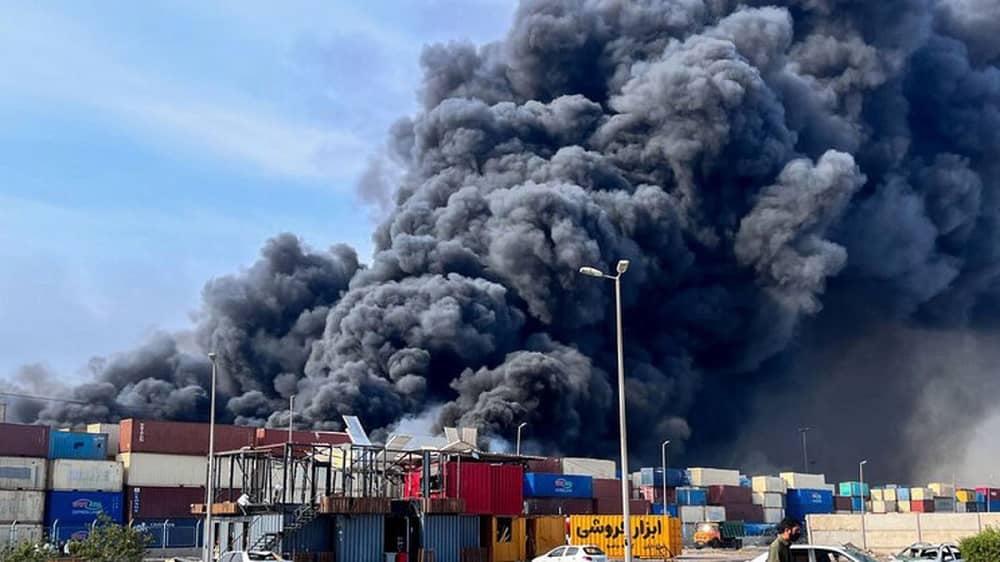
As soon as Iran came under attack, it made the oil resources of America’s allied states in the Middle East, especially the oil-rich states, its primary target. In other words, just as America began the war with the aim of regime change in Iran, Iran responded by taking the war down a path that would damage global energy trade and production. There is still no evidence that America had anticipated Iran would take the war outside the boundaries of conventional war in this way. As a result, the war has moved beyond the character of a conventional war, or a war of regime change, or a war of occupation, and has taken on the character of a war over energy trade. A war causing such enormous economic damage by turning energy into a weapon has not previously been seen in world history. In terms of economic damage, it is even bigger than the energy war of 1973. And in the past, fossil-fuel-dependent energy was not nearly this essential. Now, without fossil-fuel-dependent energy, the world comes to a halt. That is why the intensity of this war is far greater.

Regime change in Iran

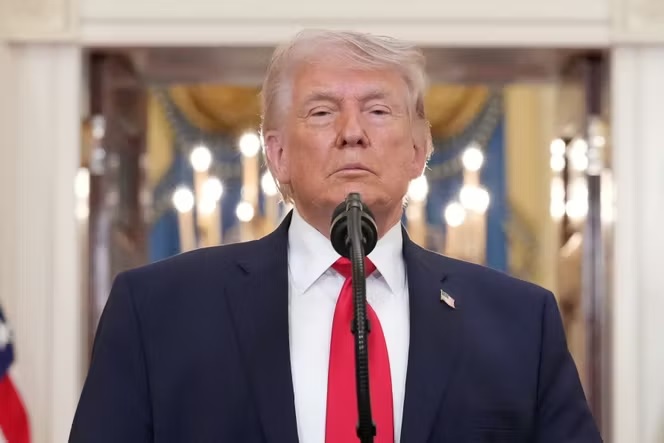
Trump has claimed that he has succeeded in bringing about regime change in Iran. Whether as a result of America’s success or through the momentum of the war itself, a kind of regime change has indeed taken place in Iran. In reality, over the past month of war, power has effectively passed from Iran’s civilian leaders into the hands of Iran’s most powerful military force, the Islamic Revolutionary Guard. In 2018, the then commander of this Islamic Revolutionary Guard, Major General Mohammad Ali Jafari, had said, “We will make the enemy understand: either everyone will use the Strait of Hormuz, or no one will.” Now this Islamic Revolutionary Guard stands at the core of Iran’s power. And it has taken exactly that path over Hormuz. Therefore, the second phase of Trump’s war is to reopen the Strait of Hormuz.

প্যারাস্যুটে ইরানে নামতে পারে ২ হাজার মার্কিন সেনা

Using Pakistan and the war over the Strait of Hormuz

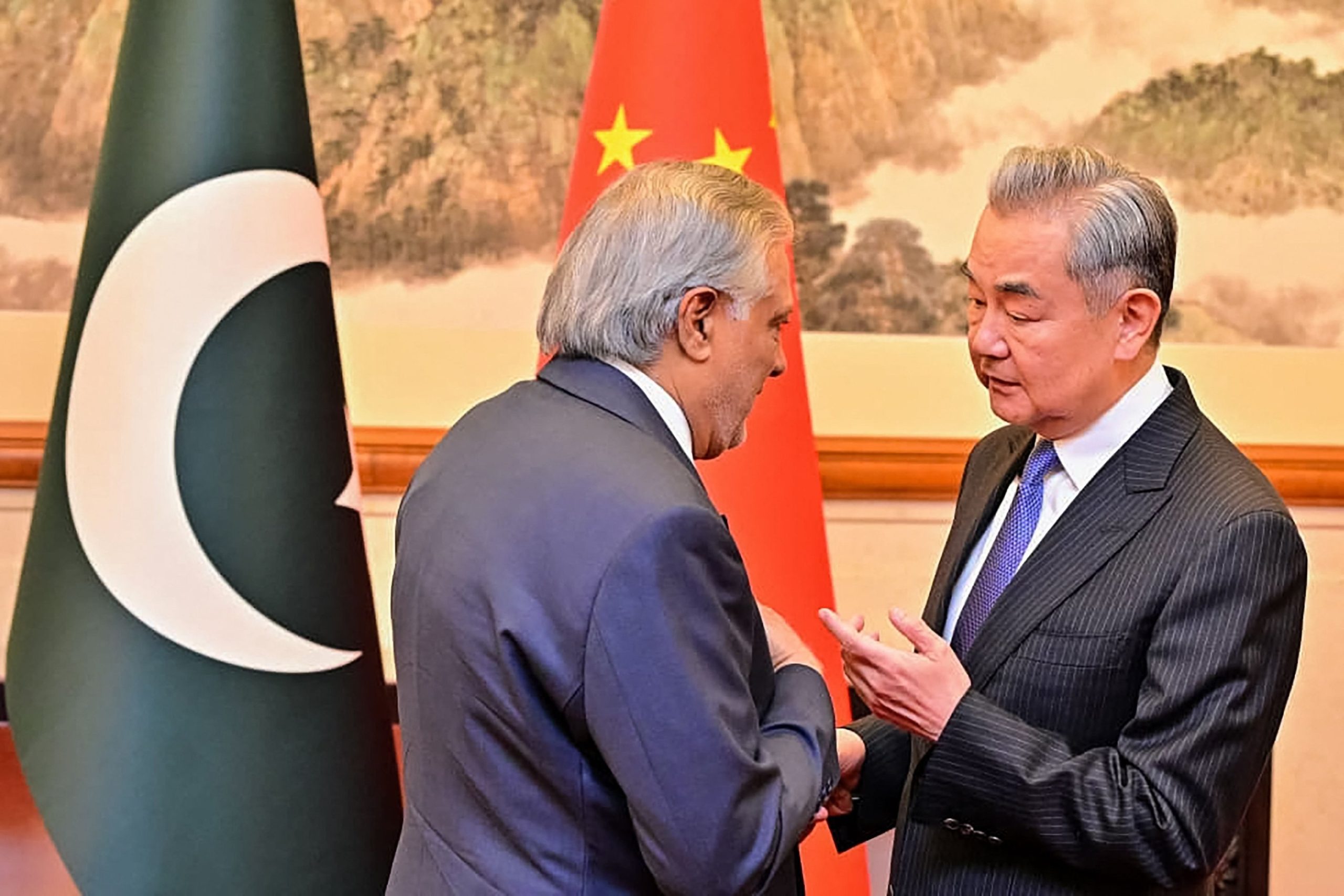
For more than a week now, Trump has been issuing Iran an ultimatum about ending the war. On the other hand, he is using Pakistan as an intermediary to pursue a negotiated settlement. When Trump and Pakistan were saying these things, Tim Marshall wrote, “An amphibious assault-capable military vessel named the USS Tripoli is on its way toward Iran. It could arrive within a week to attack Kharg Island.” That time has now passed. And America’s military ships capable of assault by water and land, along with paratroopers, have already arrived. Therefore, Pakistan’s mediation naturally comes under question. Was the real objective to stop the war, or to create time for America to bring in troops and ships for the second phase of the war?

The war in its second phase

So if the war now enters its second phase, then America will not only seek to free the Strait of Hormuz, it may also seize Kharg Island. That too is a major question. America is a vastly superior power, but neither of these tasks is easy. In the Strait of Hormuz there are Iranian mines, suicide squads, Iran’s missile city built beneath the mangrove forests of Qeshm Island beside Kharg Island, training in how to repel the regular swarms of Iranian missiles there, and, added to all that, new drones, and above all the nearly 3,000-meter vertical face of the Alborz Mountains, which is Iran’s natural strength in a war of resistance.

So, in order to free Hormuz and seize Kharg Island, it would be almost impossible to do so without defeating Iran on its mainland. And then the question will arise: will it be possible to defeat Iran on its mainland? Will Iran’s geographical strength allow that to happen easily? Rather, it would push the war toward a prolonged duration. Even if Iran’s government were ever defeated in the capital, would that stop the war?

হরমুজ প্রণালি বন্ধের ঘোষণা ইরানের, তেলের বাজারে অস্থিরতা | The Daily Campus

The Afghanistan and Turkmenistan border

Even if defeated in the capital, the remaining elements of Iran’s Revolutionary Guard and a large portion of the Iranian people would never accept defeat. Then, just as there are many places inside that vast country suitable for guerrilla war, the greatest natural fort of all is the mountain arc along the Turkmenistan and Afghanistan border, which has created a natural defensive enclosure. They could withdraw there and make the war even more prolonged.

According to 2014 estimates, 5 percent of the world’s total population lives in the Arab world. Yet 45 percent of the world’s terrorist attacks originate from within it. So if Iran’s war turns into guerrilla war, given what the world has already become after one month of energy crisis, what would the world become if, for the purposes of guerrilla warfare, Iran’s trained fighters were to take the path of terrorism?

An economy devastated by one month of war

According to a Gulf News report of April 1, by March 28, one month of war had caused 186 billion US dollars in economic losses across the Arab world. 3.9 million people had lost their jobs. Multiple reports in the March 31 Khaleej Times reflected how, because of the war, everything from the education of children in that region, including Abu Dhabi, to the movement of ordinary people, even to the suffering of the pets of those leaving those countries, had been affected.

Alongside this, major Southeast Asian media outlets such as The Japan TimesNikkei Asia, and The Straits Times of Singapore and Malaysia are reporting that Singapore too is suffering from an energy shortage. Thailand, even after stopping energy sales to everyone except Laos, is also facing an energy shortage. The Philippines has declared an energy emergency. From Indonesia’s palm regions to Japan, Vietnam, Thailand, and Malaysia, all are suffering fertilizer shortages across every kind of agriculture.

যুক্তরাষ্ট্রে অর্থনৈতিক মন্দা কী আসন্ন

Nor is South Asia being spared this energy and fertilizer crisis. In India, the largest country in South Asia, a number of fertilizer and ceramic factories have shut down because of energy shortages. Long lines there for cooking fuel have become daily fare in the world media. Reports in The Indian Express indicate that in Bhopal, because cooking gas is unavailable, demand for wood has risen, causing people to go into forests to gather wood, disregarding both tiger danger and fear of the police. Pakistan and Sri Lanka have reduced their work week from five days to four in order to save energy. Bangladesh has kept its cities functioning by shutting fertilizer factories and rationing electricity and fuel oil, but the indirect impact of this has already begun to fall across agriculture, industry, and business.

A crisis larger than the post-Covid economic crisis has begun

In a piece on March 4 about the Iran war, I had written that the post-Iran-war economy could become a crisis even larger than the post-Covid economic crisis. This past month of war has already pushed the world economy into a crisis greater than Covid. The losses of this one month cannot be overcome in the next three years, and yet the war is going to be prolonged.

So for countries dependent on imported energy, the economy is crossing the red line. On the other hand, China too is changing the pattern of selling and using everything from energy to rare earths. Japan is about to change the structure of its budget. Even sales of Apple smartphones made in India have fallen. In other words, from top to bottom, every layer of the economy has suffered a severe shock.

Author: Journalist and editor honored with the highest state award; Editor, SarakhonThe Present World.