8:12 pm, Monday, 19 January 2026

Europe Warns Trump’s Greenland Tariff Threat Could Trigger a Dangerous Trade Spiral

Sarakhon Report

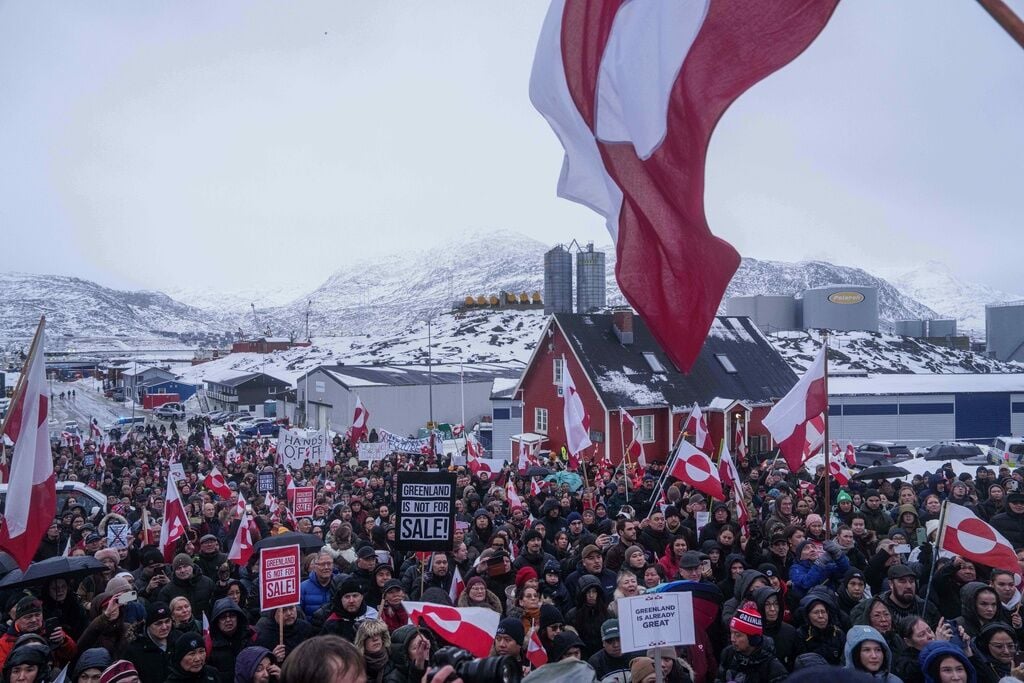
European capitals hardened their tone after U.S. President Donald Trump threatened fresh tariffs on eight allied countries unless they back American control of Greenland. The warning landed as diplomats tried to keep talks open, but European leaders said the move risks turning a political dispute into an economic shock that could ripple through supply chains and investment plans.

A coordinated pushback from allies

Denmark, Norway, Sweden, France, Germany, the United Kingdom, the Netherlands, and Finland issued a joint message rejecting pressure tactics between allies. Their core argument was simple: tariffs would damage transatlantic trust, destabilize trade, and set off a “dangerous downward spiral” that becomes harder to stop once retaliation begins.

Several governments framed the dispute as bigger than Greenland itself. They argued that using trade penalties to force a sovereignty outcome would create a precedent that weakens the broader alliance system—especially at a moment when Arctic security is already a major strategic concern.

Greenland, security, and the NATO strain

Greenland’s strategic location and resource potential have made it a focal point for security planners, but European leaders stressed that sovereignty cannot be negotiated through tariff threats. Denmark’s foreign minister signaled continued diplomatic outreach across Nordic and European partners to strengthen coordination and deterrence in the Arctic.

Officials also emphasized that military coordination in the region should be handled through established alliances and security channels, not as leverage in a trade dispute. The central worry in European capitals is that even if the tariff threat is later softened, the trust damage could be lasting.

What happens next for trade and markets

European governments have indicated they want dialogue first, but they are also preparing for escalation if tariff measures proceed. A trade confrontation between the U.S. and key European economies would immediately raise uncertainty for exporters, manufacturers, and investors—especially in sectors already sensitive to policy shifts.

For businesses, the short-term risk is disruption: delayed shipments, cost spikes, and a pause in new investment while companies reprice risk. The longer-term risk is structural: firms redesign supply chains away from transatlantic exposure, which can be costly and slow to reverse even after politics cools.

05:50:20 pm, Monday, 19 January 2026

Europe Warns Trump’s Greenland Tariff Threat Could Trigger a Dangerous Trade Spiral

05:50:20 pm, Monday, 19 January 2026

European capitals hardened their tone after U.S. President Donald Trump threatened fresh tariffs on eight allied countries unless they back American control of Greenland. The warning landed as diplomats tried to keep talks open, but European leaders said the move risks turning a political dispute into an economic shock that could ripple through supply chains and investment plans.

A coordinated pushback from allies

Denmark, Norway, Sweden, France, Germany, the United Kingdom, the Netherlands, and Finland issued a joint message rejecting pressure tactics between allies. Their core argument was simple: tariffs would damage transatlantic trust, destabilize trade, and set off a “dangerous downward spiral” that becomes harder to stop once retaliation begins.

Several governments framed the dispute as bigger than Greenland itself. They argued that using trade penalties to force a sovereignty outcome would create a precedent that weakens the broader alliance system—especially at a moment when Arctic security is already a major strategic concern.

Greenland, security, and the NATO strain

Greenland’s strategic location and resource potential have made it a focal point for security planners, but European leaders stressed that sovereignty cannot be negotiated through tariff threats. Denmark’s foreign minister signaled continued diplomatic outreach across Nordic and European partners to strengthen coordination and deterrence in the Arctic.

Officials also emphasized that military coordination in the region should be handled through established alliances and security channels, not as leverage in a trade dispute. The central worry in European capitals is that even if the tariff threat is later softened, the trust damage could be lasting.

What happens next for trade and markets

European governments have indicated they want dialogue first, but they are also preparing for escalation if tariff measures proceed. A trade confrontation between the U.S. and key European economies would immediately raise uncertainty for exporters, manufacturers, and investors—especially in sectors already sensitive to policy shifts.

For businesses, the short-term risk is disruption: delayed shipments, cost spikes, and a pause in new investment while companies reprice risk. The longer-term risk is structural: firms redesign supply chains away from transatlantic exposure, which can be costly and slow to reverse even after politics cools.