
11:41 pm, Tuesday, 20 January 2026

China’s Humanoid Robots: Dreams of a Robotic Workforce Still Under Human Control

Sarakhon Report

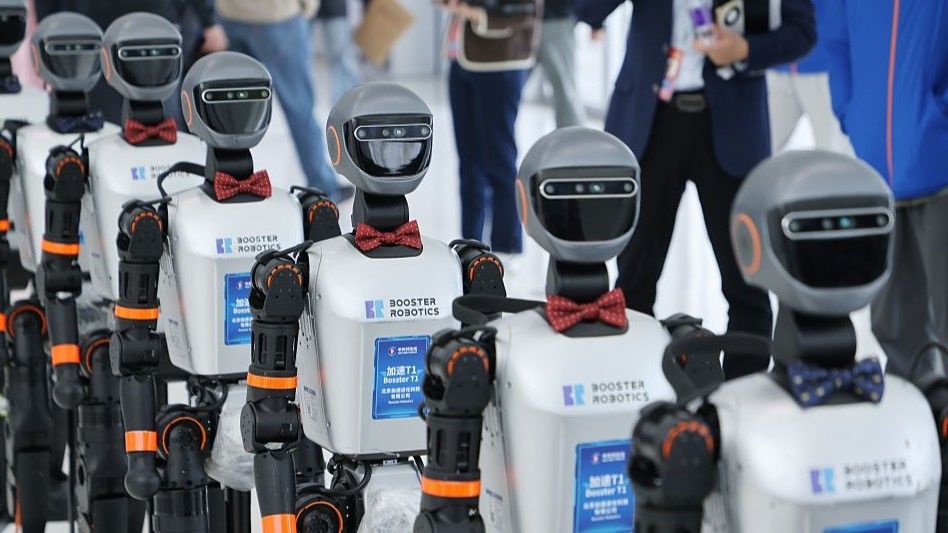
At a recent artificial intelligence conference in Shanghai, cute humanoid robots greeted guests, delivered snacks and posed for selfies. These machines, built by startups like Unitree and funded by state‑backed investors, represent China’s ambition to lead in humanoid robotics. Unlike science‑fiction fantasies of independent androids, the conference robots were operated by human controllers or preprogrammed sequences. They demonstrated capabilities such as walking, carrying items and speaking simple phrases. Chinese companies are racing to build cost‑effective robots that could one day staff factories, grocery stores and hospitals. Analysts point out that China already dominates industrial robotics and sees humanoid robots as the next frontier. A report from a major bank forecasts that millions of humanoid units could ship annually by 2035, with China manufacturing the majority.

Despite the showmanship, technical hurdles remain. Today’s humanoid robots rely heavily on remote human operators because artificial intelligence still struggles with complex decision‑making and unpredictable environments. Developers hope advances in machine learning and battery technology will make robots more autonomous and useful. The business case is also uncertain: early models cost tens of thousands of dollars, limiting mass adoption. Yet government funding and corporate enthusiasm are propelling rapid innovation. China’s push coincides with demographic challenges, as its ageing population and shrinking workforce drive interest in automation. Some observers worry that an unchecked robot boom could displace workers and exacerbate inequality, while others argue it could free people from hazardous jobs. For now, China’s humanoid robots are mostly marketing tools and research platforms, but they hint at a future where machines complement human labour rather than replace it entirely.

08:01:41 pm, Tuesday, 20 January 2026

China’s Humanoid Robots: Dreams of a Robotic Workforce Still Under Human Control

08:01:41 pm, Tuesday, 20 January 2026

At a recent artificial intelligence conference in Shanghai, cute humanoid robots greeted guests, delivered snacks and posed for selfies. These machines, built by startups like Unitree and funded by state‑backed investors, represent China’s ambition to lead in humanoid robotics. Unlike science‑fiction fantasies of independent androids, the conference robots were operated by human controllers or preprogrammed sequences. They demonstrated capabilities such as walking, carrying items and speaking simple phrases. Chinese companies are racing to build cost‑effective robots that could one day staff factories, grocery stores and hospitals. Analysts point out that China already dominates industrial robotics and sees humanoid robots as the next frontier. A report from a major bank forecasts that millions of humanoid units could ship annually by 2035, with China manufacturing the majority.

Despite the showmanship, technical hurdles remain. Today’s humanoid robots rely heavily on remote human operators because artificial intelligence still struggles with complex decision‑making and unpredictable environments. Developers hope advances in machine learning and battery technology will make robots more autonomous and useful. The business case is also uncertain: early models cost tens of thousands of dollars, limiting mass adoption. Yet government funding and corporate enthusiasm are propelling rapid innovation. China’s push coincides with demographic challenges, as its ageing population and shrinking workforce drive interest in automation. Some observers worry that an unchecked robot boom could displace workers and exacerbate inequality, while others argue it could free people from hazardous jobs. For now, China’s humanoid robots are mostly marketing tools and research platforms, but they hint at a future where machines complement human labour rather than replace it entirely.