

Bangladesh launches national protocol to detect and manage chronic kidney disease in primary care

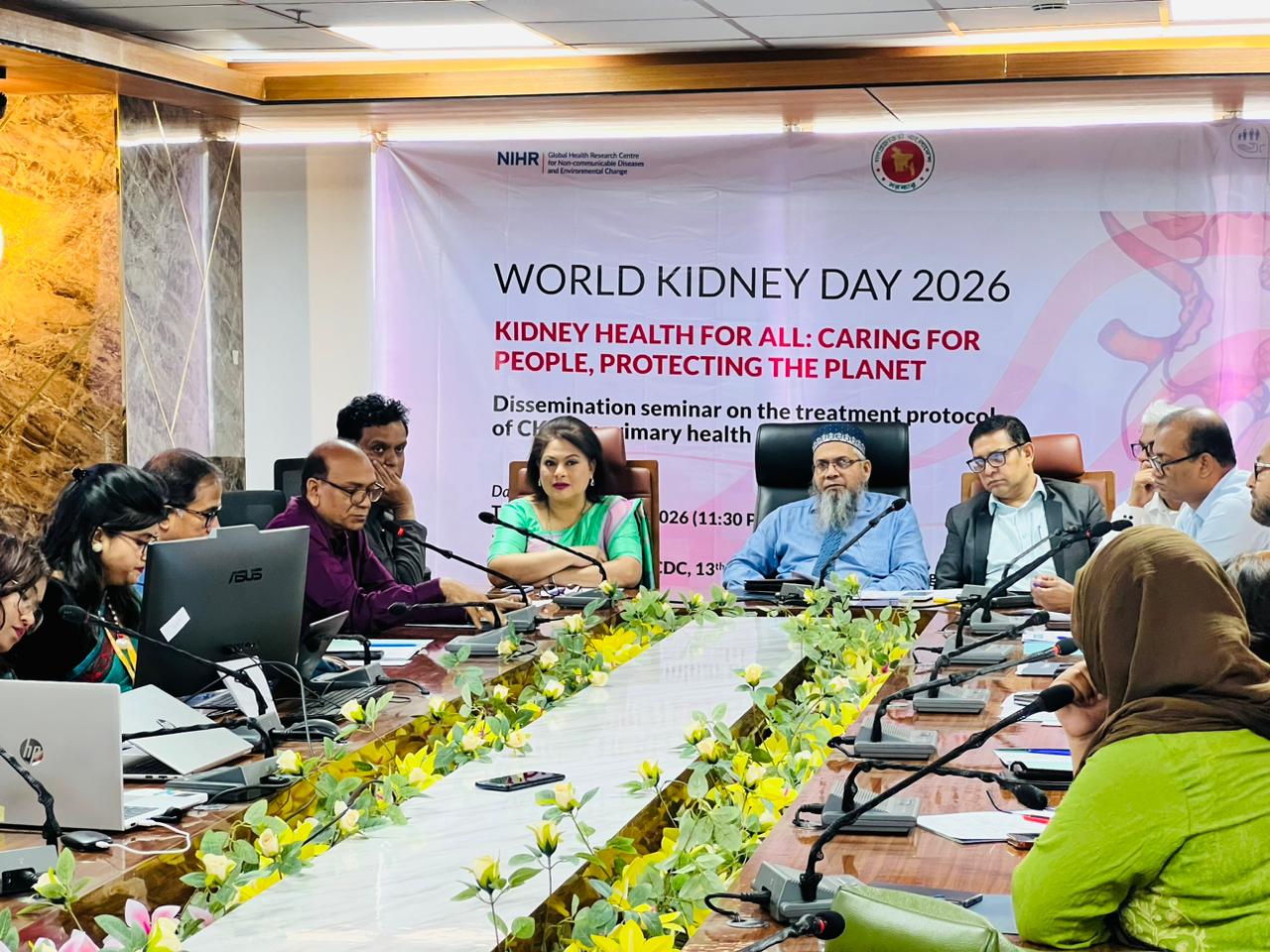
Dhaka, 12 March 2026 — Bangladesh has introduced a new National Treatment Protocol for Chronic Kidney Disease (CKD) at the primary healthcare level, aiming to ensure early detection, proper diagnosis, and effective management of kidney disease across the country through a standardised system.
The protocol was officially disseminated on the occasion of World Kidney Day 2026 at the Directorate General of Health Services (DGHS) in Mohakhali, Dhaka. It has been developed jointly by the Non-Communicable Disease Control (NCDC) programme of DGHS and icddr,b with consultation from a Scientific Working Group.
Growing public health concern
Chronic kidney disease is increasingly becoming a major public health challenge in Bangladesh. In many cases, the disease remains undetected until it reaches an advanced stage, making treatment more complicated and costly.
Research titled “Prevalence of Chronic Kidney Disease in Bangladesh: A Systematic Review and Meta-analysis” suggests that nearly one in four people in the country is affected by kidney disease, a rate higher than the global average. Each year around 35,000 to 40,000 patients progress to kidney failure, putting immense pressure on the country’s limited dialysis and kidney transplant facilities.
Silent progression of the disease
Kidney disease often develops silently, meaning many patients remain unaware of their condition until it becomes severe. People living with diabetes, high blood pressure, cardiovascular diseases, or those with a family history of kidney problems face a higher risk.
Environmental factors are also playing a growing role. Increased water salinity, heat stress, and deteriorating water quality are now being recognised as possible contributors to kidney disease, particularly in coastal areas.
Integrating screening into primary healthcare
The newly introduced protocol seeks to address these challenges by integrating kidney disease screening and management into primary healthcare services.
Under the system, Community Health Care Providers at community clinics will conduct initial screening for kidney disease, hypertension, and diabetes, and refer suspected patients for further evaluation. At the Upazila Health Complex level, doctors will follow standardised guidelines to diagnose, assess risk levels, and manage kidney disease along with related health conditions.
To strengthen implementation, icddr,b is also developing a digital system within the government’s digital health platform that will incorporate this treatment protocol and support healthcare workers at the primary care level. The initiative is being supported through the Global Health Research Centre for Non-Communicable Diseases and Environmental Change project.
Experts emphasise early detection
The dissemination event brought together senior officials of DGHS, nephrologists, cardiologists, public health experts, and key stakeholders, including prominent nephrologist Professor Dr Harun-Ur-Rashid, founder president of the Bangladesh Kidney Foundation.
Professor Dr Sheikh Sayidul Haque, Additional Director General for Planning and Development at DGHS, described the protocol as a major step forward in tackling kidney disease in Bangladesh. He said that introducing early screening and management at community and upazila levels could prevent thousands of people from progressing to end-stage kidney disease.
Professor Syed Zakir Hossain, Officer on Special Duty at DGHS and former Line Director of the NCDC programme, noted that health data indicates a growing number of kidney patients in the country. He emphasised that stronger involvement of primary healthcare facilities in screening and diagnosis is essential, adding that the new protocol will help healthcare providers identify, manage, and monitor patients more effectively.
Dr Aliya Naheed, Senior Scientist at icddr,b and principal investigator of the project, said early intervention at the primary care level can significantly reduce both deaths and treatment costs. She expressed hope that the protocol will be rapidly implemented nationwide and will serve as a model for integrated care for non-communicable diseases.
Nationwide implementation plan
The protocol is expected to be gradually rolled out across primary healthcare facilities throughout the country. Training programmes for healthcare workers and monitoring systems will be introduced to ensure effective implementation and long-term impact.