9:12 pm, Tuesday, 2 December 2025

NUCLEAR TEST THREATS BY US AND RUSSIA REOPEN FEARS OF A NEW ARMS RACE

Sarakhon Report

A fragile test-ban norm under fresh stress
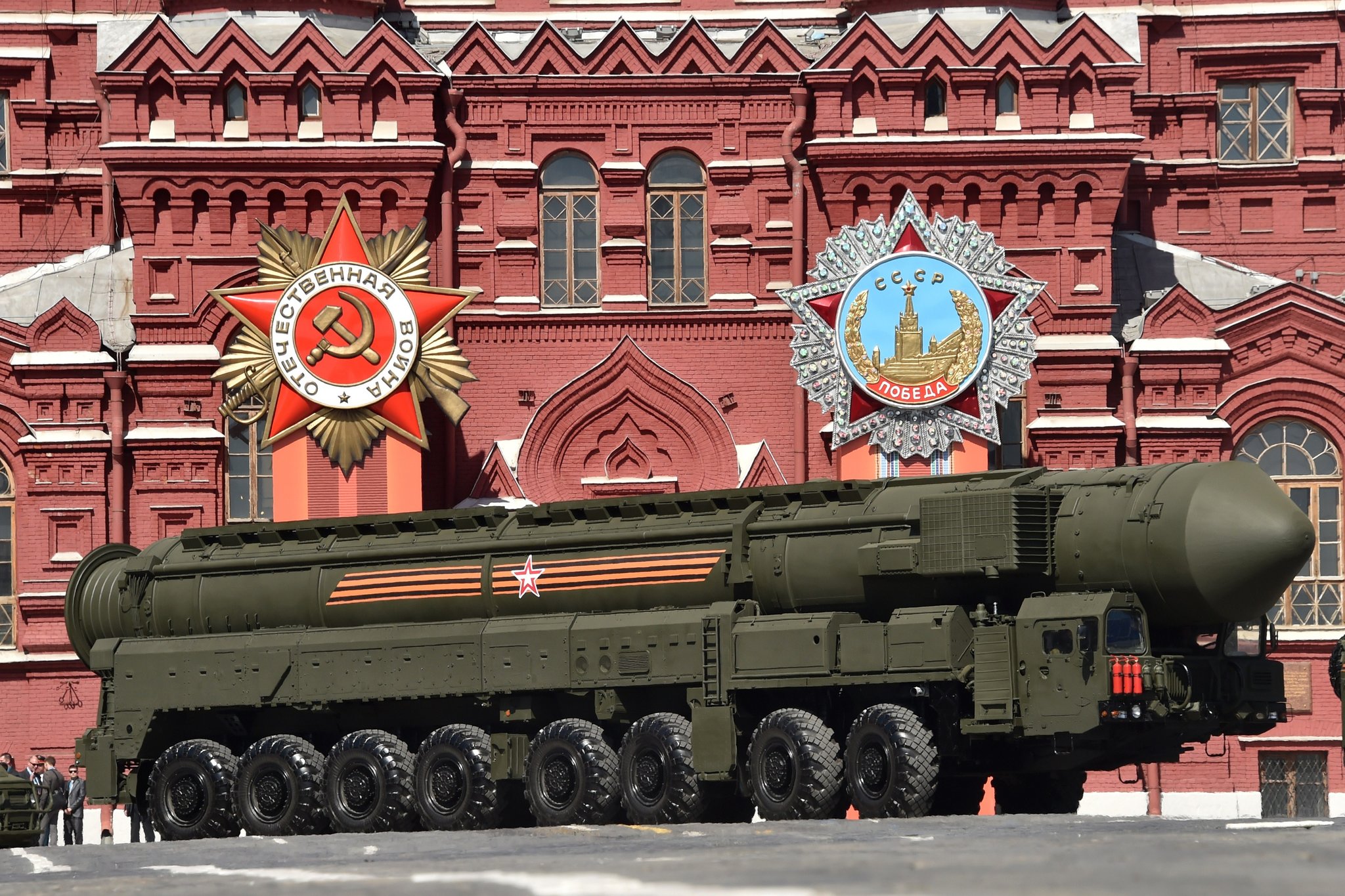
The United States and Russia are once again talking about the possibility of resuming nuclear weapons tests, reviving anxieties many thought were buried with the Cold War. Signals from Washington about potential underground experiments, paired with warnings from Moscow that it could respond in kind, have shaken diplomats and nonproliferation experts. For decades, an informal global moratorium has kept the most powerful nuclear states from conducting explosive tests, even though a formal ban never fully took legal effect. Now that restraint looks less certain, and governments worry what might follow if the taboo is broken.

At the centre of the issue is the Comprehensive Nuclear-Test-Ban Treaty, or CTBT, negotiated in the 1990s to prohibit all nuclear explosions in any environment. The treaty has been signed by most of the world’s countries but still waits for ratification by a few key states, including the US and China, before it can enter into force. Despite that legal limbo, it has long been treated as a powerful political commitment. The current rhetoric from Washington and Moscow risks eroding that sense of permanence, turning what looked like a settled norm into a point of bargaining.

Monitoring the underground world of tests
The test-ban regime rests on more than words. A dedicated organisation based in Vienna operates a web of more than 300 monitoring stations that listen for seismic signals, ocean vibrations, faint changes in air pressure and traces of radioactive particles. Together, they form a kind of planetary stethoscope that can pick up the shock waves from most nuclear blasts, even when they are buried deep underground. The network has successfully detected every acknowledged test by North Korea, giving member states data they can cross-check with their own intelligence.

Experts say this system makes it extremely difficult to hide a traditional explosive test of meaningful size. Yet they also acknowledge its limits. Some forms of very low-yield or so-called hydronuclear experiments may fall near the edge of detectability, especially if they take place in highly engineered underground facilities. Several nuclear-armed states already conduct subcritical tests that stop short of a self-sustaining chain reaction. These are considered legal under a strict “zero-yield” interpretation because they do not produce a full nuclear explosion, but the technical distinction can be hard for the public to grasp.

Russia's 'dangerous' move raises fears of new nuclear arms race

Strategic calculations and cascade risks
Supporters of the current US approach argue that any future experiments would remain in the subcritical category, aimed at validating computer models and extending the life of ageing warheads without building new types. They insist that Washington does not need explosive tests to maintain a credible deterrent. Critics, however, focus on the political message rather than the engineering details. Once the world’s largest nuclear power openly prepares for tests again, they say, other countries may feel encouraged or pressured to follow suit.

The US last conducted a full-scale nuclear explosion in 1992. Since then, Russia, Britain, France and China have also refrained from tests, relying instead on simulations and laboratory studies. If either Washington or Moscow now moves toward renewed explosive testing, analysts fear that China could see an opportunity to refine modern warhead designs. India and Pakistan, which remain outside the CTBT framework, might feel similarly emboldened. Such a cascade would not only complicate regional security dynamics, it would also weaken the arguments used to persuade non-nuclear states to stay that way.

Diplomatic options and public memory
In response to the new tension, some governments and civil-society groups are pushing for a fresh political declaration against nuclear testing, even from states that have not fully ratified the CTBT. The idea is to reinforce the existing moratorium with clear, contemporary language that reflects current technologies and risks. Others suggest expanding technical cooperation through the Vienna-based organisation, giving states more confidence that they can verify any suspicious activity. None of these steps would solve deeper strategic rivalries, but they might help keep testing off the list of tools that leaders consider acceptable.

Communities that live near former test sites are following the debate with particular concern. From the Nevada desert to Kazakhstan’s Semipalatinsk region and remote Pacific atolls, residents still deal with health problems, environmental contamination and intergenerational trauma from blasts carried out decades ago. Their experience is a reminder that testing is not an abstract technical issue but a lived reality for many people. As talk of nuclear explosions returns to headline level, activists hope that public memory of those scars will be strong enough to discourage leaders from crossing the line again.
05:46:12 pm, Tuesday, 2 December 2025

NUCLEAR TEST THREATS BY US AND RUSSIA REOPEN FEARS OF A NEW ARMS RACE

05:46:12 pm, Tuesday, 2 December 2025

A fragile test-ban norm under fresh stress
The United States and Russia are once again talking about the possibility of resuming nuclear weapons tests, reviving anxieties many thought were buried with the Cold War. Signals from Washington about potential underground experiments, paired with warnings from Moscow that it could respond in kind, have shaken diplomats and nonproliferation experts. For decades, an informal global moratorium has kept the most powerful nuclear states from conducting explosive tests, even though a formal ban never fully took legal effect. Now that restraint looks less certain, and governments worry what might follow if the taboo is broken.

At the centre of the issue is the Comprehensive Nuclear-Test-Ban Treaty, or CTBT, negotiated in the 1990s to prohibit all nuclear explosions in any environment. The treaty has been signed by most of the world’s countries but still waits for ratification by a few key states, including the US and China, before it can enter into force. Despite that legal limbo, it has long been treated as a powerful political commitment. The current rhetoric from Washington and Moscow risks eroding that sense of permanence, turning what looked like a settled norm into a point of bargaining.

Monitoring the underground world of tests
The test-ban regime rests on more than words. A dedicated organisation based in Vienna operates a web of more than 300 monitoring stations that listen for seismic signals, ocean vibrations, faint changes in air pressure and traces of radioactive particles. Together, they form a kind of planetary stethoscope that can pick up the shock waves from most nuclear blasts, even when they are buried deep underground. The network has successfully detected every acknowledged test by North Korea, giving member states data they can cross-check with their own intelligence.

Experts say this system makes it extremely difficult to hide a traditional explosive test of meaningful size. Yet they also acknowledge its limits. Some forms of very low-yield or so-called hydronuclear experiments may fall near the edge of detectability, especially if they take place in highly engineered underground facilities. Several nuclear-armed states already conduct subcritical tests that stop short of a self-sustaining chain reaction. These are considered legal under a strict “zero-yield” interpretation because they do not produce a full nuclear explosion, but the technical distinction can be hard for the public to grasp.

Russia's 'dangerous' move raises fears of new nuclear arms race

Strategic calculations and cascade risks
Supporters of the current US approach argue that any future experiments would remain in the subcritical category, aimed at validating computer models and extending the life of ageing warheads without building new types. They insist that Washington does not need explosive tests to maintain a credible deterrent. Critics, however, focus on the political message rather than the engineering details. Once the world’s largest nuclear power openly prepares for tests again, they say, other countries may feel encouraged or pressured to follow suit.

The US last conducted a full-scale nuclear explosion in 1992. Since then, Russia, Britain, France and China have also refrained from tests, relying instead on simulations and laboratory studies. If either Washington or Moscow now moves toward renewed explosive testing, analysts fear that China could see an opportunity to refine modern warhead designs. India and Pakistan, which remain outside the CTBT framework, might feel similarly emboldened. Such a cascade would not only complicate regional security dynamics, it would also weaken the arguments used to persuade non-nuclear states to stay that way.

Diplomatic options and public memory
In response to the new tension, some governments and civil-society groups are pushing for a fresh political declaration against nuclear testing, even from states that have not fully ratified the CTBT. The idea is to reinforce the existing moratorium with clear, contemporary language that reflects current technologies and risks. Others suggest expanding technical cooperation through the Vienna-based organisation, giving states more confidence that they can verify any suspicious activity. None of these steps would solve deeper strategic rivalries, but they might help keep testing off the list of tools that leaders consider acceptable.

Communities that live near former test sites are following the debate with particular concern. From the Nevada desert to Kazakhstan’s Semipalatinsk region and remote Pacific atolls, residents still deal with health problems, environmental contamination and intergenerational trauma from blasts carried out decades ago. Their experience is a reminder that testing is not an abstract technical issue but a lived reality for many people. As talk of nuclear explosions returns to headline level, activists hope that public memory of those scars will be strong enough to discourage leaders from crossing the line again.