8:35 pm, Thursday, 18 December 2025

US Senators Target Tesla-Style Driver Assist With New Road Limits

Sarakhon Report

A bill aimed at “where” Level 2 systems can run

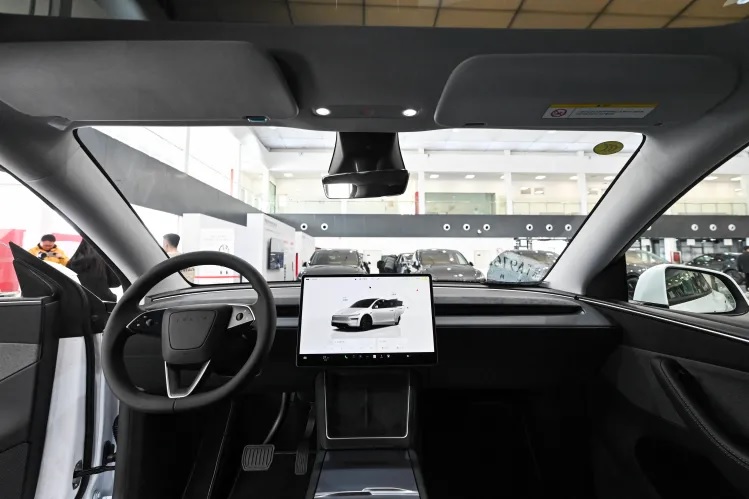
A new Democratic bill would require Tesla and other automakers to restrict Level 2 driving systems to clearly defined operating conditions, rather than letting them run broadly on roads they were not designed to handle. The proposal focuses on “operational design domains,” or ODDs, which describe the specific roads, speeds, geographies, and weather conditions where a system is intended to function. Supporters argue that defining those boundaries could reduce crashes and confusion about what today’s driver-assist can safely do.

Level 2 systems are not fully autonomous. They typically combine lane centering and adaptive cruise control, but still require continuous driver supervision. Critics say marketing language and driver behavior can drift into a dangerous middle ground, where people treat assistance as autonomy. The bill’s backers appear to be trying to force clearer guardrails into law, especially as more vehicles ship with increasingly capable but still limited software.

Tesla Investors Club: $TSLA News & Discussions

The measure comes as safety regulators and lawmakers face pressure to catch up with fast-moving automotive software. In practice, a requirement to define an ODD could push companies to geofence features or limit them to highways, mapped areas, or certain environmental conditions. For drivers, that could mean the car refuses to engage assistance on particular roads, or disengages when conditions change.

For Tesla, the proposal is notable because the company’s driver-assist branding has long been central to public debate. The bill does not single out one company in its core concept, but it directly addresses the category of advanced assistance that can be used widely and unpredictably. The aim is to reduce situations where drivers attempt complex maneuvers with software that is not built to manage them.

Supporters say the point is transparency and enforceability. If a manufacturer claims a system is safe, it should also specify the conditions under which it is safe, and design it so it cannot be used outside those conditions. Opponents, likely including parts of the industry, may argue this could slow innovation or create compliance burdens, especially for systems that rely on driver attention rather than true autonomy.

What this could change for drivers and regulators

Elon Musk admits Teslas will need new hardware for FSD | The Verge

The biggest shift would be a more explicit legal expectation that Level 2 systems operate within boundaries, even if a driver wants to push beyond them. That could also reshape crash investigations and liability debates. If a vehicle was being used outside its declared ODD, regulators could argue the system was misused, or that the manufacturer failed to prevent misuse.

It could also standardize language across automakers. Right now, consumers face a confusing mix of feature names and claims. An ODD-centered rule would force companies to speak in comparable terms: where it works, when it works, and what it cannot do. That clarity could improve consumer understanding, but it could also reduce the “wow factor” of broad claims.

The bill’s future will depend on legislative momentum and industry lobbying. But even without passage, it signals where the policy argument is heading: less focus on flashy demos, more focus on operational limits, safety cases, and proof.

Tesla continues to circle the drain | The Verge


05:01:44 pm, Thursday, 18 December 2025

US Senators Target Tesla-Style Driver Assist With New Road Limits

05:01:44 pm, Thursday, 18 December 2025

A bill aimed at “where” Level 2 systems can run

A new Democratic bill would require Tesla and other automakers to restrict Level 2 driving systems to clearly defined operating conditions, rather than letting them run broadly on roads they were not designed to handle. The proposal focuses on “operational design domains,” or ODDs, which describe the specific roads, speeds, geographies, and weather conditions where a system is intended to function. Supporters argue that defining those boundaries could reduce crashes and confusion about what today’s driver-assist can safely do.

Level 2 systems are not fully autonomous. They typically combine lane centering and adaptive cruise control, but still require continuous driver supervision. Critics say marketing language and driver behavior can drift into a dangerous middle ground, where people treat assistance as autonomy. The bill’s backers appear to be trying to force clearer guardrails into law, especially as more vehicles ship with increasingly capable but still limited software.

Tesla Investors Club: $TSLA News & Discussions

The measure comes as safety regulators and lawmakers face pressure to catch up with fast-moving automotive software. In practice, a requirement to define an ODD could push companies to geofence features or limit them to highways, mapped areas, or certain environmental conditions. For drivers, that could mean the car refuses to engage assistance on particular roads, or disengages when conditions change.

For Tesla, the proposal is notable because the company’s driver-assist branding has long been central to public debate. The bill does not single out one company in its core concept, but it directly addresses the category of advanced assistance that can be used widely and unpredictably. The aim is to reduce situations where drivers attempt complex maneuvers with software that is not built to manage them.

Supporters say the point is transparency and enforceability. If a manufacturer claims a system is safe, it should also specify the conditions under which it is safe, and design it so it cannot be used outside those conditions. Opponents, likely including parts of the industry, may argue this could slow innovation or create compliance burdens, especially for systems that rely on driver attention rather than true autonomy.

What this could change for drivers and regulators

Elon Musk admits Teslas will need new hardware for FSD | The Verge

The biggest shift would be a more explicit legal expectation that Level 2 systems operate within boundaries, even if a driver wants to push beyond them. That could also reshape crash investigations and liability debates. If a vehicle was being used outside its declared ODD, regulators could argue the system was misused, or that the manufacturer failed to prevent misuse.

It could also standardize language across automakers. Right now, consumers face a confusing mix of feature names and claims. An ODD-centered rule would force companies to speak in comparable terms: where it works, when it works, and what it cannot do. That clarity could improve consumer understanding, but it could also reduce the “wow factor” of broad claims.

The bill’s future will depend on legislative momentum and industry lobbying. But even without passage, it signals where the policy argument is heading: less focus on flashy demos, more focus on operational limits, safety cases, and proof.
Tesla continues to circle the drain | The Verge