Poll reveals Americans worry about US moral leadership and China’s rise

Survey finds desire for virtue but doubts about reality under Trump’s second term
An NPR/Ipsos poll released January 9 finds that Americans are deeply conflicted about their country’s role in the world as President Donald Trump’s second term approaches its first anniversary. The nationally representative survey of 1,021 adults shows that two‑thirds of respondents believe the United States should strive to be a moral leader, yet only about 40% think it currently fulfills that role. Mallory Newall, vice president of public affairs at Ipsos, says the erosion of confidence is striking compared with a similar poll conducted in 2017. The poll’s margin of error is plus or minus 3.3 percentage points, but the trend is clear: Americans want moral clarity but doubt their leaders deliver it.
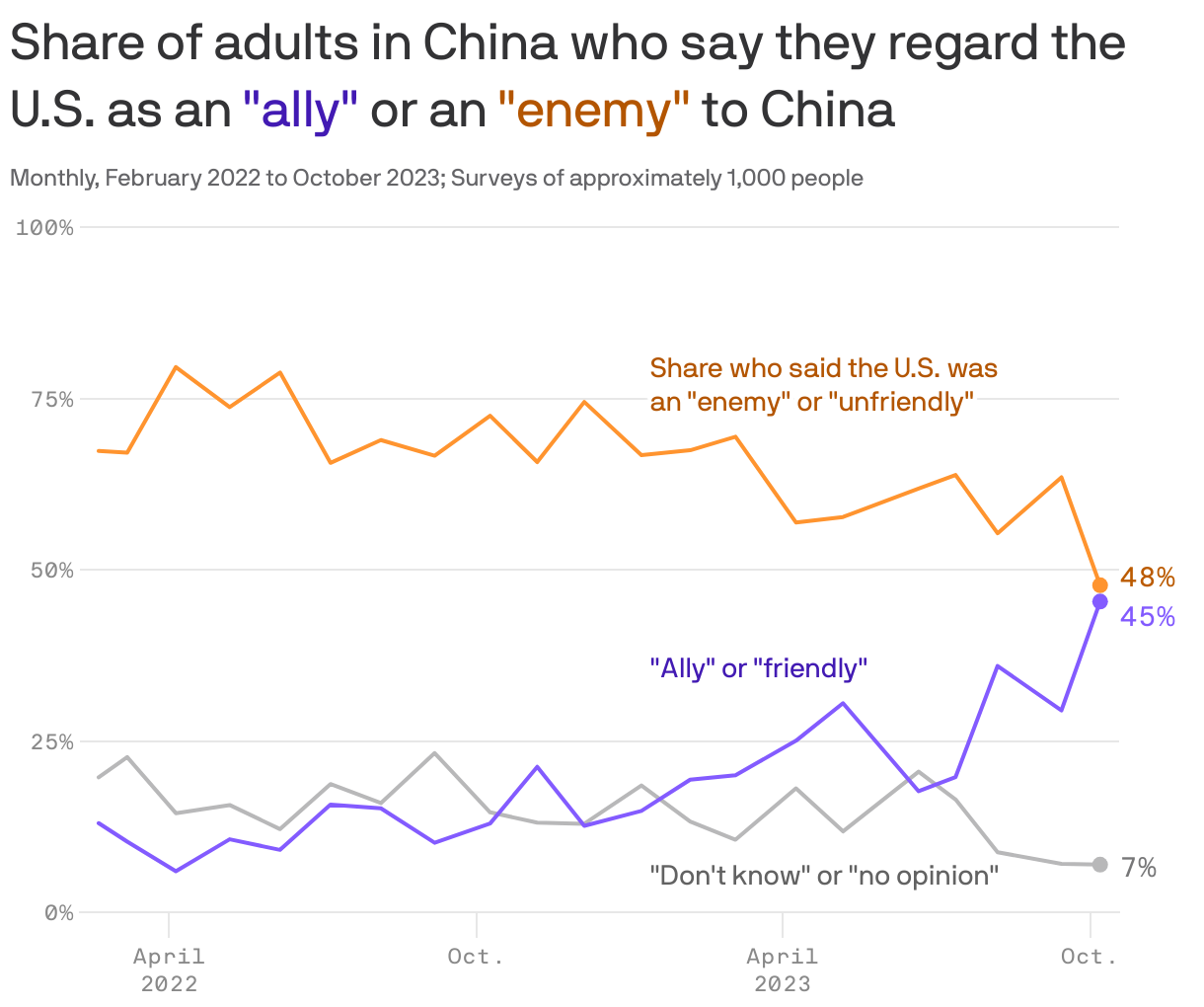
The survey also explores perceptions of national power. Sixty‑four percent of respondents still regard the United States as the world’s top military power, yet half say the country has been losing influence over the past five years. Meanwhile, 57% believe China is gaining influence, and four in ten think China now leads in technological innovation, compared with 23% who say the US does. This shift in opinion comes after Trump imposed sweeping tariffs on many trading partners and ordered military actions in Iran, Syria, Yemen and Venezuela, actions that have strained alliances and unsettled global markets. Analysts say these policies have reshaped America’s image abroad, causing both allies and adversaries to reassess their ties.
Partisan divides shape foreign policy priorities
The poll reveals sharp partisan divisions over foreign policy. Among Republicans, 67% say U.S. foreign policy should focus on improving Americans’ economic well‑being at home. Only 29% of Democrats share that view; instead, 52% of Democrats believe promoting democracy and human rights abroad should be the top priority, compared with just 16% of Republicans. Independents are split, with 45% prioritising domestic enrichment and 35% supporting a focus on global values. These differences spill over into views on aid to Ukraine. Sixty percent of Democrats and 43% of independents think Washington is not doing enough to support Kyiv, while nearly one‑third of Republicans say the U.S. is doing too much. Similarly, 62% of Democrats believe the U.S. is providing Russia with too many concessions, versus 32% of Republicans.
Another contested issue is the U.S. commitment to defend Taiwan if China attempts to seize the self‑governing island. The survey finds that only 36% of Americans believe the U.S. would be obligated to send troops, while 41% are unsure. Experts say the high level of uncertainty reflects war weariness after years of conflict in the Middle East and Europe. Economic concerns also colour perceptions of global power. Respondents who worry about inflation and job security are more likely to say the U.S. should focus on domestic priorities and less likely to support military engagements abroad. Pollsters note that opinions about international affairs are increasingly tied to people’s personal finances and partisan media consumption.
The findings arrive at a time when Trump’s foreign policy has unsettled long‑standing alliances. The president’s steep tariffs have angered European and Asian partners, while his promise to withdraw from traditional climate agreements has sparked protests. As China aggressively expands its economic and technological reach, many Americans worry the U.S. narrative of freedom and democracy is losing ground to a model of authoritarian development. This anxiety may help explain why respondents want their country to lead morally but are unsure how to reconcile that aspiration with hard‑nosed geopolitics. Observers suggest that future U.S. leaders will need to craft a foreign policy that balances power with principle, offering a clear alternative to China’s approach while addressing economic concerns at home.
Ultimately, the poll suggests Americans are searching for a new path. They want a strong military and thriving economy, but also a country admired for its values. Achieving that balance will require not only policy changes but also a national conversation about what moral leadership means in a multipolar world. As Washington navigates conflicts in Europe, Asia and the Middle East, the American public’s ambivalence will shape the options available to policymakers. Whether the U.S. can regain confidence at home and respect abroad may depend on its ability to bridge partisan divides and articulate a unifying vision.