US Sends Second Aircraft Carrier to Middle East as Iran Nuclear Standoff Intensifies

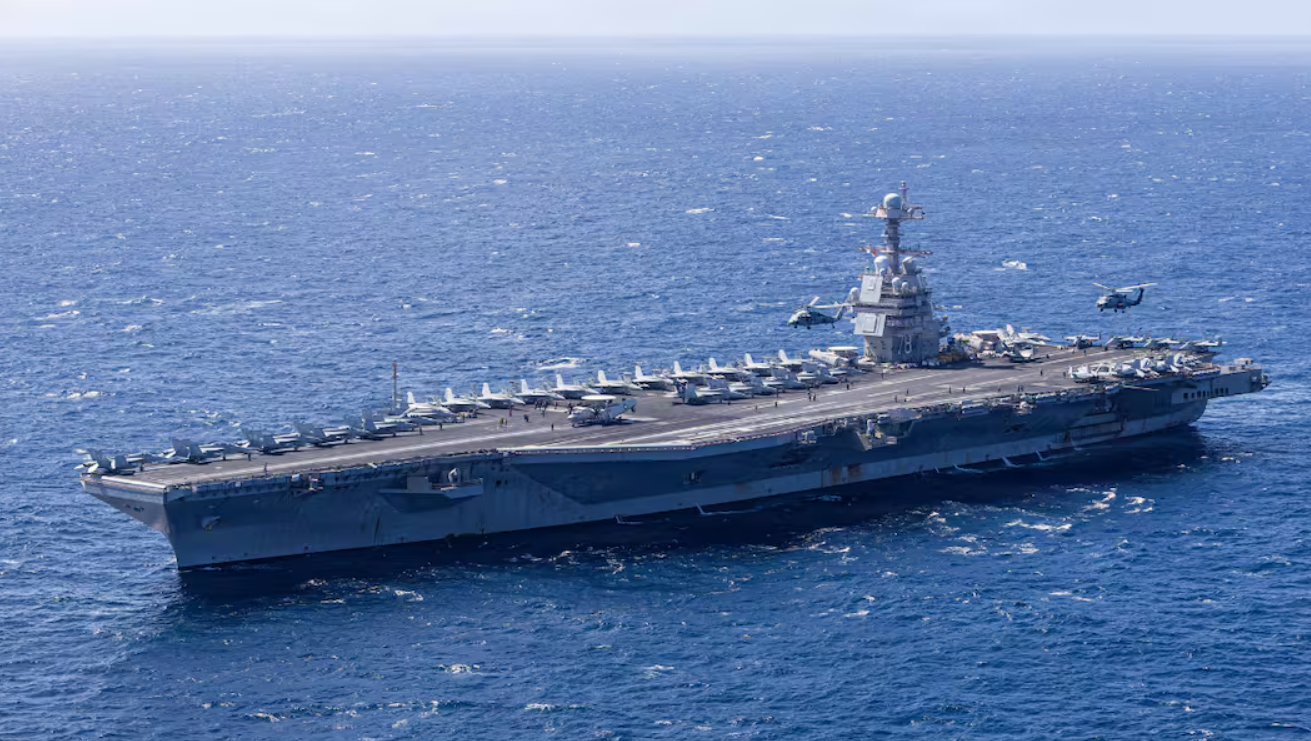
Washington orders the USS Gerald R. Ford to bolster naval presence
The United States has ordered its largest warship to sail toward the Middle East, ratcheting up military pressure on Iran at a fragile moment in stalled nuclear negotiations. The USS Gerald R. Ford, a nuclear-powered supercarrier displacing more than 100,000 tonnes, will leave the Caribbean and join the USS Abraham Lincoln strike group already patrolling the region. A person familiar with the deployment confirmed the move on Thursday. The decision places two full carrier strike groups and their escort destroyers within striking distance of Iran for the first time in months.
President Donald Trump signalled the possibility earlier this week, telling reporters that Washington must “make a deal or do something very tough.” His administration has demanded that Tehran agree to cap its uranium-enrichment programme and submit to expanded inspections. Iran has resisted, insisting its nuclear work is peaceful and that existing sanctions must be lifted first. Indirect messages exchanged through intermediaries in Oman and Qatar this week failed to produce a fresh round of face-to-face talks. A senior Iranian security official visited the two Gulf states but left without scheduling further meetings with the American side.
The deployment follows weeks of escalating rhetoric. The Abraham Lincoln arrived in the Gulf of Oman in January, accompanied by guided-missile destroyers and a cruiser. Adding the Ford and its air wing of more than seventy aircraft dramatically expands the Pentagon’s ability to project power across the Persian Gulf, the Strait of Hormuz and the Gulf of Oman simultaneously. Military analysts note that a two-carrier posture signals readiness for sustained operations rather than a temporary show of force.
Growing unease over the possibility of military confrontation
Gulf Arab states have reacted with concern. Saudi Arabia and the United Arab Emirates both issued diplomatic statements urging de-escalation, warning that any armed conflict could trigger a broader conflagration in a region still scarred by the Israel-Hamas war in the Gaza Strip. Shipping and energy markets reflected the tension. Brent crude futures rose modestly on the news, and marine insurers flagged heightened risk premiums for tankers transiting the strait. Roughly a fifth of the world’s traded oil passes through the Hormuz chokepoint every day.
European allies have echoed calls for restraint. The European Union’s foreign policy chief urged both Washington and Tehran to return to negotiations, stressing that diplomacy remains the only path to a durable agreement. China and Russia, which have their own strategic interests in the region, called the carrier deployment provocative.
Inside the United States, the move drew a mixed reaction on Capitol Hill. Several Republican senators praised the administration’s posture, arguing that overwhelming force is the most effective way to extract concessions from Tehran. Democratic lawmakers warned that the deployment risks sleepwalking into another Middle Eastern conflict without congressional authorisation. The White House said the Ford’s movement is a defensive measure designed to protect American forces and allies. The Pentagon declined to provide a timeline for the Ford’s arrival but noted that the carrier recently completed exercises in the Caribbean. Observers expect it to reach the Gulf of Oman within two weeks. As the warships converge, the window for diplomacy narrows. Whether the show of force brings Iran back to the table or pushes the region closer to confrontation remains the defining question of the coming days. Both sides appear locked into maximalist positions, and a miscalculation at sea could escalate rapidly.