
Proposal to Introduce Animal Vaccination Cards for the First Time, A New Initiative to Protect Health and Livelihoods

Experts have proposed introducing vaccination cards for livestock, poultry, and pets in Bangladesh for the first time. The initiative aims to strengthen animal health systems, protect livelihoods, and reduce the risks of zoonotic diseases.
Event and Context
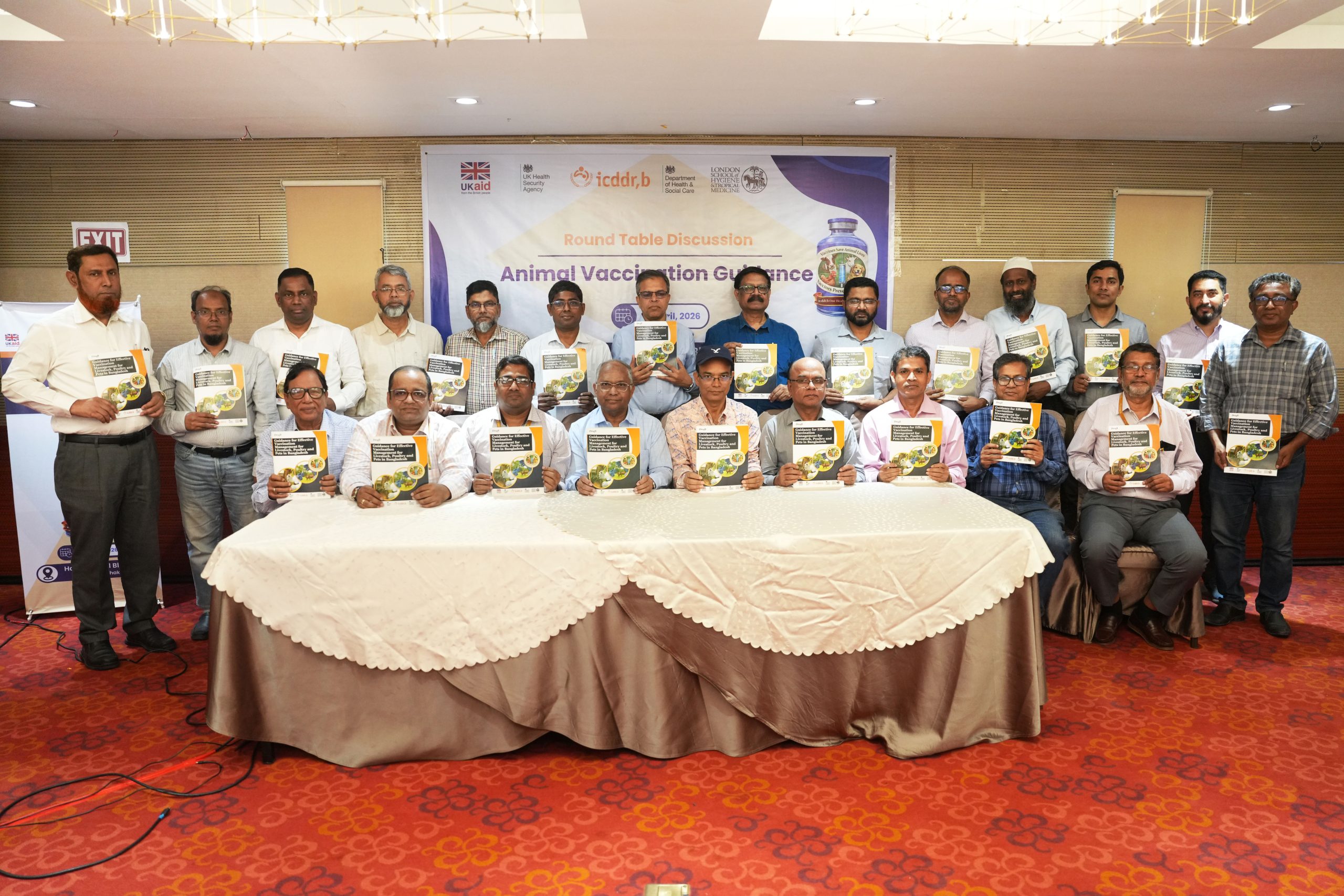
The proposal was presented at a review meeting held at Hotel Bengal Blueberry in Dhaka, marking World Health Day 2026. The event was jointly organized by icddr,b and the Department of Livestock Services.
The meeting represented the final phase of developing the “Guidelines for Effective Vaccination Management for Livestock, Poultry, and Pets in Bangladesh,” with participation from government officials, EPI representatives, pharmaceutical experts, and animal health specialists.
Vaccination Capacity and Limitations
Dr. Md. Bayzer Rahman, Director (Administration) of the Department of Livestock Services, stated that the country’s animal vaccination capacity is currently limited to around 10 percent. He noted that the livestock sector cannot reach its full potential without a strong vaccination system.
The livestock and poultry sector contributes about 1.81 percent to Bangladesh’s GDP, and nearly 20 percent of the population depends on it. Despite this, only around 20 percent of rural farmers regularly vaccinate their animals.
Root Causes of the Problem
Although Bangladesh has a successful EPI program for humans, there is no integrated national vaccination system for animals. This has led to several challenges, including:
lack of awareness
fear of vaccine side effects
weak cold chain management
insufficient supply
shortage of trained veterinary personnel
Health Risks and Disease Spread
Dr. Mahmudur Rahman noted that recent measles and bird flu situations have shown how gaps in vaccination create risks for both humans and animals. Animal vaccination not only protects animal health but also ensures food safety, environmental protection, and public health.
Bangladesh is considered a hotspot for emerging infectious diseases, with nearly 70 percent being zoonotic. High population density, close human-animal interaction, live animal markets, and rapid urbanization increase these risks. Recurrent outbreaks of diseases like anthrax, rabies, and bird flu highlight these vulnerabilities.
How the Vaccination Card System Will Work
To address these challenges, icddr,b and the Department of Livestock Services have jointly developed a structured vaccination system that includes the introduction of vaccination cards.
These cards will include:
animal identification details
vaccination history
future vaccination schedule
This system will make vaccination activities more organized and easier to track.

Benefits and Potential
Through this initiative:
vaccination coverage will increase
disease surveillance will improve
animal mortality will decrease
treatment costs will be reduced
productivity will increase
food security will improve
Dr. Sukanta Chowdhury, a scientist at icddr,b, said that the vaccination card will help farmers track vaccinations and play a significant role in disease prevention.
Importance of the ‘One Health’ Approach
Participants emphasized the importance of a coordinated ‘One Health’ approach, integrating human and animal health systems. The proposed framework includes standardized vaccination schedules, improved reporting systems, and integrated surveillance.
Experts believe that implementing this initiative will reduce disease burden and economic losses, increase farmers’ income, and help tackle antimicrobial resistance.
At the end of the meeting, all participants agreed on the need to establish a coordinated and science-based animal vaccination system, which will further strengthen the country’s overall ‘One Health’ initiative.