9:47 pm, Wednesday, 3 December 2025

Deadly Asian floods show the new face of climate risk

Sarakhon Report

Extreme late-season storms push Southeast Asia beyond its limits

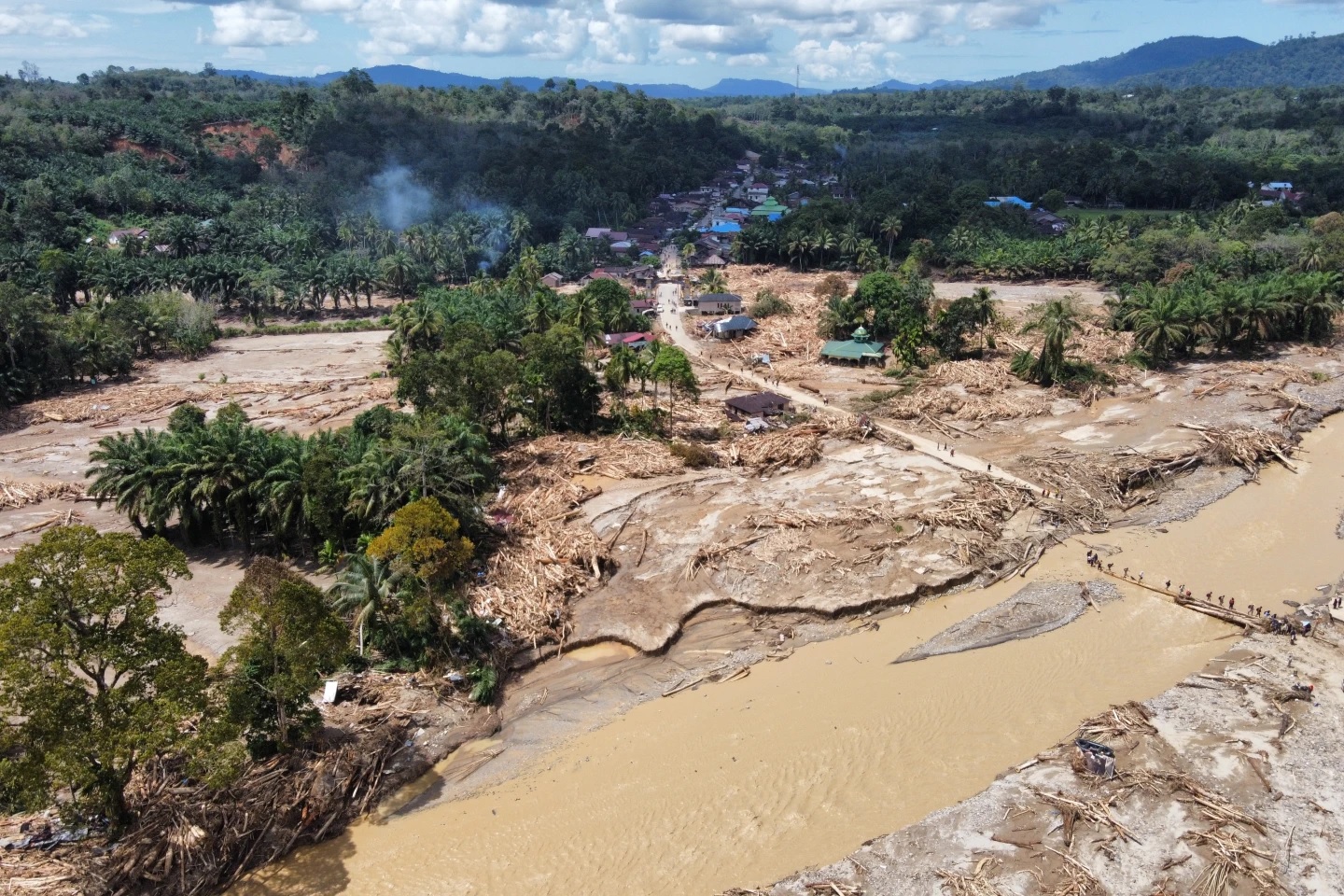
Southeast Asia is closing out 2025 under water. Weeks of late-arriving storms and torrential rain have killed more than 1,400 people across Indonesia, Sri Lanka and Thailand, with over 1,000 still missing in floods and landslides that swept away entire villages. Survivors in Indonesia say bridges, roads and power lines were ripped out in hours, leaving remote communities cut off just as they needed help most. In Sri Lanka’s hardest-hit districts, families have gone days without safe drinking water, while makeshift shelters strain to cope with rising numbers of displaced people. Thailand’s government has faced rare public criticism after its prime minister acknowledged serious shortcomings in early warnings and relief coordination.

Across the region, officials are struggling to move from crisis to recovery. Malaysia is still counting the damage from one of its worst flood events in years, which killed several people and forced thousands into temporary camps. Vietnam and the Philippines, meanwhile, have endured a full year of overlapping typhoons, flash floods and landslides, pushing local authorities to the edge of their capacity. Economists are starting to tally the losses: in Vietnam alone, the bill for damaged roads, farmland and housing is already estimated in the billions of dollars, while Thailand’s agriculture ministry reports heavy hits to rice and fruit harvests that will ripple through export markets. For many rural families, the floods have wiped out both homes and livelihoods in a single season, deepening existing inequalities.

Cars and houses are submerged in floodwaters in Songkhla province, southern Thailand, on Nov. 26, 2025. (AP Photo/Arnun Chonmahatrakool, File)

Scientists see climate crisis hitting Asia twice as hard

Climate scientists say the devastation is not a freak year but a preview of a harsher climate era that has already begun. Atmospheric levels of heat-trapping carbon dioxide rose by a record amount in 2024, “turbocharging” the global climate system and priming oceans and atmosphere for more extreme events, according to UN meteorological assessments. Asia is warming almost twice as fast as the global average, leaving its coastlines, river deltas and mountain slopes especially vulnerable to heavier downpours and rising seas. Warmer ocean waters are feeding storms with more energy and moisture, while higher sea levels amplify storm surges that push further inland than before, even when winds are not at their strongest.

Regional weather patterns are also shifting. Climate experts point to the lingering influence of El Niño and unusually warm Indian and Pacific Ocean waters, which can extend the typhoon season and bring powerful storms later in the year, when many communities expect a respite. That means storms can form faster and arrive with less warning, giving disaster agencies less time to evacuate exposed populations. Analysts at regional disaster-preparedness centers argue that many governments still focus on responding after disasters rather than investing upfront in flood defenses, resilient housing and early-warning systems that reach poor and marginalized communities. They warn that future disasters could offer even less lead time for evacuations.

Men swim despite strong waves due to Typhoon Fung-wong along a coastal village on Nov. 10, 2025, in Navotas, Philippines. (AP Photo/Aaron Favila, File)

The social impact is starkest among those with the fewest resources. In Sri Lanka, rights groups report that plantation workers and hill-country villagers living in landslide-prone zones have again borne the brunt of losses, echoing the pattern seen during the 2004 Indian Ocean tsunami. In Indonesia, community leaders say villagers without formal land titles may struggle to access compensation or relocation support, even when their homes have been destroyed. Development advocates argue that international climate finance is still falling far short of what is needed for adaptation, despite new pledges at global climate summits to scale up funding this decade. For Southeast Asia, they say, the choice is becoming clear: invest heavily now to live with a more dangerous climate, or face recurring disasters that erase years of development gains in a matter of days.


People watch rough waves caused by Typhoon Kalmaegi in Khanh Hoa, Vietnam, on Nov. 6, 2025. (AP Photo/Hau Dinh, File)


People wade through floodwaters in Songkhla province, southern Thailand, on Nov. 27, 2025. (AP Photo/Sarot Meksophawannakul, File)


08:56:59 pm, Wednesday, 3 December 2025

Deadly Asian floods show the new face of climate risk

08:56:59 pm, Wednesday, 3 December 2025

Extreme late-season storms push Southeast Asia beyond its limits

Southeast Asia is closing out 2025 under water. Weeks of late-arriving storms and torrential rain have killed more than 1,400 people across Indonesia, Sri Lanka and Thailand, with over 1,000 still missing in floods and landslides that swept away entire villages. Survivors in Indonesia say bridges, roads and power lines were ripped out in hours, leaving remote communities cut off just as they needed help most. In Sri Lanka’s hardest-hit districts, families have gone days without safe drinking water, while makeshift shelters strain to cope with rising numbers of displaced people. Thailand’s government has faced rare public criticism after its prime minister acknowledged serious shortcomings in early warnings and relief coordination.

Across the region, officials are struggling to move from crisis to recovery. Malaysia is still counting the damage from one of its worst flood events in years, which killed several people and forced thousands into temporary camps. Vietnam and the Philippines, meanwhile, have endured a full year of overlapping typhoons, flash floods and landslides, pushing local authorities to the edge of their capacity. Economists are starting to tally the losses: in Vietnam alone, the bill for damaged roads, farmland and housing is already estimated in the billions of dollars, while Thailand’s agriculture ministry reports heavy hits to rice and fruit harvests that will ripple through export markets. For many rural families, the floods have wiped out both homes and livelihoods in a single season, deepening existing inequalities.

Cars and houses are submerged in floodwaters in Songkhla province, southern Thailand, on Nov. 26, 2025. (AP Photo/Arnun Chonmahatrakool, File)

Scientists see climate crisis hitting Asia twice as hard

Climate scientists say the devastation is not a freak year but a preview of a harsher climate era that has already begun. Atmospheric levels of heat-trapping carbon dioxide rose by a record amount in 2024, “turbocharging” the global climate system and priming oceans and atmosphere for more extreme events, according to UN meteorological assessments. Asia is warming almost twice as fast as the global average, leaving its coastlines, river deltas and mountain slopes especially vulnerable to heavier downpours and rising seas. Warmer ocean waters are feeding storms with more energy and moisture, while higher sea levels amplify storm surges that push further inland than before, even when winds are not at their strongest.

Regional weather patterns are also shifting. Climate experts point to the lingering influence of El Niño and unusually warm Indian and Pacific Ocean waters, which can extend the typhoon season and bring powerful storms later in the year, when many communities expect a respite. That means storms can form faster and arrive with less warning, giving disaster agencies less time to evacuate exposed populations. Analysts at regional disaster-preparedness centers argue that many governments still focus on responding after disasters rather than investing upfront in flood defenses, resilient housing and early-warning systems that reach poor and marginalized communities. They warn that future disasters could offer even less lead time for evacuations.

Men swim despite strong waves due to Typhoon Fung-wong along a coastal village on Nov. 10, 2025, in Navotas, Philippines. (AP Photo/Aaron Favila, File)

The social impact is starkest among those with the fewest resources. In Sri Lanka, rights groups report that plantation workers and hill-country villagers living in landslide-prone zones have again borne the brunt of losses, echoing the pattern seen during the 2004 Indian Ocean tsunami. In Indonesia, community leaders say villagers without formal land titles may struggle to access compensation or relocation support, even when their homes have been destroyed. Development advocates argue that international climate finance is still falling far short of what is needed for adaptation, despite new pledges at global climate summits to scale up funding this decade. For Southeast Asia, they say, the choice is becoming clear: invest heavily now to live with a more dangerous climate, or face recurring disasters that erase years of development gains in a matter of days.

People watch rough waves caused by Typhoon Kalmaegi in Khanh Hoa, Vietnam, on Nov. 6, 2025. (AP Photo/Hau Dinh, File)


People wade through floodwaters in Songkhla province, southern Thailand, on Nov. 27, 2025. (AP Photo/Sarot Meksophawannakul, File)