
Shooting of Hadi Raises Questions Over the Election

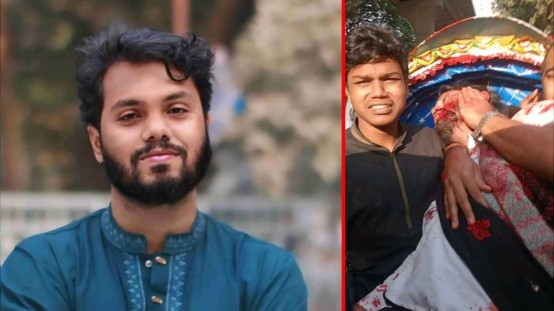
The daylight shooting of Sharif Osman Hadi, a probable candidate in the Dhaka-8 constituency, has once again raised serious questions about security and credibility in the country’s electoral politics. Coming immediately after the announcement of the election schedule, the attack has created deep uncertainty over candidates’ safety, voter participation, and the overall election environment.
Many believe the attack, which took place in a busy area of Dhaka, was not aimed at just one politician but has exposed broader weaknesses in election-time security arrangements. In political circles, it is being viewed as a direct blow to the democratic process. Both ruling and opposition camps have condemned the incident, calling for a swift investigation and exemplary punishment for those responsible.
Statements from political leaders reflect both anger and anxiety. They warn that if such violence does not remain an isolated incident and instead becomes a pattern, the election environment will be severely damaged. Fear among voters could increase, spontaneous participation may decline, and ultimately, the credibility of the election itself could be called into question.
The Chief Adviser has also expressed concern over the incident, emphasizing the need to ensure the safe movement of candidates and public security. While the administration has assured quick and effective measures to control the situation, political circles remain skeptical about how visible and effective those steps will be in practice.
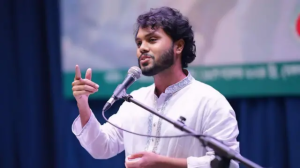
Opposition political forces have described the attack as an “anti-democratic conspiracy.” They argue that without ensuring public safety, even holding an election would make it challenging to preserve its legitimacy. However, they are not directly calling for postponing the election in response to a single incident; instead, they emphasize the need for stronger security.
Anxiety is also evident among students and civil society. They argue that if the threat of violence overshadows the electoral atmosphere, fear among voters is inevitable, thereby increasing the risk of low voter turnout. In such circumstances, organizing a credible election will be difficult without swift, transparent, and impartial action from the Election Commission and law enforcement agencies.
According to analysts, the most critical question now is whether this attack was an isolated incident or a sign of a larger plan. If violence targeting candidates increases, the entire electoral process—from polling centers to overall management—will be at risk. An incident like this, occurring so soon after the schedule announcement, has further intensified political tensions.
The government says it is strengthening investigations to uncover the motive behind the attack and will immediately enhance security measures. It has also pledged to ensure candidates’ safety so they can campaign freely. However, to restore political confidence, assurances alone are not enough; visible and credible action is now essential.
Overall, the question is increasingly clear: how acceptable is an election without guarantees of security and fairness? Yet postponing the election also carries the risk of deepening political deadlock. In the current context, the greatest challenge is to ensure a safe, transparent, and credible electoral environment that includes the participation of all stakeholders. Otherwise, this crisis could ultimately weaken the very foundations of democracy.
#HadiAttack #ElectionSecurity #BangladeshPolitics #Democracy #FreeAndFairElection