9:26 pm, Friday, 26 December 2025

Dipu Das’s Death and Poverty Alleviation


Swadesh Roy

I watched Dipu Das’s death on that night, thanks to social media. I cannot say for certain whether I felt pain. Because not only Hindus in Bangladesh, but a large segment of the country’s population lives in constant fear of this plague, every single moment.

Just two days before Dipu Das’s death, a foreigner spoke to me at length about various ways to rescue Bangladesh’s Hindus and asked for my opinion. I quoted to him a few lines from Rabindranath Tagore’s short story Ekaratri:
“One holiday I went to meet Mr. Ram Lochan. I no longer remember what we were discussing; perhaps it was about the sorry state of India. It was not that he was particularly distressed or despondent about the matter, but the subject was such that, puffing on tobacco, one could pour out an hour or an hour and a half of unbroken hobby-horse lamentation about it.”

The gentleman looked a little embarrassed. But this experience of listening to hobby-horse lamentations is not something we have encountered only during this plague. One could say it has been our lifelong companion. It does not spare even literary gatherings.

For instance, in earlier days, writers centered in Kolkata would often come to Bangladesh. They were lavishly entertained. They were served good whisky, along with all kinds of fish. At that time, Bangladesh did not lack fish. In the middle of such late-night gatherings, when everyone would grow a little drowsy, a new poet or writer, after hearing my name while being introduced, would sit a bit closer. Then, very softly, he would ask, “So tell me, how are things for you here?”
I could tell that the hobby-horse lamentation was about to begin. So I would quickly say, “Dada, shall I pour you another peg? And please taste this fish—it’s piyali from the Meghna. It may be small, but its fried taste is different. You won’t find it anywhere else.”

Just as we have had to endure these hobby-horse laments and many utopian ideas about changing our fate, we have also had to endure—smilingly—the rape, murder, and looting of women in Bhola, Bagerhat, and Ramshil in 2001, above all the face of Purnima Shil.

At that time, Wahidul Haque and Dr. Anisuzzaman were there. Many others were there too. But now, if I mention names, their troubles will only increase.

Besides, that youth and vigor are long gone. Now, at least to some extent, I understand politics and state-level business.

So, harsh as it may sound, even after seeing Dipu Das’s death, I did not dare to feel pain. Poet Nirmalendu Goon posted a four-line note on his Facebook. I do not have the courage to mention the first two lines. With the last two lines, it seems most Hindus in Bangladesh would agree: “Do not take us along as second-class citizens—just let us live a little.”

Not only my friends, but those whom one would call one’s own—the entire milieu in which I grew up and still move—are all from the majority community. They are secular. Many of them felt awkward even the next morning when speaking to me about Dipu Das’s death. That awkwardness still allows me to hope that this “plague” in Bangladesh will pass.
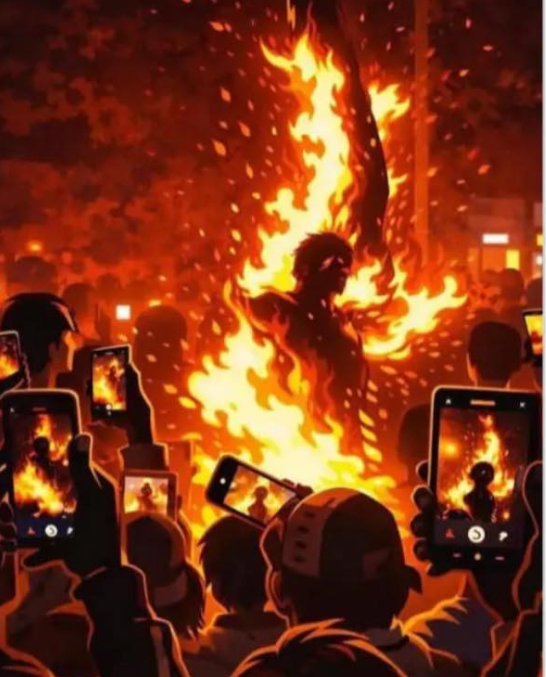
Because it is true that Hindus are steadily decreasing in Bangladesh. But after independence, the state has allowed persecution of Hindus twice. The first time was after the Awami League’s defeat in the 2001 election. And the second time has been since the fall of Sheikh Hasina’s government on 5 August 2024.

The persecution of Hindus in 2001 lasted about three months. Now, however, a full-blown plague is underway for Hindus. And when there is a plague, what is meant to happen will happen.

What politics took place where, who issued what statement—none of that helps the thousands of Dipu Dases.

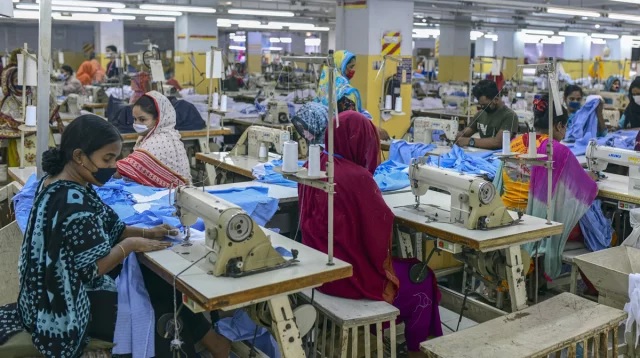
So I will speak plainly. The sight of a poor garment worker like Dipu Das being beaten, tied to a tree, and burned alive did make me heartless. Instead, it confronted me with a harsh reality. It occurred to me that the way Dipu Das was burned is, in fact, part of poverty alleviation. If they wished, Westerners could adopt this model too. True, they cremate bodies and bury them in the ground. But in societies where burning practices still exist, they could implement this—at a micro level. Any foundation or governor could adopt it as a new, innovative economic formula for poverty alleviation at the time of death.

Because if, after killing poor Dipu Das, they had simply abandoned the body, his elderly father and helpless widow would have had to spend at least five thousand taka to cremate him. Instead, by tying him to a tree and burning him, they accomplished that five-thousand-taka poverty alleviation.

I say this knowing full well about the five-thousand-taka cost. Recently, the father of an acquaintance passed away. He told me that the fallen fascist government had installed an electric crematorium in their area. As a result, now for five thousand taka, a body can be cremated. Had they bought firewood, it would have cost at least twenty thousand taka. So at least five thousand taka was saved for that family. And it is neither an interest-bearing amount nor does it require installments. It has happened on a cooperative basis, or the state has been brought to such a refined point that it occurs through a natural process.

Hindu man killed in Bangladesh: Dipu Das's wife questions about their future with daughter of one

So, in truth, for several days after Dipu Das’s death, I kept thinking—let the Dipu Dases die; there is no need to speak about testing this poverty-alleviation formula.

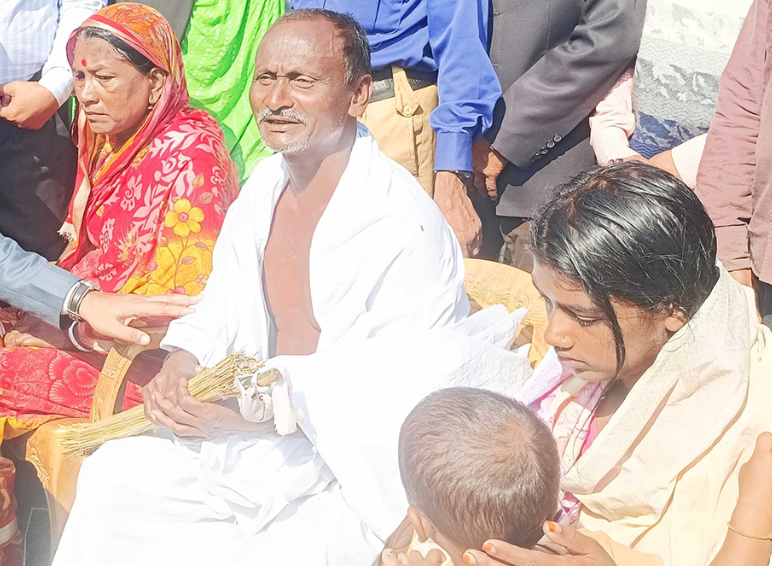
But I do not know who made the video of Dipu Das’s grief-stricken father in white clothes. The helpless father of a brutally murdered son sits on the ground, screaming and crying, saying, “My son, you used to wear this cloth, father—that is what I am wearing now…”

I, too, am familiar with that cloth, along with millions of others. Like them, after my father and mother died, I wore it. Just two years ago, commemorating the deaths of my parents, I stepped into the Ganges at Benaras wearing that cloth. It felt like something sacred. I did not know that this cloth could be so heavy—so heavy that its burden cannot be borne. I knew that a son’s corpse on a father’s shoulder is the heaviest thing—but the white cloth on Dipu Das’s father’s body revealed how heavy a son’s funeral cloth is on a father’s body—and not in death by illness or accident. When a poor father’s son, doing ordinary work, becomes a victim of brutality simply because he is a minority—who can measure that weight?

And yet, there is no remedy for this—rather, in the games of the merchant’s yardstick and the king’s scepter, how many more times fathers like Ravi Das, fathers of Dipu Dases, will have to wear this cloth—no one knows.

Author: Journalist, editor, recipient of the highest state award; Editor, Sarakhon; The Present World.


 

07:36:34 pm, Friday, 26 December 2025

Dipu Das’s Death and Poverty Alleviation

07:36:34 pm, Friday, 26 December 2025

I watched Dipu Das’s death on that night, thanks to social media. I cannot say for certain whether I felt pain. Because not only Hindus in Bangladesh, but a large segment of the country’s population lives in constant fear of this plague, every single moment.

Just two days before Dipu Das’s death, a foreigner spoke to me at length about various ways to rescue Bangladesh’s Hindus and asked for my opinion. I quoted to him a few lines from Rabindranath Tagore’s short story Ekaratri:
“One holiday I went to meet Mr. Ram Lochan. I no longer remember what we were discussing; perhaps it was about the sorry state of India. It was not that he was particularly distressed or despondent about the matter, but the subject was such that, puffing on tobacco, one could pour out an hour or an hour and a half of unbroken hobby-horse lamentation about it.”

The gentleman looked a little embarrassed. But this experience of listening to hobby-horse lamentations is not something we have encountered only during this plague. One could say it has been our lifelong companion. It does not spare even literary gatherings.

For instance, in earlier days, writers centered in Kolkata would often come to Bangladesh. They were lavishly entertained. They were served good whisky, along with all kinds of fish. At that time, Bangladesh did not lack fish. In the middle of such late-night gatherings, when everyone would grow a little drowsy, a new poet or writer, after hearing my name while being introduced, would sit a bit closer. Then, very softly, he would ask, “So tell me, how are things for you here?”

I could tell that the hobby-horse lamentation was about to begin. So I would quickly say, “Dada, shall I pour you another peg? And please taste this fish—it’s piyali from the Meghna. It may be small, but its fried taste is different. You won’t find it anywhere else.”

Just as we have had to endure these hobby-horse laments and many utopian ideas about changing our fate, we have also had to endure—smilingly—the rape, murder, and looting of women in Bhola, Bagerhat, and Ramshil in 2001, above all the face of Purnima Shil.

At that time, Wahidul Haque and Dr. Anisuzzaman were there. Many others were there too. But now, if I mention names, their troubles will only increase.

Besides, that youth and vigor are long gone. Now, at least to some extent, I understand politics and state-level business.

So, harsh as it may sound, even after seeing Dipu Das’s death, I did not dare to feel pain. Poet Nirmalendu Goon posted a four-line note on his Facebook. I do not have the courage to mention the first two lines. With the last two lines, it seems most Hindus in Bangladesh would agree: “Do not take us along as second-class citizens—just let us live a little.”

Not only my friends, but those whom one would call one’s own—the entire milieu in which I grew up and still move—are all from the majority community. They are secular. Many of them felt awkward even the next morning when speaking to me about Dipu Das’s death. That awkwardness still allows me to hope that this “plague” in Bangladesh will pass.

Because it is true that Hindus are steadily decreasing in Bangladesh. But after independence, the state has allowed persecution of Hindus twice. The first time was after the Awami League’s defeat in the 2001 election. And the second time has been since the fall of Sheikh Hasina’s government on 5 August 2024.

The persecution of Hindus in 2001 lasted about three months. Now, however, a full-blown plague is underway for Hindus. And when there is a plague, what is meant to happen will happen.

What politics took place where, who issued what statement—none of that helps the thousands of Dipu Dases.

So I will speak plainly. The sight of a poor garment worker like Dipu Das being beaten, tied to a tree, and burned alive did make me heartless. Instead, it confronted me with a harsh reality. It occurred to me that the way Dipu Das was burned is, in fact, part of poverty alleviation. If they wished, Westerners could adopt this model too. True, they cremate bodies and bury them in the ground. But in societies where burning practices still exist, they could implement this—at a micro level. Any foundation or governor could adopt it as a new, innovative economic formula for poverty alleviation at the time of death.

Because if, after killing poor Dipu Das, they had simply abandoned the body, his elderly father and helpless widow would have had to spend at least five thousand taka to cremate him. Instead, by tying him to a tree and burning him, they accomplished that five-thousand-taka poverty alleviation.

I say this knowing full well about the five-thousand-taka cost. Recently, the father of an acquaintance passed away. He told me that the fallen fascist government had installed an electric crematorium in their area. As a result, now for five thousand taka, a body can be cremated. Had they bought firewood, it would have cost at least twenty thousand taka. So at least five thousand taka was saved for that family. And it is neither an interest-bearing amount nor does it require installments. It has happened on a cooperative basis, or the state has been brought to such a refined point that it occurs through a natural process.

Hindu man killed in Bangladesh: Dipu Das's wife questions about their future with daughter of one

So, in truth, for several days after Dipu Das’s death, I kept thinking—let the Dipu Dases die; there is no need to speak about testing this poverty-alleviation formula.

But I do not know who made the video of Dipu Das’s grief-stricken father in white clothes. The helpless father of a brutally murdered son sits on the ground, screaming and crying, saying, “My son, you used to wear this cloth, father—that is what I am wearing now…”

I, too, am familiar with that cloth, along with millions of others. Like them, after my father and mother died, I wore it. Just two years ago, commemorating the deaths of my parents, I stepped into the Ganges at Benaras wearing that cloth. It felt like something sacred. I did not know that this cloth could be so heavy—so heavy that its burden cannot be borne. I knew that a son’s corpse on a father’s shoulder is the heaviest thing—but the white cloth on Dipu Das’s father’s body revealed how heavy a son’s funeral cloth is on a father’s body—and not in death by illness or accident. When a poor father’s son, doing ordinary work, becomes a victim of brutality simply because he is a minority—who can measure that weight?

And yet, there is no remedy for this—rather, in the games of the merchant’s yardstick and the king’s scepter, how many more times fathers like Ravi Das, fathers of Dipu Dases, will have to wear this cloth—no one knows.

Author: Journalist, editor, recipient of the highest state award; Editor, Sarakhon; The Present World.