2:35 am, Thursday, 26 March 2026

Missile Strike Hits U.S. Embassy Compound in Baghdad Amid Rising Regional Tensions

Sarakhon Report

Embassy compound targeted overnight
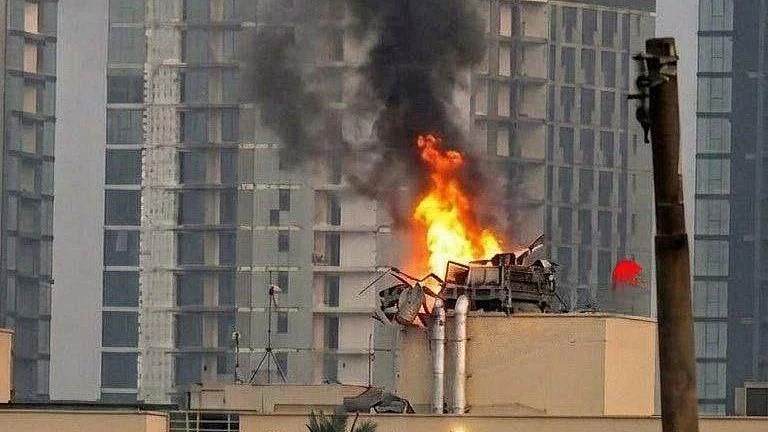
Missile fire struck part of the U.S. Embassy compound in Baghdad early Saturday, sending plumes of smoke into the sky above the heavily fortified diplomatic zone. Iraqi security officials said the strike hit a helipad inside the complex, though the extent of the damage was not immediately clear. Authorities confirmed that emergency responders were deployed rapidly after the explosion.

The embassy is located inside Baghdad’s Green Zone, a tightly guarded district housing government buildings and foreign diplomatic missions. Security officials said the missile attack occurred before dawn, when the area is typically quieter but still monitored by Iraqi and coalition forces. Images circulating from the site showed smoke rising from within the compound, though access to the area remained restricted.

Officials have not confirmed casualties. Security sources said investigators are working to determine whether the missile was launched from inside Baghdad or from nearby militia-controlled areas. The attack comes amid heightened regional tensions and an escalation of military exchanges across the Middle East.

Growing regional instability
The strike on the embassy reflects the increasingly volatile security environment following recent U.S. and Israeli military operations against targets in Iran. These operations triggered protests and retaliatory threats across the region, with several militia groups warning that American facilities could become targets.

Iraq has long served as a focal point for tensions between Washington and Iran-aligned groups. Several powerful militias operate within the country, some of which have previously launched rockets or drones toward U.S. installations. Iraqi authorities have struggled to balance relations with both Washington and Tehran while maintaining domestic stability.

Diplomatic sites in Baghdad have been targeted before, particularly during periods of heightened geopolitical tension. Previous rocket attacks on the Green Zone have forced temporary lockdowns and emergency evacuations. Security experts note that even limited strikes on diplomatic compounds can trigger broader diplomatic repercussions.

The Iraqi government condemned the attack and pledged to investigate the incident. Officials emphasized that protecting diplomatic missions is a legal obligation under international law and vowed to strengthen security around the Green Zone.

Regional analysts say the incident illustrates how broader geopolitical confrontations can spill into local conflicts. As tensions continue across the Middle East, foreign diplomatic missions in Iraq remain potential flashpoints for symbolic or retaliatory attacks.

04:24:40 pm, Saturday, 14 March 2026

Missile Strike Hits U.S. Embassy Compound in Baghdad Amid Rising Regional Tensions

04:24:40 pm, Saturday, 14 March 2026

Embassy compound targeted overnight
Missile fire struck part of the U.S. Embassy compound in Baghdad early Saturday, sending plumes of smoke into the sky above the heavily fortified diplomatic zone. Iraqi security officials said the strike hit a helipad inside the complex, though the extent of the damage was not immediately clear. Authorities confirmed that emergency responders were deployed rapidly after the explosion.

The embassy is located inside Baghdad’s Green Zone, a tightly guarded district housing government buildings and foreign diplomatic missions. Security officials said the missile attack occurred before dawn, when the area is typically quieter but still monitored by Iraqi and coalition forces. Images circulating from the site showed smoke rising from within the compound, though access to the area remained restricted.

Officials have not confirmed casualties. Security sources said investigators are working to determine whether the missile was launched from inside Baghdad or from nearby militia-controlled areas. The attack comes amid heightened regional tensions and an escalation of military exchanges across the Middle East.

Growing regional instability
The strike on the embassy reflects the increasingly volatile security environment following recent U.S. and Israeli military operations against targets in Iran. These operations triggered protests and retaliatory threats across the region, with several militia groups warning that American facilities could become targets.

Iraq has long served as a focal point for tensions between Washington and Iran-aligned groups. Several powerful militias operate within the country, some of which have previously launched rockets or drones toward U.S. installations. Iraqi authorities have struggled to balance relations with both Washington and Tehran while maintaining domestic stability.

Diplomatic sites in Baghdad have been targeted before, particularly during periods of heightened geopolitical tension. Previous rocket attacks on the Green Zone have forced temporary lockdowns and emergency evacuations. Security experts note that even limited strikes on diplomatic compounds can trigger broader diplomatic repercussions.

The Iraqi government condemned the attack and pledged to investigate the incident. Officials emphasized that protecting diplomatic missions is a legal obligation under international law and vowed to strengthen security around the Green Zone.

Regional analysts say the incident illustrates how broader geopolitical confrontations can spill into local conflicts. As tensions continue across the Middle East, foreign diplomatic missions in Iraq remain potential flashpoints for symbolic or retaliatory attacks.