6:25 pm, Monday, 13 April 2026

Bangabandhu and the Birth of a Modern Secular State in the Subcontinent

Swadesh Roy

In contemporary understanding, a Brahmin is called “twice-born” because he is born once from his mother’s womb, and a second birth is assumed through the rite of initiation (upanayan). However, in the historical reality of Indian civilization, the term “twice-born” carried a different meaning: a person is first born as an ordinary human being, and then born again through the attainment of knowledge, through Brahmatva. In other words, by becoming a possessor of knowledge, he becomes a Brahmin. This second birth was not a matter of religion, caste, or lineage, it was a matter of knowledge.

In modern civilization, however, we now see that some individuals transform themselves multiple times within a single lifetime through knowledge. Among them are those who reshape thought, true game changers, some in statecraft, others in social philosophy.

Though the Bengali nation may be considered unfortunate in many ways, it has nevertheless produced figures such as Rammohan RoyIshwar Chandra VidyasagarRabindranath TagoreChittaranjan DasSubhas Bose, and Sheikh Mujibur Rahman, all of them game changers in their own right.

Rammohan worked on language, society, and religious reform. Vidyasagar’s primary field was language; he is the true game changer of the Bengali language. He transformed it from a stagnant well into a flowing river, allowing it to move toward the ocean. Rabindranath, in turn, not only expanded Bengali into an ocean, but also created a vast ocean of thought, what may be called a “Rabindra-ocean”, through his life’s work, reshaping the Bengali mind. His intellectual trajectory shifted repeatedly; through his own thinking and knowledge, he was reborn again and again.
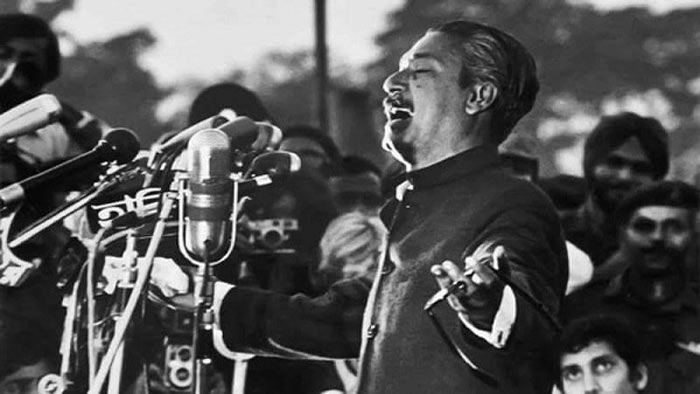
After RammohanVidyasagar, and Rabindranath, the remaining three are political figures. Chittaranjan DasSubhas Bose, and Sheikh Mujibur Rahman are game changers in politics because, among those who shaped modern state systems in the Indian subcontinent, these three stand at the forefront.

The core essence of modern state thought is the creation of a secular, law-based state, one that works for the welfare of people in this world. The state remains confined to worldly affairs and is governed by law.

The idea of a law-based state began in Babylonian civilization. In Indian civilization, Kautilya significantly advanced state thought. What began in Babylon was law shaped by individual will, where the individual dominates lawmaking; such a framework cannot produce a modern state. On the other hand, Kautilya’s political philosophy and strategies were designed to protect the state and the ruler, not to transform the lives of ordinary people. There was no participation of the people in the making of laws.

In the Indian subcontinent, the struggle for independence from British rule gave birth to a modern conception of the state. In Western political thought, through various ideologies and pathways, emerged the idea of a modern state, secular and oriented toward human welfare. Many Indian freedom fighters adopted this idea, coming from diverse religious backgrounds. Among them, within the Bengali nation, Deshbandhu Chittaranjan Das and Netaji Subhas Bose stood at the forefront of this modern state thinking. Their contributions remain deeply influential in shaping the idea of a modern state. However, both passed away before independence was achieved. As a result, India failed to emerge as a unified modern state, not for secular reasons, but due to religious divisions. That history is well known.

Consequently, in two regions shaped by religious conflict, not only mass killings but also deep social divisions, mistrust, forced migration, and the violation of women took place, events reminiscent of a barbaric age. All of this occurred in the name of religion.
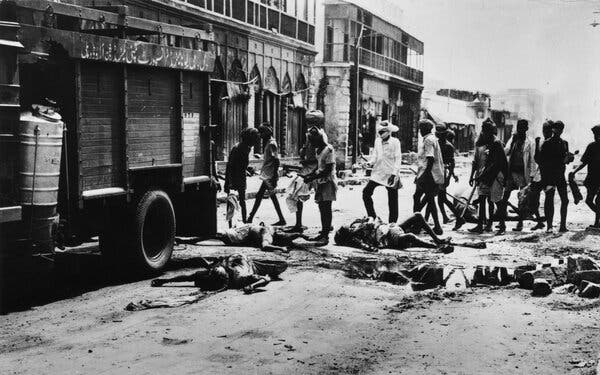
During this period, Sheikh Mujibur Rahman was also a young activist in the Pakistan movement, which emerged from religious nationalism as part of India.

Yet within a year of the 1947 partition and the creation of Pakistan, it became evident that Sheikh Mujibur Rahman had moved away from religious nationalism and emerged as a leading figure in a language-based nationalist movement. Through a transformation of his thought and knowledge, he elevated himself to a new stage of modern state thinking. Language-based nationalism can, in some ways, be as rigid as religious nationalism. The difference, however, is that language is a worldly phenomenon, it cannot be divided by religion. People across regions who share a language may belong to different religions, yet they embrace that language as their own.

Moreover, immediately after partition, a profound transformation occurred among a section of the youth across the subcontinent. One of the main reasons was the grotesque reality witnessed during partition in the name of religion; many lives were deeply affected. However, these young people could not express or act upon this psychological transformation in all regions.

In East Bengal, centered around Dhaka as the provincial capital, this transformation was not limited to the movement to establish Bengali as a state language. Many other elements were involved, which future research will reveal. Broadly speaking, the liberal environment and education of Dhaka University gave rise to a modern class of youth. Though they had participated in the Pakistan movement, a significant part of their intellectual formation was shaped by modern thought and statecraft.

Before partition, a section of Bengali political leaders, from both the Bengal Congress and the Muslim League, had attempted to create a united Greater Bengal outside both India and Pakistan. This idea of a state based on language and culture, transcending religion, also involved Sheikh Mujibur Rahman and other young Muslim League activists centered in Dhaka and Calcutta. As a result, even before Pakistan was created, they had developed a distinct intellectual framework rooted in Bengali language and culture.

Thus, the language-based nationalist movement quickly evolved into one rooted in “Bengali language and culture.” Culture, in any region, develops over thousands of years. Just as stone becomes resilient over time, culture too becomes tolerant through its long formation. Therefore, a somewhat rigid linguistic nationalism, when absorbed into culture, becomes flexible and liberal. That is why Bengali nationalism is inherently liberal, where people of all religions, castes, and communities can easily unite.
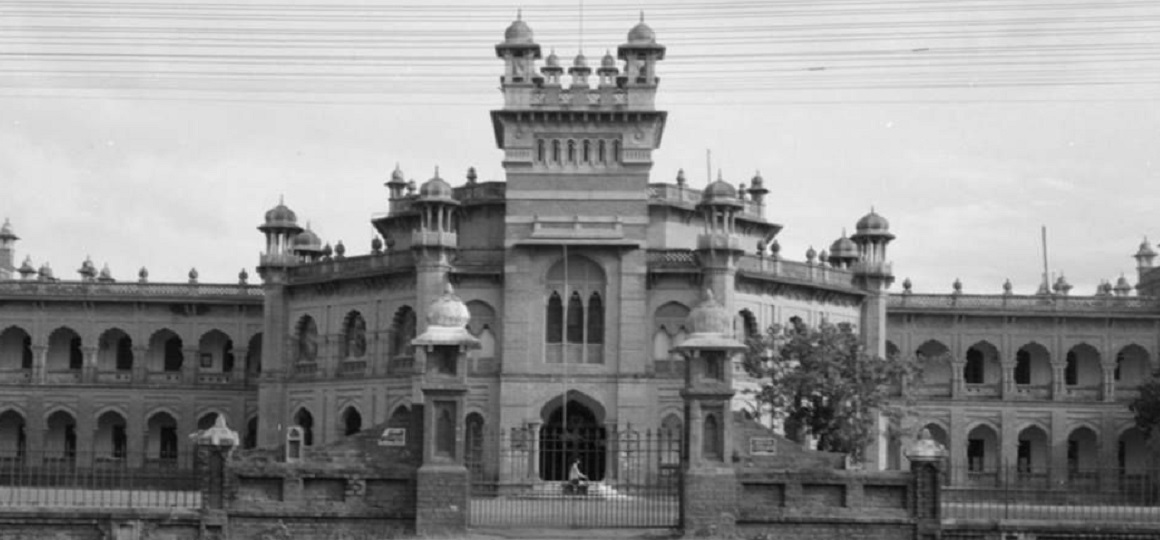
After the Pakistan movement, Sheikh Mujibur Rahman repeatedly rebirthed himself through his unwavering commitment to this liberal Bengali nationalism.

As he grew from youth to adulthood, he subjected his life’s struggle to such hardship that his personal journey itself became a central force in shaping Bengali nationalism. Through this process, he gradually became the focal point for modern-minded youth from Dhaka University, East Bengal, and even West Bengal.

At the same time, like certain global game changers, his life reflected a form of disciplined collective organization. Its core objective was to unite individuals grounded in honest and secular thought. Ignoring the fear of imprisonment and death, sacrificing youth, comfort, and worldly pleasures, he created what may be called a “sun of courage,” and its rays became the driving force behind his powerful organization.

For this reason, Sheikh Mujibur Rahman as an organizer stands as a unique example in world political history. States have often been created through armed groups. But to create a state by uniting an entire nation or all communities within a territory requires a strong ideological organization, like the backbone of the human body, upon which the nation can stand.

At the same time, in all societies, most people remain occupied with the necessities of daily life. Bringing them under a secular, modern political framework is an immensely difficult task. Even the Indian National Congress could not fully unite the masses under purely secular ideals. Later, Mahatma Gandhi incorporated spiritual elements, adopting the appearance and ethos of religious ascetics, to bring ordinary people into the movement.

In this context, in the subcontinent’s history of state formation, Bangabandhu Sheikh Mujibur Rahman stands as the only leader who united people through secular means, through language- and culture-based nationalism, and through economic programs aimed at improving people’s lives. He organized people around these secular ideas and objectives.

To analyze every moment of his organizational and state-building journey would require volumes of books, far beyond the scope of a single article.
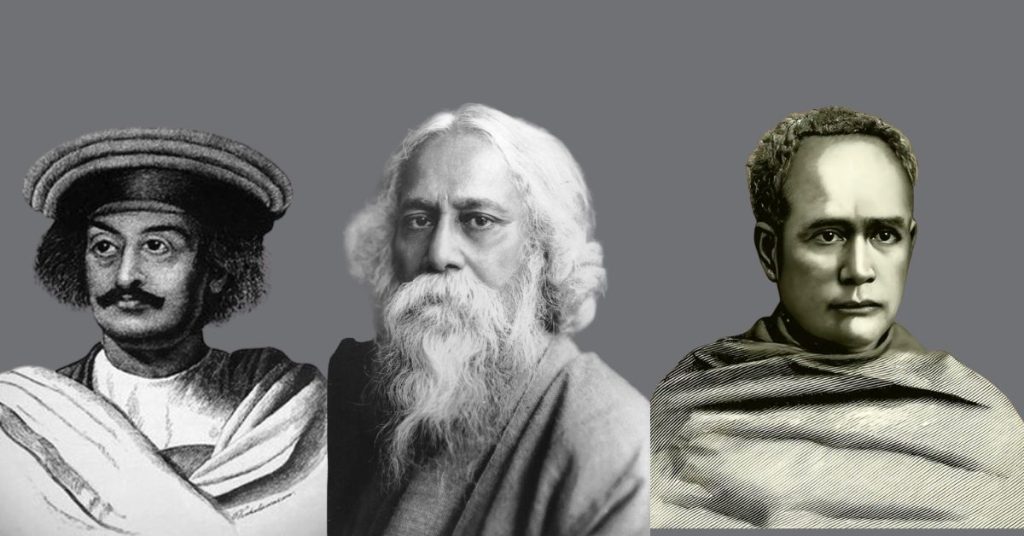
In brief, it may be said: just as Vidyasagar directed the Bengali language toward the ocean, and Rabindranath created an ocean of human thought, so too Bangabandhu Sheikh Mujibur Rahman has left behind a radiant path for the creation of a modern secular state.

On this path, like the Brahmin, he did not merely achieve a second birth through knowledge. Rather, like Rabindranath, one of the great thinkers of the modern world, he was reborn repeatedly by reshaping the course of his work. Thus, although a child named Sheikh Mujib was born in this land on 17 March 1920, this man was reborn again and again through his own work.

For this reason, whether his birthday is celebrated or not is of little consequence. Celebrating it adds nothing. Rather, his birthday will truly be observed when more Bengalis, like him, transform themselves throughout their lives and take new births on the path of modernity.

Today, when the modern secular Bangladesh he created appears to be drifting toward spiritualism, if Bengalis can, like him, engage in the struggle to transform themselves and the nation, that will be the true celebration of his 106th birth anniversary.

He has crowned Bengalis with the honor of self-transformation. Because in this subcontinent, Bengalis are the only nation who, under his leadership, established a modern secular state. Therefore, this struggle, this discipline, will continue indefinitely. At its core will remain the journey toward building a modern secular state beyond religion, caste, and tribe. To depart from this path is to fall into darkness.

Author: Recipient of the highest state award; journalist; editor, Sarakhon; The Present World.



10:03:25 pm, Tuesday, 17 March 2026

Bangabandhu and the Birth of a Modern Secular State in the Subcontinent

10:03:25 pm, Tuesday, 17 March 2026

In contemporary understanding, a Brahmin is called “twice-born” because he is born once from his mother’s womb, and a second birth is assumed through the rite of initiation (upanayan). However, in the historical reality of Indian civilization, the term “twice-born” carried a different meaning: a person is first born as an ordinary human being, and then born again through the attainment of knowledge, through Brahmatva. In other words, by becoming a possessor of knowledge, he becomes a Brahmin. This second birth was not a matter of religion, caste, or lineage, it was a matter of knowledge.

In modern civilization, however, we now see that some individuals transform themselves multiple times within a single lifetime through knowledge. Among them are those who reshape thought, true game changers, some in statecraft, others in social philosophy.

Though the Bengali nation may be considered unfortunate in many ways, it has nevertheless produced figures such as Rammohan RoyIshwar Chandra VidyasagarRabindranath TagoreChittaranjan DasSubhas Bose, and Sheikh Mujibur Rahman, all of them game changers in their own right.

Rammohan worked on language, society, and religious reform. Vidyasagar’s primary field was language; he is the true game changer of the Bengali language. He transformed it from a stagnant well into a flowing river, allowing it to move toward the ocean. Rabindranath, in turn, not only expanded Bengali into an ocean, but also created a vast ocean of thought, what may be called a “Rabindra-ocean”, through his life’s work, reshaping the Bengali mind. His intellectual trajectory shifted repeatedly; through his own thinking and knowledge, he was reborn again and again.

After RammohanVidyasagar, and Rabindranath, the remaining three are political figures. Chittaranjan DasSubhas Bose, and Sheikh Mujibur Rahman are game changers in politics because, among those who shaped modern state systems in the Indian subcontinent, these three stand at the forefront.

The core essence of modern state thought is the creation of a secular, law-based state, one that works for the welfare of people in this world. The state remains confined to worldly affairs and is governed by law.

The idea of a law-based state began in Babylonian civilization. In Indian civilization, Kautilya significantly advanced state thought. What began in Babylon was law shaped by individual will, where the individual dominates lawmaking; such a framework cannot produce a modern state. On the other hand, Kautilya’s political philosophy and strategies were designed to protect the state and the ruler, not to transform the lives of ordinary people. There was no participation of the people in the making of laws.

In the Indian subcontinent, the struggle for independence from British rule gave birth to a modern conception of the state. In Western political thought, through various ideologies and pathways, emerged the idea of a modern state, secular and oriented toward human welfare. Many Indian freedom fighters adopted this idea, coming from diverse religious backgrounds. Among them, within the Bengali nation, Deshbandhu Chittaranjan Das and Netaji Subhas Bose stood at the forefront of this modern state thinking. Their contributions remain deeply influential in shaping the idea of a modern state. However, both passed away before independence was achieved. As a result, India failed to emerge as a unified modern state, not for secular reasons, but due to religious divisions. That history is well known.

Consequently, in two regions shaped by religious conflict, not only mass killings but also deep social divisions, mistrust, forced migration, and the violation of women took place, events reminiscent of a barbaric age. All of this occurred in the name of religion.

During this period, Sheikh Mujibur Rahman was also a young activist in the Pakistan movement, which emerged from religious nationalism as part of India.

Yet within a year of the 1947 partition and the creation of Pakistan, it became evident that Sheikh Mujibur Rahman had moved away from religious nationalism and emerged as a leading figure in a language-based nationalist movement. Through a transformation of his thought and knowledge, he elevated himself to a new stage of modern state thinking. Language-based nationalism can, in some ways, be as rigid as religious nationalism. The difference, however, is that language is a worldly phenomenon, it cannot be divided by religion. People across regions who share a language may belong to different religions, yet they embrace that language as their own.

Moreover, immediately after partition, a profound transformation occurred among a section of the youth across the subcontinent. One of the main reasons was the grotesque reality witnessed during partition in the name of religion; many lives were deeply affected. However, these young people could not express or act upon this psychological transformation in all regions.

In East Bengal, centered around Dhaka as the provincial capital, this transformation was not limited to the movement to establish Bengali as a state language. Many other elements were involved, which future research will reveal. Broadly speaking, the liberal environment and education of Dhaka University gave rise to a modern class of youth. Though they had participated in the Pakistan movement, a significant part of their intellectual formation was shaped by modern thought and statecraft.

Before partition, a section of Bengali political leaders, from both the Bengal Congress and the Muslim League, had attempted to create a united Greater Bengal outside both India and Pakistan. This idea of a state based on language and culture, transcending religion, also involved Sheikh Mujibur Rahman and other young Muslim League activists centered in Dhaka and Calcutta. As a result, even before Pakistan was created, they had developed a distinct intellectual framework rooted in Bengali language and culture.

Thus, the language-based nationalist movement quickly evolved into one rooted in “Bengali language and culture.” Culture, in any region, develops over thousands of years. Just as stone becomes resilient over time, culture too becomes tolerant through its long formation. Therefore, a somewhat rigid linguistic nationalism, when absorbed into culture, becomes flexible and liberal. That is why Bengali nationalism is inherently liberal, where people of all religions, castes, and communities can easily unite.

After the Pakistan movement, Sheikh Mujibur Rahman repeatedly rebirthed himself through his unwavering commitment to this liberal Bengali nationalism.

As he grew from youth to adulthood, he subjected his life’s struggle to such hardship that his personal journey itself became a central force in shaping Bengali nationalism. Through this process, he gradually became the focal point for modern-minded youth from Dhaka University, East Bengal, and even West Bengal.

At the same time, like certain global game changers, his life reflected a form of disciplined collective organization. Its core objective was to unite individuals grounded in honest and secular thought. Ignoring the fear of imprisonment and death, sacrificing youth, comfort, and worldly pleasures, he created what may be called a “sun of courage,” and its rays became the driving force behind his powerful organization.

For this reason, Sheikh Mujibur Rahman as an organizer stands as a unique example in world political history. States have often been created through armed groups. But to create a state by uniting an entire nation or all communities within a territory requires a strong ideological organization, like the backbone of the human body, upon which the nation can stand.

At the same time, in all societies, most people remain occupied with the necessities of daily life. Bringing them under a secular, modern political framework is an immensely difficult task. Even the Indian National Congress could not fully unite the masses under purely secular ideals. Later, Mahatma Gandhi incorporated spiritual elements, adopting the appearance and ethos of religious ascetics, to bring ordinary people into the movement.

In this context, in the subcontinent’s history of state formation, Bangabandhu Sheikh Mujibur Rahman stands as the only leader who united people through secular means, through language- and culture-based nationalism, and through economic programs aimed at improving people’s lives. He organized people around these secular ideas and objectives.

To analyze every moment of his organizational and state-building journey would require volumes of books, far beyond the scope of a single article.

In brief, it may be said: just as Vidyasagar directed the Bengali language toward the ocean, and Rabindranath created an ocean of human thought, so too Bangabandhu Sheikh Mujibur Rahman has left behind a radiant path for the creation of a modern secular state.

On this path, like the Brahmin, he did not merely achieve a second birth through knowledge. Rather, like Rabindranath, one of the great thinkers of the modern world, he was reborn repeatedly by reshaping the course of his work. Thus, although a child named Sheikh Mujib was born in this land on 17 March 1920, this man was reborn again and again through his own work.

For this reason, whether his birthday is celebrated or not is of little consequence. Celebrating it adds nothing. Rather, his birthday will truly be observed when more Bengalis, like him, transform themselves throughout their lives and take new births on the path of modernity.

Today, when the modern secular Bangladesh he created appears to be drifting toward spiritualism, if Bengalis can, like him, engage in the struggle to transform themselves and the nation, that will be the true celebration of his 106th birth anniversary.

He has crowned Bengalis with the honor of self-transformation. Because in this subcontinent, Bengalis are the only nation who, under his leadership, established a modern secular state. Therefore, this struggle, this discipline, will continue indefinitely. At its core will remain the journey toward building a modern secular state beyond religion, caste, and tribe. To depart from this path is to fall into darkness.

Author: Recipient of the highest state award; journalist; editor, Sarakhon; The Present World.