
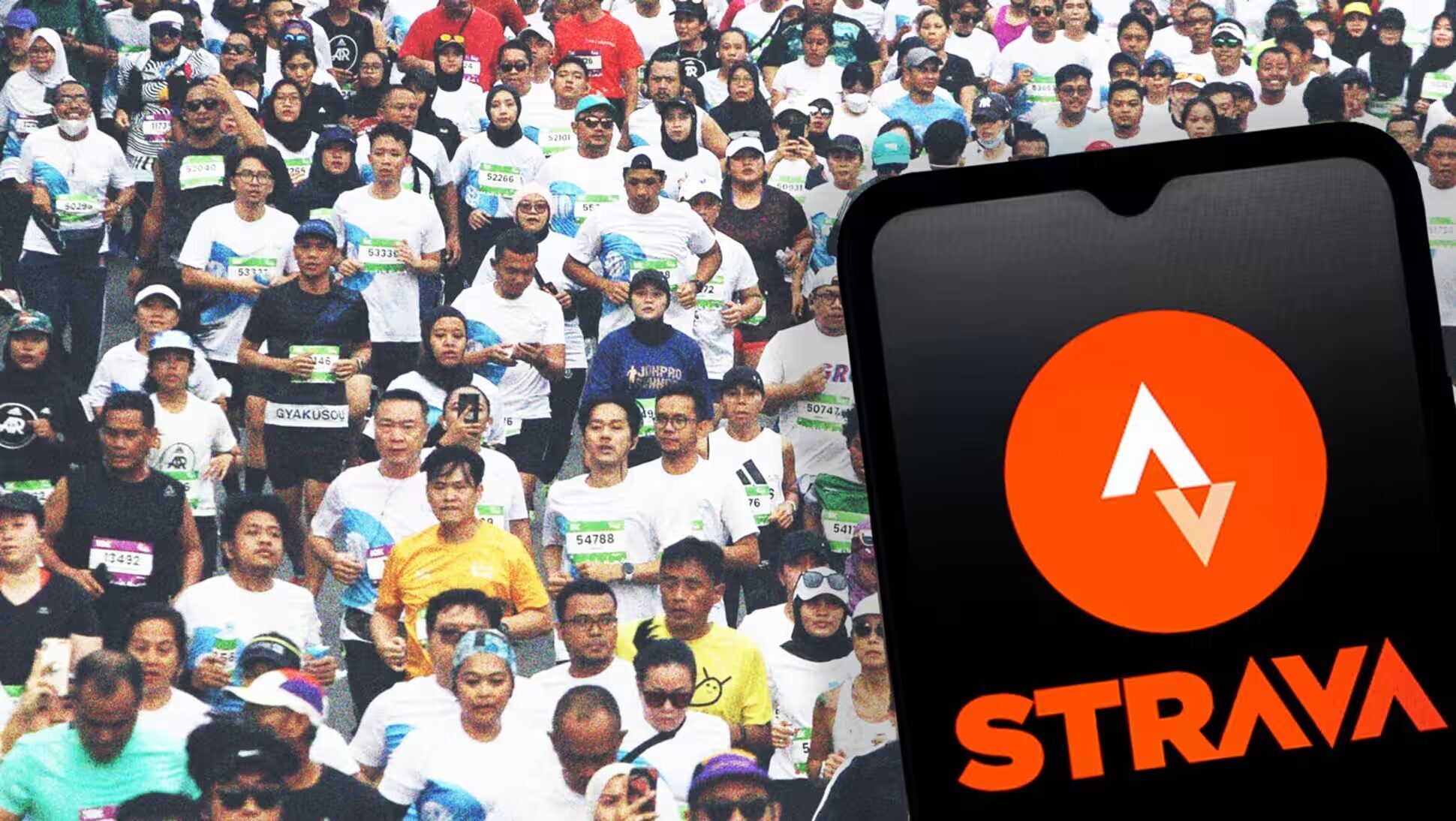
In Indonesia’s major cities, running is no longer just exercise; it has become part of social identity and competition. Sharing how far, how fast, or how many kilometers one runs each month on social media is fueling a new rivalry. To stay ahead in that competition, a peculiar business has emerged: people hiring others to run on their behalf.
Paid proxy running services, locally known as “jasa joki lari,” are gaining popularity in Indonesia. Under this service, a hired individual runs for a client and logs the activity data into the client’s fitness app. As a result, one person puts in the physical effort, while another takes credit for the achievement.
This business is expanding rapidly around Strava, a US-based fitness application and social network. Runners regularly advertise their services on social media platforms X and Threads to attract clients.
Hiring Runners to Maintain Social Image
The experience of 27-year-old entrepreneur Akbar illustrates this trend. He enjoys running with colleagues but does not always have the time or energy to do so regularly. Known among his friends and workplace peers as a regular runner, he did not want to lose that reputation.
After learning about Strava jockeys from a friend, Akbar initially found the concept laughable. Curiosity later led him to try the service himself. Over the past two years, he has hired proxies to run for him five or six times, covering distances of 10 to 15 kilometers each time.
In Akbar’s words, it makes him feel less lazy. While he has not given up running entirely, he occasionally relies on proxy runners to maintain his image as a runner.
25,000 to 50,000 Rupiah Per Kilometer
Rates in this business are set based on distance and running pace.
Lila, a 27-year-old runner, advertises her services on X. She charges 25,000 rupiah per kilometer for a pace of 8 to 9 minutes per kilometer. For a faster pace of 6 to 7 minutes per kilometer, her fee is 50,000 rupiah.
This means having a 10-kilometer run completed costs a client 250,000 to 500,000 rupiah.
Lila started the business after noticing high demand for such services on X. She later formed a team to handle requests from various parts of Indonesia. Most of her clients are university students and beginner runners who need to fulfill specific distance or running goals.
Clients provide their Strava account login credentials. The hired runners then log into the accounts and upload run data under the clients’ names.
Hiring Runners for Workplace Targets
Another major client segment consists of office and factory workers. Their employers organize Strava-based running challenges, requiring staff to complete specified distances or run routes that draw specific patterns or pictures on GPS maps.
Rizki, a young man in his twenties, began offering proxy running services a few months ago. His clients are mostly people who lack time due to long working hours but need to fulfill company-mandated fitness targets.
Rizki charges relatively lower rates. For a 5-kilometer run, he takes 40,000 to 60,000 rupiah, while a 10-kilometer run costs 80,000 to 120,000 rupiah.
According to him, many employees are so exhausted after working all day that they lack the energy to run after returning home. However, they face pressure to meet targets because it is part of workplace activities.
Social Media Competition Heightens Pressure
Running gained widespread popularity in Indonesia following the COVID-19 pandemic. Alongside a surge in cycling, running saw a renewed interest among urban youth.
Strava made this trend more competitive by allowing users to share run distances, speeds, and personal records. This created opportunities for users to compare achievements with others alongside exercising.
Riza Muhammad, a Bandung-based sports content creator, believes workplace pressure and the desire for social recognition are both driving demand for proxy runners.
Some hire runners to win rewards. Certain competitions offer prizes such as shoes for reaching monthly goals of several hundred kilometers. Others simply want to portray their speed and physical capabilities as higher than they actually are.
Most concerning, however, is that some individuals are hiring proxy runners as part of their marathon preparation.
Fake Achievements Replace Fitness
This is precisely where experts raise concerns. Long-distance running like a marathon requires gradual physical preparation, building endurance and physical capacity over time. If someone else covers the distance, the client gets no actual physical training.
According to Riza Muhammad, achieving fast running capability requires regular practice, and hiring proxy runners can in no way replace genuine training.
In some instances, there are allegations of logging unnaturally fast runs on Strava by using motorcycles. However, trainers can often detect such irregularities by spotting inconsistencies between heart rate and speed data.
Strava Takes Strict Stance
Strava authorities stated that submitting fake run data, modifying activity logs, allowing others to use an account, or displaying someone else’s achievements under one’s identity violates their terms of service.
If such violations are detected, the accounts involved may be suspended. The company stated that this policy aims to protect activity credibility and maintain trust within its global community.
Meanwhile, a section of runners notes that being exposed for such deception carries a risk of social isolation. Suspicion easily arises when a person’s live event performance fails to match their previous logged training data.
Observers remain divided on how long the proxy running business will persist in Indonesia. Some view it as a temporary fad, while others argue demand will endure as long as corporate targets and social media competition exist.
Nevertheless, the trend brings a fundamental question to the fore: is the true purpose of exercise to stay healthy, or to make one’s achievements look impressive on social media?
More by Sarakhon Report
 Pirojpur Farmers Cut Boro Cultivation Over Low Prices
 HSC Supplementary Exams Begin Dec 1 for 4.22 Lakh Students
 Bangladesh Face Pakistan in SAFF Championship Semi-Final
 Bangladesh Dollar Price Rises Despite Reserve Sales