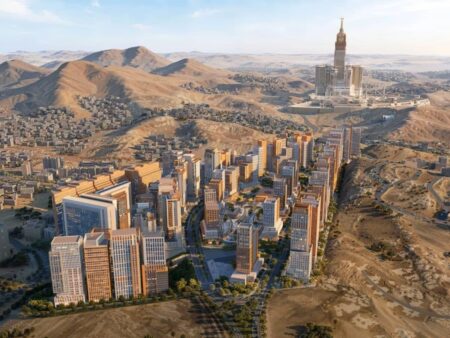

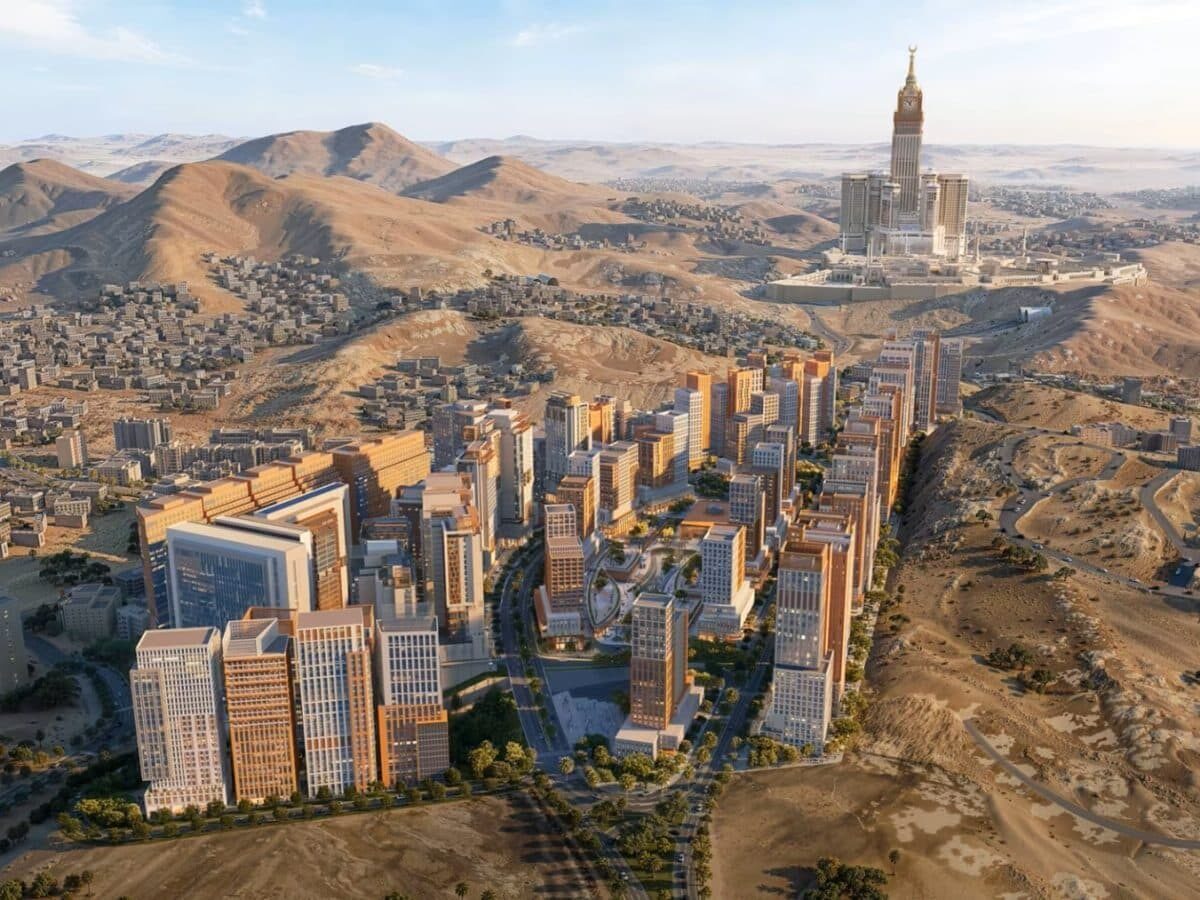
South and Southeast Asian countries are expanding their footprint in Makkah’s economy and infrastructure centered around the holy Hajj pilgrimage. While Saudi Arabia traditionally dominated Hajj management, accommodation, and tourism infrastructure, Asian nations are now carving out a new position through direct investment. The prominent example is Indonesia acquiring a massive hotel complex in Makkah for $533 million.
Danantara Indonesia, the sovereign wealth fund of Indonesia—the world’s largest Muslim-majority nation—has completed the acquisition of the Novotel Thakher Makkah. Along with the 1,461-room hotel, the institution also purchased 10.9 acres of developable land. The target investment for the entire project exceeds $1 billion.
According to analysts, this investment is not merely a venture to profit from real estate, but a significant step toward increasing Asian nations’ economic partnership in Hajj management.
Asians Now Form Majority of Hajj Pilgrims
Hajj was once viewed primarily as a Middle East-centered religious event. But that picture has changed in recent years, with the number of pilgrims from Muslim countries in South and Southeast Asia steadily increasing.
Out of nearly 1.8 million people who performed Hajj in 2024, two-thirds were citizens of Asian countries outside the Middle East.
Indonesia is among the top Hajj-sending countries each year, with more than 200,000 people traveling to Saudi Arabia annually to perform the pilgrimage.
For vast numbers of Muslims in countries like Bangladesh, Pakistan, India, Malaysia, and Indonesia, Hajj is not just a religious duty, but one of the most important aspirations of a lifetime. In many cases, people wait for years to go on Hajj. In some Indonesian provinces, the waiting list stretches from several years to several decades.
This massive demand is expanding the scope of accommodation, transport, food, healthcare, and other tourism-related businesses around Hajj.
A $12 Billion Economy Around Hajj
Economic activity worth an estimated $12 billion is generated in Saudi Arabia every year around Hajj and year-round Umrah. This revenue represents roughly 7 percent of the country’s Gross Domestic Product (GDP).
A pilgrim typically spends several thousand dollars on travel, accommodation, food, local transport, and other purchases. Due to the huge number of pilgrims from South and Southeast Asia, a significant amount of money flows from this region to Saudi Arabia.
The Saudi government views this pilgrim demand as a long-term economic opportunity. Under ‘Saudi Vision 2030’, plans have been set to expand Hajj and Umrah access, increase accommodation capacity, and boost tourist spending.
As a result, businesses in hotels, transport, food, and other services in Makkah are becoming increasingly attractive to international investors.
Religious and Economic Interests in Indonesia’s Investment
A key feature of Indonesia’s investment is that it marks the first instance of a foreign state acquiring direct property ownership in the Thakher Makkah area.
The deal was finalized following high-level political talks involving Indonesian President Prabowo Subianto. According to the Indonesian government, ensuring dedicated accommodation and necessary services for its pilgrims is one of the key objectives of this initiative.
The primary goal of Danantara Indonesia is to boost national economic growth. In that light, investing massive funds in Saudi real estate outside the country may seem exceptional. However, such initiatives are not new internationally when it comes to long-term investments.
Sovereign wealth funds across the world regularly invest in hotels, tourism, and hospitality sectors. In September this year, Singapore’s sovereign wealth fund GIC acquired assets of several Marriott-operated hotels in Japan. Sovereign investment firms in Qatar and Abu Dhabi also own hotels and resorts globally.
In Indonesia’s case, however, the investment is far more deeply tied to religious and national identity.
Opportunity to Increase Control over Hajj Management
Given Indonesia’s vast Muslim population and growing purchasing power, demand for Hajj pilgrims from the country is expected to rise further in the future. Owning its own hotels and service centers in Makkah will allow Indonesian entities to exercise relatively greater influence over accommodation, costs, and service quality for their citizens.
This will not only create revenue opportunities from the investment, but also somewhat reduce the need to rely entirely on Saudi-controlled infrastructure.
Hajj management requires a vast coordinated operation covering transport, lodging, food, sanitation, medical care, and language assistance. Just as tourism and transport infrastructure developed around Christian pilgrimages in medieval Europe, Hajj has transformed into a modern international economic system.
According to Islamic tradition, Hajj dates back to the time of Prophet Ibrahim. This religious journey spanning centuries is now undergoing a new economic reality.
Will Other Asian Nations Also Invest?
Indonesia’s initiative could open up new possibilities for other Muslim-majority countries in South and Southeast Asia. Particularly for nations sending large numbers of pilgrims to Saudi Arabia annually, there is economic logic in directly investing in Makkah’s accommodation and service infrastructure.
However, it remains uncertain whether Indonesia’s investment will serve as a model for other countries to follow.
One thing is clear: the shifting geographical demographics of Hajj pilgrims are now reflected in Makkah’s economic structure. Asian nations are no longer willing to remain mere consumers in the economy surrounding the vast numbers of people assembling annually in Makkah for religious reasons; they are eager to strengthen their position as investors and partners as well.
More by Sarakhon Report
 Chattogram Has Only 28 Public Toilets for 70 Lakh People
 Bangladesh To Play Without Hasan Mahmud in Centurion
 Stevie Wonder Shines 50 Years After Key Of Life