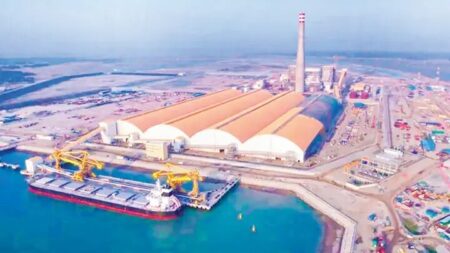

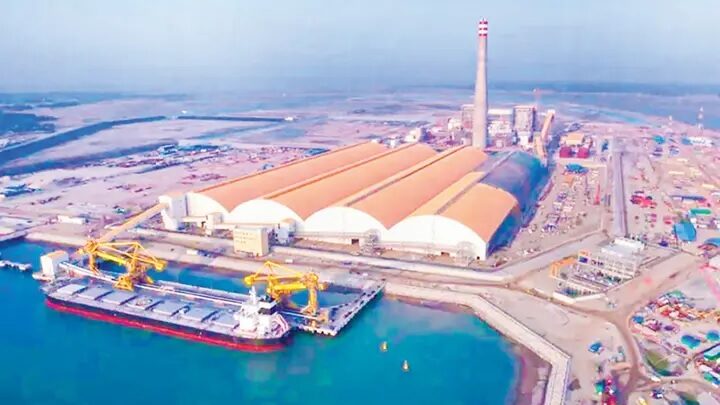
Matarbari deep-sea port on Bangladesh’s southeastern coast is more than infrastructure for loading and unloading cargo. With proper planning and regional cooperation, it could become a new hub for Bangladesh’s industrialisation and international trade, while strengthening economic ties with India’s northeastern states. Japan aims to build on this potential by developing a broader Bay of Bengal economic corridor that integrates ports, industrial zones, energy facilities, roads and railways.
The plan gained renewed significance following the joint statement issued after a meeting in Tokyo on October 27 between Bangladesh’s Prime Minister Tarique Rahman and Japanese Prime Minister Sanae Takaichi. The two countries agreed to strengthen strategic cooperation under the Bay of Bengal Industrial Growth Belt, or BIG-B, initiative. Its objectives include improving connectivity, addressing natural disasters and geopolitical risks, creating economic opportunities through public-private partnerships, and promoting regional peace and stability. The statement also reaffirmed their commitment to building shared prosperity across the Bay of Bengal region, with Bangladesh at its centre.
The significance of the initiative extends beyond bilateral relations between Bangladesh and Japan. Connecting India’s seven northeastern states to the network could improve access to the Bay of Bengal, reduce cargo transportation costs and reshape regional production and supply chains. Realising this potential, however, will require more than port construction. Cross-border trade arrangements, transport permissions, customs procedures, warehousing facilities and reliable road and waterway connections will also be essential.
Japan’s BIG-B: From Port Development to Industrialisation
Japan introduced the concept of the Bay of Bengal Industrial Growth Belt, or BIG-B, in 2014. Its central objective is to develop Bangladesh’s transport, energy and industrial infrastructure, turning the country into an important regional hub for manufacturing and trade. The plan centres on integrating a deep-sea port, industrial zones, energy infrastructure and improved transport networks around the Matarbari-Maheshkhali area.
The Japan International Cooperation Agency (JICA) is financing the development of Matarbari Port and related road infrastructure. In March 2023, JICA announced a loan agreement of up to ¥105.362 billion for the second phase of the Matarbari Port Development Project. A financing agreement was also signed for improvements to the Chattogram-Cox’s Bazar highway. The aim of these infrastructure projects is not only to expand port capacity but also to facilitate cargo movement and improve trade connectivity with neighbouring countries.
A statement issued by Japan’s Ministry of Foreign Affairs after the October 27 meeting also said Japanese private investment in Bangladesh could reach ¥1 trillion over the next five years, with the potential to create 200,000 jobs. This is a stated target, not a confirmed investment total or a record of jobs already created. However, as industrial development around Matarbari advances, the area could attract investment in manufacturing, supply chains, warehousing and export-oriented industries.
Why Matarbari Matters to Northeast India
India’s seven northeastern states—Assam, Tripura, Meghalaya, Manipur, Mizoram, Nagaland and Arunachal Pradesh—share borders with Bangladesh. For businesses in these states, the distance to seaports and the cost of transportation are important factors when shipping goods to international markets. If Matarbari becomes an effective regional trade route, businesses, particularly in Tripura and Assam, could gain an alternative route for imports and exports.
A 2025 policy paper by Japan’s Institute of Developing Economies, part of the Japan External Trade Organization (IDE-JETRO), identified Matarbari as a potential hub for linking Northeast India with regional manufacturing and supply chains. It suggested that using Matarbari instead of Kolkata Port could reduce inland transportation costs on certain routes. According to one estimate in the report, the cost of transporting goods by land from Northeast India to Matarbari could be about 70 per cent lower than transporting them to Kolkata Port. Under specific conditions, maritime freight costs for shipments to Southeast Asia via Matarbari could also be 20 to 25 per cent lower than via Chattogram Port.
These figures, however, are research-based estimates of potential savings, not evidence of reductions already achieved. Actual costs will depend on cross-border procedures, cargo clearance, road and waterway capacity, shipping schedules and the commercial decisions of transport operators.
How Could Bangladesh’s Economy Change?
Matarbari Port could have its most significant economic effects in three areas.
First, it could expand Bangladesh’s import and export capacity. If larger vessels can call directly at the port, opportunities may emerge to reduce shipping times and transportation costs for certain types of international trade. This could help Bangladeshi exporters compete in new markets.
Second, industrial zones built around the port could generate new business in manufacturing, warehousing, cargo processing, transportation, maritime services and information technology. Increased domestic and foreign investment in these sectors could create jobs and stimulate demand for local businesses.
Third, Bangladesh could provide services not only for its own imports and exports but also for moving goods from neighbouring regions. If commercial links with Northeast India, Nepal and Bhutan expand, Bangladesh could become a more important part of regional supply chains. Realising this potential would require effective transport and trade agreements among the countries concerned.
Benefits for Northeast India, Opportunities for Bangladesh
Northeast India could gain an alternative export route for agricultural products, tea, processed foods and other manufactured goods. Bangladesh, in turn, could expand supplies of consumer goods, ready-made garments, pharmaceuticals, processed foods and other products to the region. These opportunities would depend on actual market demand, product standards, customs arrangements and transportation costs.
Another 2025 policy paper by IDE-JETRO highlighted infrastructure constraints, high transport costs, restrictions on cross-border vehicle movement and warehousing problems as obstacles to expanding trade between Bangladesh and Northeast India. Building a new port alone will not be enough. Improved border management, coordinated transport systems and stronger public-private partnerships will also be needed.
For Bangladesh, an important question is how much domestic businesses will benefit from opportunities to transport goods for neighbouring countries. Without meaningful participation by local producers, small and medium-sized enterprises, transport operators and skilled workers, the benefits of major infrastructure projects could become concentrated among a limited number of companies.
What Are the Main Implementation Challenges?
Several conditions must be met if Matarbari is to become a regional trade hub. These include effective connections between the port and national highways, reliable road and waterway transport, modern customs procedures and faster cargo clearance at border crossings. Unless regular and commercially viable routes are established between Matarbari and Northeast India, the projected cost savings may not materialise.
Industrial zones will also need reliable electricity and energy supplies, investment-friendly policies, skilled workers and effective environmental safeguards. The effects of port construction and operations on local fishing communities, coastal populations and the surrounding environment must be considered as part of the planning process. If economic growth comes at the cost of long-term environmental damage, the project’s overall benefits could be undermined.
Regional diplomacy is another critical factor. Japan’s broader plan will be difficult to implement without effective trade and transport cooperation between Bangladesh and India. Connecting Bangladesh with Northeast India through Matarbari is therefore not merely an infrastructure challenge. It is also a test of mutual trust, regular policy coordination and long-term commercial cooperation.
Turning Potential into Economic Gains
Matarbari Port could create new economic opportunities for Bangladesh, strengthening the country’s position in international trade while providing Northeast India with an alternative route to maritime markets. Japan’s renewed emphasis on the BIG-B initiative has brought this potential into sharper focus.
But building a port does not guarantee economic transformation. Success will depend on how quickly goods can be transported, how much business costs fall, how many new industries emerge and how widely the benefits reach ordinary people and local businesses. If Matarbari can integrate port operations, industry, energy and regional connectivity within a single economic framework, it could become an important trade gateway for Bangladesh and offer Northeast India a new route to international markets.
Could Matarbari Port reshape the future of regional trade? Japan’s BIG-B initiative offers a potential pathway to stronger economic links between Bangladesh and Northeast India, but the outcome will depend on implementation, cross-border cooperation and the distribution of economic benefits.