The Government’s Vast Arrangements Against the Small Street Presence of Bengali Nationalists

I had intended to write this piece yesterday. Had I written it yesterday, perhaps it would have begun differently. By coincidence, as I sat down to write on the afternoon of June 22, I remembered that today is the birth anniversary of the revolutionary Ganesh Ghosh. Even in our boyhood, the name Ganesh Ghosh stirred the blood. Whenever his name came to mind, those lines of Sukanta would rise to the lips— “They were heroes, they awakened storms in the sky… their tales, in the fire of bullets, guns and bombs, remain thrilling even today.”
I still remember being scolded by my father in my boyhood for using the phrase “the Chittagong Armoury Loot.” The man from whom I have, to this day, received more affection and tenderness than from anyone else in the world, said in a rather firm voice, “What does ‘loot’ mean?” With my head bowed, I said, to plunder? This time, in a calm voice, he asked, who plunders? With my head still lowered, I answered— thieves, robbers, or bandits.
My father, a follower of Subhas Bose, touched his forehead lightly with his hand and said, who were Masterda Surya Sen, Ananta Singh, and Ganesh Ghosh? Standing there with my head bowed, I said, revolutionaries. My father corrected me slightly and said, nationalist freedom fighters. Then he explained that, under Masterda’s leadership, they took control of the armoury in Chittagong— an armoury purchased with the money of Indians— and created the first liberated zone in India, or liberated the whole of Chittagong.
Today, in my later years, I can understand how terrifying a single narrative can be. Those nationalist freedom fighters who battered, twisted and broke the occupying British monarchy that had seized India— we have called them revolutionaries more often than freedom fighters. And the supporters of the British, consciously or unconsciously, placed on our tongues the phrase “Chittagong Armoury Loot.” Through that phrase, the nationalist freedom fighter was brought down to the rank of a looter, that is, a bandit.

And we unconsciously created this same narrative in 1971 as well. Our freedom fighters took control of funds from many banks in different areas of Bangladesh occupied by the Pakistani army— funds that belonged to Bengalis— and secured weapons from armouries, and deposited them with the Government of Bangladesh for conducting the war and running the wartime government. Yet even today we say, “they looted the bank and took the money away,” “they looted the armoury and took the weapons away.” And these, in essence, created a narrative that not only weakened various aspects of the liberation struggle— in the Bangladesh built through the Liberation War, the hegemony that should have emerged, a hegemony rooted in Bengali culture, did not emerge in this country. Instead, a religious fundamentalist hegemony arose. Religion became entwined with politics. And it is true that in world history, nationalists, even after achieving victory and receiving the legitimate right to kill, do not kill. On the other hand, in world history, more human slaughter has taken place in the name of religion than from any plague, epidemic, or other natural disaster. Whatever mass killings or killings through riots took place in the creation of Bangladesh, India and Pakistan were all in the name of religion. Yet today this truth has been proven: because the three countries of this subcontinent failed to build a cultural nationalist or conceptual nationalist hegemony in opposition to religious hegemony, the three states are not honoured in the world in the way they should have been, given their past heritage.
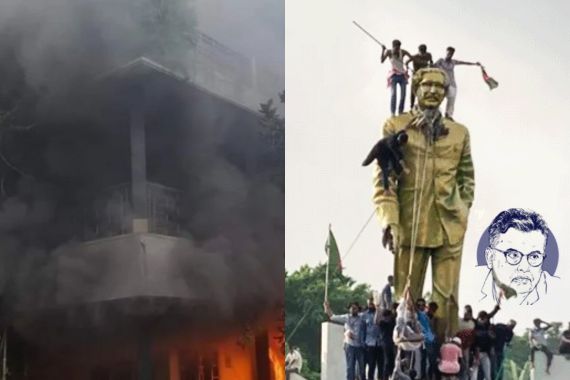
On the other hand, Yunus, through his meticulously designed conspiracy, caused the rise of religious fundamentalism in the country and began the work of creating a narrative. Using as capital that conspiracy of the religious fundamentalists, the killing of police and people, and the fall of a government, he is challenging Bangladesh’s Liberation War at every moment. Yet it was through that very incident that the sculpture of Bangabandhu Sheikh Mujibur Rahman, the principal leader of Bangladesh’s independence, was broken. And in the same style as the American conspiracy— that is, the way the sculpture of Iraq’s nationalist leader Saddam Hussein was smashed with hammers and shovels and pulled down with ropes— in that same way, the July forces of Yunus brought down the sculpture of Bangabandhu Sheikh Mujibur Rahman. They even had the historic symbol of independence, Bangabandhu’s house at 32, demolished three times by so-called “obscene boys and girls.”
History, even if it takes a hundred years, will certainly say that this act of Yunus was an attempt to complete the unfinished work of Yahya Khan in 1971.
The meticulous design of Yunus is still ongoing in Bangladesh. Even so, this truth must be stated: just as Yahya was defeated without being able to complete his work, so too the followers of Yunus— whoever they may be, wherever they may stand, and in whatever position they may be— will also be defeated.
In reality, if one reviews the history of the world, it becomes clear that nationalist forces are always invincible— if that nationalism is a conceptual nationalism of language and territory, uniting all religions, castes and communities of that land.
With Ganesh Ghosh there were several young men, including Tegra, who were fifteen, sixteen and seventeen years old. The British could kill these nationalists, could hang them, but could not stop them.
In reality, the strength of fighters who believe in a secular and correct ideal is limitless. Just as, in the freedom struggle of the British period, there was the Chittagong operation of Ganesh Ghosh and others, so in 1971, during our own struggle for independence, there was the freedom fighters’ “Operation Monayem Khan” in Dhaka, carried out by a young man of sixteen or seventeen. Besides that, Operation Hotel Intercontinental, Operation Blackout or plunging Dhaka into darkness by cutting off electricity, Operation Baitul Mukarram, Operation DIT— in all these operations combined, there were two to three hundred young people. Yet they shook the foundations of the occupying Pakistani soldiers and their collaborators.
Moreover, another major aspect of this language-based or conceptual nationalist struggle is that such forces are always victorious. But after victory, even after obtaining the legitimate right to kill, they do not engage in mass killing. Because nationalism is a flowing process, which, while preserving the beauty of diversity, seeks gradually to unite everyone through a culture of unity.
Because of this ideological strength, the infinite strength of these nationalists can never be measured by their numbers. No state power in world history has ever done so when taking advance measures against them. Again, if nationalists themselves deviate from their ideal, they automatically become powerless.
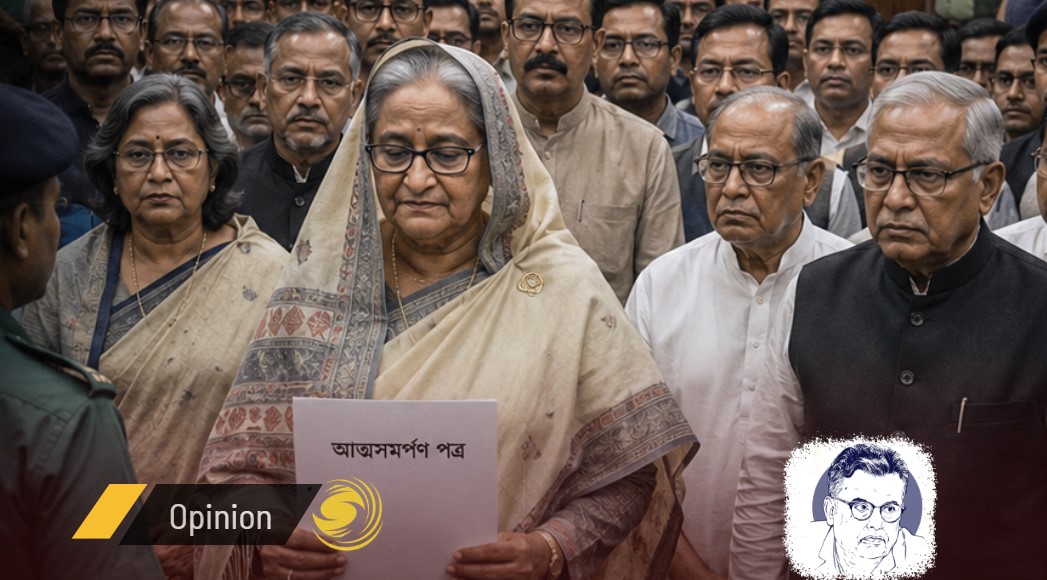
In Bangladesh, the Bengali nationalist or secular nationalist force is, at present, essentially the Awami League, the party that led the Liberation War and whose activities are currently banned.
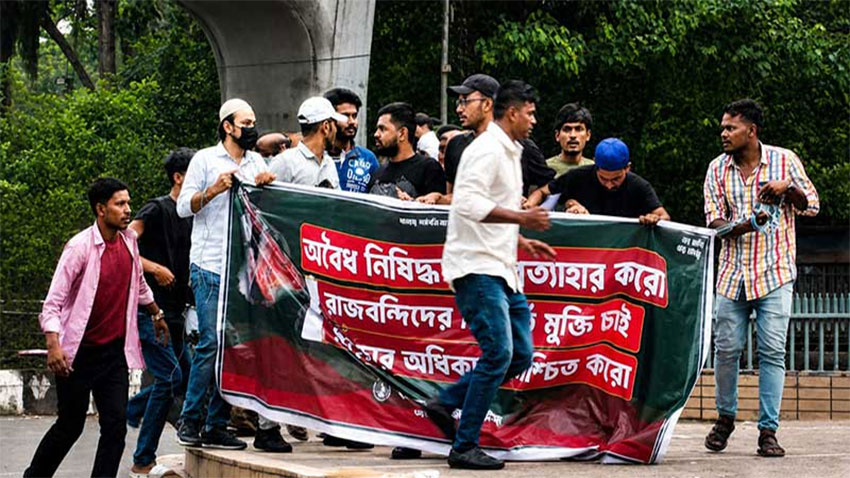
Their supporters— one hundred, two hundred, five hundred, or sometimes twenty to fifty young people— are trying to carry out their activities on the streets. In a country of twenty crore people, this is a very small number. Even for a large party of the scale of the Awami League, whose activities are currently banned, if one or two lakh of its leaders and activists are in prison, that too is very small in number.
Those who are in prison are in the custody of the government. They can do nothing. Even so, because of the twenty-five or so to two or four hundred young people who are marching, and because of the party’s 77th founding anniversary on June 23— the day this article will be published— the measures taken by the government have been reported by Bangladesh’s leading English daily as follows:
“Army to remain deployed till June 30 as home ministry cites sabotage, law-and-order risks
Star Online Report
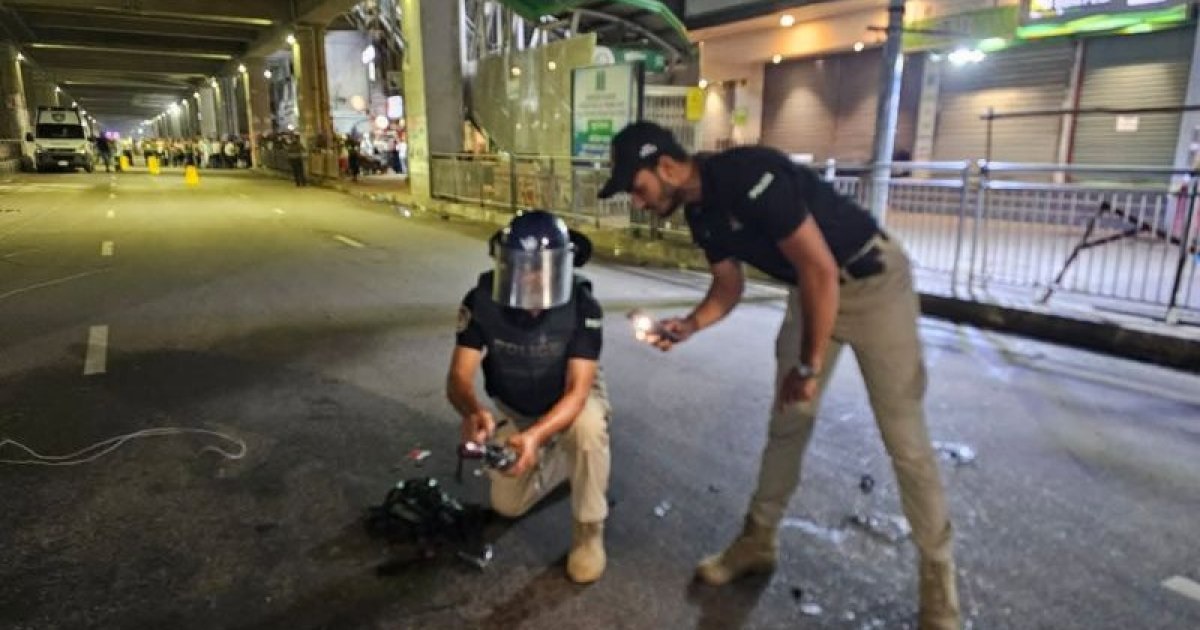
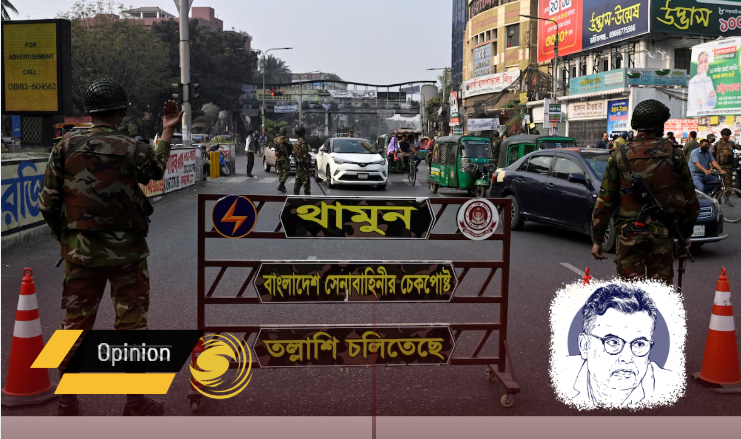
The government has ordered the deployment of army personnel in three metropolitan cities, including Dhaka, and three other districts, citing fears of possible sabotage by leaders and activists of the Awami League, whose activities are currently banned.
According to a letter issued by the Ministry of Home Affairs today, the army will remain deployed in the field until June 30.
The troops have been ordered to be deployed in the Dhaka Metropolitan Police, Chattogram Metropolitan Police, Gazipur Metropolitan Police, Narayanganj, Gopalganj, and Faridpur.
“Various banned organisations have been carrying out unlawful gatherings, processions, and other activities across the country, creating risks of sabotage and deterioration of law and order. As a result, there is a possibility of damage to public life and property in several districts,” the letter reads.
The ministry’s directive was issued today as part of measures aimed at maintaining law and order and preventing any untoward incidents, the official order said.
Earlier, Police Headquarters issued a nationwide alert over fears of possible clashes between Awami League activists and members of other political parties ahead of the party’s founding anniversary on June 23.
In a notification signed by DIG Kamrul Ahasan, the PHQ on Thursday sent instructions to the heads of all units across the country, asking them to remain alert and take necessary precautionary measures.”
(The government has decided to keep the army deployed until June 30, citing fears of deterioration in the law-and-order situation and sabotage.

Star Online Report
From fear of possible sabotage by the leaders and activists of the Awami League, which has currently been declared banned, the government has ordered army deployment in three metropolitan cities, including Dhaka, and in three additional districts.
In a letter issued today by the Ministry of Home Affairs, it has been stated that the army will remain deployed in the field until June 30.
According to the directive, army personnel will be deployed in the Dhaka Metropolitan Police (DMP), Chattogram Metropolitan Police (CMP), Gazipur Metropolitan Police, Narayanganj, Gopalganj and Faridpur areas.
The letter says, “Various banned organisations are conducting unlawful gatherings, processions and other activities in different places across the country, creating risks of sabotage and deterioration of the law-and-order situation. As a result, there is fear of damage to public life and property in several districts.”
The government order says that this directive has been issued today with the aim of keeping the law-and-order situation normal and preventing any untoward incident.
Earlier, ahead of June 23, on the occasion of the Awami League’s founding anniversary, Police Headquarters (PHQ) issued an alert across the country over fears of possible clashes between the party’s leaders and activists and members of other political parties.
In a notification signed by DIG Kamrul Ahasan, all unit chiefs across the country were instructed last Thursday to remain alert and take necessary preventive measures.)
From the government’s side, the government is correct. Because in world history, no state power has ever measured the core strength or operational strength of nationalist forces by numbers when taking advance measures against them. The number present at a given moment is never the real measure of their strength.
The invincible fiction writer Sarat Chandra Chattopadhyay, embodying the struggle of this nationalist force, wrote a novel titled Pather Dabi. Many of today’s inheritors of obscene language may not have read it. There, the symbolic character of this nationalism is named Sabyasachi. In Kazi Abdul Wadud’s practical dictionary, the word Sabyasachi is defined as one capable of shooting arrows with both hands, one capable of performing several tasks at the same time. But throughout the entire novel, the Sabyasachi who appears as the symbol of the nationalist movement— by his two hands are meant one hand of his flesh-and-blood body and another hand of his inner, mental belief; the arrows, or the motion of struggle released by both, are equal. That is, there is no crack or gap between ideal and self-sacrifice.
And it was addressing this symbol of the nationalist movement that Sarat Chandra wrote, “In some forgotten past, was not the first chain forged for you alone? Was not the prison first built with only you in mind? That is your glory! Who has the power to neglect you! These countless guards, this immense burden of soldiers— all of it is only for you!”
The writer is a journalist honoured with the highest state award, and Editor of Sarakhon and The Present World.