The Day Bangladesh’s Founding Father Was Desecrated

Swadesh Roy

During the mass uprising of 1990, after a large procession emerged from the University of Dhaka in defiance of the curfew imposed by then-President Ershad, with students from Shamsunnahar Hall and Rokeya Hall at the front, the student leaders lying in hospital beds pulled the IV needles from their arms, ran out and joined the procession. After that, Ershad’s resignation was only a matter of time.

Before the student procession came out, I had received word, as a reporter, that it was important to go to Dhanmondi 32 very early in the morning. I went there. Upon arriving, I found Abdul Jalil, then Joint Secretary of the Awami League and later its General Secretary, extremely busy. Although Sheikh Hasina remained under house arrest at 32, police surveillance had become lax.

Abdul Jalil instructed several people, who then rushed towards the University of Dhaka by rickshaw and motorcycle. I later heard from Abdul Jalil that, earlier that morning, Army Chief General Nuruddin had telephoned Sheikh Hasina. Abdul Jalil did not know whether Nuruddin had spoken to her by telephone before that. He was beside Sheikh Hasina at the time, and when the telephone rang, he answered it and discovered that the caller was the then Army Chief, General Nuruddin. He handed the receiver to Sheikh Hasina. After speaking to Nuruddin, Sheikh Hasina immediately instructed Abdul Jalil to send word to the University of Dhaka, telling the Chhatra Sangram Parishad, the Students’ Action Council, to bring out a procession at once in defiance of the curfew. The army would not obstruct it. Nuruddin had made the necessary arrangements. After that, Nuruddin would no longer be reachable on that telephone.

দেশ গড়তে প্রাণ দিলেন মুজিব, সেখানেই মাটিতে পড়ে তাঁর মূর্তি! বিশ্ব ধিক্কার জানাচ্ছে বাংলাদেশের আন্দোলনকে | bangladesh-situation-the-country-was-built-by ...

I heard the next part from General Ershad sometime around 2010, while sitting and talking with him at a social gathering. The moment I told him this part about General Nuruddin, I noticed a change in the muscles of his jaw. The first thing he said was, “He is a traitor.” After gradually calming him down and talking about various matters until late into the night, I learned from him that, when the procession emerged in defiance of the curfew and the army offered no obstruction, he repeatedly tried to telephone Nuruddin. But he could not reach him on any of his lines, or through any of the other channels available for contacting an army chief. He described the details in this manner.

I then asked him whether, in 1996, when General Nuruddin was Minister of Power in the Awami League government, there had not been an occasion, perhaps during the early days, when Nuruddin extended his hand towards him in Parliament, but he refused to shake it and moved away after saying something. Ershad laughed and said, “I did not shake his hand. I told him, ‘You are a traitor.’ But look, after betraying me, you are a cripple today, while I remain fit and healthy.” General Nuruddin had broken his leg in a road accident. Ershad continued, “Let me also tell you this: you will not last long in the Awami League either.” General Nuruddin later became deeply devoted to Delwar Hossain Sayeedi and embraced Sayeedi’s political ideology.

I had the opportunity to know President Ershad personally over many years. In his private life, he was considerably more modern. He did not appear to place much faith in the afterlife. His reading and intellectual depth were also considerable. Even then, why he believed in otherworldly retribution in Nuruddin’s case is genuinely difficult to explain. In any event, that was his personal matter. He regarded General Nuruddin’s condition as punishment for his sin.

List of Chief of Army Staff - Bangladesh Army

Apart from Abdul Jalil and General Ershad, I later pieced together the entire picture behind the scenes from leading figures on both sides, from those who supported Ershad and those who opposed him. Perhaps a book could be written about it. But what would be the point? Such things have accompanied state power for thousands of years.

In any event, for a year or two after Ershad’s fall, the anniversary of his downfall was observed. After that, neither the 15-party alliance, nor the 7-party alliance, nor Jamaat-e-Islami continued to observe the day. Ershad later aligned himself politically both with the Awami League-led alliance and with the Jamaat-BNP alliance.

জেনারেল এরশাদের ক্ষমতাগ্রহণ - BBC News বাংলা

On 5 August, many, including Jamaat-BNP, the NCP, the CPB and Udichi, will observe the anniversary of the fall of Sheikh Hasina’s government.

But when one looks at history, a question arises: does any young person in this country today even know whether Ershad fell on 5 December or 6 December? Such is the eventual fate of days commemorating political movements.

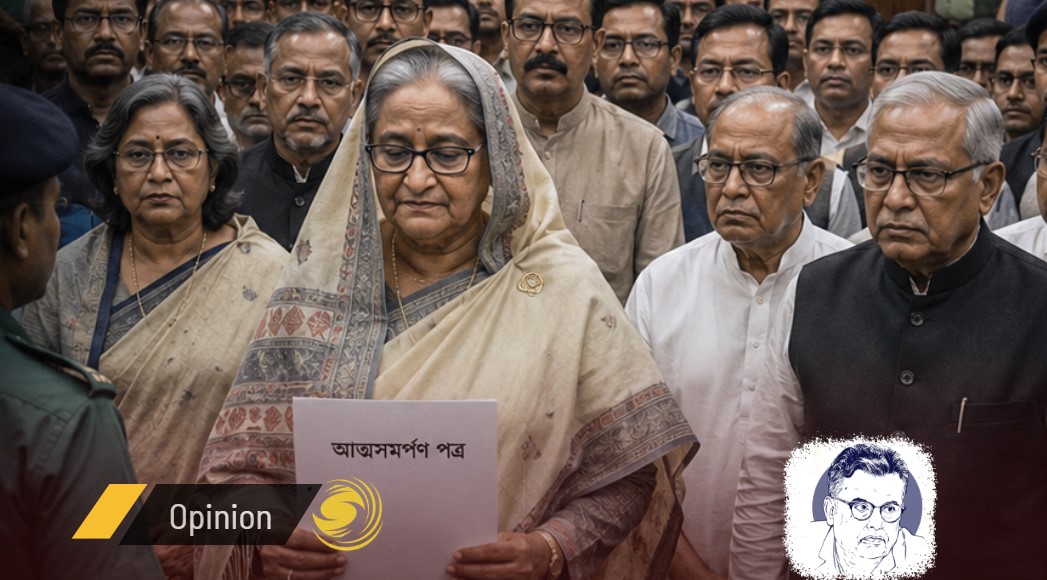
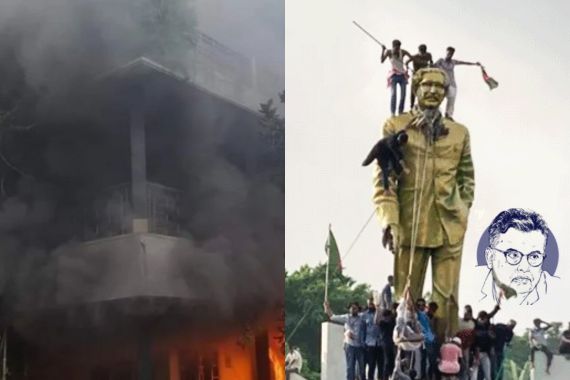
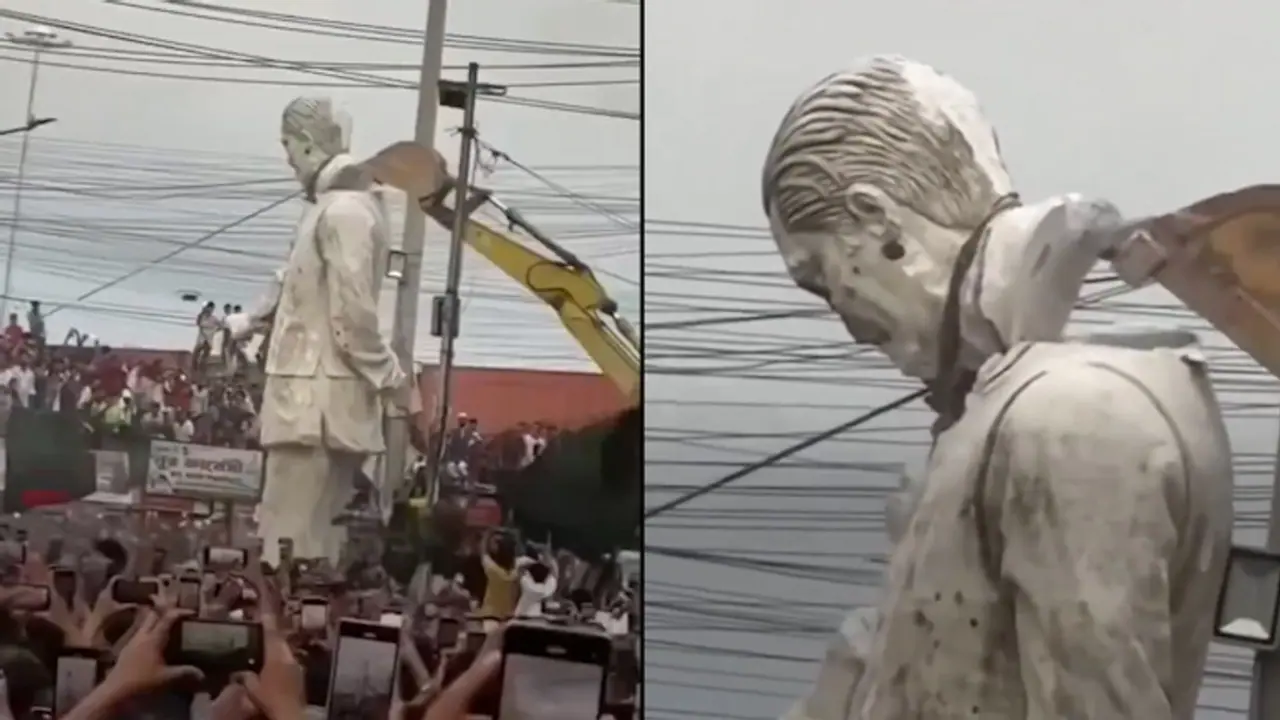
Yet 5 August 2024 will remain in history, marked by pain in the heart of the Bengali nation and by the lowering of its head in shame. From that afternoon onward, the people of this country witnessed the demolition of sculptures of Bangabandhu. They saw people urinate upon the head of a sculpture of the Father of the Nation. Even individuals in state uniform took part in demolishing sculptures of the founder of the state. Bangabandhu’s historic house was set on fire, and living human beings were burned to death there. Every trace of his memory was erased. Although he was assassinated on 15 August 1975, even then he was not subjected to humiliation of this kind.

Bangabandhu Birthday Mujib Projects :: Photos, videos, logos, illustrations and branding :: Behance

He gave this riverine, agrarian people their first modern state, a people who had never before possessed a state of their own. He was assassinated together with his family in August. Then, in August 2024, he was once again humiliated, this time through acts of the crudest kind.

Such humiliation does not diminish his historical stature. History is never written at once. For history to be written, grains of sand must accumulate over time and become stone. On that stone, those who killed Caesar are recorded as conspirators and assassins, while Caesar retains his place among history’s great heroes. Likewise, people do not know the names of the associates who betrayed Alexander. Yet history remembers Alexander as Alexander the Great.

Jayanta Ghosal writes on Mujibar Rahaman murder - Anandabazar

In the same way:

“As long as the Padma, Jamuna, Gouri and Meghna flow,
Your achievements shall endure, Sheikh Mujibur Rahman.”

And that achievement is the country called Bangladesh. To humiliate him, therefore, is to call one’s own birth into question.

Even then, as a Bengali, and as someone who understands the significance of paternal identity, whenever the destruction and humiliation of the memory of the Father of the Nation, the founder of the state, comes to mind, the question is unavoidable: how will the nation free itself from this sin? Perhaps, even after such a sin, day may still dawn after the penance of night. But 5 August 2024 has left the Bengali nation with the permanent burden of this stain of ingratitude.

Author: Journalist honoured with the country’s highest state award; Editor, Sarakhon and The Present World.

06:17:38 pm, Friday, 14 August 2026

The Day Bangladesh’s Founding Father Was Desecrated

06:17:38 pm, Friday, 14 August 2026

During the mass uprising of 1990, after a large procession emerged from the University of Dhaka in defiance of the curfew imposed by then-President Ershad, with students from Shamsunnahar Hall and Rokeya Hall at the front, the student leaders lying in hospital beds pulled the IV needles from their arms, ran out and joined the procession. After that, Ershad’s resignation was only a matter of time.

Before the student procession came out, I had received word, as a reporter, that it was important to go to Dhanmondi 32 very early in the morning. I went there. Upon arriving, I found Abdul Jalil, then Joint Secretary of the Awami League and later its General Secretary, extremely busy. Although Sheikh Hasina remained under house arrest at 32, police surveillance had become lax.

Abdul Jalil instructed several people, who then rushed towards the University of Dhaka by rickshaw and motorcycle. I later heard from Abdul Jalil that, earlier that morning, Army Chief General Nuruddin had telephoned Sheikh Hasina. Abdul Jalil did not know whether Nuruddin had spoken to her by telephone before that. He was beside Sheikh Hasina at the time, and when the telephone rang, he answered it and discovered that the caller was the then Army Chief, General Nuruddin. He handed the receiver to Sheikh Hasina. After speaking to Nuruddin, Sheikh Hasina immediately instructed Abdul Jalil to send word to the University of Dhaka, telling the Chhatra Sangram Parishad, the Students’ Action Council, to bring out a procession at once in defiance of the curfew. The army would not obstruct it. Nuruddin had made the necessary arrangements. After that, Nuruddin would no longer be reachable on that telephone.
দেশ গড়তে প্রাণ দিলেন মুজিব, সেখানেই মাটিতে পড়ে তাঁর মূর্তি! বিশ্ব ধিক্কার জানাচ্ছে বাংলাদেশের আন্দোলনকে | bangladesh-situation-the-country-was-built-by ...

I heard the next part from General Ershad sometime around 2010, while sitting and talking with him at a social gathering. The moment I told him this part about General Nuruddin, I noticed a change in the muscles of his jaw. The first thing he said was, “He is a traitor.” After gradually calming him down and talking about various matters until late into the night, I learned from him that, when the procession emerged in defiance of the curfew and the army offered no obstruction, he repeatedly tried to telephone Nuruddin. But he could not reach him on any of his lines, or through any of the other channels available for contacting an army chief. He described the details in this manner.

I then asked him whether, in 1996, when General Nuruddin was Minister of Power in the Awami League government, there had not been an occasion, perhaps during the early days, when Nuruddin extended his hand towards him in Parliament, but he refused to shake it and moved away after saying something. Ershad laughed and said, “I did not shake his hand. I told him, ‘You are a traitor.’ But look, after betraying me, you are a cripple today, while I remain fit and healthy.” General Nuruddin had broken his leg in a road accident. Ershad continued, “Let me also tell you this: you will not last long in the Awami League either.” General Nuruddin later became deeply devoted to Delwar Hossain Sayeedi and embraced Sayeedi’s political ideology.

I had the opportunity to know President Ershad personally over many years. In his private life, he was considerably more modern. He did not appear to place much faith in the afterlife. His reading and intellectual depth were also considerable. Even then, why he believed in otherworldly retribution in Nuruddin’s case is genuinely difficult to explain. In any event, that was his personal matter. He regarded General Nuruddin’s condition as punishment for his sin.
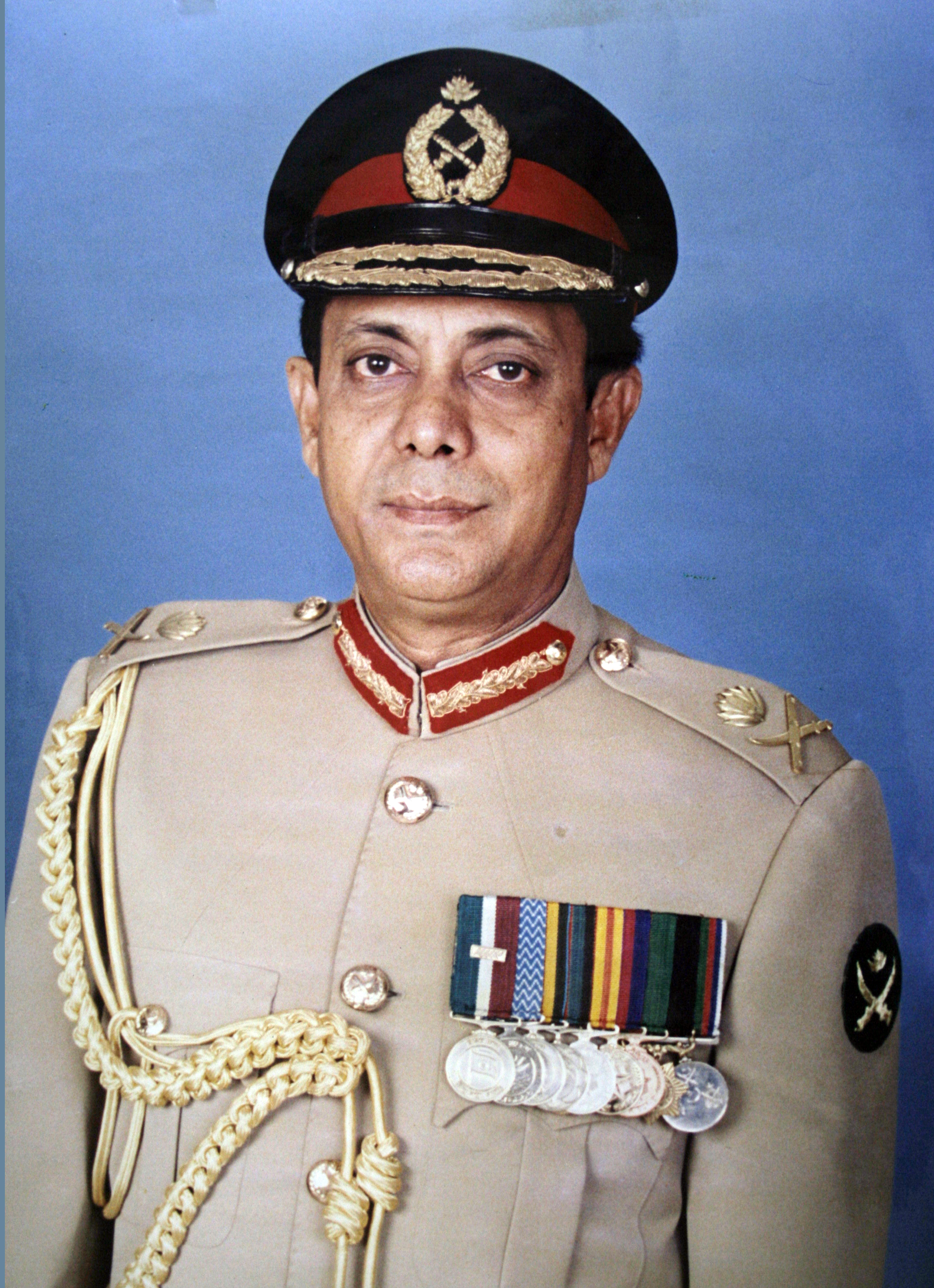
List of Chief of Army Staff - Bangladesh Army

Apart from Abdul Jalil and General Ershad, I later pieced together the entire picture behind the scenes from leading figures on both sides, from those who supported Ershad and those who opposed him. Perhaps a book could be written about it. But what would be the point? Such things have accompanied state power for thousands of years.

In any event, for a year or two after Ershad’s fall, the anniversary of his downfall was observed. After that, neither the 15-party alliance, nor the 7-party alliance, nor Jamaat-e-Islami continued to observe the day. Ershad later aligned himself politically both with the Awami League-led alliance and with the Jamaat-BNP alliance.
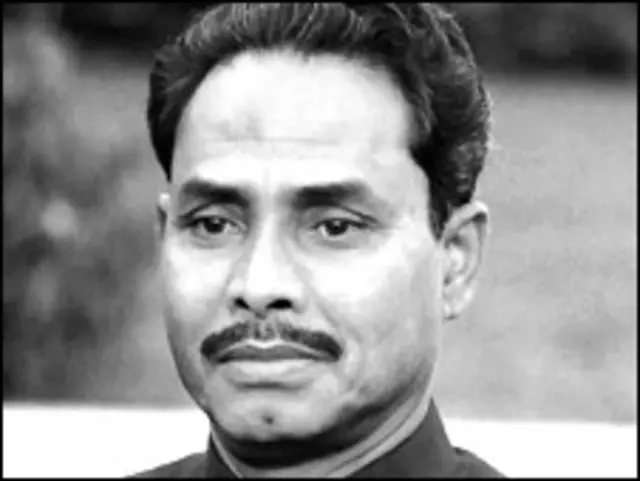
জেনারেল এরশাদের ক্ষমতাগ্রহণ - BBC News বাংলা

On 5 August, many, including Jamaat-BNP, the NCP, the CPB and Udichi, will observe the anniversary of the fall of Sheikh Hasina’s government.

But when one looks at history, a question arises: does any young person in this country today even know whether Ershad fell on 5 December or 6 December? Such is the eventual fate of days commemorating political movements.

Yet 5 August 2024 will remain in history, marked by pain in the heart of the Bengali nation and by the lowering of its head in shame. From that afternoon onward, the people of this country witnessed the demolition of sculptures of Bangabandhu. They saw people urinate upon the head of a sculpture of the Father of the Nation. Even individuals in state uniform took part in demolishing sculptures of the founder of the state. Bangabandhu’s historic house was set on fire, and living human beings were burned to death there. Every trace of his memory was erased. Although he was assassinated on 15 August 1975, even then he was not subjected to humiliation of this kind.

Bangabandhu Birthday Mujib Projects :: Photos, videos, logos, illustrations and branding :: Behance

He gave this riverine, agrarian people their first modern state, a people who had never before possessed a state of their own. He was assassinated together with his family in August. Then, in August 2024, he was once again humiliated, this time through acts of the crudest kind.

Such humiliation does not diminish his historical stature. History is never written at once. For history to be written, grains of sand must accumulate over time and become stone. On that stone, those who killed Caesar are recorded as conspirators and assassins, while Caesar retains his place among history’s great heroes. Likewise, people do not know the names of the associates who betrayed Alexander. Yet history remembers Alexander as Alexander the Great.
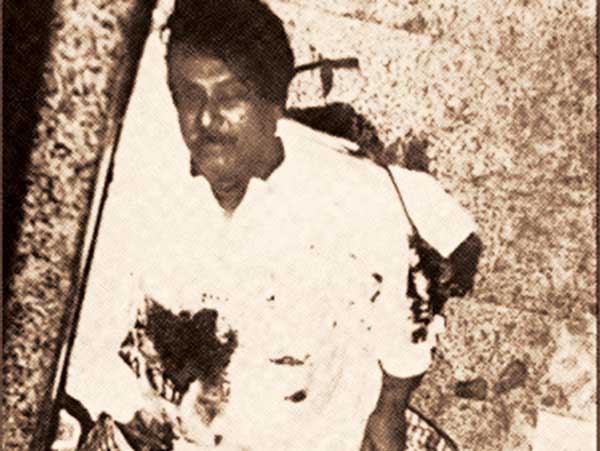
Jayanta Ghosal writes on Mujibar Rahaman murder - Anandabazar

In the same way:

“As long as the Padma, Jamuna, Gouri and Meghna flow,
Your achievements shall endure, Sheikh Mujibur Rahman.”

And that achievement is the country called Bangladesh. To humiliate him, therefore, is to call one’s own birth into question.

Even then, as a Bengali, and as someone who understands the significance of paternal identity, whenever the destruction and humiliation of the memory of the Father of the Nation, the founder of the state, comes to mind, the question is unavoidable: how will the nation free itself from this sin? Perhaps, even after such a sin, day may still dawn after the penance of night. But 5 August 2024 has left the Bengali nation with the permanent burden of this stain of ingratitude.

Author: Journalist honoured with the country’s highest state award; Editor, Sarakhon and The Present World.