7:35 pm, Thursday, 7 May 2026

National Workshop on Strengthening Primary Health Care in Bangladesh

Sarakhon Report

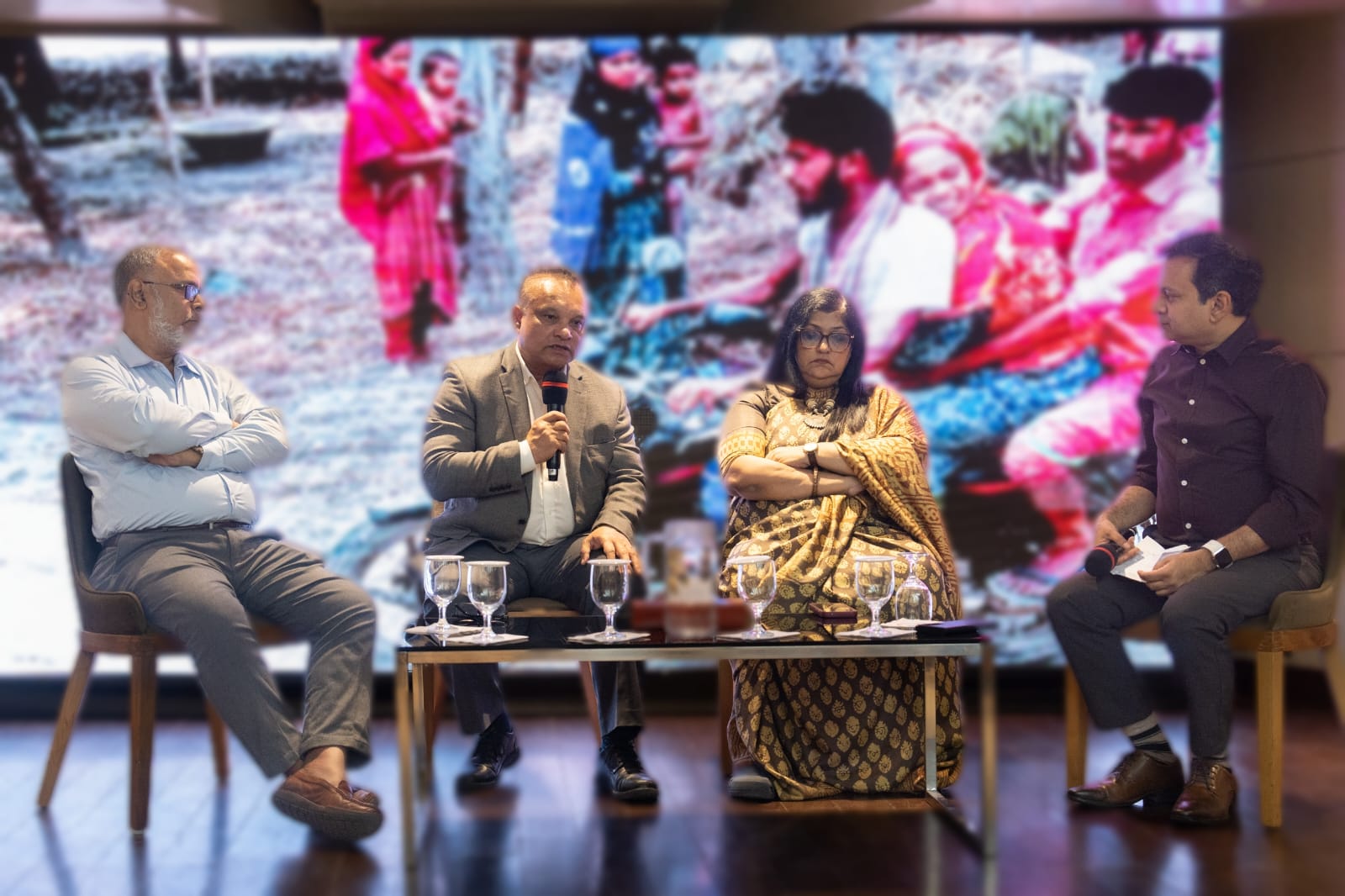
Bangladesh’s primary healthcare system has significant opportunities to become more connected, patient-centred, and responsive to emerging health challenges, experts and policymakers said at a two-day national workshop convened by BRAC, in collaboration with Medtronic LABS and PATH, at the BRAC Centre in Mohakhali, Dhaka.

The workshop, titled “Leapfrogging Primary Health Care in Bangladesh,” brought together senior government officials, development partners, technology providers, and health experts to explore practical ways to strengthen access, continuity, and quality of care across the country. Discussions focused on how digital tools, stronger referral systems, support for frontline health workers, and better-integrated patient information systems could improve primary healthcare delivery, particularly for underserved communities.

The event was attended by senior government officials and representatives from relevant agencies, including Dr S M Ziauddin Haider, Special Assistant to the Prime Minister on Health Affairs; Prof. Zahid Raihan, Additional Director General (Administration); Prof. Dr Foara Tasnim, Additional Director General (Planning and Development); Dr Abu Ahammad Al Mamun, Director (MIS); Dr Syed Kamrul Islam, Director (PHC & ITHC); and Dr Kazi Saifuddin Bennoor, Director (BMRC).

Representatives from development and funding partners, including the Asian Development Bank (ADB), the World Bank Group, JICA, UNICEF, and the Department of Foreign Affairs and Trade of the Australian Government, also joined the discussions. Technology experts and solution providers such as Delft Imaging, qure.ai, Shukhee, and molbio participated as well.

The workshop aimed to address persistent challenges within Bangladesh’s primary healthcare system, where many patients still struggle to access timely, affordable, and continuous care due to fragmented services, weak referral follow-up, incomplete patient records, and limited support for frontline health workers.

Over the two days, participants identified seven major gaps across the patient care journey. They discussed five priority solution areas, including digital and AI-supported decision tools, remote specialist support and diagnostics, capacity-building for frontline workers, improved provider workflows and patient information systems, and a shared health data and intelligence backbone.

The discussions centred on developing practical, Bangladesh-specific solutions to strengthen patient-centred care, improve coordination across the health system, and support future pilot implementation through collaboration among government agencies, development partners, NGOs, researchers, private-sector actors, and technology providers.

Dr S M Ziauddin Hyder, Special Assistant to the Prime Minister on Health Affairs, said strengthening primary healthcare remains one of the government’s key priorities, particularly to ensure that people in both rural and urban communities can access quality care close to where they live.

He emphasised the importance of promoting preventive healthcare practices, noting that greater public awareness and early care-seeking behaviour will be essential to improving long-term health outcomes. He also highlighted the role of digitalisation in strengthening primary healthcare delivery, improving coordination, and expanding access to services across the country.

Speaking during the “Leapfrogging Primary Healthcare in Bangladesh” workshop convened by BRAC, Medtronic LABS, and PATH, Asif Saleh, Executive Director of BRAC, said Bangladesh now has an opportunity to rethink how primary healthcare is organised and delivered, particularly for communities that remain underserved, difficult to reach, or vulnerable to climate and economic shocks.

He noted that while Bangladesh has built important foundations in community-based healthcare and frontline service delivery, patients still often experience the system as fragmented, episodic, and difficult to navigate.

According to Asif Saleh, addressing increasingly complex health challenges — including non-communicable diseases, mental health issues, maternal and child health concerns, and climate-related risks — will require a shift toward more integrated, continuous, and patient-centred models of care.
“Leapfrogging is not simply about digitising existing systems,” he said. “It is about reorganising care around the patient — ensuring that the right information, the right provider, and the right support are available at the right time throughout the entire care journey.”

He further noted that emerging digital infrastructure, advances in AI and data systems, expanding policy ambitions around integrated primary healthcare, and growing support from partners together create a rare opportunity for Bangladesh to build a stronger and more connected healthcare system.

Asif Saleh also stressed that lessons emerging from Bangladesh could have broader relevance for other countries, particularly across the developing world, facing similar pressures on their primary healthcare systems.

“The challenge of effective primary healthcare is global,” he said. “If we can demonstrate practical, scalable approaches that improve continuity, quality, and access in Bangladesh, those lessons could help inform health systems across many parts of the Global South.”


05:57:52 pm, Thursday, 7 May 2026

National Workshop on Strengthening Primary Health Care in Bangladesh

05:57:52 pm, Thursday, 7 May 2026

Bangladesh’s primary healthcare system has significant opportunities to become more connected, patient-centred, and responsive to emerging health challenges, experts and policymakers said at a two-day national workshop convened by BRAC, in collaboration with Medtronic LABS and PATH, at the BRAC Centre in Mohakhali, Dhaka.

The workshop, titled “Leapfrogging Primary Health Care in Bangladesh,” brought together senior government officials, development partners, technology providers, and health experts to explore practical ways to strengthen access, continuity, and quality of care across the country. Discussions focused on how digital tools, stronger referral systems, support for frontline health workers, and better-integrated patient information systems could improve primary healthcare delivery, particularly for underserved communities.

The event was attended by senior government officials and representatives from relevant agencies, including Dr S M Ziauddin Haider, Special Assistant to the Prime Minister on Health Affairs; Prof. Zahid Raihan, Additional Director General (Administration); Prof. Dr Foara Tasnim, Additional Director General (Planning and Development); Dr Abu Ahammad Al Mamun, Director (MIS); Dr Syed Kamrul Islam, Director (PHC & ITHC); and Dr Kazi Saifuddin Bennoor, Director (BMRC).

Representatives from development and funding partners, including the Asian Development Bank (ADB), the World Bank Group, JICA, UNICEF, and the Department of Foreign Affairs and Trade of the Australian Government, also joined the discussions. Technology experts and solution providers such as Delft Imaging, qure.ai, Shukhee, and molbio participated as well.

The workshop aimed to address persistent challenges within Bangladesh’s primary healthcare system, where many patients still struggle to access timely, affordable, and continuous care due to fragmented services, weak referral follow-up, incomplete patient records, and limited support for frontline health workers.

Over the two days, participants identified seven major gaps across the patient care journey. They discussed five priority solution areas, including digital and AI-supported decision tools, remote specialist support and diagnostics, capacity-building for frontline workers, improved provider workflows and patient information systems, and a shared health data and intelligence backbone.

The discussions centred on developing practical, Bangladesh-specific solutions to strengthen patient-centred care, improve coordination across the health system, and support future pilot implementation through collaboration among government agencies, development partners, NGOs, researchers, private-sector actors, and technology providers.

Dr S M Ziauddin Hyder, Special Assistant to the Prime Minister on Health Affairs, said strengthening primary healthcare remains one of the government’s key priorities, particularly to ensure that people in both rural and urban communities can access quality care close to where they live.

He emphasised the importance of promoting preventive healthcare practices, noting that greater public awareness and early care-seeking behaviour will be essential to improving long-term health outcomes. He also highlighted the role of digitalisation in strengthening primary healthcare delivery, improving coordination, and expanding access to services across the country.

Speaking during the “Leapfrogging Primary Healthcare in Bangladesh” workshop convened by BRAC, Medtronic LABS, and PATH, Asif Saleh, Executive Director of BRAC, said Bangladesh now has an opportunity to rethink how primary healthcare is organised and delivered, particularly for communities that remain underserved, difficult to reach, or vulnerable to climate and economic shocks.

He noted that while Bangladesh has built important foundations in community-based healthcare and frontline service delivery, patients still often experience the system as fragmented, episodic, and difficult to navigate.

According to Asif Saleh, addressing increasingly complex health challenges — including non-communicable diseases, mental health issues, maternal and child health concerns, and climate-related risks — will require a shift toward more integrated, continuous, and patient-centred models of care.

“Leapfrogging is not simply about digitising existing systems,” he said. “It is about reorganising care around the patient — ensuring that the right information, the right provider, and the right support are available at the right time throughout the entire care journey.”

He further noted that emerging digital infrastructure, advances in AI and data systems, expanding policy ambitions around integrated primary healthcare, and growing support from partners together create a rare opportunity for Bangladesh to build a stronger and more connected healthcare system.

Asif Saleh also stressed that lessons emerging from Bangladesh could have broader relevance for other countries, particularly across the developing world, facing similar pressures on their primary healthcare systems.

“The challenge of effective primary healthcare is global,” he said. “If we can demonstrate practical, scalable approaches that improve continuity, quality, and access in Bangladesh, those lessons could help inform health systems across many parts of the Global South.”