Is the Ganges Water Treaty Heading Towards a December Deadlock?

Swadesh Roy

“The issues relating to the 1996 Ganges Water Treaty will be discussed within the framework of the Joint Rivers Commission of the two countries.

Speaking to journalists in New Delhi, India’s Ministry of External Affairs spokesperson Randhir Jaiswal said that the Ganges Water Treaty was signed in 1996 for a period of 30 years and that all water and river-related issues between India and Bangladesh are discussed as part of the agenda of the bilateral Joint Rivers Commission. He also said that meetings of the Joint Committee established under the treaty continue to be held at the technical level.”

The Ganges Water Treaty between India and Bangladesh will expire in December this year. Only three months remain before December arrives. It was at this juncture, on the afternoon of 29 August, that India’s Ministry of External Affairs, through its official spokesperson Randhir Jaiswal, made its position known regarding the renewal of the India-Bangladesh Ganges Water Treaty.

Meanwhile, Bangladesh’s Foreign Minister, Dr Khalilur Rahman, informed Parliament that Bangladesh had already sent India a draft proposal concerning the renewal of the Ganges Water Treaty and was now awaiting India’s response. If the statement of India’s Ministry of External Affairs, conveyed through Mr Jaiswal, is regarded largely as a response to Bangladesh’s proposal, it may then be said that the renewal of the India-Bangladesh Ganges Water Treaty is entering a period of uncertainty.

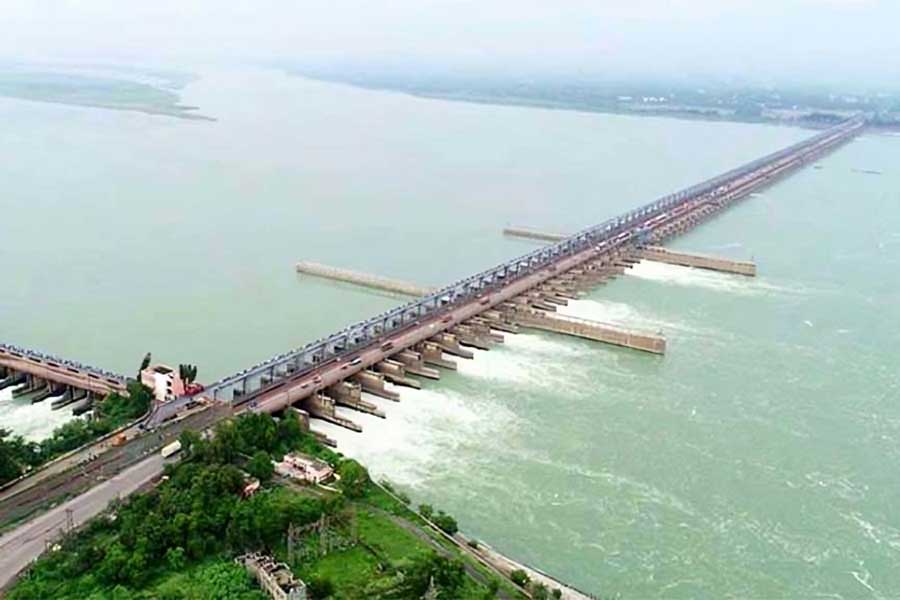
Ganga-Padma Water Sharing Agreement | River experts of Bangladesh supported India's claim on water distribution of Padma River from Farakka Barrage dgtld - Anandabazar

Farakka Barrage

During the Ershad era, I had the good fortune to cover several meetings of the Joint Rivers Commission. An even greater fortune was the opportunity to examine the extensive file maintained by journalist Ataus Samad on JRC meetings. In addition, while seeking comments from the water-resources expert B. M. Abbas during that period, I had the opportunity to learn about certain aspects of the issue. Taking all those experiences together, it may be said that placing the Ganges Water Treaty within the process of JRC meetings is much like forming an inquiry committee to examine a particular matter. It is generally seen that when a government wishes to keep a sensitive issue hanging indefinitely, it forms an inquiry committee. And the formation of an inquiry committee usually means that nobody knows when the matter will finally be resolved.

The recent natural disaster in Nepal demonstrates that river issues and water-sharing agreements do not concern only the supply of water to agriculture-dependent regions in the lower basin. What is most closely connected with such agreements is the mutual exchange of information, particularly the sharing of essential information by the upper riparian state with the lower-basin region.

The extent to which such information is necessary can be understood from the responsible writings of water experts and diplomats in the Pakistani media since India placed the Indus Waters Treaty in abeyance following the Pahalgam attack, a decision that preceded Operation Sindoor. In these writings and statements, every responsible expert has argued that the two countries should immediately resolve the water-related problems of the Indus basin rivers through high-level discussions in Pakistan’s interest. Yet, at the time they are making these arguments, India has not, in practical terms, stopped the flow of water in that sense. It has, however, stopped sharing information. That alone has caused Pakistan to suffer from both floods and drought.

Record Flooding: $40 Billion Of Damage In Pakistan As Monsoons Devastate South Asia

Floods in Pakistan

How essential information-sharing from the upper basin can be was demonstrated this week by the devastating flash flood in Nepal’s Bhote Koshi river system. Warning information was shared with the people of Nepal only 15 minutes before the disaster. There is very little practical difference between sharing information 15 minutes before a catastrophe and not sharing it at all.

The Indus Waters Treaty between India and Pakistan was concluded through the mediation of the World Bank. However, judging from the writings and statements of Pakistani experts, it appears that the World Bank can no longer do anything about the present situation. The only solution is to resolve the matter through cordial discussions between the two countries. Several columnists appearing recently on Geo News and in leading Pakistani newspapers have expressed almost the same view. What they are seeking to say is that, rather than attempting to mediate the war between the United States and Iran, it is far more urgent for Pakistan’s leaders to think about their own farmers and about preventing future desertification and floods. This is because the lives and livelihoods of tens of millions of ordinary Pakistanis are connected with the issue. For that reason, genuine high-level discussions between India and Pakistan must begin and must be made effective.

The same applies to resolving the water-related problems concerning the Ganges and the other 54 rivers shared by Bangladesh and India. Connected with this issue are not only the lives and livelihoods of Bangladesh’s ordinary people, but also the climatic impact on the land in different regions of the country and the changes that such impacts bring to the land and the natural environment. Moreover, the world is now confronting an intensifying El Niño event, one that international climate agencies warn may become exceptionally strong. From Indonesia in the Asia-Pacific to Pakistan, India and Bangladesh in South Asia, countries face the twin dangers of desertification and flooding. The flood cycle itself has changed. Floods are no longer events that occur once in ten years. They may now occur at virtually any moment.

Fight against desertification

Desertification of Pakistan

Over the past 56 years, Bangladesh has seen and heard many things concerning the waters of the Ganges. From the Farakka Long March to raising the issue at the United Nations, all these are now familiar chapters. Everyone also knows how much such efforts ultimately achieved.

History instead tells us that, even before the Farakka Barrage became operational, Bangabandhu Sheikh Mujibur Rahman, then head of government, had by 1975 brought the question of a permanent agreement, in addition to an interim arrangement, within a definite framework. But he was assassinated before such an agreement could be concluded. Later, discussions between Morarji Desai and Ziaur Rahman resulted in a five-year agreement in 1977. The reality, however, was that the agreement contained substantial deficiencies in its data. Even so, the agreement did not remain effective for long. From then until 1996, the arrangement continued through a series of interim renewals. Although Bangladesh had a democratic government from 1991 to 1996, it was not possible by any means to secure either a Ganges water treaty or a guarantee that information concerning the 54 shared rivers would be supplied.

The path that Pakistani experts are now advising their country’s highest leaders to follow regarding the rivers of the Indus basin was precisely the path followed in 1996 by Bangladesh’s leader and head of government, Sheikh Hasina, when she concluded this treaty for a period of 30 years. Its term will expire this December.

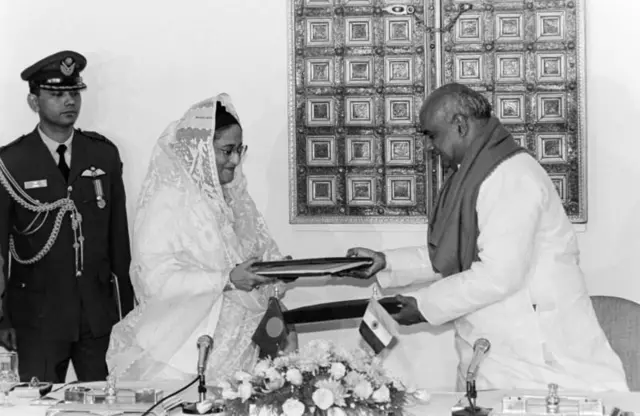
১৯৯৬ সালের ডিসেম্বরে দিল্লিতে গঙ্গা চুক্তি স্বাক্ষরিত হওয়ার সময় দুই প্রধানমন্ত্রী শেখ হাসিনা ও এইচ ডি দেবেগৌড়া

Former Prime Ministers Sheikh Hasina and H.D. Deve Gowda were present when the Ganga Accord was signed in Delhi in December 1996.

Three months before the treaty’s expiry, the words of the Indian Ministry of External Affairs spokesperson indicate that Bangladesh may be heading towards a complication over the waters of its principal river, the Padma, known as the Ganges in India, resembling the difficulty now confronting Pakistan. An analysis of the Indian spokesperson’s statement makes it easy to conclude that the renewal of the Ganges Water Treaty may be entering a process in which an early renewal becomes increasingly unlikely.

On one side lies the impact of El Niño, and on the other are shortages of gas, electricity, fertiliser and fuel. At such a time, the government must calmly understand how devastating uncertainty over the waters of the Ganges could be for tens of millions of ordinary people across the country. Taken together, the Yunus government and the present government have, over the past two years, failed to proceed along the correct path towards resolving the problems of energy and fertiliser. That pattern of governmental conduct must not be repeated in the case of the Ganges Water Treaty.

The author is an award-winning journalist and editor of Sarakhon and The Present World.

12:31:19 pm, Monday, 31 August 2026

Is the Ganges Water Treaty Heading Towards a December Deadlock?


12:31:19 pm, Monday, 31 August 2026

“The issues relating to the 1996 Ganges Water Treaty will be discussed within the framework of the Joint Rivers Commission of the two countries.

Speaking to journalists in New Delhi, India’s Ministry of External Affairs spokesperson Randhir Jaiswal said that the Ganges Water Treaty was signed in 1996 for a period of 30 years and that all water and river-related issues between India and Bangladesh are discussed as part of the agenda of the bilateral Joint Rivers Commission. He also said that meetings of the Joint Committee established under the treaty continue to be held at the technical level.”

The Ganges Water Treaty between India and Bangladesh will expire in December this year. Only three months remain before December arrives. It was at this juncture, on the afternoon of 29 August, that India’s Ministry of External Affairs, through its official spokesperson Randhir Jaiswal, made its position known regarding the renewal of the India-Bangladesh Ganges Water Treaty.

Meanwhile, Bangladesh’s Foreign Minister, Dr Khalilur Rahman, informed Parliament that Bangladesh had already sent India a draft proposal concerning the renewal of the Ganges Water Treaty and was now awaiting India’s response. If the statement of India’s Ministry of External Affairs, conveyed through Mr Jaiswal, is regarded largely as a response to Bangladesh’s proposal, it may then be said that the renewal of the India-Bangladesh Ganges Water Treaty is entering a period of uncertainty.
Ganga-Padma Water Sharing Agreement | River experts of Bangladesh supported India's claim on water distribution of Padma River from Farakka Barrage dgtld - Anandabazar

Farakka Barrage

During the Ershad era, I had the good fortune to cover several meetings of the Joint Rivers Commission. An even greater fortune was the opportunity to examine the extensive file maintained by journalist Ataus Samad on JRC meetings. In addition, while seeking comments from the water-resources expert B. M. Abbas during that period, I had the opportunity to learn about certain aspects of the issue. Taking all those experiences together, it may be said that placing the Ganges Water Treaty within the process of JRC meetings is much like forming an inquiry committee to examine a particular matter. It is generally seen that when a government wishes to keep a sensitive issue hanging indefinitely, it forms an inquiry committee. And the formation of an inquiry committee usually means that nobody knows when the matter will finally be resolved.

The recent natural disaster in Nepal demonstrates that river issues and water-sharing agreements do not concern only the supply of water to agriculture-dependent regions in the lower basin. What is most closely connected with such agreements is the mutual exchange of information, particularly the sharing of essential information by the upper riparian state with the lower-basin region.

The extent to which such information is necessary can be understood from the responsible writings of water experts and diplomats in the Pakistani media since India placed the Indus Waters Treaty in abeyance following the Pahalgam attack, a decision that preceded Operation Sindoor. In these writings and statements, every responsible expert has argued that the two countries should immediately resolve the water-related problems of the Indus basin rivers through high-level discussions in Pakistan’s interest. Yet, at the time they are making these arguments, India has not, in practical terms, stopped the flow of water in that sense. It has, however, stopped sharing information. That alone has caused Pakistan to suffer from both floods and drought.

Record Flooding: $40 Billion Of Damage In Pakistan As Monsoons Devastate South Asia

Floods in Pakistan

How essential information-sharing from the upper basin can be was demonstrated this week by the devastating flash flood in Nepal’s Bhote Koshi river system. Warning information was shared with the people of Nepal only 15 minutes before the disaster. There is very little practical difference between sharing information 15 minutes before a catastrophe and not sharing it at all.

The Indus Waters Treaty between India and Pakistan was concluded through the mediation of the World Bank. However, judging from the writings and statements of Pakistani experts, it appears that the World Bank can no longer do anything about the present situation. The only solution is to resolve the matter through cordial discussions between the two countries. Several columnists appearing recently on Geo News and in leading Pakistani newspapers have expressed almost the same view. What they are seeking to say is that, rather than attempting to mediate the war between the United States and Iran, it is far more urgent for Pakistan’s leaders to think about their own farmers and about preventing future desertification and floods. This is because the lives and livelihoods of tens of millions of ordinary Pakistanis are connected with the issue. For that reason, genuine high-level discussions between India and Pakistan must begin and must be made effective.

The same applies to resolving the water-related problems concerning the Ganges and the other 54 rivers shared by Bangladesh and India. Connected with this issue are not only the lives and livelihoods of Bangladesh’s ordinary people, but also the climatic impact on the land in different regions of the country and the changes that such impacts bring to the land and the natural environment. Moreover, the world is now confronting an intensifying El Niño event, one that international climate agencies warn may become exceptionally strong. From Indonesia in the Asia-Pacific to Pakistan, India and Bangladesh in South Asia, countries face the twin dangers of desertification and flooding. The flood cycle itself has changed. Floods are no longer events that occur once in ten years. They may now occur at virtually any moment.

Fight against desertification

Desertification of Pakistan

Over the past 56 years, Bangladesh has seen and heard many things concerning the waters of the Ganges. From the Farakka Long March to raising the issue at the United Nations, all these are now familiar chapters. Everyone also knows how much such efforts ultimately achieved.

History instead tells us that, even before the Farakka Barrage became operational, Bangabandhu Sheikh Mujibur Rahman, then head of government, had by 1975 brought the question of a permanent agreement, in addition to an interim arrangement, within a definite framework. But he was assassinated before such an agreement could be concluded. Later, discussions between Morarji Desai and Ziaur Rahman resulted in a five-year agreement in 1977. The reality, however, was that the agreement contained substantial deficiencies in its data. Even so, the agreement did not remain effective for long. From then until 1996, the arrangement continued through a series of interim renewals. Although Bangladesh had a democratic government from 1991 to 1996, it was not possible by any means to secure either a Ganges water treaty or a guarantee that information concerning the 54 shared rivers would be supplied.

The path that Pakistani experts are now advising their country’s highest leaders to follow regarding the rivers of the Indus basin was precisely the path followed in 1996 by Bangladesh’s leader and head of government, Sheikh Hasina, when she concluded this treaty for a period of 30 years. Its term will expire this December.
১৯৯৬ সালের ডিসেম্বরে দিল্লিতে গঙ্গা চুক্তি স্বাক্ষরিত হওয়ার সময় দুই প্রধানমন্ত্রী শেখ হাসিনা ও এইচ ডি দেবেগৌড়া

Former Prime Ministers Sheikh Hasina and H.D. Deve Gowda were present when the Ganga Accord was signed in Delhi in December 1996.

Three months before the treaty’s expiry, the words of the Indian Ministry of External Affairs spokesperson indicate that Bangladesh may be heading towards a complication over the waters of its principal river, the Padma, known as the Ganges in India, resembling the difficulty now confronting Pakistan. An analysis of the Indian spokesperson’s statement makes it easy to conclude that the renewal of the Ganges Water Treaty may be entering a process in which an early renewal becomes increasingly unlikely.

On one side lies the impact of El Niño, and on the other are shortages of gas, electricity, fertiliser and fuel. At such a time, the government must calmly understand how devastating uncertainty over the waters of the Ganges could be for tens of millions of ordinary people across the country. Taken together, the Yunus government and the present government have, over the past two years, failed to proceed along the correct path towards resolving the problems of energy and fertiliser. That pattern of governmental conduct must not be repeated in the case of the Ganges Water Treaty.

The author is an award-winning journalist and editor of Sarakhon and The Present World.