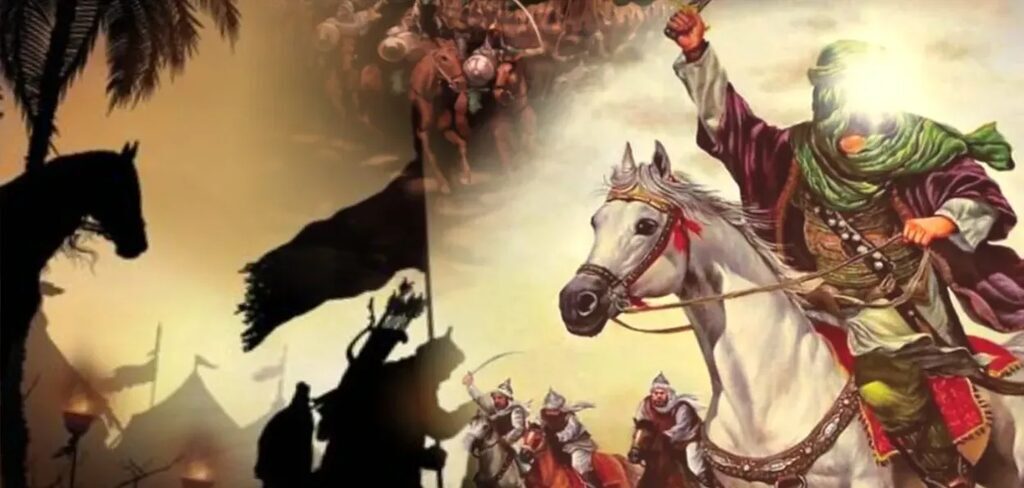

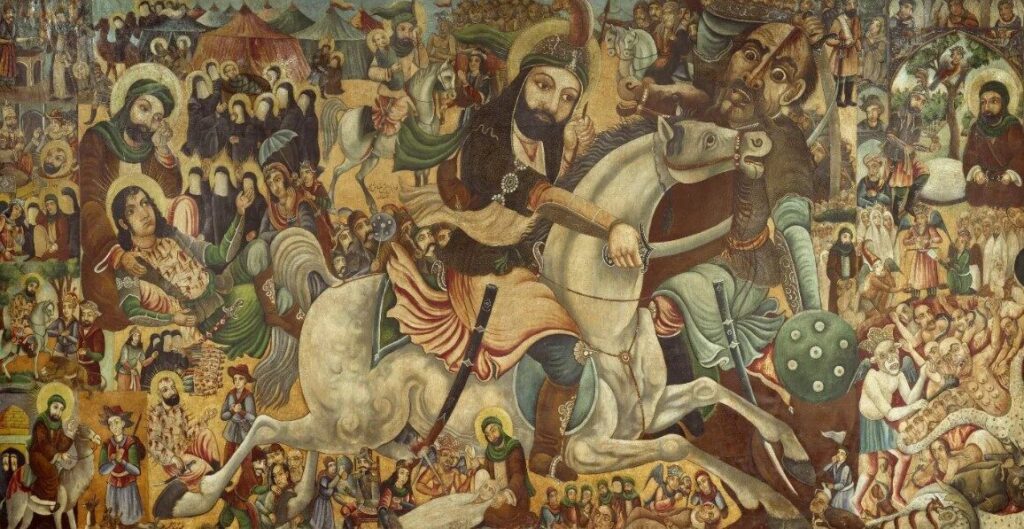
Some events in Islamic history have become far more than memories of the past. Over the centuries, they have shaped people’s faith, moral values, culture, and sense of identity. The Battle of Karbala is one such event. In 680 CE, Imam Hussein ibn Ali, the grandson of Prophet Muhammad, and his companions were martyred at Karbala in present-day Iraq. Their deaths occupy a central place in the religious consciousness of Shia Muslims. For them, Karbala is not merely a battlefield; it is a symbol of standing against injustice, sacrificing oneself for justice, and remaining steadfast in the pursuit of truth.
Nearly 1,400 years later, Shia Muslims around the world continue to commemorate Karbala during the month of Muharram. Through tears, mourning processions, religious gatherings, elegies, and acts of mourning, they preserve a historical memory that tells a story of both grief and moral courage.
Yet the history of Shia Muslims is not confined to the tragedy of Karbala. From the political and theological debates of Islam’s early years to scholarship, philosophy, literature, architecture, empire-building, and social life in the modern world, their contributions span a long and varied history. To understand this legacy, one must look beyond the sorrow of Karbala to the community’s achievements, intellectual traditions, and enduring faith passed down through generations.
The Origins of a Faith Centered on the Prophet’s Family
The word “Shia” derives from the Arabic expression “Shi‘at Ali,” meaning the followers or supporters of Ali. The historical roots of Shia identity lie in the debate that emerged after the death of Prophet Muhammad over who should lead the Muslim community. Shia Muslims believe that Ali ibn Abi Talib, the Prophet’s cousin and son-in-law, and his descendants had a special right to lead the community. Over time, this political position developed into a distinct religious doctrine, spiritual tradition, and set of institutions.
Ali was one of the most important figures in early Islamic history and served as the fourth caliph. His wife, Fatima, was the daughter of Prophet Muhammad. Their two sons, Hasan and Hussein, were the Prophet’s grandsons. In Shia religious tradition, this family—known as the Ahl al-Bayt, or the family of the Prophet—is held in special esteem.
Although Shia Islam has several branches, reverence for the Prophet’s family is an important feature they share. However, Shia groups differ over the number of Imams, their authority, and the question of succession. Twelver Shias, also known as Ithna Ashari Shias, recognize twelve Imams, while Ismaili and Zaydi Shias follow their own distinct religious traditions.
At the heart of this history lies a profound belief: leadership is not merely a matter of political power but is also connected to religious knowledge, moral authority, and justice. This understanding played a significant role in the development of Shia theology and spiritual thought over subsequent centuries.
Karbala: An Unequal Battle
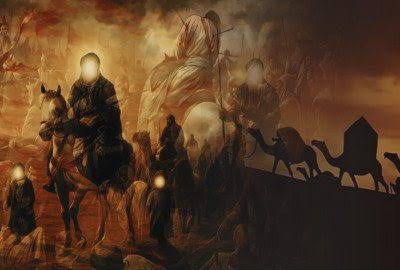
In 680 CE, following the death of the Umayyad ruler Muawiya, his son Yazid assumed power. Hussein refused to pledge allegiance to him. Some people in the Iraqi city of Kufa invited Hussein to come there and promised him their support. Responding to their appeal, he set out for Iraq with members of his family and a small group of followers.
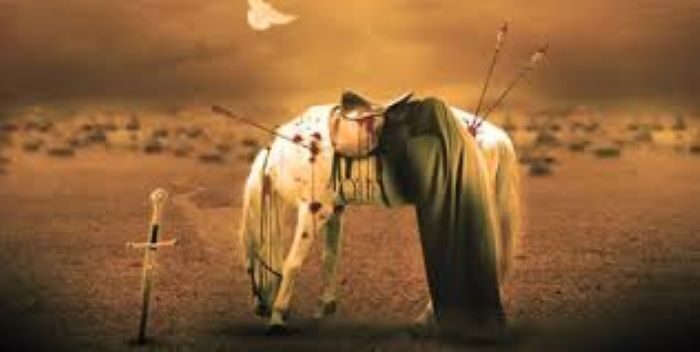
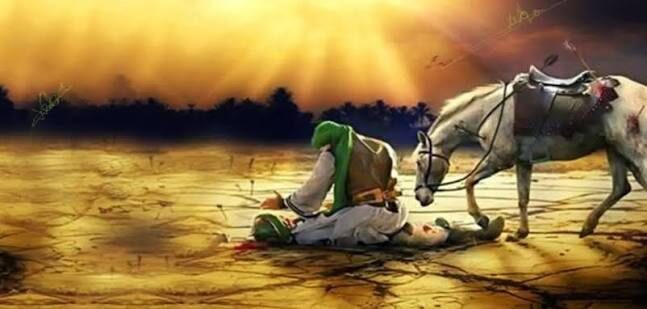
But the situation quickly changed. His supporters in Kufa were unable to stand by him effectively. Umayyad forces intercepted Hussein and his companions at Karbala. On the 10th of Muharram in 61 AH, corresponding to 680 CE, Hussein and most of the men in his group were killed. The women and children of his family were taken captive.

Militarily, the confrontation was an unequal struggle. Hussein was accompanied by only a small number of relatives and followers, while his opponents commanded a much larger force. But the significance of Karbala was not limited to the outcome of the battle. For Shia Muslims, Hussein’s death became a symbol of a moral stance in which faith and justice were placed above submission to political power.
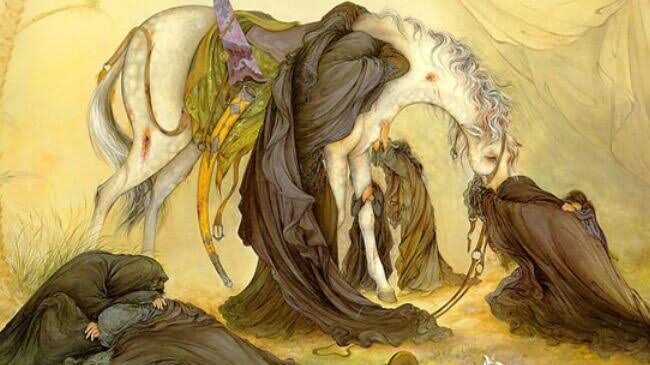
One historical distinction is important here. Hussein, who was killed at Karbala, was the grandson of Prophet Muhammad. His elder brother Hasan was also the Prophet’s grandson, but he did not die at Karbala; he had died earlier. Women in the Prophet’s family also played a crucial role in the events associated with Karbala. Hussein’s sister, Zaynab bint Ali, and other women of his family carried the memory of the tragedy through captivity and grief. Zaynab’s role has since acquired particular significance in Shia commemorative tradition.
Ashura: Keeping History Alive Through Mourning
The first ten days of Muharram hold special significance in the Shia religious calendar. The tenth day, Ashura, is the principal day of mourning and reflection in remembrance of Karbala. In countries around the world, Shia Muslims attend religious gatherings, listen to sermons about the events of Karbala, recite elegies, and take part in mourning processions.
The expressions of mourning vary. In some places, people recite marsiya, or elegies; elsewhere, they perform matam, a form of ritual chest-beating, while processions are held in remembrance of Karbala. Large numbers of pilgrims visit the shrine of Imam Hussein in Karbala, Iraq, as well as sacred sites associated with his half-brother Abbas ibn Ali. Ashura is also observed according to distinctive local traditions in cities across Iran, South Asia, Lebanon, and other parts of the world.
Not all Shia Muslims observe mourning in the same way. Practices vary according to region, religious tradition, family customs, and personal belief. Some attend extended religious discussions, others emphasize charity and service to people, while many express their remembrance of Karbala through mourning processions and matam.
A common feeling underlies these practices: the deaths of Hussein and his companions are not merely events of the distant past. Their memory continues to confront present generations with questions of justice, responsibility, and humanity.
Beyond Tears: A Language of Protest
In Shia religious culture, the memory of Karbala has become a language of protest as well as mourning. Hussein’s sacrifice is regarded as an example of taking a principled stand against injustice. In this interpretation, Karbala teaches that numerical superiority or military strength does not, by itself, establish the moral legitimacy of a cause.
Interpretations of Karbala, however, have never been entirely uniform. Religious speakers, historians, poets, and political thinkers have examined the event from different perspectives. For some, it represents the highest form of religious devotion; for others, it symbolizes resistance to oppression. Still others view it as a historical episode through which to examine the complex relationship between power, leadership, and moral responsibility.
The memory of Karbala has also been invoked in political movements. At various times, Shia leaders have drawn on Hussein’s sacrifice to call for resistance against injustice. Yet this historical symbol has not always served the same political purpose. The relationship between religious devotion, social justice, and political struggle has changed according to the circumstances of different periods.
This tradition of mourning is therefore both an expression of personal grief and a means of preserving collective memory. By recounting the story of Karbala from one generation to the next, a community sustains its history, values, and identity.
A Glorious Past: Empires, Scholarship, and Cultural Development
Explaining Shia Muslim history solely through the sorrow of Karbala would obscure its broader cultural and intellectual legacy. During the medieval period, various Shia ruling dynasties gained political power and contributed to the development of Islamic civilization.
One notable example is the Fatimid Caliphate. Founded in North Africa in 909, this Ismaili Shia dynasty later established a powerful political system centered on Egypt. Its capital was transferred to Egypt in 973. During the Fatimid period, Ismaili theology, literature, and scholarship developed, while Cairo emerged as an important political and cultural center.
Another significant chapter was the Safavid Empire. In the early sixteenth century, the Safavid rulers established Twelver Shia Islam as the state religion of Iran. This decision had a lasting influence on the country’s religious and political identity. It also opened a new chapter in the development of religious educational institutions, jurisprudence, philosophy, the arts, and architecture.
Imam Ja‘far al-Sadiq is another important figure in the development of Shia religious thought. This eighth-century religious scholar is associated with a significant period in the development of Shia jurisprudence and theology. The school of Islamic law associated with his name and followed by Twelver Shias is known as the Ja‘fari school.
The significance of this history lies in the fact that Shia tradition has never been confined to mourning and remembrance. It has also contributed to the development of religious law, philosophy, literature, spirituality, and political thought. At different times, Shia communities have contributed to scholarship, architecture, the arts, and social institutions. These achievements should not, however, be treated as the exclusive accomplishments of a single religious identity. Interaction and contributions among different communities were important to the history of Islamic civilization as a whole.
The Memory of Karbala and Questions of Humanity
The role of women in the story of Karbala is particularly significant. Hussein’s sister Zaynab and other women of his family were taken captive after the killings. In religious accounts, their words, patience, and courage are regarded as important elements in preserving the memory of Karbala. Their experience reminds us that history is not confined to those who die on the battlefield. Those who survive and carry forward the memory and accounts of an event are also part of history.
In many communities, commemorations of Karbala include distributing food to the poor, providing water, and helping those in need. The religious interpretations and local customs associated with these activities vary. Nevertheless, they are often regarded as ways of turning mourning into social responsibility.
A question repeatedly raised by the story of Karbala is this: What is a person’s duty in the face of injustice? How difficult is it to oppose the powerful, and how great can the cost of defending one’s moral convictions be? These questions are relevant not only to Shia Muslims but also to anyone reflecting on history, religion, and ethics.
At the same time, it is important to respect the historical and theological differences among the various traditions within Islam when interpreting the memory of Karbala. Sunni Muslims also revere Ali, Fatima, Hasan, and Hussein, although the commemoration of Karbala and the concept of the Imams occupy a particularly central place in Shia religious life. Despite differences in belief and practice, reverence for the Prophet’s family remains an important part of the broader Islamic tradition.
A Memory That Remains Alive Across the Centuries
The Battle of Karbala was limited in military scale, but its historical and religious impact has endured. It remains a central element of Shia Muslim identity, ritual, and spirituality. At the same time, it is an important chapter in the wider history of Islam, shaping ongoing discussions about leadership, justice, allegiance, and sacrifice.
The glorious history of Shia Muslims includes their deep devotion to the Prophet’s family, the theological traditions developed around the teachings of the Imams, the growth of scholarship, and the political and cultural institutions established in different eras. At the heart of their tradition of mourning lies Karbala, where the deaths of Imam Hussein and his companions transformed a historical event into a memory that has acquired new meanings across generations.
Through Muharram processions, elegies, prayers, and pilgrimages to Karbala, this history remains alive today. These commemorations involve tears, but they express more than grief. They also embody faith, identity, and a moral commitment to standing for justice.
Ultimately, the legacy of Karbala leaves behind a profound human question: Beyond the calculations of power and numbers, what are truth, justice, and conscience worth? For Shia Muslims, seeking an answer means returning time and again to the memory of Imam Hussein—and to the long, diverse, and deeply human history that has grown around it.