

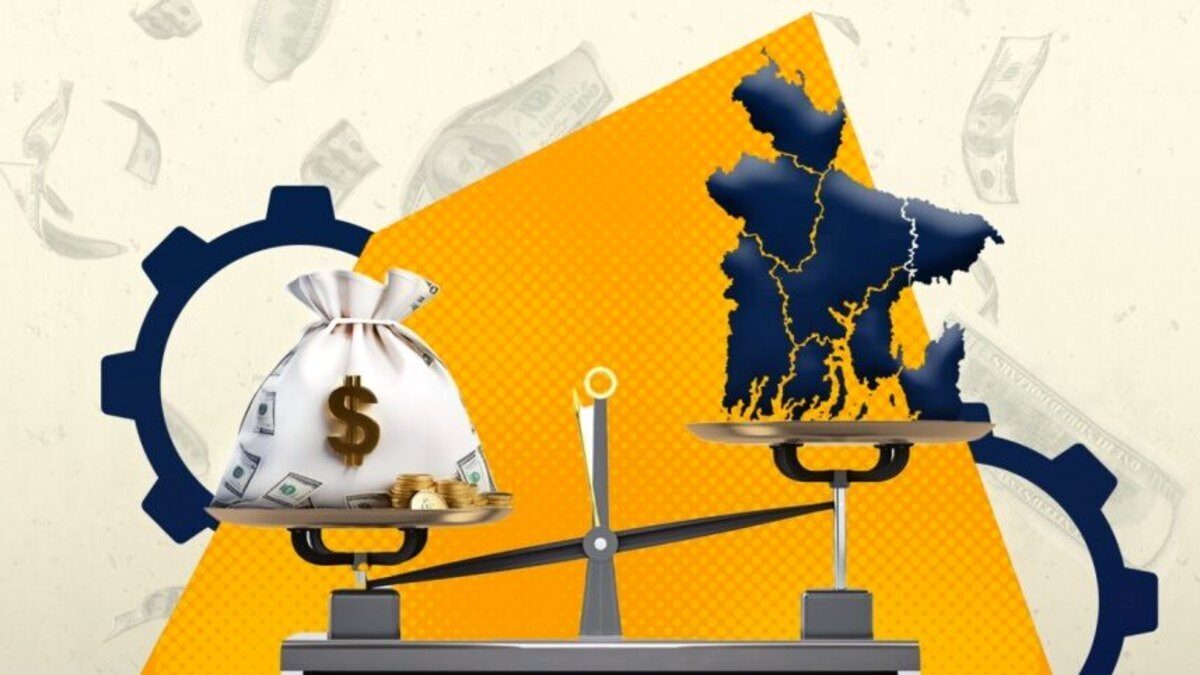
Bangladesh’s economy is under pressure from multiple simultaneous crises—high inflation, foreign exchange tightness, massive non-performing loans, weak revenue collection, and rising debt servicing obligations. In this situation, financing from the International Monetary Fund (IMF) may provide temporary relief, but the fundamental question remains how long Bangladesh can sustain itself on loans.
IMF funding helps manage external balance of payments pressures and maintain the confidence of development partners. However, this money must be repaid. Alongside obtaining loans, urgent reforms are needed in the banking sector, revenue policy, monetary policy, and the exchange rate system. Hiding past weaknesses behind new loans will only increase future liabilities.
Low Growth, High Uncertainty
The pace of industrial investment and employment creation remains weak, while inflation has eroded public purchasing power. Although ready-made garment exports, remittances, and agricultural output have provided some support, the overall economic situation remains fragile.
According to World Bank projections, Bangladesh’s GDP growth could be 3.4 percent in fiscal years 2025-26 and 2026-27. The agency also estimates that nearly 2.1 million people fell into poverty in FY 2025-26. An IMF assessment similarly warned that without progress on reforms, growth could drop to 3.5 percent in FY 2026-27.
This outlook indicates that turning the economy around requires more than just financial supply—an environment that boosts production and investment is essential.
IMF Financing: Relief, Not a Permanent Solution
Bangladesh is already under an IMF loan program, with discussions ongoing regarding new financing and reform conditions. In July 2026, an IMF delegation discussed the economic situation and reform priorities in Dhaka. However, discussions and final approval of a new program are two different matters.
While IMF funds can enhance external transaction capacity and help secure financing from other development partners, loans are not grants. Without increases in production, exports, and revenue generation, these loans will only heighten repayment pressures in the future.
Banking Sector Weakened by Bad Loans
The distress in the banking sector poses one of the biggest risks to the economy. According to Bangladesh Bank data, default loans reached Tk 6,06,555 crore at the end of June 2026, accounting for 32.78 percent of total loans.
Political influence, weak supervision, and loan management irregularities have deepened the crisis. Merely keeping weak banks afloat with government funds will not solve the problem. What is required is an accurate assessment of bank asset quality, strict loan recovery, board accountability, and strengthened regulatory oversight. Recovering embezzled funds and taking action against offenders are also crucial.
Low Revenue, High Debt Reliance
Low government revenue has increased reliance on borrowing to meet development and routine expenditures. According to World Bank estimates, Bangladesh’s tax-to-GDP ratio was just 6.7 percent in FY 2024-25. The institution highlighted the need to raise this rate to at least 15 percent to support necessary development spending.
Reducing tax evasion, expanding the tax net, and modernizing tax administration are vital. However, tax reforms must not place an extra burden on low-income groups, and the impact on essential commodity prices and living costs must be carefully considered.
Rising Domestic and External Debt Pressures
Understanding Bangladesh’s debt situation requires looking beyond external debt. According to a joint IMF-World Bank assessment, total public and publicly guaranteed debt reached approximately $188.8 billion at the end of FY 2024-25, representing about 41.3 percent of GDP.
A major portion of this is domestic debt. During the same period, domestic debt interest and repayments accounted for 4.2 percent of GDP, while external debt servicing stood at 1.2 percent of GDP.
When the government borrows heavily from commercial banks, private entrepreneurs and industries face credit crunches, threatening investment and job creation.
Project selection for external loans is equally critical. In FY 2025-26, Bangladesh received $8.07 billion in foreign assistance while paying $4.49 billion in principal and interest repayments. Therefore, before taking on new loans, projects must be evaluated for revenue generation, economic benefits, implementation risks, and repayment capacity, prioritizing projects that boost exports, cut import costs, or improve productivity.
Protecting Ordinary People from Reform Burdens
The IMF reform agenda includes increasing revenue, rationalizing subsidies, addressing banking sector weaknesses, and instilling discipline in monetary policy. However, reducing subsidies on fuel, electricity, or fertilizer could raise production costs and living expenses. It must be ensured that the tax burden does not fall heavily on the poor and low-income population.
To this end, targeted social support must accompany reforms. Making life harder for citizens in the name of achieving economic stability will only reduce the public acceptability of reforms.
Building Capacity, Not Accumulating Debt
There is currently no basis to conclude that Bangladesh has fallen into an inevitable debt crisis. The joint assessment ranks overall and external debt risk at a moderate level, though capacity to absorb major economic shocks remains limited.
The immediate priority should be curbing default loans, boosting revenue collection, ensuring efficiency in public spending, and financing productive investments. Concessional loans should be prioritized, and borrowed funds must not be locked up in unviable projects.
While IMF financing can buy time and offer relief, failing to use that time to fix structural economic weaknesses will cause new debt to prolong old crises. Bangladesh’s real success lies not in securing more loans, but in reducing loan dependency by expanding domestic revenue, production, and export capacity.
More by Sarakhon Report
 Indonesians Hire Runners to Fake Fitness App Achievements
 Pirojpur Farmers Cut Boro Cultivation Over Low Prices
 HSC Supplementary Exams Begin Dec 1 for 4.22 Lakh Students
 Bangladesh Face Pakistan in SAFF Championship Semi-Final