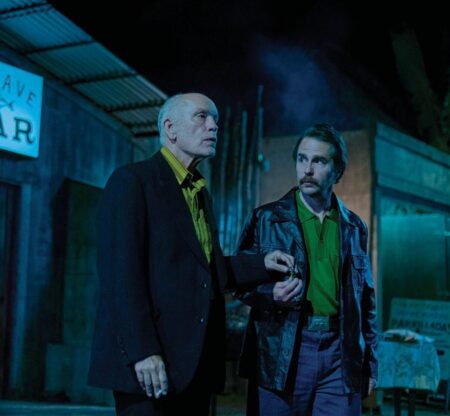

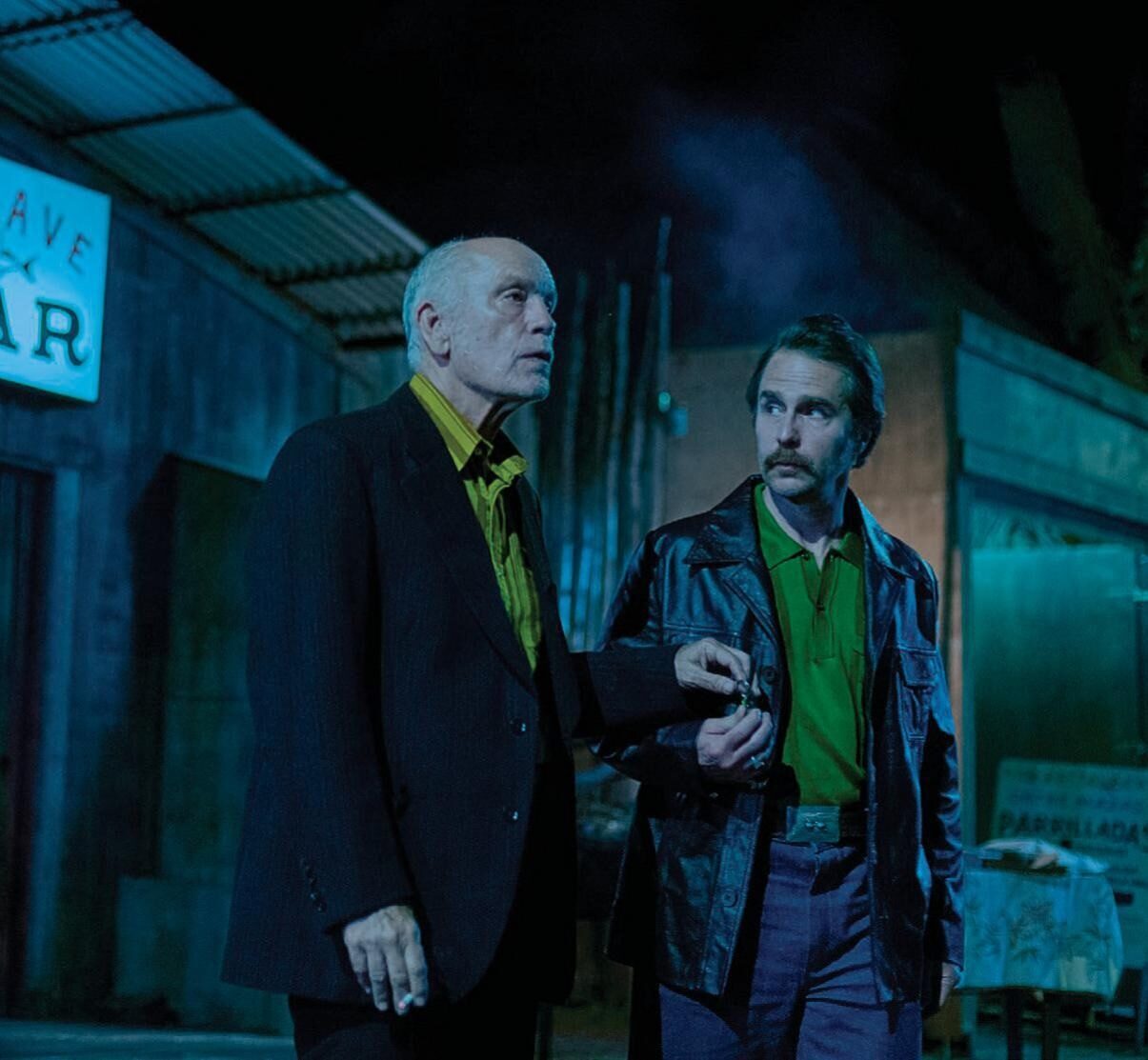
John Malkovich and Sam Rockwell deliver captivating performances as two 1970s CIA officers in director Martin McDonagh’s new film “Wild Horse Nine,” a story exploring friendship, conflict, politics, and the complexities of human nature.
When a filmmaker repeatedly tackles similar themes, is it a signature artistic style or a lack of fresh imagination? Director and screenwriter Martin McDonagh’s new film prompts such questions.
Much like “In Bruges” and “The Banshees of Inisherin,” the film examines male friendship, disagreement, and interpersonal complexities. Malkovich and Rockwell portray two CIA officers stationed in Santiago, Chile, during the 1970s, who are sent on a special mission to Easter Island.
The plot revolves around the long-standing relationship between the two colleagues, marked by mutual irritation, humor, and peculiar occurrences. While an abundance of witty dialogue occasionally hinders the natural flow of the story, the duo’s stellar acting largely overcomes this shortcoming.
Malkovich plays Chris, while Rockwell plays Lee—two characters with contrasting personalities. Having worked together for a long time, they easily understand each other’s state of mind, yet remain constantly engaged in arguments.
Chris is often lost in eccentric thoughts. In one scene, he complains about numerous moths invading his home, worried they might ruin his clothes. Refusing to kill them, he suggests catching and releasing them outside, an odd behavior that annoys Lee.
The narrative unfolds against the political backdrop of 1973, when Chile’s socialist president Salvador Allende was in power shortly before his government faced a military coup. Chris and Lee are well aware of the impending crisis, as their job involves destabilizing democratic governments abroad.
In one scene, Chris remarks that he sometimes feels more empathy for Chile’s moths than for its people—despite having been secretly involved in the killings of nearly 68 individuals.
Steve Buscemi plays MJ, Chris’s ruthless and power-hungry superior officer, whom Chris thoroughly dislikes and spreads rumors about. However, Chris himself uses heroin—not for pleasure, but to ease the pain of facing terminal cancer.
Chris welcomes the chance to visit Easter Island, eager to see its iconic giant stone statues while planning to write his memoirs. He ponders whether dinosaurs had souls to open his book, an idea that irritates Lee even as their underlying deep affection remains clear to the audience.
Through their relationship, the film incorporates sharp humor about CIA operations, suggestive exchanges with two young tourists, and satirical remarks about various global cultures.
Chris develops a special fascination with the wild horses of Easter Island, forming a spiritual connection with one in particular. However, McDonagh prevents emotional sentimentality from running too deep, as the horse meets a tragic end without a clear explanation.
Nevertheless, the film carries somewhat more human warmth than many of the director’s previous works, lacking the contempt for small-town residents seen in “Three Billboards Outside Ebbing, Missouri.”
Although McDonagh’s dialogue can feel overly dramatic at times, his skill in crafting roles for actors remains evident. Rockwell plays Lee as a calm pragmatist who reacts to Chris’s eccentricities and serves as a sounding board for his thoughts.
John Malkovich demonstrates his acting prowess as Chris. The mutual understanding, snappy dialogue exchanges, and contrasting temperaments between the two leads form the movie’s main draw.
Despite some verbose dialogue and unnecessary melodrama, the performances by Malkovich and Rockwell make “Wild Horse Nine” enjoyable, with their compelling screen presence proving to be the film’s greatest strength.
More by Sarakhon Report
 Bangladesh All Out for 400 in Johannesburg Test
 BB Warns Banks Against Unnecessary Dollar Purchases
 Speakers Honor Dinesh Chandra Sen’s Pluralistic Cultural Legacy
 Shahjalal Terminal 3 to Handle Four Daily Flights Initially