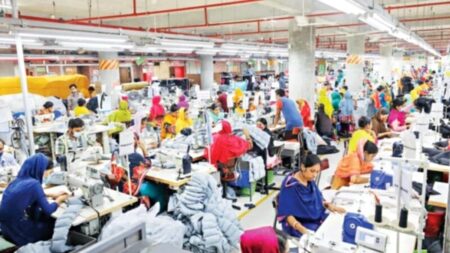

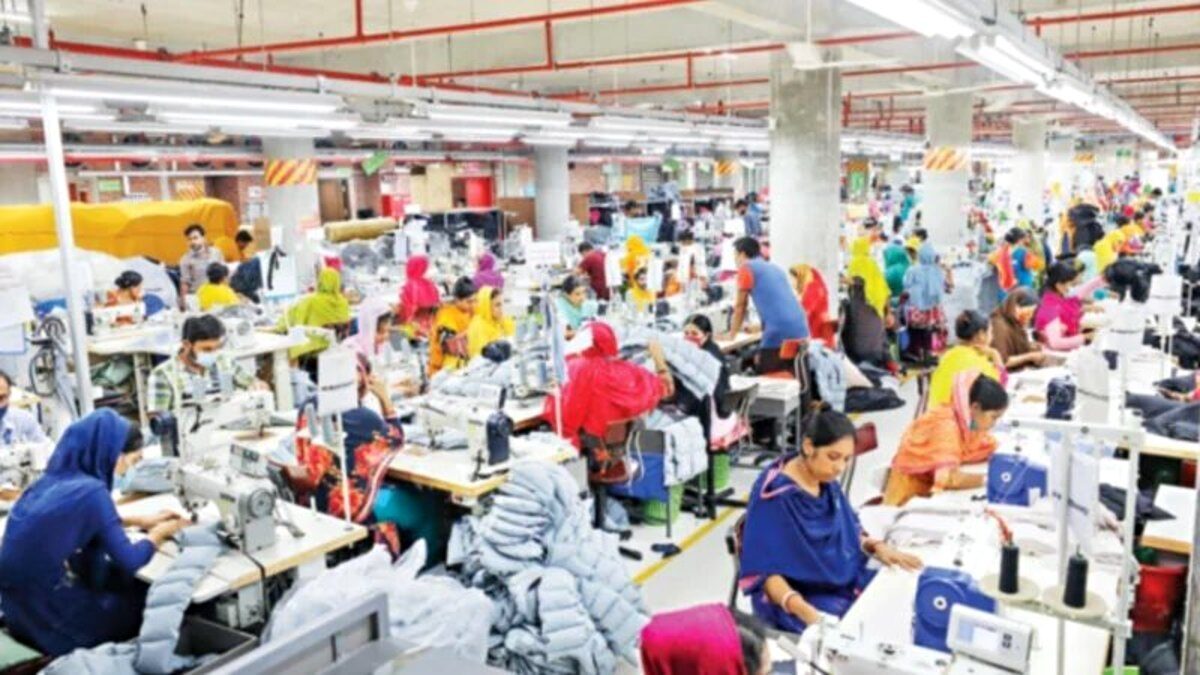
The energy crisis in Bangladesh’s industrial sector is no longer limited to gas or electricity supply shortages. Its impact is spreading to production costs, factory capacity, export orders, investment, and daily business operations. Entrepreneurs are forced to spend extra money to secure energy, with production declining in some units, product deliveries delayed in others, and reliance on alternative energy growing to meet buyer demand.
This pressure is compounded by rising raw material prices, increased demand for working capital, and uncertainty in international trade. As a result, industrial enterprises are struggling to manage operational costs while maintaining market competitiveness.
The extent of this situation is highlighted in HSBC’s 2026 global trade survey. Half of the Bangladeshi businesses surveyed identified energy costs as their biggest operational pressure. Rising raw material prices were cited as a major challenge by 49 percent of firms, while 70 percent reported an increase in overall costs. Furthermore, 76 percent expect costs to rise over the next two years.
In other words, the energy crisis is no longer an isolated operational problem; it is reshaping industry cost structures and future plans.
Energy Shortages Drive Up Production Costs
Industrial production in Bangladesh has long relied on uninterrupted gas and electricity supplies. However, supply shortages force factories to turn to alternatives. Relying on generators, diesel-powered generation, or other expensive systems increases the per-unit cost of production.
The impact is particularly severe in energy-intensive industries such as ready-made garments, textiles, yarn, dyeing, and chemical processing. These sectors require consistent temperature, pressure, and power at every stage of production. Irregular gas or electricity supplies do not just halt production; restarting the process requires additional time and money.
A September 2026 report featuring a survey of 134 Bangladeshi knitwear factories revealed that 55 percent reported reduced or canceled buyer orders due to gas and electricity shortages. Additionally, 78 percent were forced to partially shut down production. This was compounded by delivery delays and pressure from buyers for price discounts.
In one example of a large garment factory, although part of its power needs were met through its own solar system, it still had to rely on gas and diesel systems for the rest. High diesel prices increased the company’s production costs by 2 to 3 percent, with a monthly financial impact of around Tk 50 lakh.
While one company’s experience does not reflect the entire industry, it illustrates how alternative energy use creates new pressures on production costs.
Falling Output Puts Export Orders at Risk
More than 80 percent of Bangladesh’s export earnings come from the ready-made garment sector, which employs nearly 40 lakh people. Consequently, when production is disrupted by energy shortages, the impact extends beyond factory owners and workers, placing pressure on the country’s foreign exchange earnings and employment.
When factory production falls, delivering goods on schedule becomes difficult. International buyers usually operate on strict timelines. Delays can lead buyers to demand discounts, cut orders, or turn to alternative producing countries.
According to survey data, factories that partially shut down due to energy shortages struggled to deliver goods on time. Some firms resorted to costly air freight to meet deadlines. While this ensured goods reached buyers, it further eroded exporters’ profits.
The competitiveness of Bangladesh’s garment industry relies primarily on large production capacity, relatively low costs, and timely delivery. The energy crisis is creating pressure in all three areas. Meanwhile, competing nations such as India and Vietnam are gaining opportunities to strengthen their positions as alternative sourcing hubs.
Import Costs and Working Capital Pressure
Another major impact of the energy crisis is on business cash flow. In the HSBC survey, 64 percent of Bangladeshi firms reported an increased need for working capital compared to 2025. This means more funds must be tied up to cover raw materials, energy procurement, worker wages, and freight delivery costs.
Small and medium enterprises (SMEs) face higher risks in this situation. Compared to larger firms, they have smaller cash reserves and limited access to credit. Even when output declines, fixed costs remain. As revenue drops, their ability to service debt and make new investments weakens.
According to estimates by the Dhaka Chamber of Commerce and Industry (DCCI), the industrial sector could lose up to Tk 2,387 crore in daily economic output due to the energy crisis. The estimate notes that if factories operate at 55 percent capacity, the daily loss could reach around Tk 1,074 crore.
These figures are trade body estimates rather than official national income or government production measurements. However, they provide an indication of the economic risks associated with reduced industrial capacity.
Reliance on Energy Imports Heightens Risk
A large portion of Bangladesh’s power and industrial sectors depends on natural gas. As domestic production cannot meet demand, liquefied natural gas (LNG) must be imported. Price hikes or supply disruptions in the international market put direct pressure on national energy security.
According to World Bank data from May 2026, Middle East conflict increased price and supply uncertainties in the global energy market. For import-dependent Bangladesh, this impacted foreign exchange reserves and public finances. In response, the World Bank approved an additional $350 million in financing to support Petrobangla’s LNG imports.
The International Energy Agency’s 2026 gas market review showed that Bangladesh’s natural gas consumption fell by 7 percent in the first three quarters compared to the same period of the previous year. Gas-fired power generation dropped by over 12 percent between March and August, while LNG imports declined by 10 percent from March to September.
While these statistics do not directly measure the decline in industrial output, they clearly show that contractions in energy supply and consumption are impacting power generation and the industrial operating environment.
Capacity Without Energy Security
Although Bangladesh’s installed power generation capacity has increased, energy supply uncertainty raises questions about the power sector’s effectiveness. A November 2026 analysis by S&P Global Energy noted that installed generation capacity reached nearly 30,000 MW, yet power shortages hit a three-year high.
The core issue is not just the number of power plants or installed capacity, but securing an uninterrupted supply of gas, coal, and other fuels to run them. Without fuel, installed capacity cannot be fully utilized.
The same analysis highlighted that a large share of the country’s power capacity is gas- and coal-based, with renewables accounting for a relatively small portion. As a result, volatility in international markets for imported energy leaves the country’s power and industrial sectors simultaneously vulnerable.
China Plus One Strategy: Opportunities and Competition
Despite the energy crisis, new opportunities are emerging for Bangladesh in global supply chains. The HSBC survey shows that 55 percent of Bangladeshi businesses are restructuring or reshoring their supply chains, while 57 percent are pursuing a China Plus One strategy, compared to a global average of 36 percent.
Under this strategy, international companies establish alternative production and supply bases in one or more countries outside China. For Bangladesh, this creates opportunities to secure new investments and export orders.
However, capitalizing on these opportunities requires a reliable energy supply, competitive production costs, a skilled workforce, efficient logistics, and policy consistency. Low wages and a large labor market alone will not sustain long-term confidence among global buyers.
In the survey, 91 percent of Bangladeshi firms expressed optimism that international trade would expand over the next two years. At the same time, 31 percent cited negative impacts from tariffs and trade uncertainty, 32 percent reported reduced revenue, and 37 percent feared further revenue declines—compared to a global average fear rate of 28 percent.
This indicates that while international trade expansion holds potential, Bangladeshi firms remain concerned about cost and market risks.
Tech Adoption Rises, But Energy Remains Key Barrier
The HSBC survey found that 86 percent of Bangladeshi firms have begun using artificial intelligence in at least one trade-related activity. Additionally, 96 percent reported utilizing benefits from at least one free trade agreement (FTA). However, 97 percent face obstacles in fully leveraging these agreements.
These figures demonstrate that businesses are eager to harness technology and international market opportunities. However, without reliable basic production infrastructure—especially energy—it remains difficult to fully realize the benefits of technology or trade agreements.
Long-Term Energy Plan Needed to Address Crisis
While immediate solutions to the industrial energy crisis are essential, long-term planning is equally vital. To reduce reliance on energy imports, Bangladesh must advance domestic gas exploration, expand renewable energy, upgrade power transmission and distribution networks, and ensure uninterrupted supplies to industrial zones.
Predictability in energy supply is particularly crucial for industrial plants. When entrepreneurs know when and how much gas or electricity will be available, production planning and cost management become manageable. Conversely, supply uncertainty forces firms to allocate extra funds for alternative energy, disrupts production, and delays new investment decisions.
Bangladesh’s industrial sector currently faces a triple burden: energy uncertainty, rising production costs, and intense international competition. If prolonged, this pressure will not only reduce factory output but also hit export orders, employment, investment, and foreign exchange earnings.
To maintain industrial competitiveness, reducing energy prices alone is insufficient. Uninterrupted supply, import risk management, and long-term energy security are essential. Regardless of how much factory capacity grows, without secured energy, that capacity cannot be fully converted into economic growth.
More by Sarakhon Report
 Fifty Years On, Rocky Remains Story of Human Dignity
 Fulbaria Banar River Bridge Unused for 10 Years
 Govt Plans Tk 300cr Plant to Cut Livestock Vaccine Imports
 Bangladesh Face Pakistan in SAFF Semifinal