
From the 1950s through the 1990s, Bangladesh had an independent intellectual class. These men and women owed no political party their blind allegiance, and they were progressive and secular in outlook. Though once we have called someone an intellectual, there is scarcely any need to add that they are progressive and secular. For no one can become an intellectual in the true sense unless their thinking is informed by a secular outlook, one concerned with the world in which we live.
In the years after 15 August 1975, beginning in 1976 or 1977, Bangladeshi intellectuals gathered under the auspices of various organisations to mark the birthday of India’s prime minister, Mrs Indira Gandhi. At first I would sit in the audience and listen. Later, as a junior reporter, I went to cover these gatherings. I went largely out of my own interest. Bangladesh then had a government hostile to India. Its allegiance to Pakistan, too, was strong. So the birthday of a leader who had played so great a part in the breakup of Pakistan and the birth of Bangladesh received little coverage in the press.
One of the organisations through which these intellectuals held their gatherings was the Bangabandhu Parishad, founded by Matin Chowdhury, Bose Professor and former vice-chancellor of the University of Dhaka. After Bangabandhu Sheikh Mujibur Rahman was assassinated and the Awami League banned, Matin Chowdhury, on his release from Ziaur Rahman’s prison, brought together some of the country’s leading intellectuals to found the organisation.
Among those I remember speaking at the birthday gatherings organised by the Bangabandhu Parishad and others were Professor Musharraf Hossain, Justice Syed Mohammad Hossain, Justice K. M. Sobhan, the historian Salahuddin Ahmed, the journalist, writer and sociologist Abu Zafar Shamsuddin, the politicians and intellectuals Professor Muzaffar Ahmed and Pir Habibur Rahman, the journalist Nurul Islam Patwari, and Professor Anisuzzaman. Many of the country’s distinguished poets, and many younger poets too, would read their work at these gatherings.
Two of the speakers, Justice Syed Mohammad Hossain and the journalist and writer Abu Zafar Shamsuddin, would often say that Indira Gandhi was born in the year of the Russian Revolution. Though she was not herself a Bengali, she was one of the heroes of the greatest revolution the Bengalis had ever known.
At the time, I did not fully understand why, in the face of all the difficulties that followed 15 August 1975, they continued to mark Mrs Indira Gandhi’s birthday in this way. One thing, though, I did understand. In speaking of Indira Gandhi and her great father, Jawaharlal Nehru, they would recall Nehru’s contribution to India’s independence movement, Indira’s sacrifices and struggles, and the extraordinary part she played in Bangladesh’s Liberation War. Yet what they took the greatest pains to explain was the struggle that Indira Gandhi and her father had waged for secularism.
What I had failed to grasp at first gradually became clear to me. With the murder of Bangabandhu, secularism itself had been killed off in the Constitution of Bangladesh. An effort was under way to edge it out of society and politics as well. At such a time, whether the press reported their words or not, and however few people had come to hear them, these speakers wanted to move their listeners to stand up for secularism. They spoke of how much secularism mattered in one’s personal life, in politics and, above all, in the running of a state. Their argument was that until a state became secular, it could never become a state in the fullest sense. By the same token, a political party that was not secular could scarcely be called a political party in the true sense of the term. These were the truths they set before the young.
In remembering Indira Gandhi, in speaking of her life and her struggles, they were speaking, at heart, of the secular Bangladesh that Bangabandhu had founded. They wanted their listeners to understand that only by returning to that ideal could Bangladesh become a state in the fullest sense. Implicit in their words was the thought that, with Bangabandhu’s death, Bangladesh had lost its character as a modern state. Sometimes they said so outright.
Even then, they feared that Indira Gandhi might meet the same fate as Bangabandhu. They believed that wherever politics and the state drew their authority from religion, both invariably remained subservient to imperialism. Justice Syed Mohammad Hossain would sometimes say, “To be polite, we call it religion-based politics. But it was Bangabandhu Sheikh Mujibur Rahman who found the right words for what these people practise. He called it ‘the politics of those who trade in religion.’” As Justice Syed Mohammad Hossain explained, these people did indeed trade in religion. Most of them had no real faith in religion themselves and used it only to serve their political interests.
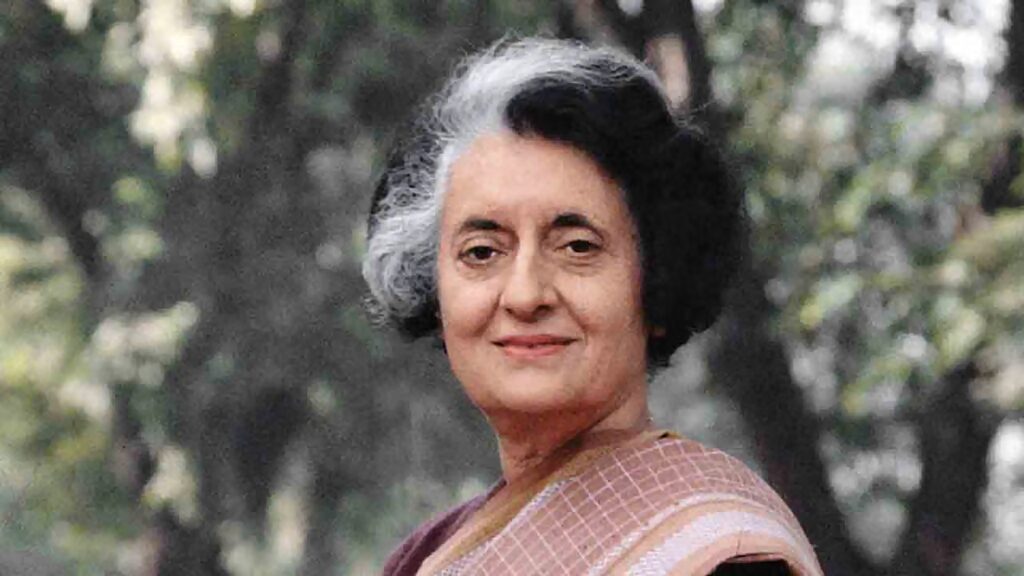
My own attachment to Indira Gandhi goes back to the refugee camp. As a child I stood in the mud and water, with only a distant view of her on the stage, yet somehow I found reassurance in her face. Since she had said our country would be free and we would return to our own land, I felt sure we would have our country back and our home too. I thought I would even see again the dogs and cats we had left behind, the ones I missed so much. So wherever a meeting was held to discuss her, I would go.
I saw, too, how in those days, in a Bangladesh without Bangabandhu, many decent young men and women had only to hear Indira Gandhi’s name to think of her, as they thought of him, as one of their own. Everyone would recoil when the intellectuals said that imperialism and religious politics might not let her live. Like Allende or Bangabandhu Sheikh Mujibur Rahman, she too might have to pay with her life.
There was something else we used to hear from the intellectuals at those meetings. After Pakistan lost its eastern wing, one Western country, one Middle Eastern country and one of India’s neighbours had changed their plans. They had drawn back somewhat from their plan to foment unrest in northeastern India and break it away from the country, and had begun to give greater priority to breaking Punjab away in the name of religion. According to the speakers, those countries had allocated three times as much money to Punjab as they had previously set aside for northeastern India. The result, they believed, would be the spread of religious politics in India, and Mrs Gandhi’s life, like Bangabandhu’s, might be in danger.
It was only later, as I read a number of books about Mrs Gandhi and Indian politics, that I came to appreciate how clearly our intellectuals had understood the matter. An incident Pupul Jayakar recounts in Indira Gandhi: A Biography gives some idea of how keenly aware both Mrs Gandhi and her family were of the danger.
When Mrs Gandhi’s bodyguards shot her, Sonia Gandhi heard the shots and thought at first that someone must still be setting off firecrackers, although Diwali was over. But when a member of the household staff came and told her what had happened, she was terrified. Her first thought was for young Rahul. It occurred to her in that instant that Rahul too might be killed, as Sheikh Mujibur Rahman’s youngest son, Russel, had been.
The fear that seized Sonia Gandhi proves, in a sense, that the assassinations of Bangabandhu Sheikh Mujibur Rahman and Indira Gandhi were bound together by a common thread.
On the 109th anniversary of the birth of Indira Gandhi (1917–1984), looking at the present as well as the past, one can see that secularism was the deepest bond between Indira and Mujib. Here another, striking parallel emerges. Two members of Indira Gandhi’s family who served as heads of government lost their lives at the hands of fundamentalist politics. Bangabandhu Sheikh Mujibur Rahman, too, lost his life at the hands of fundamentalist politics. Whatever the circumstances in which the government of his daughter Sheikh Hasina was ousted, she herself survived, but fundamentalism has spread across the country since her government fell. An effort is under way to drive secularism into exile.
On this subcontinent, both families have been criticised for practising dynastic politics. Indira Gandhi, Sheikh Mujibur Rahman and Sheikh Hasina have all been called authoritarian. Those who describe them that way may well be speaking from their own points of view. Nor are they entirely wrong. Yet it is also true that the world over, statesmen and heads of government are duly elected, and once in office almost all become authoritarian to some degree. Judged by what democracy itself requires, few statesmen or heads of government in history truly measure up.
As a close friend, Pupul Jayakar saw Indira Gandhi at close quarters. I. K. Gujral observed her too. Both acknowledged that, in that sense, Indira Gandhi was no democrat by temperament. Yet she wanted to protect India and its people as a tigress would. As a tigress protects her young.
A Western journalist writing about Bangabandhu Sheikh Mujibur Rahman in 1972 observed that Mujib so closely identified his country and his nationalism with his own person that he would say “my tigers” and “my rivers”. In other words, the tigress’s instinct one saw in Indira Gandhi was there in him too, the instinct of a parent to protect its young.
It is a risky thing to comment on Sheikh Hasina at this moment. Yet the imprint of Indira Gandhi on Sheikh Hasina’s political life is clear. That fundamentalism has spread in Bangladesh since her departure is also recognised internationally.
One fact, then, has earned its place in the history of this subcontinent. Members of these two families have given their lives for secularism and for bringing others to the path of secularism.
Throughout history, from Galileo and Socrates down to our own day, writers, great political figures and thinkers in country after country who have sought to turn people’s minds to the world in which they live have found themselves the targets of bullets, or faced the hangman’s noose or the cup of hemlock.
This conflict will endure. For fundamentalists need darkness, and secularism needs light. It is easy enough, then, to say what this conflict in our world amounts to. It is a struggle between light and darkness, between knowledge and ignorance.
Who can say when ignorance will be dispelled from any country or any corner of the earth? This is the hardest struggle in the world. Even so, when we remember those who gave their lives for the light, on the anniversaries of their births and deaths, we do more than express our gratitude. We let a little of that light fall on us too.
Swadesh Roy is recipient of the country’s highest state honour, and editor of Sarakhon and The Present World.
More by Swadesh Roy
 Deny Bangabandhu Sheikh Mujibur Rahman, and Bangladesh becomes a ‘Mini Pakistan’
 Leaders and Activists Born of Adversity and the Words “No One Has the Power to Hang Sheikh Hasina”
 In 1971, Not Durga but Indira Gandhi; Chinmoy in Prison and Durga, the Village Girl
 Rammohan and Women’s Emancipation: East Bengal’s Brahmo Samaj and Rahul Gandhi