10:35 am, Wednesday, 3 June 2026

The Man Zia Could Not Bring Into a Secret Meeting

Swadesh Roy

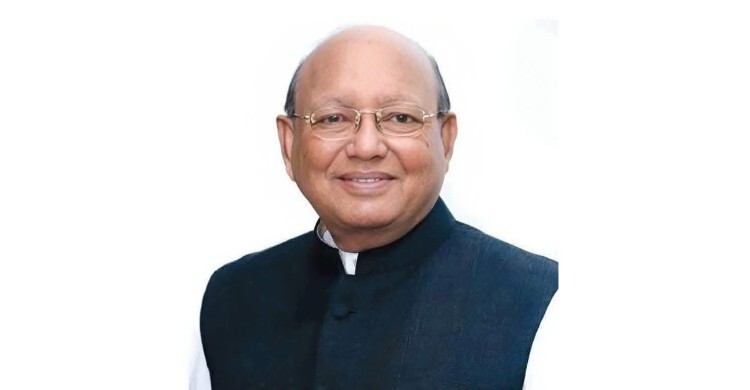
Among the few people in Bangladesh who were politicians through and through, Tofail Ahmed was one. Much has been written about the history of his student movement and about his role in the history of Bangladesh’s creation. It is also true that the history of Bangladesh’s struggle for independence cannot be written without him. That work, of course, belongs to historians.

In my long life in journalism, I saw and came to know many things about him for professional reasons. For instance, after the 1991 election, the Awami League was then in the opposition. Tofail Ahmed was living in a rented house in Dhanmondi owned by Major Ziauddin. At that time, almost no one would rent him a house. Those familiar with the politics of Bangladesh understand very well why. Soon after the election, one day, I went to his house very early in the morning for professional work. He had just woken up and was sitting in the drawing room in his nightclothes, making phone calls. Those who knew him closely all know that Tofail Ahmed had no telephone notebook. Once he heard a telephone number, both the person and the number remained fixed in his memory.

In any case, as soon as I entered, I saw him turning the dial of that old analog telephone with his finger. With a gesture of his eyes, he asked me to sit. Before I had even sat down, I heard him say,

“Salam bhai, Salam Talukdar, the then General Secretary of the BNP, I hear that in the Bhola by-election you are apparently giving the nomination to so-and-so.” I do not remember the name exactly; it was in an old notebook.

I could not hear what was being said from the other end.

Anyway, from this end Tofail Ahmed again said, “Look, Salam bhai, this time you have come to power. Next time perhaps we will. Or even if we do not, the politics of this country will still be done by us. That is why I am telling you, if you give him the nomination, it will harm not only the political environment of Bhola, but also your own politics.” Saying this, he added, “There are many good candidates in your party there,” and then, in one stretch, he named four or five people.

From the other end, Salam Talukdar spoke for quite some time.

When he had finished, Tofail Ahmed again said, “Look, if terrorists enter politics, if they come to the front, then in the end you and I, we who do politics, will be the ones harmed. You will have no importance in politics, nor will we. The terrorists themselves will become the leaders. Political killings will increase further. Democracy has returned to the country after a long time. And if the lives of politicians are not endangered, that is better, is it not?”

It seemed that, at the other end, Salam Talukdar had been convinced. Because after that, Tofail Ahmed began speaking with him, smiling, about personal matters. Later, I noticed that the “so-and-so” about whom Tofail Ahmed had objected was not given the BNP nomination.

After 15 August 1975, Tofail Ahmed spent five years in prison. In other words, he was in jail for much of Ziaur Rahman’s rule. Even then, from the BNP’s General Secretary Salam Talukdar, a son of a former aristocratic Muslim League family, he expected a political culture, and he received it too.

They had grown accustomed to that culture from the time they were involved in student politics. Because it was under his principal leadership that the greatest mass uprising in this country took place. But no “mob violence” took place under the leadership of any student leader of his. Rather, where political courtesy stood can be understood from an incident after 1971, when the trial of Muslim League leader Khwaja Khairuddin began as a war criminal. Khwaja Khairuddin had been the Muslim League candidate against Bangabandhu Sheikh Mujibur Rahman in Dhaka’s Kotwali-Sutrapur constituency.

In any case, if one searches the newspaper pages of that time, one will find Khwaja Khairuddin saying in court: “I, Khwaja Khairuddin, opposed independence, but I did not kill a political opponent. Rather, on the night of 25 March, I kept Tofail and Razzak in my house. On the 27th, I arranged for them to go to Keraniganj.”

In written history, we read that the last to leave Bangabandhu’s house on the night of 25 March were Tajuddin Ahmad, Dr. Kamal Hossain and Barrister Amirul Islam. But what I came to know from Tofail Ahmed was that after they had left, he and Abdur Razzak were supposed to go. They did leave at the appointed time. And Bangabandhu gave them some instructions. If those are written here, this piece will become too long. He also gave them some money in a bag. They set off for the house of Borhanuddin Gagan in Keraniganj, but had gone only as far as old Dhaka when they fell into the firing of the Pakistani Army. That night, they took shelter in the house of Khwaja Khairuddin, the Muslim League leader who had been Bangabandhu’s opponent in the election.

At that time, Tofail Ahmed’s book had not yet been published. It was probably 1983. Tofail Ahmed had come out of Ershad’s prison only a few days earlier. To the generation of that time, Tofail Ahmed was immensely popular. If he went to any shop on Elephant Road to buy a shirt or shoes, a crowd would gather within moments just to see him. So I told the editor, let us take an interview of Tofail Ahmed for this week. When he agreed, I once again went to his house very early in the morning. He had not yet moved into Major Ziauddin’s house. He was looking for a house. He was telling Abdul Mannan, then a Chhatra League leader and later the President of Chhatra League, “You people see if you can find a house in the Dhanmondi area.”

From their conversation, it could be understood that it was not possible for him to pay very high rent. For that reason, he was having difficulty finding a rented house in Dhanmondi. Even then, Tofail Ahmed was saying, “You try. I will stay in this area. Bangabandhu lived here. The house at number 32 is also here. I do not feel like staying far from this place.” In any case, after Abdul Mannan and a few other student leaders had left, he had begun giving me the interview when suddenly he picked up the phone and called someone. While interviewing political leaders, this is normal. On the phone, he asked whether the money he had asked to be delivered to someone had been given. I understood that an affirmative answer had come from the other end. He let out a long sigh.

Although this is not a journalist’s work, still, in a somewhat Bengali habit, I asked, “Bhai, is there any problem?” He sat silent for a long time. I could understand that several scenes were perhaps passing before his eyes like reels of film.

Then, in a somewhat heavy voice, he said, “In 1975, when the army was sent to Mymensingh jail to kill me, he was the jailer of that jail at the time. He took me out of the jail and kept me at his house. Because of that, I am alive today. You can understand what happened to him for that offence.” I understood that he was asking for money to be sent to that man’s family.

As a journalist, while collecting information, I have seen the long list of such money being sent from number 32. Among those who were killed or injured from 1969 until after 1975, the families that had become helpless, Sheikh Hasina would collect money from various people for them every month so that money orders could be sent to those families. How difficult it was at that time to collect such money will not be properly understood by the generation that today becomes, overnight, the grandchildren of zamindars and enters politics. They will not understand what it means to do politics for the country.

At that time, because of a shortage of five hundred taka, Sheikh Hasina and other senior leaders often had to wait for several hours before setting out for many Awami League district programmes, if that money did not arrive on time. The leaders, and Sheikh Hasina herself, would collect it in different ways. Perhaps instead of leaving at eight in the morning, they would set out at eleven, or even the next day.

Toward the end of the eighties, I went to the house of architect Mazharul Islam, probably to interview some foreign person. At that time, Major General Majedul Haq, who had been a BNP minister, and his wife were there. In the midst of this, Tofail Ahmed entered. Seeing him, everyone stood up, although all of them were older than him. Tofail Ahmed sat down and, looking toward Majedul Haq’s wife, said, “Bhabi, how are you?” Majedul Haq’s wife, in a somewhat angry tone, said, “Ask him how I am. What kind of thing did the boys of his party do, pulling at the girls’ ornas?”

Tofail Ahmed too, with a somewhat serious face, said, “On the soil of Dhaka University, this does not suit.” After that, I went to a sofa at a distance and began recording the interview of that gentleman, and from time to time my eyes fell in this direction. It seemed that throughout the whole time Majedul Haq was sitting somewhat withdrawn. A slight doubt arose in my mind.

In any case, after taking the interview, I came out and was walking along the road. The sun was scorching. Suddenly I saw a car stop beside me. Lowering the car window, Tofail Ahmed called me and said, “Hey, which way are you going?” When I told him my destination, he said, “Get in, I will drop you off.” In the car, amid many kinds of conversation, at one point I said to him, “Bhai, one thing seemed a little unusual to my eyes.” He said, “Tell me what.” I said, “The way Major General Majedul Haq spoke with you, he seemed far too constrained. Why?” He said, “No, that is a mistake of your eyes. Majed bhai’s wife, that is, bhabi, of course does not do BNP politics. She is a supporter of the Awami League or of progressive politics. Besides, it was I who took Majed bhai to Bangabandhu in 1972. Although he was an army officer who had returned from Pakistan, he had some sort of problem with Osmani sahib, because of which he could not return to the army. Almost every day he would come to my house. In any case, one day I myself took him to Bangabandhu. Seeing him, Bangabandhu said, ‘Osmani sahib does have some problems. All right, you go, I will see.’ After that, his job was restored.”

As a politician, doing something for everyone was natural to him. But on the question of his own position and dignity, he was uncompromising. For example, during the anti-Ershad movement, he had been arrested from a hartal. The morning after he was released, I went to his house at dawn for a news item on the condition of the jail, to collect some information from him. I went and saw Jamaat leader Kamaruzzaman and another person, probably Quader Molla, sitting on the sofa in front of him. Kamaruzzaman was saying, “Tofail sahib, you people have formed three alliances. Include us too and make it a four-party alliance. Everyone’s demand is the same: election under a caretaker government. Our demand is also that.”

Tofail Ahmed, in a very calm voice, said, “Look, Kamaruzzaman sahib, however much movement you may carry out, however many people may come to your side, after what you did in 1971, this much, that I am speaking with you, that you are coming to my house, let it remain up to this. Ask your own conscience whether you can expect more than this. Is even what I am doing not more than enough?”

Journalists Toab Khan and M. R. Akhtar Mukul had both worked with Ziaur Rahman. In the nineties, through discussions with the two of them at different times, I came to know that as President and Chief Martial Law Administrator, Ziaur Rahman could not bring only one Awami League leader to meet him secretly at night in his office or somewhere else, and that leader was Tofail Ahmed. Leaving aside the power of the army, even by trying through the former Awami League leader who, despite having been among the most loved by Bangabandhu Sheikh Mujib, had gone through Khondaker Mostaq and joined Ziaur Rahman, that Obaidur Rahman, Ziaur Rahman did not succeed.

At the time when I received this information, Obaidur Rahman had been expelled from the BNP. He spent most of his time sitting at his house at Asad Gate. One afternoon, during a break from work, I left the office and went to him. I had gone many times before as well. He had told many truths before too.

That is a different matter. That day, going to him, I asked, “Is it actually true that Tofail Ahmed never held any secret meeting with Ziaur Rahman at Ziaur Rahman’s call?” Obaidur Rahman laughed and, in a somewhat regional dialect, said, “He is a Barishaillya. His neck is stiff. He could not be managed.”

Not all information is useful to journalists. But verifying the truth of information is an addiction for journalists. So after verifying the truth with Obaidur Rahman, I thought that now one could go to Tofail Ahmed.

By then, the Awami League had come to power after 21 years; Tofail Ahmed was a minister. I worked at an anti-government newspaper. Even then, when I called and asked him for time, he gave me time. The time was “lunch time.” As soon as I entered, he asked me to have lunch with him. And he said, “I read your criticisms of the government. Criticise more.” I said, “I do praise your good works.” He paid no attention to that.

Then he said, “Surely you have come for some news. Tell me while eating. I am in difficulty. Managing businessmen is very hard.” I said, “It is not any current news, bhai. I came to know the truth of one piece of information.” Saying this, I asked whether it was true that he had not met Ziaur Rahman secretly, and why he had not done so.

He said, “The matter is true. Zia took many routes. But you understand, I have returned from the mouth of death several times. And that jail and politics are joined together, I learned that by seeing Bangabandhu. Bangabandhu spent his entire youth in jail. Compared with that, we did politics in a much better condition.”

I understood that if, because of not meeting him, he had had to go to jail, or if something more had happened, he had been prepared for that.

Then I asked him, “But what would have been wrong in having a secret meeting with him at night?” He said, “Look, politics is not a conspiracy. Whatever happens in politics will remain open before the public. However many times he might have called for a meeting with our party, I would certainly have gone with the party representatives. But no politics takes place in the darkness of night.”

Tofail Ahmed had remained silent for many days. Today, 1 June 2026, he has died. At the time of his death, the conspirator Yunus has pushed the politics of the country they created completely into the darkness of night. He has handed it over to foreigners.

Therefore, the creation of this country by Tofail Ahmed and those like him will be successful if courageous, honest and decent young people can once again bring politics out of the darkness of night.

Author: Journalist honoured with the highest state award; Editor, Sarakhon, The Present World.

06:57:00 pm, Tuesday, 2 June 2026

The Man Zia Could Not Bring Into a Secret Meeting

06:57:00 pm, Tuesday, 2 June 2026

Among the few people in Bangladesh who were politicians through and through, Tofail Ahmed was one. Much has been written about the history of his student movement and about his role in the history of Bangladesh’s creation. It is also true that the history of Bangladesh’s struggle for independence cannot be written without him. That work, of course, belongs to historians.

In my long life in journalism, I saw and came to know many things about him for professional reasons. For instance, after the 1991 election, the Awami League was then in the opposition. Tofail Ahmed was living in a rented house in Dhanmondi owned by Major Ziauddin. At that time, almost no one would rent him a house. Those familiar with the politics of Bangladesh understand very well why. Soon after the election, one day, I went to his house very early in the morning for professional work. He had just woken up and was sitting in the drawing room in his nightclothes, making phone calls. Those who knew him closely all know that Tofail Ahmed had no telephone notebook. Once he heard a telephone number, both the person and the number remained fixed in his memory.

In any case, as soon as I entered, I saw him turning the dial of that old analog telephone with his finger. With a gesture of his eyes, he asked me to sit. Before I had even sat down, I heard him say,

“Salam bhai, Salam Talukdar, the then General Secretary of the BNP, I hear that in the Bhola by-election you are apparently giving the nomination to so-and-so.” I do not remember the name exactly; it was in an old notebook.

I could not hear what was being said from the other end.

Anyway, from this end Tofail Ahmed again said, “Look, Salam bhai, this time you have come to power. Next time perhaps we will. Or even if we do not, the politics of this country will still be done by us. That is why I am telling you, if you give him the nomination, it will harm not only the political environment of Bhola, but also your own politics.” Saying this, he added, “There are many good candidates in your party there,” and then, in one stretch, he named four or five people.

From the other end, Salam Talukdar spoke for quite some time.

When he had finished, Tofail Ahmed again said, “Look, if terrorists enter politics, if they come to the front, then in the end you and I, we who do politics, will be the ones harmed. You will have no importance in politics, nor will we. The terrorists themselves will become the leaders. Political killings will increase further. Democracy has returned to the country after a long time. And if the lives of politicians are not endangered, that is better, is it not?”

It seemed that, at the other end, Salam Talukdar had been convinced. Because after that, Tofail Ahmed began speaking with him, smiling, about personal matters. Later, I noticed that the “so-and-so” about whom Tofail Ahmed had objected was not given the BNP nomination.

After 15 August 1975, Tofail Ahmed spent five years in prison. In other words, he was in jail for much of Ziaur Rahman’s rule. Even then, from the BNP’s General Secretary Salam Talukdar, a son of a former aristocratic Muslim League family, he expected a political culture, and he received it too.

They had grown accustomed to that culture from the time they were involved in student politics. Because it was under his principal leadership that the greatest mass uprising in this country took place. But no “mob violence” took place under the leadership of any student leader of his. Rather, where political courtesy stood can be understood from an incident after 1971, when the trial of Muslim League leader Khwaja Khairuddin began as a war criminal. Khwaja Khairuddin had been the Muslim League candidate against Bangabandhu Sheikh Mujibur Rahman in Dhaka’s Kotwali-Sutrapur constituency.

In any case, if one searches the newspaper pages of that time, one will find Khwaja Khairuddin saying in court: “I, Khwaja Khairuddin, opposed independence, but I did not kill a political opponent. Rather, on the night of 25 March, I kept Tofail and Razzak in my house. On the 27th, I arranged for them to go to Keraniganj.”

In written history, we read that the last to leave Bangabandhu’s house on the night of 25 March were Tajuddin Ahmad, Dr. Kamal Hossain and Barrister Amirul Islam. But what I came to know from Tofail Ahmed was that after they had left, he and Abdur Razzak were supposed to go. They did leave at the appointed time. And Bangabandhu gave them some instructions. If those are written here, this piece will become too long. He also gave them some money in a bag. They set off for the house of Borhanuddin Gagan in Keraniganj, but had gone only as far as old Dhaka when they fell into the firing of the Pakistani Army. That night, they took shelter in the house of Khwaja Khairuddin, the Muslim League leader who had been Bangabandhu’s opponent in the election.

At that time, Tofail Ahmed’s book had not yet been published. It was probably 1983. Tofail Ahmed had come out of Ershad’s prison only a few days earlier. To the generation of that time, Tofail Ahmed was immensely popular. If he went to any shop on Elephant Road to buy a shirt or shoes, a crowd would gather within moments just to see him. So I told the editor, let us take an interview of Tofail Ahmed for this week. When he agreed, I once again went to his house very early in the morning. He had not yet moved into Major Ziauddin’s house. He was looking for a house. He was telling Abdul Mannan, then a Chhatra League leader and later the President of Chhatra League, “You people see if you can find a house in the Dhanmondi area.”

From their conversation, it could be understood that it was not possible for him to pay very high rent. For that reason, he was having difficulty finding a rented house in Dhanmondi. Even then, Tofail Ahmed was saying, “You try. I will stay in this area. Bangabandhu lived here. The house at number 32 is also here. I do not feel like staying far from this place.” In any case, after Abdul Mannan and a few other student leaders had left, he had begun giving me the interview when suddenly he picked up the phone and called someone. While interviewing political leaders, this is normal. On the phone, he asked whether the money he had asked to be delivered to someone had been given. I understood that an affirmative answer had come from the other end. He let out a long sigh.

Although this is not a journalist’s work, still, in a somewhat Bengali habit, I asked, “Bhai, is there any problem?” He sat silent for a long time. I could understand that several scenes were perhaps passing before his eyes like reels of film.

Then, in a somewhat heavy voice, he said, “In 1975, when the army was sent to Mymensingh jail to kill me, he was the jailer of that jail at the time. He took me out of the jail and kept me at his house. Because of that, I am alive today. You can understand what happened to him for that offence.” I understood that he was asking for money to be sent to that man’s family.

As a journalist, while collecting information, I have seen the long list of such money being sent from number 32. Among those who were killed or injured from 1969 until after 1975, the families that had become helpless, Sheikh Hasina would collect money from various people for them every month so that money orders could be sent to those families. How difficult it was at that time to collect such money will not be properly understood by the generation that today becomes, overnight, the grandchildren of zamindars and enters politics. They will not understand what it means to do politics for the country.

At that time, because of a shortage of five hundred taka, Sheikh Hasina and other senior leaders often had to wait for several hours before setting out for many Awami League district programmes, if that money did not arrive on time. The leaders, and Sheikh Hasina herself, would collect it in different ways. Perhaps instead of leaving at eight in the morning, they would set out at eleven, or even the next day.

Toward the end of the eighties, I went to the house of architect Mazharul Islam, probably to interview some foreign person. At that time, Major General Majedul Haq, who had been a BNP minister, and his wife were there. In the midst of this, Tofail Ahmed entered. Seeing him, everyone stood up, although all of them were older than him. Tofail Ahmed sat down and, looking toward Majedul Haq’s wife, said, “Bhabi, how are you?” Majedul Haq’s wife, in a somewhat angry tone, said, “Ask him how I am. What kind of thing did the boys of his party do, pulling at the girls’ ornas?”

Tofail Ahmed too, with a somewhat serious face, said, “On the soil of Dhaka University, this does not suit.” After that, I went to a sofa at a distance and began recording the interview of that gentleman, and from time to time my eyes fell in this direction. It seemed that throughout the whole time Majedul Haq was sitting somewhat withdrawn. A slight doubt arose in my mind.

In any case, after taking the interview, I came out and was walking along the road. The sun was scorching. Suddenly I saw a car stop beside me. Lowering the car window, Tofail Ahmed called me and said, “Hey, which way are you going?” When I told him my destination, he said, “Get in, I will drop you off.” In the car, amid many kinds of conversation, at one point I said to him, “Bhai, one thing seemed a little unusual to my eyes.” He said, “Tell me what.” I said, “The way Major General Majedul Haq spoke with you, he seemed far too constrained. Why?” He said, “No, that is a mistake of your eyes. Majed bhai’s wife, that is, bhabi, of course does not do BNP politics. She is a supporter of the Awami League or of progressive politics. Besides, it was I who took Majed bhai to Bangabandhu in 1972. Although he was an army officer who had returned from Pakistan, he had some sort of problem with Osmani sahib, because of which he could not return to the army. Almost every day he would come to my house. In any case, one day I myself took him to Bangabandhu. Seeing him, Bangabandhu said, ‘Osmani sahib does have some problems. All right, you go, I will see.’ After that, his job was restored.”

As a politician, doing something for everyone was natural to him. But on the question of his own position and dignity, he was uncompromising. For example, during the anti-Ershad movement, he had been arrested from a hartal. The morning after he was released, I went to his house at dawn for a news item on the condition of the jail, to collect some information from him. I went and saw Jamaat leader Kamaruzzaman and another person, probably Quader Molla, sitting on the sofa in front of him. Kamaruzzaman was saying, “Tofail sahib, you people have formed three alliances. Include us too and make it a four-party alliance. Everyone’s demand is the same: election under a caretaker government. Our demand is also that.”

Tofail Ahmed, in a very calm voice, said, “Look, Kamaruzzaman sahib, however much movement you may carry out, however many people may come to your side, after what you did in 1971, this much, that I am speaking with you, that you are coming to my house, let it remain up to this. Ask your own conscience whether you can expect more than this. Is even what I am doing not more than enough?”

Journalists Toab Khan and M. R. Akhtar Mukul had both worked with Ziaur Rahman. In the nineties, through discussions with the two of them at different times, I came to know that as President and Chief Martial Law Administrator, Ziaur Rahman could not bring only one Awami League leader to meet him secretly at night in his office or somewhere else, and that leader was Tofail Ahmed. Leaving aside the power of the army, even by trying through the former Awami League leader who, despite having been among the most loved by Bangabandhu Sheikh Mujib, had gone through Khondaker Mostaq and joined Ziaur Rahman, that Obaidur Rahman, Ziaur Rahman did not succeed.

At the time when I received this information, Obaidur Rahman had been expelled from the BNP. He spent most of his time sitting at his house at Asad Gate. One afternoon, during a break from work, I left the office and went to him. I had gone many times before as well. He had told many truths before too.

That is a different matter. That day, going to him, I asked, “Is it actually true that Tofail Ahmed never held any secret meeting with Ziaur Rahman at Ziaur Rahman’s call?” Obaidur Rahman laughed and, in a somewhat regional dialect, said, “He is a Barishaillya. His neck is stiff. He could not be managed.”

Not all information is useful to journalists. But verifying the truth of information is an addiction for journalists. So after verifying the truth with Obaidur Rahman, I thought that now one could go to Tofail Ahmed.

By then, the Awami League had come to power after 21 years; Tofail Ahmed was a minister. I worked at an anti-government newspaper. Even then, when I called and asked him for time, he gave me time. The time was “lunch time.” As soon as I entered, he asked me to have lunch with him. And he said, “I read your criticisms of the government. Criticise more.” I said, “I do praise your good works.” He paid no attention to that.

Then he said, “Surely you have come for some news. Tell me while eating. I am in difficulty. Managing businessmen is very hard.” I said, “It is not any current news, bhai. I came to know the truth of one piece of information.” Saying this, I asked whether it was true that he had not met Ziaur Rahman secretly, and why he had not done so.

He said, “The matter is true. Zia took many routes. But you understand, I have returned from the mouth of death several times. And that jail and politics are joined together, I learned that by seeing Bangabandhu. Bangabandhu spent his entire youth in jail. Compared with that, we did politics in a much better condition.”

I understood that if, because of not meeting him, he had had to go to jail, or if something more had happened, he had been prepared for that.

Then I asked him, “But what would have been wrong in having a secret meeting with him at night?” He said, “Look, politics is not a conspiracy. Whatever happens in politics will remain open before the public. However many times he might have called for a meeting with our party, I would certainly have gone with the party representatives. But no politics takes place in the darkness of night.”

Tofail Ahmed had remained silent for many days. Today, 1 June 2026, he has died. At the time of his death, the conspirator Yunus has pushed the politics of the country they created completely into the darkness of night. He has handed it over to foreigners.

Therefore, the creation of this country by Tofail Ahmed and those like him will be successful if courageous, honest and decent young people can once again bring politics out of the darkness of night.

Author: Journalist honoured with the highest state award; Editor, Sarakhon, The Present World.