Sergio Gor’s Visit, China’s Message, and Bangladesh’s Electoral Crossroads 

Swadesh Roy

When an official visit is shortened at one side’s initiative, or when a programme is unilaterally cancelled, ordinary citizens and diplomats alike can read the underlying message of such conduct. They assume that something has fallen short of the purpose for which the visit was originally intended. Such conduct is a polite way of signalling that shortcoming.

This, however, never means that diplomacy or bilateral relations have come to a halt. A BNP leader, for example, recently asked, “In this election, India helped us with everything, beginning with our leader’s return. They even worked through certain Hindu leaders to ensure that Hindus would vote for us. Even after all this, why are they still allowing Hasina to engage in politics?”

There is something rather pleasing about a politician being so innocent. If nothing else, he is practising politics with the simple mind of a child. In any case, I replied that during Atal Bihari Vajpayee’s time, a war with Pakistan was taking place on one side, while the India-Pakistan bus service continued to operate on the other.

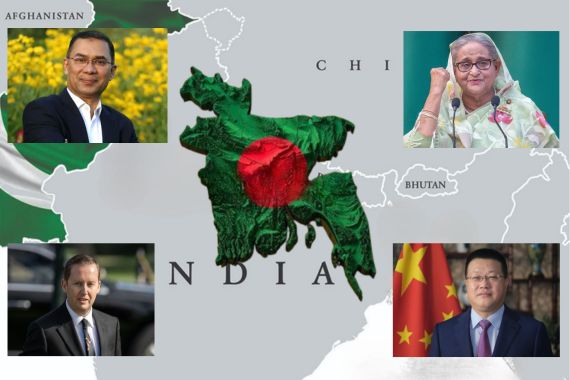
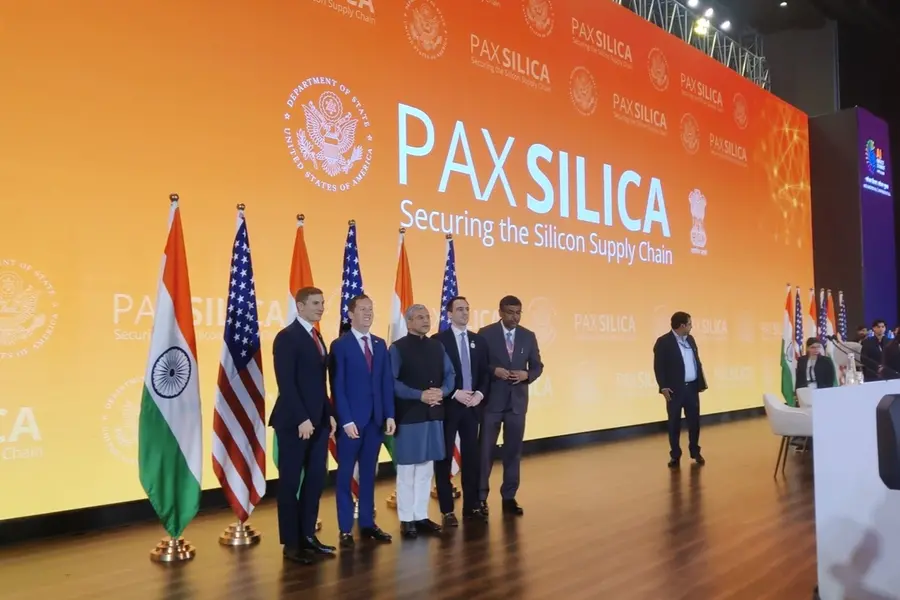
Sergio Gor, the US President’s Special Envoy for South and Central Asia who has been appointed ambassador to India, curtailed several previously scheduled programmes during his recent visit to Bangladesh. Nevertheless, he invited Bangladesh to join the Pax Silica initiative. Semiconductors, artificial intelligence and critical minerals are among the most important issues shaping both the world of today and the world of tomorrow. Pax Silica is the US-led supply network built around these sectors. It has been formed by a number of countries, including the United States, the United Kingdom, Japan, Singapore, South Korea, Israel, the United Arab Emirates, the Netherlands and Australia, with India joining at a later stage.

I came to understand that Bangladesh would need to move towards membership of such an alliance when I attended an economic connectivity conference in India’s North-East in either 2022 or 2023. One of the central figures at the conference was Japan’s ambassador posted in India, who was also responsible for Nepal. During an exchange of courtesies with him, I was able to understand, through only a few remarks, that the connection between Japan’s substantial investment in the development of India’s North-East and Bangladesh’s Matarbari Deep-Sea Port was far more significant than it might initially appear. He is a highly accomplished diplomat. In my presentation, I had described the Matarbari Deep-Sea Port as one of the principal “game changers” for the region. In the course of his remarks, he repeated that expression and, merely through a change in his facial muscles, conveyed a great deal. That made the matter even easier to understand.

Since the Second World War, just as the United States has drawn Japan and South Korea tightly into its strategic orbit, the exceptionally intelligent and industrious Japanese nation has also mastered the art of moving forward by keeping the United States alongside it.

Gor calls on Bangladesh to join Pax Silica initiative - OrissaPOST

Sergio Gor’s invitation is therefore a natural continuation of the efforts that have been under way for more than a decade to explore and advance the economic potential of this region. It may, however, be assumed that Sergio Gor had to state this afresh because Bangladesh’s politics has changed over the past two years. Many issues have moved away from the focal points of economics and politics, or have taken a different course.

On the other hand, before Sergio Gor invited Bangladesh to become a partner in this alliance, Bangladesh had already decided to join, as an observer, a similar China-led alliance called WAICO. That alliance includes 29 countries, among them major states such as Russia, Brazil, Malaysia, Indonesia and South Africa, as well as Pakistan, Oman and Myanmar.

Although Bangladesh made that decision earlier, Sergio Gor has nevertheless invited it to join Pax Silica. This is essentially a continuation of the connectivity initiatives surrounding Matarbari and the wider region.

There is, of course, another issue that will inevitably reveal itself here, at least to some extent. During Trump’s recent visit to China, he repeatedly emphasised, in accordance with his own policy, the idea of the G-2, meaning the “Great Two”. In other words, Trump wants to revive, in a new form, a world dominated by two superpowers, similar to the era of the Soviet Union and the United States. One superpower would be the United States, and the other would be China.

Following Trump’s visit, statements by China’s foreign minister, as well as editorials and major columns published in Beijing ReviewGlobal Times and People’s Daily, together with articles by Chinese think tanks in several South-East Asian journals, have conveyed that Trump’s G-2 formula is by no means the policy of Xi Jinping. Their arguments echo those of the realist think tanks of the present moment. The wars in Iran and Ukraine have already demonstrated that the meaning of both military power and economic power has changed. They have also brought another reality to the forefront: it is no longer possible to confine the contemporary world within one or two poles. Rather, the time has come for every country to identify its own sources of strength. This applies even to small states. If they fail to do so, their condition will resemble that of Saint Kitts and Nevis, the Caribbean island state. Everyone knows that, in reality, the country has become a base for international crypto-money players. In that sense, it possesses no meaningful sovereignty. It is even said that, over the past two years, many young Bangladeshi crypto players have joined that arena there. Similar conditions have emerged in several African and Latin American countries, as well as in a number of Pacific island states. The principal reasons these countries are silently losing their sovereignty are uneducated and incompetent leadership and the absence of proper politics.

That Bangladesh currently lacks proper politics became clear from the Chinese ambassador’s remarks on the 3rd. He said that Bangladesh required “political unity and stability”. The very use of the word “required” means that both are currently in short supply.

স্থানীয় রাজনীতিতে বিএনপি, এনসিপি থেকে এগিয়ে জামায়াত: জরিপ

In diplomacy and politics, what is publicly stated, or what think tanks aligned with the relevant parties write, is not always the final word. China has said that it does not believe in a G-2 policy. This, however, does not mean that one can simply assume China will remain outside a G-2 arrangement everywhere. In reality, there is always the question of differences in “place, time and actor”.

It is therefore natural that one may view the two developments through a G-2 lens and attempt to fit the pieces of the puzzle together, placing the curtailment of certain programmes during Gor’s visit alongside the Chinese ambassador’s subsequent statement about the need for unity and stability in Bangladesh’s politics.

At present, Jamaat, the BNP and the NCP are the parties engaged in politics in Bangladesh. They are essentially part of the same force, or are natural allies. In other words, they possess a deep unity, or arise from the same roots. Why, then, is the Chinese ambassador calling for political unity? Which political force is meant to be included in this unity or inclusive politics? Whatever the government or its natural allies may say, the countries that have investments in Bangladesh, or for which Bangladesh is geopolitically important, have understood that keeping the Awami League and its allies away from political activities means excluding more than half of the population from the existing political unity.

Five months have also passed before the eyes of those who provided every possible form of assistance to bring the BNP to power. As a result, even if only to a limited extent, a clearer picture has begun to emerge before them regarding how much the BNP will be able to deliver on the economy, connectivity and the issue of “militancy”, which poses a danger to internal security.

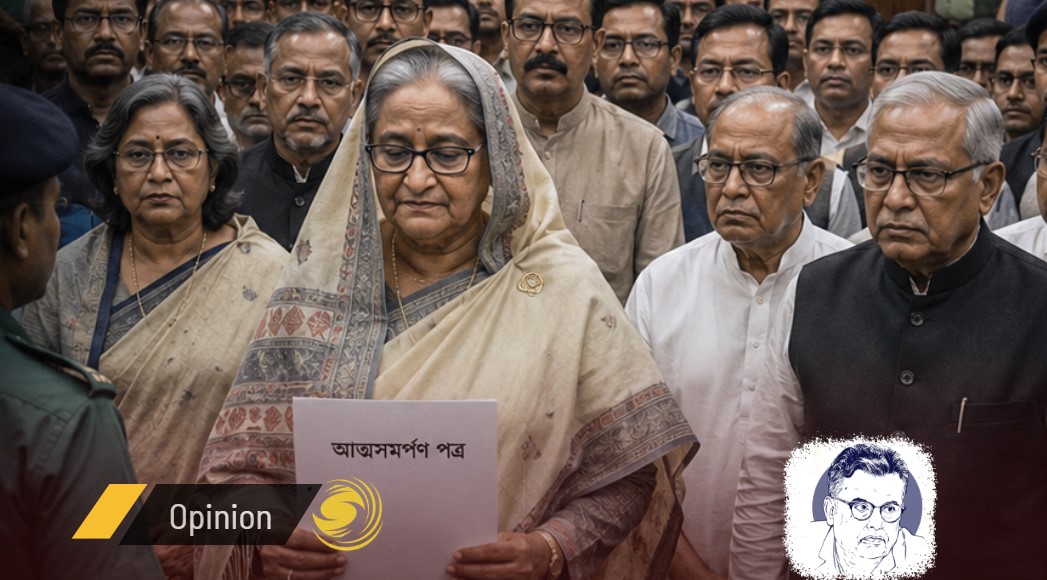
Rather, the conduct of the BNP over the past several days, and particularly the most recent request by Prime Minister’s Foreign Affairs Adviser Humayun Kabir to the Indian ambassador and to their central minister, Dinesh Trivedi, to stop Sheikh Hasina’s political activities, indicate that Sheikh Hasina has now become the principal focal point of the BNP and its natural allies. In many respects, the issue appears to be causing them considerable panic.

There are, of course, several logical reasons for this. The BNP leader and current Prime Minister, Tarique Rahman, also spent 17 years in exile in London. Sheikh Hasina’s government had sentenced him as well. Yet he never said that he would return to the country with that sentence hanging over him and confront it directly. He did not return to the country even after 5 August 2024. Rather, before returning home following his mother’s death, he stated on Facebook that the question of his return to the country did not depend on his decision alone.

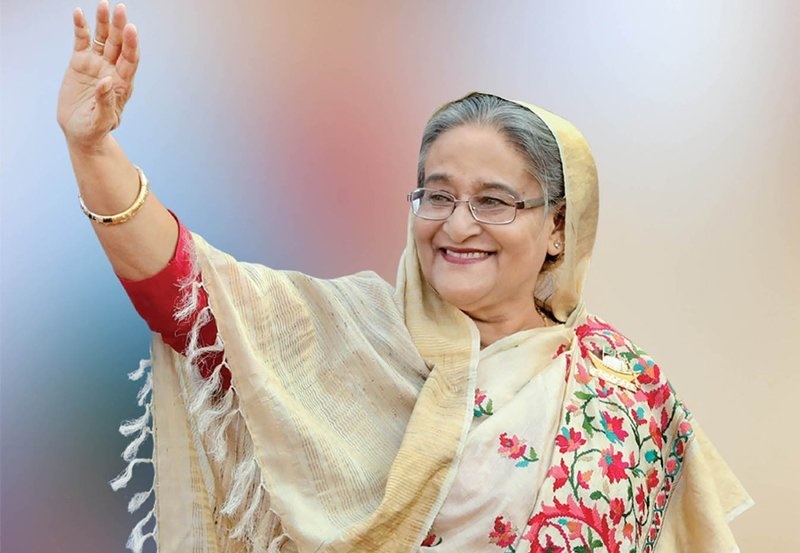
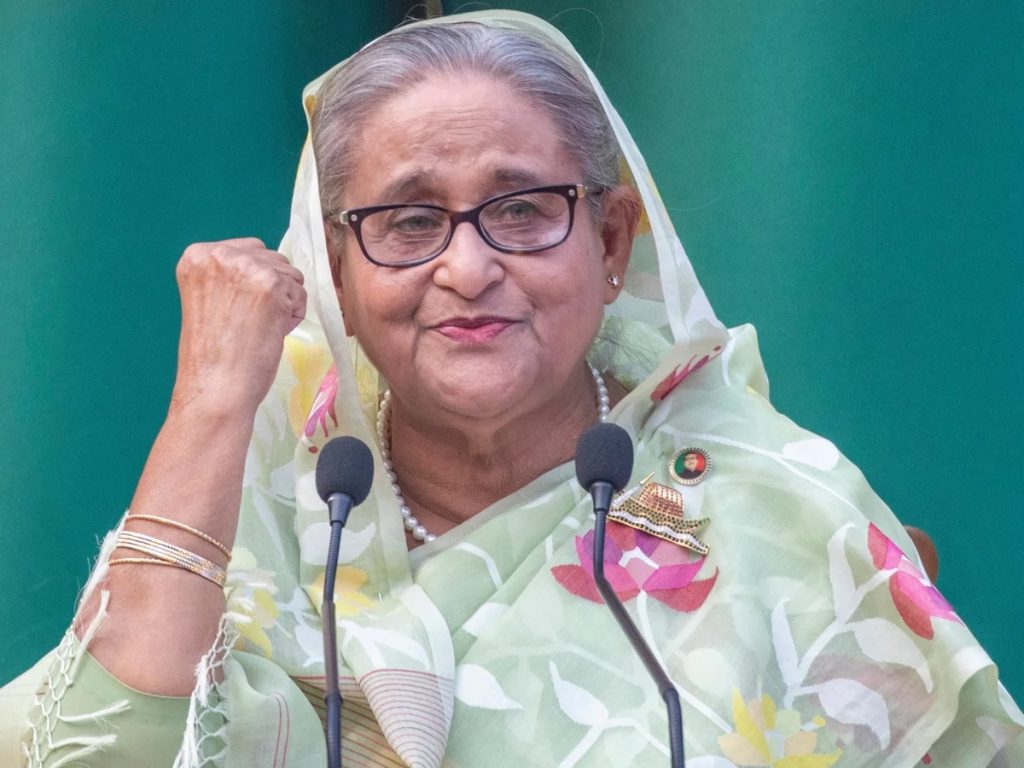
On the other hand, the punishment imposed on Sheikh Hasina is more severe than the one imposed on Tarique Rahman. Tarique Rahman had received a sentence of life imprisonment, while Sheikh Hasina faces a death sentence. Yet, with this death sentence hanging over her, Sheikh Hasina has already set a deadline, within a year and a half, for her return to the country. It is also clear to the government and to many others, on the basis of concrete information, that Sheikh Hasina’s return to the country is now only a matter of time. Moreover, Sheikh Hasina is a deeply battle-hardened politician. Whatever deadline she may announce publicly, she will want to return before that deadline. At a time when Sheikh Hasina’s return to the country has become certain, the request made to the Indian government to halt Hasina’s political activities, both directly by the government’s foreign affairs adviser and through statements by the state minister for foreign affairs, has made Sheikh Hasina even more important in Bangladesh’s politics.

The question may now arise as to why Tarique Rahman did not wish to return to the country during those 17 years, and why the BNP and its natural allies are so concerned about Sheikh Hasina’s return. In reality, the political party led by Tarique Rahman belongs to a category of parties that are essentially protected political parties. They originate under the protection of state power, and they remain comfortable, or survive in the political arena, with the support of other centres of power. By contrast, political parties such as the Awami League emerge through many difficult ascents and descents on the streets. Consequently, politicians and political analysts in stable countries cannot understand how far the leaders and workers of such a party may be prepared to risk their lives. In the same way, it is difficult for protected political parties such as the BNP to calculate it.

In any case, alongside these issues, the overall picture of Sergio Gor’s visit and the remarks of the Chinese ambassador have brought one matter above everything else: political unity and stability in Bangladesh.

Although Sheikh Hasina maintained stability in the country during her rule, it ultimately became clear that extremist fundamentalism could not be contained. That fundamentalist force destroyed the country’s infrastructure, industrial establishments and every form of state institution. Nor did it end there. Since the fall of Sheikh Hasina’s government, the country’s overall economic indicators have continued to move downwards.

At such a time, the countries that have investments in Bangladesh will naturally seek political unity and stability. Having learned from the elections held under Sheikh Hasina in 2018 and 2024, as well as from the election of 12 February 2026, they are also beginning to understand that, without a free and inclusive election, it has become almost impossible to place Bangladesh back on the main railway track. Bangladesh now stands precisely at that critical juncture.

The writer is a recipient of the highest state award, a journalist and editor associated with Sarakhon and The Present World.

12:33:38 pm, Thursday, 6 August 2026

Sergio Gor’s Visit, China’s Message, and Bangladesh’s Electoral Crossroads 

12:33:38 pm, Thursday, 6 August 2026

When an official visit is shortened at one side’s initiative, or when a programme is unilaterally cancelled, ordinary citizens and diplomats alike can read the underlying message of such conduct. They assume that something has fallen short of the purpose for which the visit was originally intended. Such conduct is a polite way of signalling that shortcoming.

This, however, never means that diplomacy or bilateral relations have come to a halt. A BNP leader, for example, recently asked, “In this election, India helped us with everything, beginning with our leader’s return. They even worked through certain Hindu leaders to ensure that Hindus would vote for us. Even after all this, why are they still allowing Hasina to engage in politics?”

There is something rather pleasing about a politician being so innocent. If nothing else, he is practising politics with the simple mind of a child. In any case, I replied that during Atal Bihari Vajpayee’s time, a war with Pakistan was taking place on one side, while the India-Pakistan bus service continued to operate on the other.

Sergio Gor, the US President’s Special Envoy for South and Central Asia who has been appointed ambassador to India, curtailed several previously scheduled programmes during his recent visit to Bangladesh. Nevertheless, he invited Bangladesh to join the Pax Silica initiative. Semiconductors, artificial intelligence and critical minerals are among the most important issues shaping both the world of today and the world of tomorrow. Pax Silica is the US-led supply network built around these sectors. It has been formed by a number of countries, including the United States, the United Kingdom, Japan, Singapore, South Korea, Israel, the United Arab Emirates, the Netherlands and Australia, with India joining at a later stage.

I came to understand that Bangladesh would need to move towards membership of such an alliance when I attended an economic connectivity conference in India’s North-East in either 2022 or 2023. One of the central figures at the conference was Japan’s ambassador posted in India, who was also responsible for Nepal. During an exchange of courtesies with him, I was able to understand, through only a few remarks, that the connection between Japan’s substantial investment in the development of India’s North-East and Bangladesh’s Matarbari Deep-Sea Port was far more significant than it might initially appear. He is a highly accomplished diplomat. In my presentation, I had described the Matarbari Deep-Sea Port as one of the principal “game changers” for the region. In the course of his remarks, he repeated that expression and, merely through a change in his facial muscles, conveyed a great deal. That made the matter even easier to understand.

Since the Second World War, just as the United States has drawn Japan and South Korea tightly into its strategic orbit, the exceptionally intelligent and industrious Japanese nation has also mastered the art of moving forward by keeping the United States alongside it.
Gor calls on Bangladesh to join Pax Silica initiative - OrissaPOST

Sergio Gor’s invitation is therefore a natural continuation of the efforts that have been under way for more than a decade to explore and advance the economic potential of this region. It may, however, be assumed that Sergio Gor had to state this afresh because Bangladesh’s politics has changed over the past two years. Many issues have moved away from the focal points of economics and politics, or have taken a different course.

On the other hand, before Sergio Gor invited Bangladesh to become a partner in this alliance, Bangladesh had already decided to join, as an observer, a similar China-led alliance called WAICO. That alliance includes 29 countries, among them major states such as Russia, Brazil, Malaysia, Indonesia and South Africa, as well as Pakistan, Oman and Myanmar.

Although Bangladesh made that decision earlier, Sergio Gor has nevertheless invited it to join Pax Silica. This is essentially a continuation of the connectivity initiatives surrounding Matarbari and the wider region.

There is, of course, another issue that will inevitably reveal itself here, at least to some extent. During Trump’s recent visit to China, he repeatedly emphasised, in accordance with his own policy, the idea of the G-2, meaning the “Great Two”. In other words, Trump wants to revive, in a new form, a world dominated by two superpowers, similar to the era of the Soviet Union and the United States. One superpower would be the United States, and the other would be China.

Following Trump’s visit, statements by China’s foreign minister, as well as editorials and major columns published in Beijing ReviewGlobal Times and People’s Daily, together with articles by Chinese think tanks in several South-East Asian journals, have conveyed that Trump’s G-2 formula is by no means the policy of Xi Jinping. Their arguments echo those of the realist think tanks of the present moment. The wars in Iran and Ukraine have already demonstrated that the meaning of both military power and economic power has changed. They have also brought another reality to the forefront: it is no longer possible to confine the contemporary world within one or two poles. Rather, the time has come for every country to identify its own sources of strength. This applies even to small states. If they fail to do so, their condition will resemble that of Saint Kitts and Nevis, the Caribbean island state. Everyone knows that, in reality, the country has become a base for international crypto-money players. In that sense, it possesses no meaningful sovereignty. It is even said that, over the past two years, many young Bangladeshi crypto players have joined that arena there. Similar conditions have emerged in several African and Latin American countries, as well as in a number of Pacific island states. The principal reasons these countries are silently losing their sovereignty are uneducated and incompetent leadership and the absence of proper politics.

That Bangladesh currently lacks proper politics became clear from the Chinese ambassador’s remarks on the 3rd. He said that Bangladesh required “political unity and stability”. The very use of the word “required” means that both are currently in short supply.

স্থানীয় রাজনীতিতে বিএনপি, এনসিপি থেকে এগিয়ে জামায়াত: জরিপ

In diplomacy and politics, what is publicly stated, or what think tanks aligned with the relevant parties write, is not always the final word. China has said that it does not believe in a G-2 policy. This, however, does not mean that one can simply assume China will remain outside a G-2 arrangement everywhere. In reality, there is always the question of differences in “place, time and actor”.

It is therefore natural that one may view the two developments through a G-2 lens and attempt to fit the pieces of the puzzle together, placing the curtailment of certain programmes during Gor’s visit alongside the Chinese ambassador’s subsequent statement about the need for unity and stability in Bangladesh’s politics.

At present, Jamaat, the BNP and the NCP are the parties engaged in politics in Bangladesh. They are essentially part of the same force, or are natural allies. In other words, they possess a deep unity, or arise from the same roots. Why, then, is the Chinese ambassador calling for political unity? Which political force is meant to be included in this unity or inclusive politics? Whatever the government or its natural allies may say, the countries that have investments in Bangladesh, or for which Bangladesh is geopolitically important, have understood that keeping the Awami League and its allies away from political activities means excluding more than half of the population from the existing political unity.

Five months have also passed before the eyes of those who provided every possible form of assistance to bring the BNP to power. As a result, even if only to a limited extent, a clearer picture has begun to emerge before them regarding how much the BNP will be able to deliver on the economy, connectivity and the issue of “militancy”, which poses a danger to internal security.

Rather, the conduct of the BNP over the past several days, and particularly the most recent request by Prime Minister’s Foreign Affairs Adviser Humayun Kabir to the Indian ambassador and to their central minister, Dinesh Trivedi, to stop Sheikh Hasina’s political activities, indicate that Sheikh Hasina has now become the principal focal point of the BNP and its natural allies. In many respects, the issue appears to be causing them considerable panic.

There are, of course, several logical reasons for this. The BNP leader and current Prime Minister, Tarique Rahman, also spent 17 years in exile in London. Sheikh Hasina’s government had sentenced him as well. Yet he never said that he would return to the country with that sentence hanging over him and confront it directly. He did not return to the country even after 5 August 2024. Rather, before returning home following his mother’s death, he stated on Facebook that the question of his return to the country did not depend on his decision alone.
On the other hand, the punishment imposed on Sheikh Hasina is more severe than the one imposed on Tarique Rahman. Tarique Rahman had received a sentence of life imprisonment, while Sheikh Hasina faces a death sentence. Yet, with this death sentence hanging over her, Sheikh Hasina has already set a deadline, within a year and a half, for her return to the country. It is also clear to the government and to many others, on the basis of concrete information, that Sheikh Hasina’s return to the country is now only a matter of time. Moreover, Sheikh Hasina is a deeply battle-hardened politician. Whatever deadline she may announce publicly, she will want to return before that deadline. At a time when Sheikh Hasina’s return to the country has become certain, the request made to the Indian government to halt Hasina’s political activities, both directly by the government’s foreign affairs adviser and through statements by the state minister for foreign affairs, has made Sheikh Hasina even more important in Bangladesh’s politics.

The question may now arise as to why Tarique Rahman did not wish to return to the country during those 17 years, and why the BNP and its natural allies are so concerned about Sheikh Hasina’s return. In reality, the political party led by Tarique Rahman belongs to a category of parties that are essentially protected political parties. They originate under the protection of state power, and they remain comfortable, or survive in the political arena, with the support of other centres of power. By contrast, political parties such as the Awami League emerge through many difficult ascents and descents on the streets. Consequently, politicians and political analysts in stable countries cannot understand how far the leaders and workers of such a party may be prepared to risk their lives. In the same way, it is difficult for protected political parties such as the BNP to calculate it.

In any case, alongside these issues, the overall picture of Sergio Gor’s visit and the remarks of the Chinese ambassador have brought one matter above everything else: political unity and stability in Bangladesh.

Although Sheikh Hasina maintained stability in the country during her rule, it ultimately became clear that extremist fundamentalism could not be contained. That fundamentalist force destroyed the country’s infrastructure, industrial establishments and every form of state institution. Nor did it end there. Since the fall of Sheikh Hasina’s government, the country’s overall economic indicators have continued to move downwards.

At such a time, the countries that have investments in Bangladesh will naturally seek political unity and stability. Having learned from the elections held under Sheikh Hasina in 2018 and 2024, as well as from the election of 12 February 2026, they are also beginning to understand that, without a free and inclusive election, it has become almost impossible to place Bangladesh back on the main railway track. Bangladesh now stands precisely at that critical juncture.

The writer is a recipient of the highest state award, a journalist and editor associated with Sarakhon and The Present World.