11:50 am, Saturday, 9 May 2026

What Strength Does the Awami League Have Beyond Politics


Swadesh Roy

The politics of the Awami League has now been banned through the passage of a law in parliament. In this situation, the party no longer has any legal or conventional right to express its political strength in a legitimate, lawful, or established manner.

Yet, the party known as the Awami League, now banned, has been described by the country’s veteran economist and intellectual Rehman Sobhan as follows: “The Awami League is not just a political party of Bangladesh; it is the Awami League that created Bangladesh.” This naturally raises a question: is the power or strength of such a party confined only within the realm of politics? A party or platform that creates a country, no matter how cornered it becomes within formal politics, inevitably possesses many other forms of resources and strength beyond conventional political frameworks. What might those strengths of the Awami League be?

Strength Embedded in Its Origins

The Awami League was born out of the progressive young faction of the Muslim League that had created Pakistan, along with representatives of peasants and common people. Both the Muslim League and Pakistan stood in opposition to progressivism and to the representation of all people. Like any other land, this land (then East Bengal, now Bangladesh) also had an inherent progressive aspiration. It is from this indigenous aspiration that the Awami League was born. As a result, these strengths are intrinsically embedded within its very origin: the party is a bearer of the progressive aspirations of the land, and particularly a representative of the poor and of all ordinary communities.
It Does Not Need the Narrative of “Hindus Voted for Them”

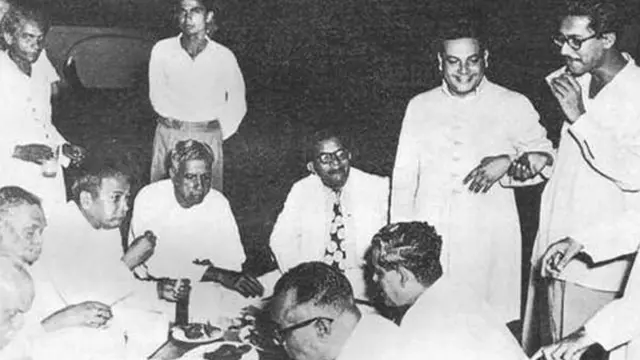
For this reason, in Muslim-majority Bangladesh, Hindus, Buddhists, Christians, and other ethnic groups find in the Awami League a politically reliable institution. It is within this institution that everyone feels respected as human beings. Therefore, regardless of whatever labels are attached to the Awami League, it cannot be labeled as fundamentalist. On the contrary, those opposing the Awami League, except for its allied parties, must resort to overt attempts through domestic and foreign embedded journalists and media to prove that they are not fundamentalist. This is done by constructing narratives such as “Hindus voted for that party.” Because until it can be demonstrated that Hindus voted for them, those opposing the Awami League remain identified as Muslim fundamentalist parties, or at best as parties of moderate Muslims.

Despite such strategic maneuvers, the Awami League continues to be identified as the innate progressive and territorially grounded secular Bengali nationalist force of Bangladesh.
The True Bengali Nationalist Movement

The Bengali nation has a long history. At least two thousand years of civilizational history can be traced through its many layers. However, there was no sustained attempt or movement in ancient history to become a territorially grounded Bengali nationalism. Only in some medieval literature, and later after 1905 with the movement against the partition of Bengal, did Rabindranath begin to articulate an early form of Bengali nationalism in his songs and poetry. Later, its powerful expression emerged in the voice of Nazrul:

“Salutations, salutations, salutations, my Bangladesh.”

However, within the broader Indian nationalist movement, the struggle for Indian independence, and the eventual partition into Hindu and Muslim states, this Bengali nationalist movement was suppressed. Rabindranath passed away, and Nazrul too was rendered speechless by an unknown illness.

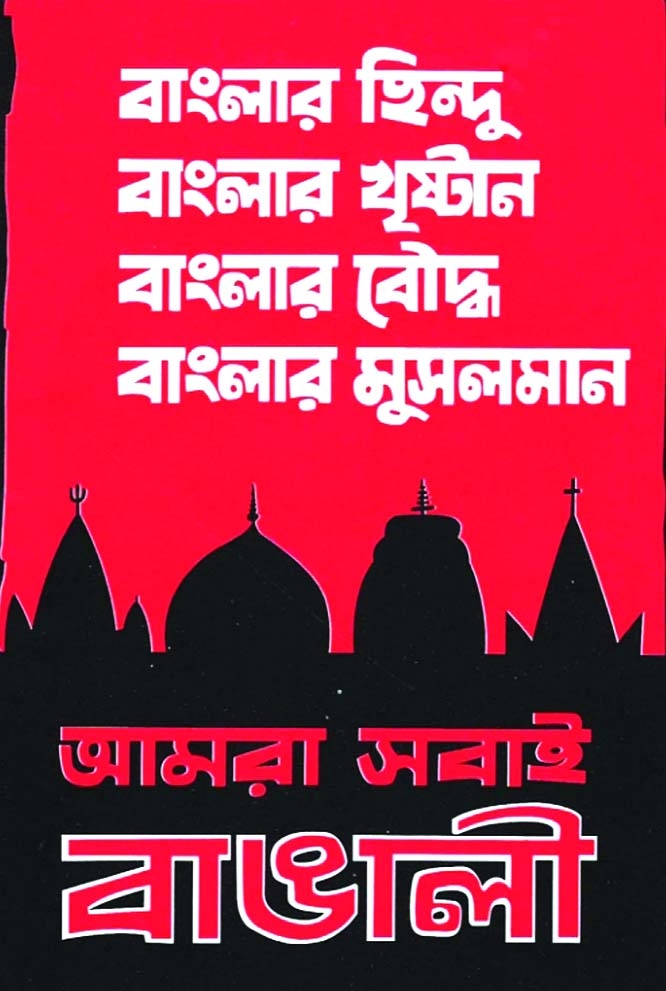
Thus, in the truest sense, the Bengali nationalist movement began in this eastern Bengal from the 1950s. Like other nationalist movements elsewhere, its beginnings emerged through art and literature. The poets, novelists, storytellers, lyricists, and artists of the 1950s in Bangladesh all centered their work around a distinct identity grounded in Bengali nationalism. As a result, the foundational basis of Bangladesh’s progressive art and culture has remained Bengali nationalism. Anything outside of this is reactionary.

The Culture and Literature of the 1950s

The foundation of Bengali nationalist art and literature in Bangladesh was built by the writers, artists, and cultural activists of the 1950s. Drawing from the timeless Sahajiya philosophical tradition of Bengal, and incorporating Rabindranath and Nazrul, they used their exceptional intellect and creativity to begin constructing a stream of art, literature, and culture rooted in Bengali nationalism.

This work was not limited to aesthetic artistic production alone. Nor was it merely a struggle identified in history as part of the nationalist movement. Rather, they succeeded in transforming this struggle into a flowing river, one that would continue to run eternally across this land.

During that time, this cultural and literary movement was politically embodied by the Awami League and the Communist Party of Bangladesh. The Communist Party of East Bengal, from the 1950s onward, was compelled by political and social realities to engage more in nationalist movements than in classical communist movements. The nationalist and patriotic faction of the Communist Party gradually merged with the Awami League from the 1960s, and by the 1980s, it was fully absorbed into it.

As a result, the Awami League has been able to most comprehensively embody Bangladesh’s Bengali nationalist art, literature, and culture. The political inheritance and flowing continuity of this cultural resource also rest with the Awami League.

The Epics of the 1960s and 1970s: Literature and the Liberation War

The strong foundation of Bengali nationalism established in the arts and literature of the 1950s was not only accelerated by the poets, writers, and artists of the 1960s and 1970s, but also became one of the key architects in the creation of a territorial, secular Bengali state.

Thus, from the 1950s through the 1970s, poets, writers, and artists functioned as complementary forces alongside the political power of the Awami League, collectively creating the epic known as the Liberation War and the secular state known as Bangladesh.

Whenever a nation becomes the inheritor of an epic, its national identity and consciousness, its entire cultural structure, develops around that epic.

As a result, even the so-called populist writers of Bangladesh must ground their work in some element of the epic known as the Liberation War. Therefore, even when they are populist, their work ultimately functions as a strength of Bengali nationalist politics.
Poetry, Patriotic Songs, Theatre, and Slogans

Poetry, patriotic songs, and theatre all fall within the domain of art and literature. Yet it must be said that after Rabindranath and Nazrul, the vast treasury of patriotic songs based on Bengali nationalism that has been created in Bengali music has emerged in this eastern Bengal, or Bangladesh. The strength of these songs can be truly carried only by the Bengali nationalist force and its political stream, the Awami League. Therefore, in the absence of the Awami League, attempts are made to suppress this cultural power and music.

However, the power of song is innate. When a Baul accepts a brutal death simply for singing (as has been witnessed over the past two years), it becomes evident how immense the power of these patriotic and secular songs truly is.

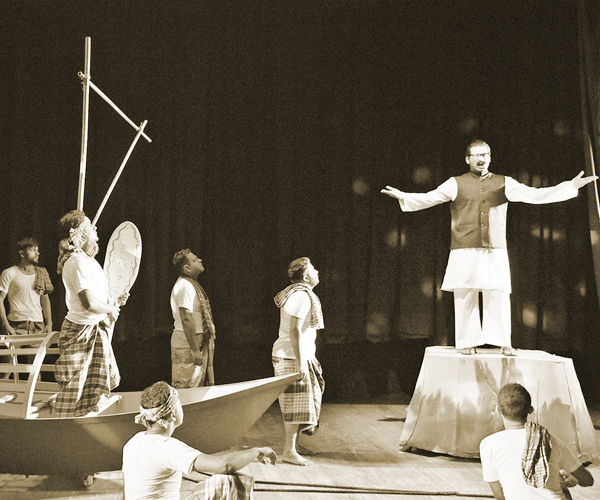
Through a long liberation struggle and in the aftermath of the assassination of Bangabandhu Sheikh Mujibur Rahman, Bengali nationalist playwrights have created countless extraordinary works of theatre. These too must be suppressed or kept banned in various ways if Bengali nationalism or the Awami League is to be suppressed. The magnitude of theatre’s power can be understood from the fact that the law enacted by the British to ban plays in order to protect their empire is still in force in Bangladesh.

On the other hand, from the 1950s onward, the finest poems in the Bengali language, centered around the struggle to create a secular state and its rises and falls, have been written by poets of this land. And around the struggle and tragic death of Bangabandhu Sheikh Mujibur Rahman, one of the greatest heroes in world history and the creator of the Bengali nation-state, poets of this country have written some of the finest poems ever composed anywhere in the world.

Language itself possesses immense power; and when it takes the form of poetry, it becomes a force that endures forever.
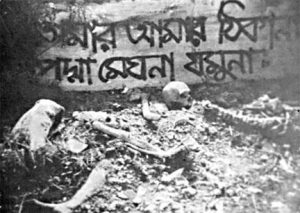
The eminent polymath writer Syed Shamsul Haq, one of the foremost literary figures after Rabindranath and Nazrul, once wrote that Bengalis standing on the streets can compose some of the most powerful poetry in the world in the form of slogans. The truth of this can be understood by recalling at least three Bengali slogans:

“Your address and mine, Padma, Meghna, Jamuna.”

“Who are you? Who am I? Bengali, Bengali.”

“Joy Bangla.”

The first of these slogans defines geography and national character, the second defines identity, and the third defies explanation. No language in the world has yet been able to fully interpret it. One can only say that a future historian, while searching through the history of this land, will be astonished to discover how just two words could contain such power, words that, when uttered, have led people from childhood to old age to repeatedly embrace death in the history of this country.
The Heroic Character of a Nation

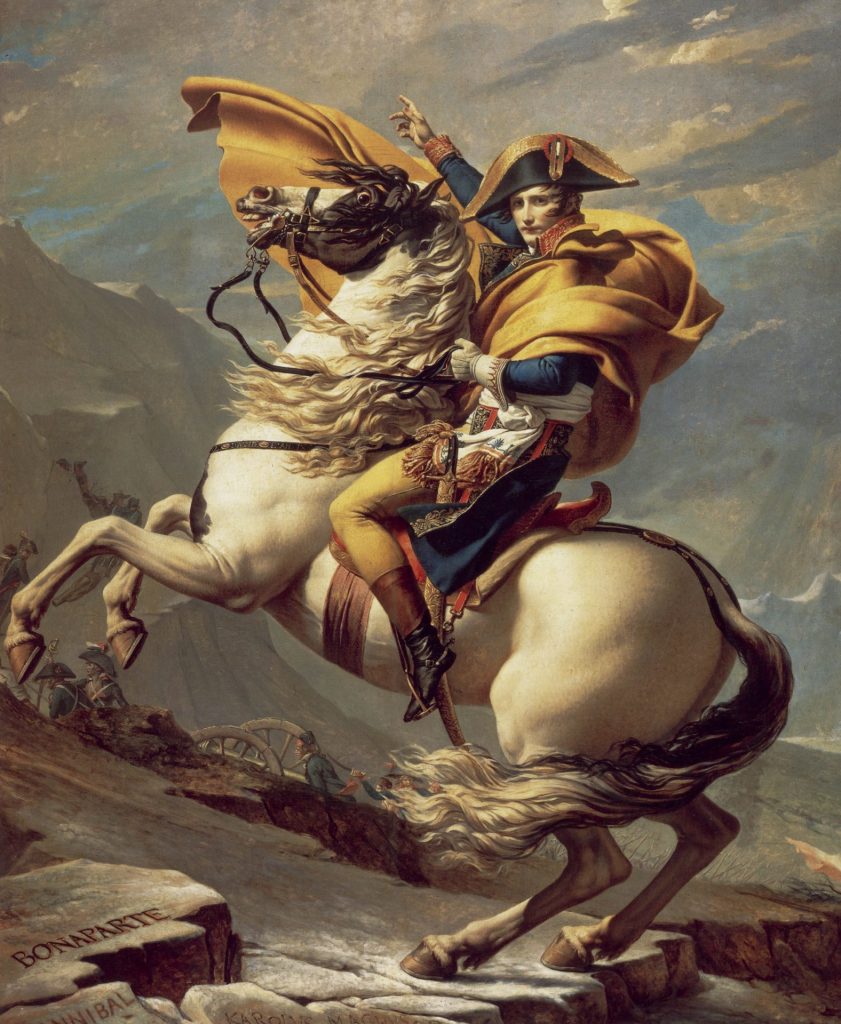
A nation without heroes is, in truth, no nation at all. That is why some nations, in order to build themselves, even draw heroes from imagined epics. Despite all historical criticisms, figures such as Napoleon the Great and Alexander the Great remain symbols of heroism.

In the history of the Bengalis, no matter how many rises and falls occur, every honest son of this nation will continue to seek heroism in Sheikh Mujibur Rahman for the next thousand years. And by embodying him, the children of Bengal will themselves become heroic. They will become courageous. And it is an immutable truth that without heroism, no step in life can succeed. Conspiracy can never be a substitute for heroism.

Just as Sheikh Mujib and Bangladesh are twin words, Sheikh Mujib and the Bengali people are also synonymous. Likewise, in this land, heroism and Sheikh Mujibur Rahman are synonymous. Therefore, in this Bengal, heroes will always stand tall by embodying his character.

Those who demolish Sheikh Mujib’s sculptures, who desecrate them, do not realize that in the medieval period, when attempts were made to push the Bengali language aside, the poet Abdul Hakim identified such people in the following way:

“Those who are born in Bengal yet hate the Bengali language, I do not know from what lineage they arise.”

Thus, whenever anyone insults Bangabandhu in this land, a poet, following Abdul Hakim, might say of them:

Those who are born in Bangladesh, Yet refuse to acknowledge the legacy of Sheikh Mujib; Why waste effort trying to determine their origin? Do not even waste your hatred on them, They are lower than the very object of hatred.

In reality, just as the Bengali language is eternal, so too is Bangabandhu Sheikh Mujibur Rahman an eternal force in the state and national life of the Bengalis. And when a hero, or the memory of a hero, is attacked or insulted, the number of that hero’s followers increases, and their strength grows beyond ordinary times. Above all, there flows the sacred bloodline of Bangabandhu and his companions in the creation of the nation. And the power of such a bloodline, today, the world can observe it in Iran.
The Bloodline of Hasan and Husayn

Before attacking Iran, the aggressors must certainly have calculated not only their weapons but also the geographical strength of Iran. But one factor they did not account for was this: the primary source of unity among Iran’s largest population, the Shia community, is the bloodline of Hasan and Husayn, descendants of the Prophet.

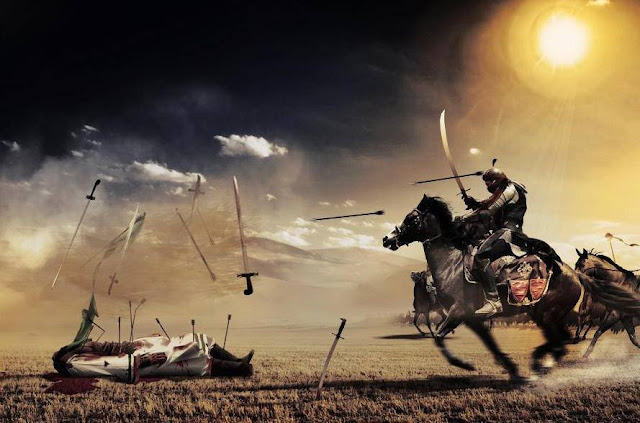
Fourteen hundred years ago, on the banks of the Euphrates, the brutal blade of Shimr shed the blood of the heroic Hasan and Husayn, along with their children and followers. That very blood has, for fourteen centuries, provided the Shia community with a distinct and enduring unity. On the tenth day of Muharram each year, that unity doubles. Thus, even after the successive killings of leaders, it has not been possible to fracture their unity.

In the national life of Bangladesh, those who shed the blood of Sheikh Mujib, the creator of Bangladesh, along with his family members and his fellow fighters, wielded weapons no different from the blade of Shimr. Just as Shimr’s blade stood against the bloodline of the Prophet, so too do the assassins of Bangabandhu stand against Bangladesh in the life of the Bengali nation. Therefore, the unity of Bengali nationalist strength is akin to that of the Shia community.

Even after fourteen centuries, one would see, standing at the edge of death, that on the day of Bangabandhu’s assassination, on the day his fellow fighters were killed in prison, and even on the day his historic house is demolished, the unity of Bengali nationalist forces, the followers of Sheikh Mujib, will double. This is the nature of a hero’s bloodline in the life of any nation.

Author: Recipient of the highest state honor; journalist and editor, Sarakhon, The Present World
07:19:53 pm, Saturday, 18 April 2026

What Strength Does the Awami League Have Beyond Politics

07:19:53 pm, Saturday, 18 April 2026

The politics of the Awami League has now been banned through the passage of a law in parliament. In this situation, the party no longer has any legal or conventional right to express its political strength in a legitimate, lawful, or established manner.

Yet, the party known as the Awami League, now banned, has been described by the country’s veteran economist and intellectual Rehman Sobhan as follows: “The Awami League is not just a political party of Bangladesh; it is the Awami League that created Bangladesh.” This naturally raises a question: is the power or strength of such a party confined only within the realm of politics? A party or platform that creates a country, no matter how cornered it becomes within formal politics, inevitably possesses many other forms of resources and strength beyond conventional political frameworks. What might those strengths of the Awami League be?

Strength Embedded in Its Origins

The Awami League was born out of the progressive young faction of the Muslim League that had created Pakistan, along with representatives of peasants and common people. Both the Muslim League and Pakistan stood in opposition to progressivism and to the representation of all people. Like any other land, this land (then East Bengal, now Bangladesh) also had an inherent progressive aspiration. It is from this indigenous aspiration that the Awami League was born. As a result, these strengths are intrinsically embedded within its very origin: the party is a bearer of the progressive aspirations of the land, and particularly a representative of the poor and of all ordinary communities.

It Does Not Need the Narrative of “Hindus Voted for Them”

For this reason, in Muslim-majority Bangladesh, Hindus, Buddhists, Christians, and other ethnic groups find in the Awami League a politically reliable institution. It is within this institution that everyone feels respected as human beings. Therefore, regardless of whatever labels are attached to the Awami League, it cannot be labeled as fundamentalist. On the contrary, those opposing the Awami League, except for its allied parties, must resort to overt attempts through domestic and foreign embedded journalists and media to prove that they are not fundamentalist. This is done by constructing narratives such as “Hindus voted for that party.” Because until it can be demonstrated that Hindus voted for them, those opposing the Awami League remain identified as Muslim fundamentalist parties, or at best as parties of moderate Muslims.

Despite such strategic maneuvers, the Awami League continues to be identified as the innate progressive and territorially grounded secular Bengali nationalist force of Bangladesh.

The True Bengali Nationalist Movement

The Bengali nation has a long history. At least two thousand years of civilizational history can be traced through its many layers. However, there was no sustained attempt or movement in ancient history to become a territorially grounded Bengali nationalism. Only in some medieval literature, and later after 1905 with the movement against the partition of Bengal, did Rabindranath begin to articulate an early form of Bengali nationalism in his songs and poetry. Later, its powerful expression emerged in the voice of Nazrul:

“Salutations, salutations, salutations, my Bangladesh.”

However, within the broader Indian nationalist movement, the struggle for Indian independence, and the eventual partition into Hindu and Muslim states, this Bengali nationalist movement was suppressed. Rabindranath passed away, and Nazrul too was rendered speechless by an unknown illness.

Thus, in the truest sense, the Bengali nationalist movement began in this eastern Bengal from the 1950s. Like other nationalist movements elsewhere, its beginnings emerged through art and literature. The poets, novelists, storytellers, lyricists, and artists of the 1950s in Bangladesh all centered their work around a distinct identity grounded in Bengali nationalism. As a result, the foundational basis of Bangladesh’s progressive art and culture has remained Bengali nationalism. Anything outside of this is reactionary.

The Culture and Literature of the 1950s

The foundation of Bengali nationalist art and literature in Bangladesh was built by the writers, artists, and cultural activists of the 1950s. Drawing from the timeless Sahajiya philosophical tradition of Bengal, and incorporating Rabindranath and Nazrul, they used their exceptional intellect and creativity to begin constructing a stream of art, literature, and culture rooted in Bengali nationalism.

This work was not limited to aesthetic artistic production alone. Nor was it merely a struggle identified in history as part of the nationalist movement. Rather, they succeeded in transforming this struggle into a flowing river, one that would continue to run eternally across this land.

During that time, this cultural and literary movement was politically embodied by the Awami League and the Communist Party of Bangladesh. The Communist Party of East Bengal, from the 1950s onward, was compelled by political and social realities to engage more in nationalist movements than in classical communist movements. The nationalist and patriotic faction of the Communist Party gradually merged with the Awami League from the 1960s, and by the 1980s, it was fully absorbed into it.

As a result, the Awami League has been able to most comprehensively embody Bangladesh’s Bengali nationalist art, literature, and culture. The political inheritance and flowing continuity of this cultural resource also rest with the Awami League.

The Epics of the 1960s and 1970s: Literature and the Liberation War

The strong foundation of Bengali nationalism established in the arts and literature of the 1950s was not only accelerated by the poets, writers, and artists of the 1960s and 1970s, but also became one of the key architects in the creation of a territorial, secular Bengali state.

Thus, from the 1950s through the 1970s, poets, writers, and artists functioned as complementary forces alongside the political power of the Awami League, collectively creating the epic known as the Liberation War and the secular state known as Bangladesh.

Whenever a nation becomes the inheritor of an epic, its national identity and consciousness, its entire cultural structure, develops around that epic.

As a result, even the so-called populist writers of Bangladesh must ground their work in some element of the epic known as the Liberation War. Therefore, even when they are populist, their work ultimately functions as a strength of Bengali nationalist politics.

Poetry, Patriotic Songs, Theatre, and Slogans

Poetry, patriotic songs, and theatre all fall within the domain of art and literature. Yet it must be said that after Rabindranath and Nazrul, the vast treasury of patriotic songs based on Bengali nationalism that has been created in Bengali music has emerged in this eastern Bengal, or Bangladesh. The strength of these songs can be truly carried only by the Bengali nationalist force and its political stream, the Awami League. Therefore, in the absence of the Awami League, attempts are made to suppress this cultural power and music.

However, the power of song is innate. When a Baul accepts a brutal death simply for singing (as has been witnessed over the past two years), it becomes evident how immense the power of these patriotic and secular songs truly is.

Through a long liberation struggle and in the aftermath of the assassination of Bangabandhu Sheikh Mujibur Rahman, Bengali nationalist playwrights have created countless extraordinary works of theatre. These too must be suppressed or kept banned in various ways if Bengali nationalism or the Awami League is to be suppressed. The magnitude of theatre’s power can be understood from the fact that the law enacted by the British to ban plays in order to protect their empire is still in force in Bangladesh.

On the other hand, from the 1950s onward, the finest poems in the Bengali language, centered around the struggle to create a secular state and its rises and falls, have been written by poets of this land. And around the struggle and tragic death of Bangabandhu Sheikh Mujibur Rahman, one of the greatest heroes in world history and the creator of the Bengali nation-state, poets of this country have written some of the finest poems ever composed anywhere in the world.

Language itself possesses immense power; and when it takes the form of poetry, it becomes a force that endures forever.

The eminent polymath writer Syed Shamsul Haq, one of the foremost literary figures after Rabindranath and Nazrul, once wrote that Bengalis standing on the streets can compose some of the most powerful poetry in the world in the form of slogans. The truth of this can be understood by recalling at least three Bengali slogans:

“Your address and mine, Padma, Meghna, Jamuna.”

“Who are you? Who am I? Bengali, Bengali.”

“Joy Bangla.”

The first of these slogans defines geography and national character, the second defines identity, and the third defies explanation. No language in the world has yet been able to fully interpret it. One can only say that a future historian, while searching through the history of this land, will be astonished to discover how just two words could contain such power, words that, when uttered, have led people from childhood to old age to repeatedly embrace death in the history of this country.

The Heroic Character of a Nation

A nation without heroes is, in truth, no nation at all. That is why some nations, in order to build themselves, even draw heroes from imagined epics. Despite all historical criticisms, figures such as Napoleon the Great and Alexander the Great remain symbols of heroism.

In the history of the Bengalis, no matter how many rises and falls occur, every honest son of this nation will continue to seek heroism in Sheikh Mujibur Rahman for the next thousand years. And by embodying him, the children of Bengal will themselves become heroic. They will become courageous. And it is an immutable truth that without heroism, no step in life can succeed. Conspiracy can never be a substitute for heroism.

Just as Sheikh Mujib and Bangladesh are twin words, Sheikh Mujib and the Bengali people are also synonymous. Likewise, in this land, heroism and Sheikh Mujibur Rahman are synonymous. Therefore, in this Bengal, heroes will always stand tall by embodying his character.

Those who demolish Sheikh Mujib’s sculptures, who desecrate them, do not realize that in the medieval period, when attempts were made to push the Bengali language aside, the poet Abdul Hakim identified such people in the following way:

“Those who are born in Bengal yet hate the Bengali language, I do not know from what lineage they arise.”

Thus, whenever anyone insults Bangabandhu in this land, a poet, following Abdul Hakim, might say of them:

Those who are born in Bangladesh, Yet refuse to acknowledge the legacy of Sheikh Mujib; Why waste effort trying to determine their origin? Do not even waste your hatred on them, They are lower than the very object of hatred.

In reality, just as the Bengali language is eternal, so too is Bangabandhu Sheikh Mujibur Rahman an eternal force in the state and national life of the Bengalis. And when a hero, or the memory of a hero, is attacked or insulted, the number of that hero’s followers increases, and their strength grows beyond ordinary times. Above all, there flows the sacred bloodline of Bangabandhu and his companions in the creation of the nation. And the power of such a bloodline, today, the world can observe it in Iran.

The Bloodline of Hasan and Husayn

Before attacking Iran, the aggressors must certainly have calculated not only their weapons but also the geographical strength of Iran. But one factor they did not account for was this: the primary source of unity among Iran’s largest population, the Shia community, is the bloodline of Hasan and Husayn, descendants of the Prophet.

Fourteen hundred years ago, on the banks of the Euphrates, the brutal blade of Shimr shed the blood of the heroic Hasan and Husayn, along with their children and followers. That very blood has, for fourteen centuries, provided the Shia community with a distinct and enduring unity. On the tenth day of Muharram each year, that unity doubles. Thus, even after the successive killings of leaders, it has not been possible to fracture their unity.

In the national life of Bangladesh, those who shed the blood of Sheikh Mujib, the creator of Bangladesh, along with his family members and his fellow fighters, wielded weapons no different from the blade of Shimr. Just as Shimr’s blade stood against the bloodline of the Prophet, so too do the assassins of Bangabandhu stand against Bangladesh in the life of the Bengali nation. Therefore, the unity of Bengali nationalist strength is akin to that of the Shia community.

Even after fourteen centuries, one would see, standing at the edge of death, that on the day of Bangabandhu’s assassination, on the day his fellow fighters were killed in prison, and even on the day his historic house is demolished, the unity of Bengali nationalist forces, the followers of Sheikh Mujib, will double. This is the nature of a hero’s bloodline in the life of any nation.

Author: Recipient of the highest state honor; journalist and editor, Sarakhon, The Present World