
Can SAARC Ever Be Made Effective?


Through the Iran war, the world’s traditional understanding of military power has changed. Alongside that, several other matters have also become clearer, or at least have opened up new ways of thinking. For a long time, the economic capacity of different countries had been discussed in many ways. Now it has been proved that much of that calculation was hollow. In the same way, the future and effectiveness of the military, economic and regional alliances formed across the world have also come under fresh scrutiny.
For example, the Iran war has proved that although ASEAN remains under China’s shadow, China’s energy capacity and commercial strategy are ultimately directed toward China’s own interests. The ASEAN member states will not receive a share of those advantages from China. In the final analysis, they will have to stand on their own feet.
In any major military or economic crisis faced by the ASEAN member states, this alliance will not be able to play any real role. At present, because of America’s attack on Iran, the ASEAN countries are falling into an economic crisis, and each country is having to deal with that crisis separately. The alliance itself is not being able to play any meaningful role.
On the other hand, Iran became a member of BRICS one year before America attacked it. Yet BRICS has no role in the Iran war. Nor does it have any real scope to play such a role.

The same is true of NATO. Just as the members of this alliance could not act together in any unified way in the Ukraine war, they are also unable to play any role in the Iran war. They have neither the capacity to do so nor the practical reality for it.
Another issue has also come to the forefront at this moment: no alliance in the world today has a leadership that is broadly acceptable to global public opinion. Some say that if leaders of the stature of the early Non-Aligned Movement were present today, such as India’s Jawaharlal Nehru, Indonesia’s Sukarno, and Egypt’s Gamal Abdel Nasser, then perhaps it would have been possible to take an initiative to stop the war and even succeed in that objective. Those leaders had that level of acceptance before world public opinion. But in the present time and circumstances, there is little benefit in imagining what might have happened even if leaders of that stature existed. Besides, the reality of the world itself has changed.
On the other hand, even without forming any alliance, many Gulf states had until now considered themselves safe under America’s military shadow. Through the Iran war, it has been proved that because war has moved into a new technological age, the question of security has become far more complex. The military base of a major country is no longer something special in terms of security. Rather, as in the case of those Gulf states, it can invite danger.
Even the old advantage of creating buffer states or buffer zones for traditional defence or attack has lost its importance and necessity because of long-range missiles and, most recently, the use of drones.

At the same time, the Iran war of less than two months has proved that there are very few countries in the world capable of managing themselves in the face of a comprehensive economic crisis.
At such a time, how much importance and necessity remains, if any at all, for SAARC, this South Asian alliance created from thinking that is 50 years old, first with seven countries and later with Afghanistan, making it an alliance of eight countries?
First of all, among the eight countries of this alliance, none has with another what can truly be called a good relationship. Therefore, where none of the eight countries has any good relationship with another, how can an alliance made up of those countries become effective? Besides, in six of these eight countries, religion-based politics, under different names, has raised its head. When religion-based politics comes to the front in any country, the liberal middle class of that country becomes endangered. And no matter how much it is said that the people are everything, and that one person, one vote is the main strength of democracy, in reality the basic foundation of the modern state idea is the liberal middle class. Therefore, most of the states in this alliance are no longer organised around their own people in that sense. Rather, many of them are suffering from the problems of divided populations.
After this comes the question of the relationship between the two nuclear powers of the alliance, India and Pakistan. Their relationship is not merely bad; the relationship between these two countries is not going to improve in the near future. Not only India, but many countries in the world consider Pakistan’s nuclear capability to be dangerous. Because when nuclear power remains in the hands of a state whose political forces and civil administration are weak, and where the state itself gives shelter to international militancy, that nuclear power becomes a threat to any country in the world.
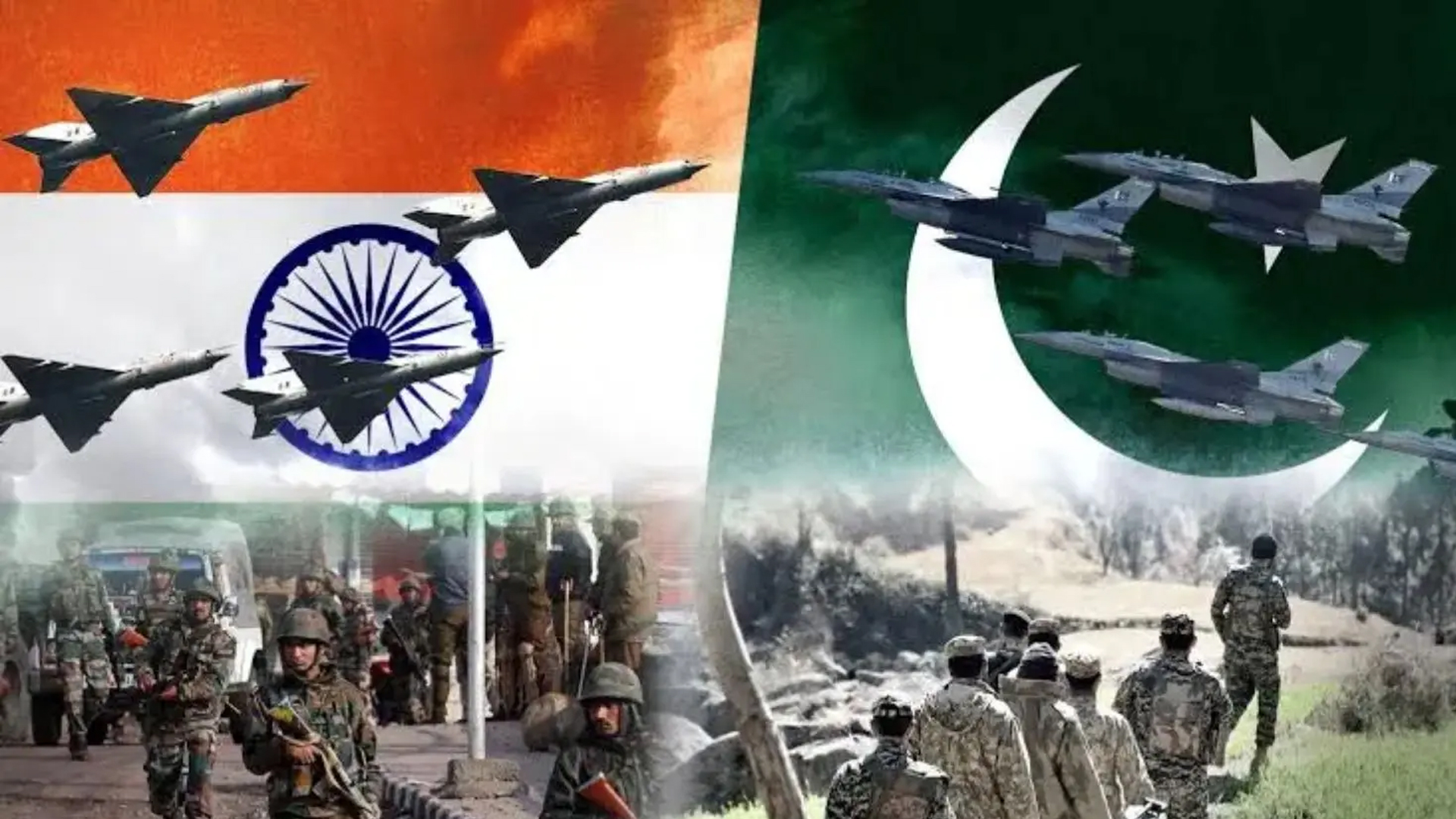
Then, through the Pahalgam militant attack in India and India’s Operation Sindoor in response to it, it has been proved that Pakistan also possesses modern weapons developed outside the NATO and Warsaw blocs. Therefore, the reality after that operation is this: whether anyone admits it publicly or not, a competition to modernise and expand the two countries’ own weapons stockpiles will continue, even if secretly. When the two countries are engaged in such a competition, there is very little logic in thinking about friendship.
On the other hand, Pakistan’s mineral, maritime and port resources are now moving increasingly toward the indirect and direct control of two major powers. When any country enters such a chapter, it is natural to assume that the country has entered a transitional period. For example, when Huseyn Shaheed Suhrawardy, as the prime minister of Pakistan, joined the CENTO Pact, Maulana Bhashani opposed it. As an experienced politician, he understood that entering this pact meant Pakistan was going to become a toy of the great powers. It was entering a transitional period.
If one looks at history, it can be seen that Sheikh Mujibur Rahman began raising the demand for East Pakistan’s autonomy from that time onward. Maulana Bhashani, even after adopting a policy of not disturbing Ayub Khan, clearly understood by 1969 that the days of a united Pakistan were over. He then assisted Sheikh Mujibur Rahman.
When any country enters a transitional period, what follows is what followed then. Though young, Sheikh Mujibur Rahman was already highly mature in politics. As a patriot, he took advantage of Pakistan’s fragile moment for his country and his people.
After joining the CENTO Pact in 1955, it seemed that Pakistan had advanced greatly on the world stage. But between 1955 and 1971, within only 16 years, what was destined to happen to Pakistan happened. Now Pakistan is passing through a period similar to the years between 1955 and 1971. No one can predict the future. But the course of events is taking Pakistan toward the loss of mineral resources and toward the smoothing of the Belt and Road Initiative. Therefore, at this time, Pakistan will not have friendship with India. The course of events will not move in that direction. And without an improvement in India-Pakistan relations, it is not possible to think of SAARC becoming effective.
Another matter is also worth noting. For the last two years, whenever Pakistan has spoken with Bangladesh, it has spoken only of reviving SAARC. Apart from that, there is no notable response in Pakistan’s media regarding SAARC. The real meaning of speaking about SAARC with Bangladesh is this: since India does not want SAARC to become active at this moment, coming to Bangladesh and speaking about SAARC is merely a diplomatic attempt to further inflame anti-India politics in Bangladesh.
While India and Pakistan stand in this reality regarding SAARC, Afghanistan, on the other hand, is not a country in that sense at present. The real people of Afghanistan silently desire a healthy future, but that future lies beyond their line of sight. Besides, Afghanistan’s future depends to a large extent on its current kind of war with Pakistan, and also on what future emerges from the Iran war.
On the other hand, although Bangladesh has shown activity regarding SAARC, the government of Bangladesh has come through a non-inclusive election. Nepal, too, through so-called Gen-Z terrorism, has brought about a change in power, weakened the country’s political forces, and created the country of a “rapper prime minister.” Such “rapper prime ministers,” created with the support of outside forces, are neither capable of running their own country nor able to create an environment where real political forces can grow. They do not have that education or political skill. Rather, they push the country toward another crisis.
In this reality of South Asia, whatever else may be possible at this moment, no possibility can be seen of reviving SAARC. Besides, through the Iran war, the question has come before everyone as to whether any alliance is truly necessary at all.
In this reality, before forming or reviving such an alliance of economic, social and political communication, the members of the alliance need a long period of preparation. If an alliance is created before that preparation and environment are in place, it does not become effective in the true sense, or ultimately it becomes impossible for it to survive. In an interview on the future of the European Union, Lee Kuan Yew said this very clearly. His view was that ASEAN had been formed without preparation; therefore, in that sense, the ASEAN countries would not benefit through the alliance. Similarly, the European Union had been formed without preparation, and they were moving much too far. The unity they were seeking did not exist among them. Therefore, at some stage, they would fail.

That Lee Kuan Yew was correct is now being proved to a considerable extent. Even before the Iran war, Britain left the European Union. During the Iran war, additional truths have emerged regarding ASEAN’s economy, politics, security and everything else. Even QUAD and BRICS have become far less significant. If these realities are denied, future decisions may not be correct.
Therefore, standing amid the fear of such a future and the new reality of the present, can countries that are filled with differences in opinion and direction, however much they may belong to the same region, really be brought together through this old-style alliance and made effective? For this reason, does discussion on this matter at the foreign ministerial level or at the state level bring anything beyond the expenditure of state money and the pleasure of a good lunch or dinner?
The writer is a journalist honoured with the highest state award, editor of Sarakhon and The Present World.