

Excessive screen use among schoolchildren in Dhaka is leading to growing concerns over sleep deprivation, obesity, eye problems, and mental health risks, according to the International Health Research Organization. A new study by the organization found that most children in the capital are spending far more time on mobile phones, tablets, televisions, and other digital devices than internationally recommended limits.
The study, conducted between 2022 and 2024, included 420 children aged 6 to 14 from six schools in Dhaka. Three of the schools were Bangla-medium, and three were English-medium institutions. The findings were recently published in the Journal of Medical Internet Research Human Factors.
Alarming Levels of Screen Use
The study found that more than four out of every five children spend over two hours a day on screens, despite the internationally recommended recreational screen-time limit for children being around two hours daily. In reality, children in Dhaka spend an average of 4.6 hours per day on smartphones, computers, televisions, and gaming devices.
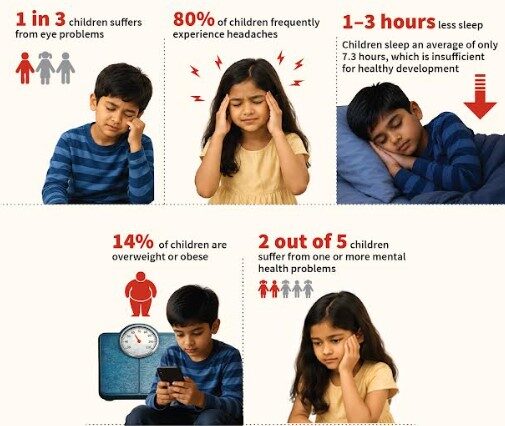
Researchers reported that prolonged screen exposure is causing various physical health problems among children. More than one-third of the participants were suffering from eye-related issues, while nearly 80 percent regularly complained of headaches. The study also identified a direct connection between excessive screen use and sleep problems. Children who spent more than 2 hours on screens slept an average of only 7.3 hours per night, below the recommended 8 to 10 hours for their age group.
Rising Risk of Obesity and Mental Health Problems
Around 14 percent of the children involved in the study were found to be overweight or obese, with higher rates among heavy screen users. Health experts warned that long-term sleep deprivation during childhood can negatively affect memory, attention span, learning ability, emotional regulation, and physical growth.
The study also found that nearly two out of every five children were experiencing some form of mental health difficulty, including anxiety, hyperactivity, behavioral problems, and emotional instability. Researchers believe excessive digital stimulation and reduced face-to-face social interaction may also be affecting children’s mental well-being.
Warning for Parents
Lead researcher Dr. Shaharia Hafiz Kakon said parents should not ignore signs such as late sleeping habits, eye discomfort, headaches, irritability, reduced interest in outdoor play, or declining concentration, as these may indicate the harmful effects of excessive screen use.
Researchers also advised children to follow the “20-20-20” rule to protect their eyes. This means that after every 20 minutes of screen use, children should look at something 20 feet away for at least 20 seconds.
Dr. Tahmeed Ahmed, Executive Director of icddr,b, said that while technology has become an essential part of modern life and education, healthy limits for children are necessary. He urged parents to encourage more outdoor activities, physical exercise, adequate sleep, and family-centered time. He also recommended involving children in extracurricular activities such as debates, group reading sessions, library visits, and gardening.
According to the researchers, the goal is not to completely ban technology, but to help children develop healthy and balanced digital habits.