

5:04 am, Sunday, 24 May 2026

Call for Public-Private Coordination in Legal Aid, 80 Percent of Cases Could Be Resolved Quickly

Sarakhon Report

Stakeholders have emphasized the need for effective coordination between government and non-government initiatives to ensure accessible, humane, and inclusive legal aid for marginalized and underprivileged people across the country. According to them, without stronger coordination in information sharing, service referrals, monitoring, and joint implementation, it will not be possible to deliver legal assistance to people at their doorsteps.

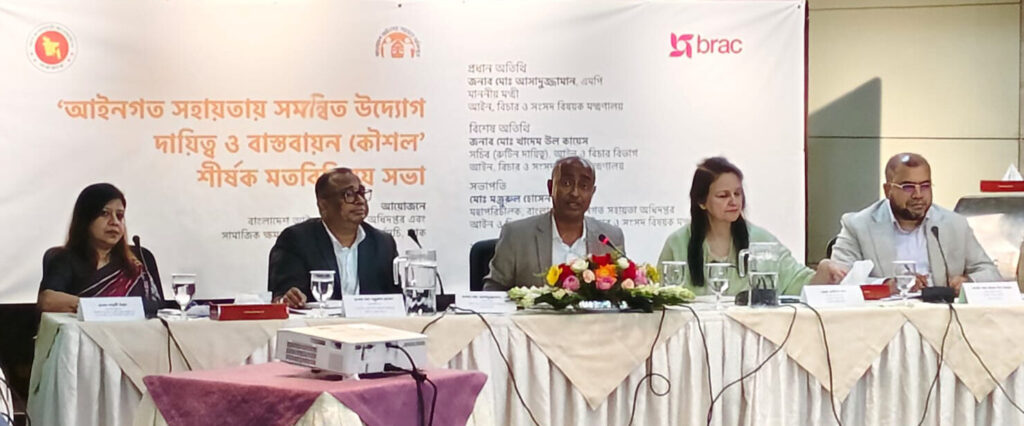
These issues were discussed at an exchange meeting titled “Integrated Initiatives in Legal Aid: Responsibilities and Implementation Strategies,” held on Saturday at the BRAC Centre in Mohakhali, Dhaka. The event was jointly organized by the National Legal Aid Services Organization and BRAC’s Social Empowerment and Legal Protection Programme.

Focus on Quick Case Resolution

Speaking as the chief guest, Law, Justice and Parliamentary Affairs Adviser Md. Asaduzzaman said the government is working to ensure access to justice for every citizen. He noted that around 4.5 million cases are currently pending in the country’s courts. Of these, he believes 80 percent of cases eligible for settlement could be resolved within a single day, while the remaining 20 percent could be settled within two to three days.

The law adviser said that if 50,000 cases could be settled through mediation within the next three months, visible changes would emerge in the judicial system. He also expressed optimism that major improvements could be achieved within two years.

He added that the government is prioritizing mediation both before and after cases are filed. To achieve this, joint awareness campaigns by government and non-government organizations must be expanded. He also called for grassroots-level recommendations identifying existing problems and possible solutions. If necessary, the government would also consider amending laws, he said.

Call for Legal Awareness in Education

Md. Asaduzzaman also urged the inclusion of legal awareness education in academic curricula to help students become more informed about legal rights and services. He further stated that the government would take all necessary measures to ensure speedy justice in the recent case involving the rape and murder of a child in Pallabi, Dhaka.

Reserved-seat Member of Parliament Jeba Amena Khan stressed the importance of collective action against violence against women, child marriage, and social discrimination. She also called for stronger awareness campaigns and social initiatives.

Importance of a Unified Database and Referral System

Md. Khaled Ul Qayes, Secretary (Routine Responsibility) of the Law and Justice Division, said a strong referral system and integrated central database are essential to ensure effective supervision and service delivery. He also emphasized the need for coordinated implementation structures at district and sub-district levels.

Director General of the National Legal Aid Services Organization Md. Manjurul Hossain said joint partnerships between government and private organizations are crucial for bringing legal aid services to people’s doorsteps. He also highlighted the need for coordination with the Department of Social Services to ensure safe shelter, protection, and rehabilitation for victims.

Discussion on Expanding Inclusive Legal Aid

The meeting also discussed expanding legal aid services for women, children, persons with disabilities, workers, the transgender community, prisoners, migrant families, climate-vulnerable populations, and people living in remote areas. Participants also exchanged views on digital legal aid, online dispute resolution, pre-case mediation, and coordinated implementation structures at the local level.

Shashwati Biplob, Associate Director of BRAC’s Social Empowerment and Legal Protection and Gender Justice and Diversity Programme, said the core objective of the legal aid law is to ensure empowerment and social justice for marginalized communities. She also called for strengthening dispute resolution mechanisms through alternative dispute resolution methods.

Organizers expressed hope that the exchange meeting would strengthen partnerships between government and private initiatives and help create a sustainable framework for delivering justice-based services to people across the country.

Government-Private Coordination in Legal Aid

The meeting emphasized the importance of government-private coordination and speedy case resolution in strengthening legal aid activities.

Participants called for stronger cooperation between public and private institutions to make legal aid more effective. They also stressed mediation and negotiated settlements as ways to reduce the number of pending court cases.


05:04:48 pm, Saturday, 23 May 2026

Call for Public-Private Coordination in Legal Aid, 80 Percent of Cases Could Be Resolved Quickly

05:04:48 pm, Saturday, 23 May 2026

Stakeholders have emphasized the need for effective coordination between government and non-government initiatives to ensure accessible, humane, and inclusive legal aid for marginalized and underprivileged people across the country. According to them, without stronger coordination in information sharing, service referrals, monitoring, and joint implementation, it will not be possible to deliver legal assistance to people at their doorsteps.

These issues were discussed at an exchange meeting titled “Integrated Initiatives in Legal Aid: Responsibilities and Implementation Strategies,” held on Saturday at the BRAC Centre in Mohakhali, Dhaka. The event was jointly organized by the National Legal Aid Services Organization and BRAC’s Social Empowerment and Legal Protection Programme.

Focus on Quick Case Resolution

Speaking as the chief guest, Law, Justice and Parliamentary Affairs Adviser Md. Asaduzzaman said the government is working to ensure access to justice for every citizen. He noted that around 4.5 million cases are currently pending in the country’s courts. Of these, he believes 80 percent of cases eligible for settlement could be resolved within a single day, while the remaining 20 percent could be settled within two to three days.

The law adviser said that if 50,000 cases could be settled through mediation within the next three months, visible changes would emerge in the judicial system. He also expressed optimism that major improvements could be achieved within two years.

He added that the government is prioritizing mediation both before and after cases are filed. To achieve this, joint awareness campaigns by government and non-government organizations must be expanded. He also called for grassroots-level recommendations identifying existing problems and possible solutions. If necessary, the government would also consider amending laws, he said.

Call for Legal Awareness in Education

Md. Asaduzzaman also urged the inclusion of legal awareness education in academic curricula to help students become more informed about legal rights and services. He further stated that the government would take all necessary measures to ensure speedy justice in the recent case involving the rape and murder of a child in Pallabi, Dhaka.

Reserved-seat Member of Parliament Jeba Amena Khan stressed the importance of collective action against violence against women, child marriage, and social discrimination. She also called for stronger awareness campaigns and social initiatives.

Importance of a Unified Database and Referral System

Md. Khaled Ul Qayes, Secretary (Routine Responsibility) of the Law and Justice Division, said a strong referral system and integrated central database are essential to ensure effective supervision and service delivery. He also emphasized the need for coordinated implementation structures at district and sub-district levels.

Director General of the National Legal Aid Services Organization Md. Manjurul Hossain said joint partnerships between government and private organizations are crucial for bringing legal aid services to people’s doorsteps. He also highlighted the need for coordination with the Department of Social Services to ensure safe shelter, protection, and rehabilitation for victims.

Discussion on Expanding Inclusive Legal Aid

The meeting also discussed expanding legal aid services for women, children, persons with disabilities, workers, the transgender community, prisoners, migrant families, climate-vulnerable populations, and people living in remote areas. Participants also exchanged views on digital legal aid, online dispute resolution, pre-case mediation, and coordinated implementation structures at the local level.

Shashwati Biplob, Associate Director of BRAC’s Social Empowerment and Legal Protection and Gender Justice and Diversity Programme, said the core objective of the legal aid law is to ensure empowerment and social justice for marginalized communities. She also called for strengthening dispute resolution mechanisms through alternative dispute resolution methods.

Organizers expressed hope that the exchange meeting would strengthen partnerships between government and private initiatives and help create a sustainable framework for delivering justice-based services to people across the country.

Government-Private Coordination in Legal Aid

The meeting emphasized the importance of government-private coordination and speedy case resolution in strengthening legal aid activities.

Participants called for stronger cooperation between public and private institutions to make legal aid more effective. They also stressed mediation and negotiated settlements as ways to reduce the number of pending court cases.