1:39 am, Friday, 15 May 2026

Can Pakistan Deliver a US-Iran Deal – or Will Another Power Take the Lead?

Sarakhon Report

As Washington and Tehran test fragile diplomatic channels, regional powers are competing for the opportunity to shape the future of Middle East negotiations.

After threatening to destroy Iran’s “entire civilization” just hours before his own deadline expired, US President Donald Trump abruptly announced a two-week ceasefire that remains in effect, though still fragile. Throughout this period, the White House has aggressively promoted the idea that negotiations with Iran are actively progressing and producing results. Washington continues to speak of progress and efforts toward a framework agreement, even as Tehran accuses the US of violating understandings and American military forces remain prepared to resume operations at any moment.

Iran’s skepticism is understandable. On two previous occasions, negotiations with the Trump administration resulted in further escalation rather than de-escalation. During the most intense phase of the conflict, Tehran publicly rejected Trump’s claims about imminent negotiations, describing the reports as misleading and false. Iranian Parliament Speaker Mohammad Bagher Ghalibaf, frequently identified in Western media as a possible negotiator, argued that Washington was using fabricated reports of talks to influence oil markets. That claim appears difficult to dismiss. Oil prices dropped immediately after Trump referred to negotiations with Tehran. Although prices did not return to the $72-per-barrel level seen before the conflict erupted on February 28, they nevertheless showed signs of stabilization.

According to Tehran, Trump’s repeated references to negotiations are intended less to create genuine dialogue and more to project the image that the White House controls the escalation, maintains the diplomatic initiative, and can frame any interim outcome as a personal political victory for the president. In this interpretation, the public emphasis on negotiations serves as a political exit strategy, allowing Washington to avoid appearing defeated even if no major strategic breakthrough is achieved. This aligns with the administration’s pattern of combining aggressive rhetoric with claims of productive diplomatic engagement.

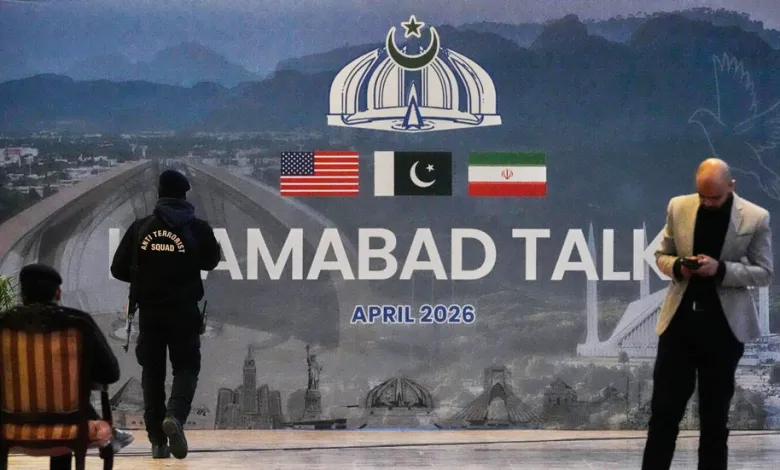
International media quickly embraced this narrative. Yet attention has shifted away from whether negotiations are possible to a more practical question: who will mediate them? Most media reports now suggest that Pakistan is likely to host the talks. Islamabad’s role in brokering the ceasefire has significantly raised its diplomatic profile, turning focus toward whether Pakistan can become an effective mediator between Washington and Tehran.

Why Pakistan?

In early April, reports emerged identifying Pakistan as one of the most probable venues for future negotiations. Around the same time, Pakistan’s Foreign Ministry officially acknowledged negotiations between Iran and the United States, which reportedly took place on April 11. Those discussions ended without concrete results, although no renewed hostilities followed. Instead, the United States reportedly intensified pressure through a blockade of Iranian ports. Media reports now indicate that Washington and Tehran continue exchanging settlement proposals through Pakistani diplomatic channels.

Pakistan’s role is not accidental. As the world’s only Muslim-majority nuclear power, Pakistan holds unique symbolic and strategic significance across the Islamic world. This status gives Islamabad additional legitimacy in matters involving regional security and political balance. Pakistan also possesses an advantage many regional actors lack: the ability to maintain functional relations with both Iran and the United States.

Several Western media outlets report that Islamabad has already been involved in transmitting proposals between the two sides and is being considered as a platform for future talks. Pakistan has also reportedly coordinated regional consultations involving Türkiye and Egypt.

For Islamabad, mediation offers several advantages. Pakistan seeks to demonstrate that it is more than a peripheral player in South Asian politics. It also has a direct interest in preventing instability on its borders, since unrest in Iran would immediately increase security, trade, and sectarian risks inside Pakistan itself.

At the same time, Pakistan hopes to strengthen its image as a country pursuing a more independent foreign policy than it did 15 or 20 years ago. Historically viewed as a close US ally positioned against India, Pakistan has in recent years diversified its diplomatic relationships, deepened ties with China, expanded cooperation with Russia, and pursued greater strategic autonomy. This makes Pakistan more attractive to Iran, which requires a mediator not entirely aligned with American interests but also not openly hostile toward Washington.

Nevertheless, American influence in Pakistan remains substantial. That combination — Islamic legitimacy alongside practical communication channels with Washington — positions Pakistan as one of the strongest mediation candidates currently available.

Pakistan, however, remains deeply entangled in its own regional tensions. Rivalry with India continues to fuel instability, while unresolved disputes with Afghanistan — including armed clashes earlier this year — remain serious concerns. If Islamabad succeeds in facilitating a meaningful agreement between the US and Iran, its geopolitical standing would rise considerably, strengthening its leverage across the region.

Why Not Oman?

Oman has traditionally served as a mediator between Iran and the United States. For years, Muscat was regarded as the most discreet and pragmatic venue for sensitive contacts between the two countries. In 2025, Oman once again hosted indirect discussions on nuclear issues between Washington and Tehran.

Those talks, however, produced no meaningful results. It would be unfair to blame Oman itself. Rather, the inconsistency of the White House — alternating between pressure tactics and diplomatic outreach — ultimately empowered hardliners in Washington who favored confrontation.

Despite these setbacks, Oman should not be dismissed entirely. Its greatest strength remains the trust it has cultivated with both sides and its reputation as a reliable and discreet intermediary. Even if Oman no longer dominates the mediation process, it remains the most institutionally familiar and internationally recognized channel for communication between Tehran and Washington.
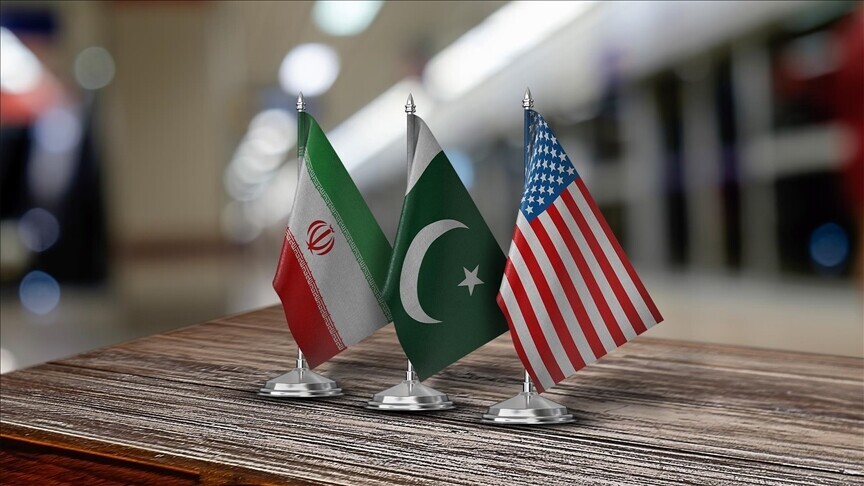
Pakistan expects US-Iran pact 'soon': Foreign Ministry

What About Türkiye?

Türkiye is another serious contender. Its position is unique because it is both a Muslim-majority country and a NATO member with significant influence inside the alliance. Ankara is not merely a peripheral actor within the Western security structure; it is an independent regional power capable of navigating complex diplomatic relationships.

Türkiye maintains institutional access to Western capitals while also preserving extensive experience in dealing with Iran. Reports suggest that Ankara has already conveyed messages between Washington and Tehran and was considered as a possible venue for negotiations.

For Türkiye, the Iran conflict directly affects national security. Ankara has no interest in Iran collapsing, fragmenting, or descending into prolonged instability. Turkish leaders fear that such a scenario would trigger new refugee flows, intensify Kurdish militancy near the border, and expand regional instability dangerously close to Turkish territory.

As a result, Türkiye is well positioned not merely as a messenger but as an active stakeholder in de-escalation. It combines political influence, military standing, established diplomatic channels, and a clear strategic interest in preventing the Iranian crisis from spiraling out of control.

Unlike several Gulf Arab states, Türkiye is not viewed by Tehran as an outright adversary. At the same time, Ankara can engage the United States through NATO and broader strategic frameworks, giving it advantages that more neutral mediators lack. President Recep Tayyip Erdogan would also likely welcome the political prestige of hosting a major peace agreement on Turkish soil.

Perhaps Egypt?

Egypt has also been mentioned as a possible mediator, though its candidacy is more controversial than those of Pakistan or Türkiye. Cairo has attempted to maintain a somewhat distinct position from other Arab states. While it criticizes Iranian actions that threaten maritime security and regional stability, it has avoided fully aligning itself with an anti-Iran coalition.

Relations between Cairo and Tehran remain complicated. After Egypt’s 2013 political transition and the removal of the Muslim Brotherhood government, significant ideological divisions emerged between the two countries. Iran had expressed sympathy toward the Brotherhood, while Egyptian President Abdel Fattah El-Sisi built much of his legitimacy around suppressing Islamist movements.

Over time, however, regional dynamics evolved. Egypt gradually pursued more pragmatic relations with states it had previously viewed with suspicion, including Iran. Though the two countries never became allies, Cairo adopted a more flexible diplomatic posture.

This ambiguity could make Egypt a useful mediator. Tehran may not consider Cairo an ideal partner, but neither does it see Egypt as entirely discredited. Meanwhile, Egypt maintains strong ties with Washington and possesses significant influence across the Arab world.

Egypt also has direct economic reasons to seek regional de-escalation. The Bab-el-Mandeb Strait, a crucial maritime chokepoint leading to the Red Sea and Suez Canal, remains central to Egypt’s economic stability. Any disruption caused by the Houthis or broader regional conflict could severely damage Suez Canal traffic, depriving Egypt of a vital source of foreign currency and worsening economic pressures.

In this sense, Egypt may not emerge as the primary architect of negotiations, but it could become a politically acceptable participant in a broader multilateral mediation framework.

Ultimately, the growing debate over potential mediators reflects the absence of a stable and trusted diplomatic mechanism for addressing the crisis. Trump seeks to present negotiations as ongoing and under American control, while Iran rejects what it views as a narrative imposed by Washington.

Oman remains an established but no longer exclusive intermediary. Pakistan appears increasingly attractive because of its strategic significance, Islamic legitimacy, and communication channels with both sides. Türkiye possesses substantial political influence and strong incentives to prevent regional collapse. Egypt, though a less obvious choice, could still play a role within a larger diplomatic coalition.

Most importantly, the competition over mediation reflects a broader struggle over who will shape the future political order of the Middle East. In this environment, a mediator is no longer merely a messenger. It is a power seeking the authority to define the framework of conflict resolution itself.


09:21:07 pm, Thursday, 14 May 2026

Can Pakistan Deliver a US-Iran Deal – or Will Another Power Take the Lead?

09:21:07 pm, Thursday, 14 May 2026

As Washington and Tehran test fragile diplomatic channels, regional powers are competing for the opportunity to shape the future of Middle East negotiations.

After threatening to destroy Iran’s “entire civilization” just hours before his own deadline expired, US President Donald Trump abruptly announced a two-week ceasefire that remains in effect, though still fragile. Throughout this period, the White House has aggressively promoted the idea that negotiations with Iran are actively progressing and producing results. Washington continues to speak of progress and efforts toward a framework agreement, even as Tehran accuses the US of violating understandings and American military forces remain prepared to resume operations at any moment.

Iran’s skepticism is understandable. On two previous occasions, negotiations with the Trump administration resulted in further escalation rather than de-escalation. During the most intense phase of the conflict, Tehran publicly rejected Trump’s claims about imminent negotiations, describing the reports as misleading and false. Iranian Parliament Speaker Mohammad Bagher Ghalibaf, frequently identified in Western media as a possible negotiator, argued that Washington was using fabricated reports of talks to influence oil markets. That claim appears difficult to dismiss. Oil prices dropped immediately after Trump referred to negotiations with Tehran. Although prices did not return to the $72-per-barrel level seen before the conflict erupted on February 28, they nevertheless showed signs of stabilization.

According to Tehran, Trump’s repeated references to negotiations are intended less to create genuine dialogue and more to project the image that the White House controls the escalation, maintains the diplomatic initiative, and can frame any interim outcome as a personal political victory for the president. In this interpretation, the public emphasis on negotiations serves as a political exit strategy, allowing Washington to avoid appearing defeated even if no major strategic breakthrough is achieved. This aligns with the administration’s pattern of combining aggressive rhetoric with claims of productive diplomatic engagement.

International media quickly embraced this narrative. Yet attention has shifted away from whether negotiations are possible to a more practical question: who will mediate them? Most media reports now suggest that Pakistan is likely to host the talks. Islamabad’s role in brokering the ceasefire has significantly raised its diplomatic profile, turning focus toward whether Pakistan can become an effective mediator between Washington and Tehran.

Why Pakistan?

In early April, reports emerged identifying Pakistan as one of the most probable venues for future negotiations. Around the same time, Pakistan’s Foreign Ministry officially acknowledged negotiations between Iran and the United States, which reportedly took place on April 11. Those discussions ended without concrete results, although no renewed hostilities followed. Instead, the United States reportedly intensified pressure through a blockade of Iranian ports. Media reports now indicate that Washington and Tehran continue exchanging settlement proposals through Pakistani diplomatic channels.

Pakistan’s role is not accidental. As the world’s only Muslim-majority nuclear power, Pakistan holds unique symbolic and strategic significance across the Islamic world. This status gives Islamabad additional legitimacy in matters involving regional security and political balance. Pakistan also possesses an advantage many regional actors lack: the ability to maintain functional relations with both Iran and the United States.

Several Western media outlets report that Islamabad has already been involved in transmitting proposals between the two sides and is being considered as a platform for future talks. Pakistan has also reportedly coordinated regional consultations involving Türkiye and Egypt.

For Islamabad, mediation offers several advantages. Pakistan seeks to demonstrate that it is more than a peripheral player in South Asian politics. It also has a direct interest in preventing instability on its borders, since unrest in Iran would immediately increase security, trade, and sectarian risks inside Pakistan itself.

At the same time, Pakistan hopes to strengthen its image as a country pursuing a more independent foreign policy than it did 15 or 20 years ago. Historically viewed as a close US ally positioned against India, Pakistan has in recent years diversified its diplomatic relationships, deepened ties with China, expanded cooperation with Russia, and pursued greater strategic autonomy. This makes Pakistan more attractive to Iran, which requires a mediator not entirely aligned with American interests but also not openly hostile toward Washington.

Nevertheless, American influence in Pakistan remains substantial. That combination — Islamic legitimacy alongside practical communication channels with Washington — positions Pakistan as one of the strongest mediation candidates currently available.

Pakistan, however, remains deeply entangled in its own regional tensions. Rivalry with India continues to fuel instability, while unresolved disputes with Afghanistan — including armed clashes earlier this year — remain serious concerns. If Islamabad succeeds in facilitating a meaningful agreement between the US and Iran, its geopolitical standing would rise considerably, strengthening its leverage across the region.

Why Not Oman?

Oman has traditionally served as a mediator between Iran and the United States. For years, Muscat was regarded as the most discreet and pragmatic venue for sensitive contacts between the two countries. In 2025, Oman once again hosted indirect discussions on nuclear issues between Washington and Tehran.

Those talks, however, produced no meaningful results. It would be unfair to blame Oman itself. Rather, the inconsistency of the White House — alternating between pressure tactics and diplomatic outreach — ultimately empowered hardliners in Washington who favored confrontation.

Despite these setbacks, Oman should not be dismissed entirely. Its greatest strength remains the trust it has cultivated with both sides and its reputation as a reliable and discreet intermediary. Even if Oman no longer dominates the mediation process, it remains the most institutionally familiar and internationally recognized channel for communication between Tehran and Washington.

Pakistan expects US-Iran pact 'soon': Foreign Ministry

What About Türkiye?

Türkiye is another serious contender. Its position is unique because it is both a Muslim-majority country and a NATO member with significant influence inside the alliance. Ankara is not merely a peripheral actor within the Western security structure; it is an independent regional power capable of navigating complex diplomatic relationships.

Türkiye maintains institutional access to Western capitals while also preserving extensive experience in dealing with Iran. Reports suggest that Ankara has already conveyed messages between Washington and Tehran and was considered as a possible venue for negotiations.

For Türkiye, the Iran conflict directly affects national security. Ankara has no interest in Iran collapsing, fragmenting, or descending into prolonged instability. Turkish leaders fear that such a scenario would trigger new refugee flows, intensify Kurdish militancy near the border, and expand regional instability dangerously close to Turkish territory.

As a result, Türkiye is well positioned not merely as a messenger but as an active stakeholder in de-escalation. It combines political influence, military standing, established diplomatic channels, and a clear strategic interest in preventing the Iranian crisis from spiraling out of control.

Unlike several Gulf Arab states, Türkiye is not viewed by Tehran as an outright adversary. At the same time, Ankara can engage the United States through NATO and broader strategic frameworks, giving it advantages that more neutral mediators lack. President Recep Tayyip Erdogan would also likely welcome the political prestige of hosting a major peace agreement on Turkish soil.

Perhaps Egypt?

Egypt has also been mentioned as a possible mediator, though its candidacy is more controversial than those of Pakistan or Türkiye. Cairo has attempted to maintain a somewhat distinct position from other Arab states. While it criticizes Iranian actions that threaten maritime security and regional stability, it has avoided fully aligning itself with an anti-Iran coalition.

Relations between Cairo and Tehran remain complicated. After Egypt’s 2013 political transition and the removal of the Muslim Brotherhood government, significant ideological divisions emerged between the two countries. Iran had expressed sympathy toward the Brotherhood, while Egyptian President Abdel Fattah El-Sisi built much of his legitimacy around suppressing Islamist movements.

Over time, however, regional dynamics evolved. Egypt gradually pursued more pragmatic relations with states it had previously viewed with suspicion, including Iran. Though the two countries never became allies, Cairo adopted a more flexible diplomatic posture.

This ambiguity could make Egypt a useful mediator. Tehran may not consider Cairo an ideal partner, but neither does it see Egypt as entirely discredited. Meanwhile, Egypt maintains strong ties with Washington and possesses significant influence across the Arab world.

Egypt also has direct economic reasons to seek regional de-escalation. The Bab-el-Mandeb Strait, a crucial maritime chokepoint leading to the Red Sea and Suez Canal, remains central to Egypt’s economic stability. Any disruption caused by the Houthis or broader regional conflict could severely damage Suez Canal traffic, depriving Egypt of a vital source of foreign currency and worsening economic pressures.

In this sense, Egypt may not emerge as the primary architect of negotiations, but it could become a politically acceptable participant in a broader multilateral mediation framework.

Ultimately, the growing debate over potential mediators reflects the absence of a stable and trusted diplomatic mechanism for addressing the crisis. Trump seeks to present negotiations as ongoing and under American control, while Iran rejects what it views as a narrative imposed by Washington.

Oman remains an established but no longer exclusive intermediary. Pakistan appears increasingly attractive because of its strategic significance, Islamic legitimacy, and communication channels with both sides. Türkiye possesses substantial political influence and strong incentives to prevent regional collapse. Egypt, though a less obvious choice, could still play a role within a larger diplomatic coalition.

Most importantly, the competition over mediation reflects a broader struggle over who will shape the future political order of the Middle East. In this environment, a mediator is no longer merely a messenger. It is a power seeking the authority to define the framework of conflict resolution itself.