

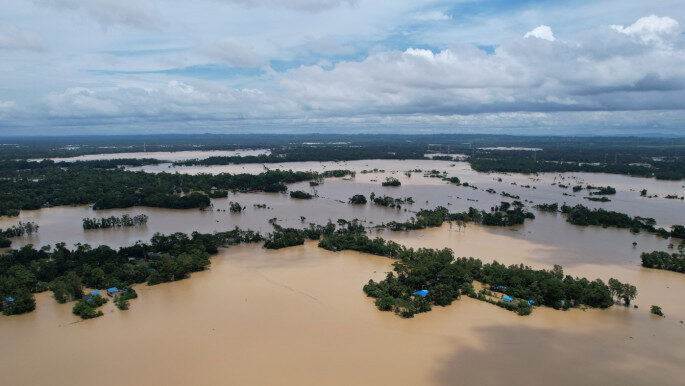
Three consecutive days of heavy rainfall, flash floods from the hills, and upstream water flow have triggered a fresh wave of severe flooding across southeastern and northeastern Bangladesh. Chattogram, Cox’s Bazar, Bandarban, Rangamati, Khagrachhari, Moulvibazar, and Habiganj are among the worst-affected districts. In some areas, rivers have risen above danger levels; in others, landslides have claimed lives, while thousands of families have become stranded and isolated.
Preliminary government data, international media reports, and assessments by humanitarian organizations indicate that this is more than a short-term flood emergency. Instead, it serves as another warning of increasingly frequent and intense extreme weather events driven by climate change.
Human Toll and Humanitarian Crisis
According to the latest available information, at least 44 people have died due to flooding and landslides. The victims include women and children killed in landslides at Rohingya refugee camps in Cox’s Bazar. Many others have been injured, and numerous families have been forced to seek shelter in safer locations.
More than one million people across seven districts have had their daily lives directly disrupted. Approximately 267,000 families have become stranded by floodwaters. While many residents have evacuated to emergency shelters, a large number remain trapped in their homes. Cooking has become impossible in many areas, electricity supplies have been cut, and access to safe drinking water is severely limited. Many families are relying on flattened rice, molasses, biscuits, and other dry foods as emergency rations.
The Worst-Affected Areas
Large parts of the Chattogram Division have been inundated after several days of heavy rainfall. Landslides in Bandarban and Cox’s Bazar have further worsened the situation. In Moulvibazar and Habiganj, extensive flooding of low-lying areas has left thousands of people isolated.
Many roads remain submerged, disrupting normal transportation. In some places, bridges have been damaged, while washed-out roads are hampering rescue operations. As a result, relief supplies are reaching remote communities primarily by boat.
A Major Blow to Agriculture
The flood’s most significant economic impact is being felt in the agricultural sector. Seedbeds for Aman rice, seasonal vegetables, betel leaf plantations, banana and papaya orchards, and other crops face extensive damage. Fish farms and ponds in low-lying areas have been washed away, while shortages of livestock feed are also emerging.
Agricultural experts warn that if floodwaters do not recede within the next few days, farmers’ losses will multiply. Small-scale farmers, in particular, are likely to require additional loans and government support to resume cultivation.
Infrastructure and Public Services Disrupted
Flooding has severely damaged rural infrastructure. In many places, roads are underwater, while approach roads to bridges have collapsed. Power outages have also weakened mobile phone network coverage in numerous areas.
Many educational institutions have suspended classes because their premises are flooded, with some schools being used as temporary emergency shelters. Healthcare services have also been disrupted in affected communities.
Relief and Rescue Operations
Alongside government agencies, the Bangladesh Army, Navy, and local authorities are conducting rescue operations and distributing relief supplies. Food, clean drinking water, and medicines are being transported by boat to remote and inaccessible areas.
However, local residents say the scale of the disaster is so extensive that many communities have yet to receive adequate relief. Rescue efforts have also slowed because road access has been cut off.
Heightened Risks in Rohingya Camps
The Rohingya refugee camps in Cox’s Bazar have once again demonstrated their extreme vulnerability during periods of heavy rainfall. In addition to the fatalities caused by landslides, many shelters have been damaged. Unstable hillsides and mudslides continue to pose serious threats.
International humanitarian organizations have warned that if heavy rainfall persists, access to safe water, sanitation services, and healthcare in the camps could deteriorate further.
Fresh Concerns Ahead
Flood forecasting and weather monitoring agencies have warned that heavy to very heavy rainfall may occur again across northeastern Bangladesh, the northern districts, and the Chattogram Division over the next 24 to 72 hours. This could cause water levels in several rivers to rise further, increasing the risk of flooding in additional areas.
The Reality of Climate Change
Bangladesh is one of the world’s most climate-vulnerable countries. Scientists have long warned that global warming is increasing the frequency and intensity of extreme rainfall, flash floods, and landslides. The latest flooding in the country’s southeast is another manifestation of that reality.
Previous World Bank analyses have found that millions of people in Bangladesh face the risk of river erosion and flooding every year. Experts argue that long-term preparedness must go beyond emergency relief and focus on river management, hill conservation, improved urban drainage, effective early warning systems, and climate-resilient infrastructure.
The Full Extent of the Damage Is Yet to Be Determined
The complete scale of the damage caused by these three days of flooding has not yet been fully assessed. The numbers of fatalities and stranded residents continue to change as new information emerges. Government agencies are still conducting surveys to determine losses across agriculture, fisheries, education, transportation, power, and housing.
One fact, however, is already clear: this is not merely a short-lived natural disaster. It is another major test of Bangladesh’s climate resilience, infrastructure, and disaster preparedness. Rapid rehabilitation of affected communities, recovery support for farmers, and the adoption of more effective long-term climate adaptation strategies now represent the country’s greatest challenges.