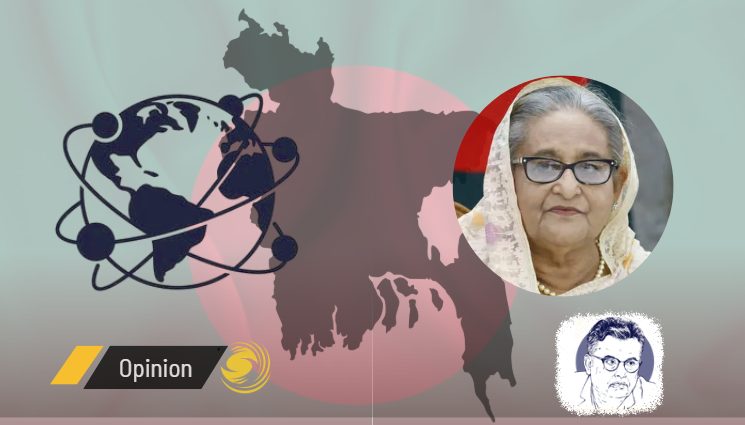
Sheikh Hasina’s First Political Programme Since Her Ouster

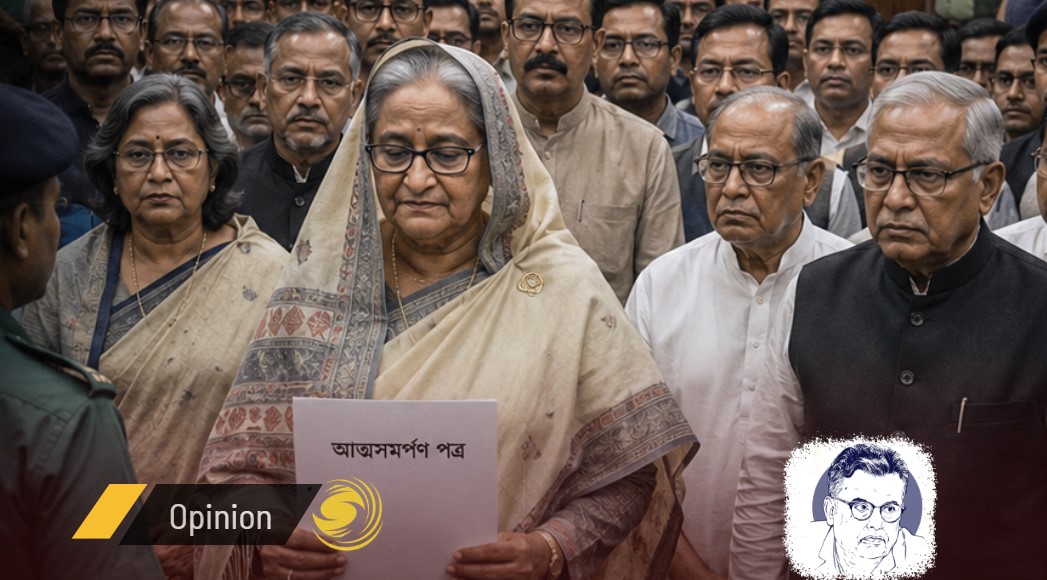
Nearly two years after being ousted from power, the programme Sheikh Hasina has announced for her return to the country is, in every sense, a political programme. Any political programme announced by a politician will inevitably be interpreted in different ways. In the social sciences, there is no opportunity to insist that two plus two must always equal four, because every element involved is embedded in human beings and society, and both are changing from one moment to the next. Someone else, therefore, may choose not to describe Sheikh Hasina’s programme for returning home as a political programme. Yet when the matter is examined from different perspectives, and when the history of the Awami League’s previous catastrophes and removals from power is analysed, Sheikh Hasina’s programme for returning to the country emerges as a wholly political programme. She has now placed this political programme before those who defeated her and her party.
The first questions that will now arise are these: Why has Sheikh Hasina announced a political programme? Why did she take nearly two years to announce it? Whatever the cause of a political catastrophe suffered by a party formed through the people and from within the people, two years is not an excessively long period. Rather, that time is necessary. Leaders and experts may be able to understand the causes of a catastrophe immediately or relatively quickly. But the true lifeblood of a political party lies in its ordinary party workers; they need time before the fundamental causes of such a catastrophe become fully clear to them.
Besides, a political party such as the Awami League, which arose entirely from within the people and not from a palace or a military cantonment, must regard every such catastrophe as a political catastrophe.
Before 2024, the Awami League’s greatest catastrophe after independence occurred on 15 August 1975, when Bangabandhu was assassinated along with his family and the Awami League was removed from power. On the face of it, that was a military coup. A number of members of the armed forces carried out the act by stepping outside the country’s constitutional framework and violating military discipline. There must certainly have been a meticulous design behind the removal of the Awami League from power in 1975 as well. That issue, however, is not relevant here. What is relevant is that, beginning on 15 August 1975 itself, the Awami League’s policymakers began meeting in various secret locations and asking themselves what the real cause of their defeat had been. That, too, is an extensive chapter of history. Yet even then, a large part of the Awami League leadership quickly concluded that what had occurred on 15 August 1975 was their political defeat, and that they themselves would have to build their future through the political path.
Even after 15 August 1975, successive pages of that meticulous design continued to come to light. That took a considerable amount of time. But the workers of a party such as the Awami League, a party born from among the people, had one great consolation: they had been removed from power by a military clique. Therefore, despite the immense grief of losing Bangabandhu and the four leaders who had led the Liberation War, they possessed one source of pride from the very beginning: the people had not removed them from power.
But from August 2024, when Yunus seized power, until he travelled to the United States, Awami League workers remained far more humiliated and bewildered because they believed that the people had removed them from power. That understanding changed when Yunus, speaking at the Clinton Global Initiative, disclosed that the removal of the Awami League from power in 2024 had not been a spontaneous uprising or mass uprising by the people but rather, in his own words, the result of an “amazing, meticulously designed thing.” On that day, he also introduced one of the masterminds behind that meticulous design. Thereafter, he and one mastermind after another became identifiable to the people through their own actions.
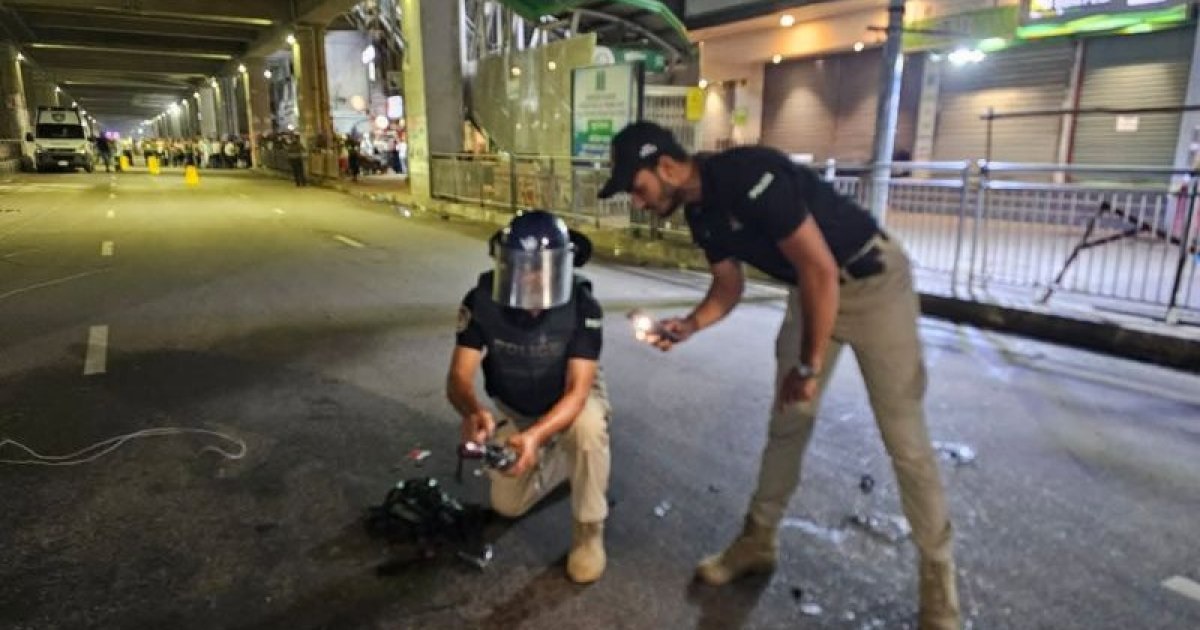
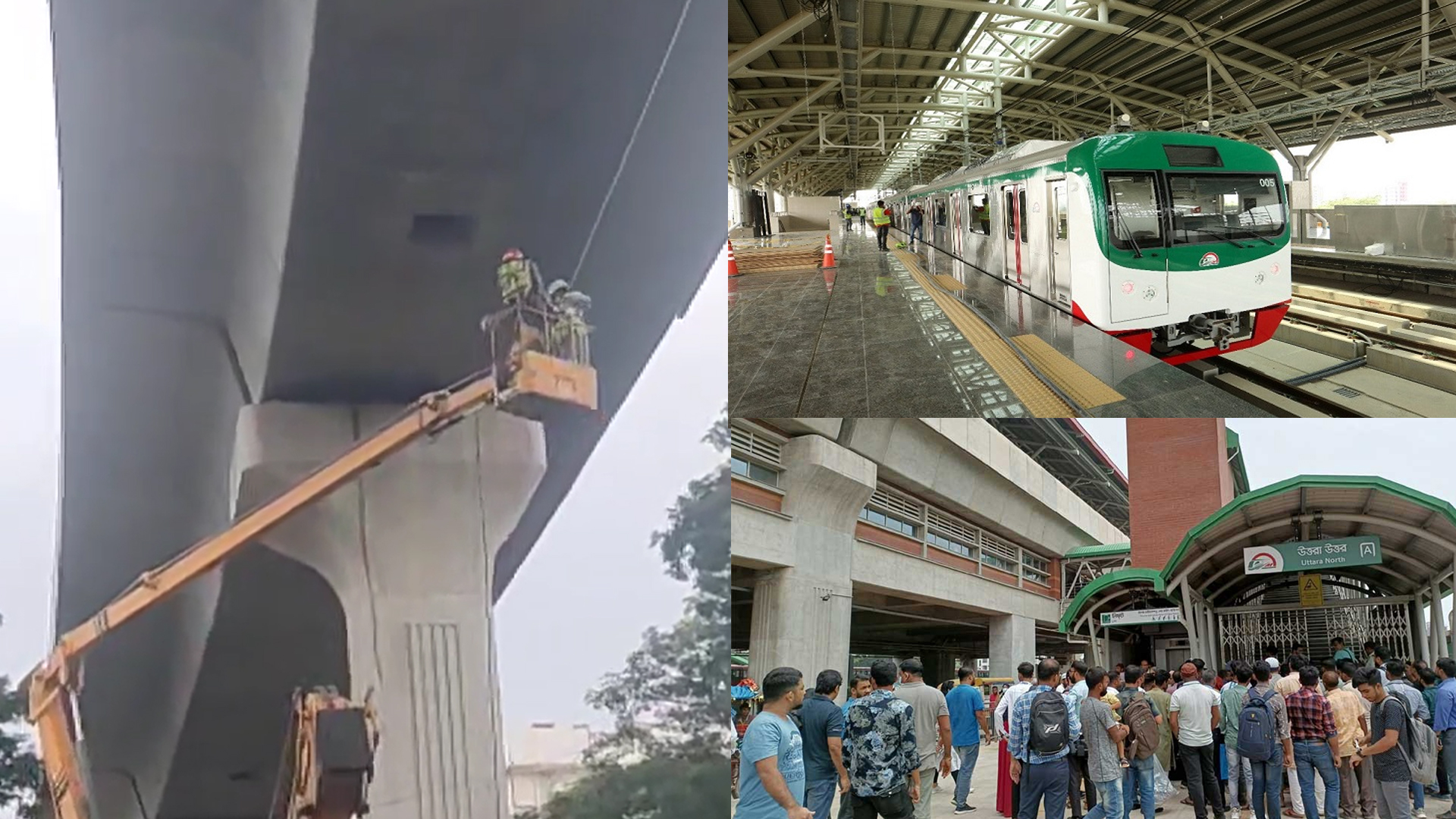
Even before that, Brigadier Sakhawat had been removed from the Ministry of Home Affairs for stating certain truths. Then, one video after another showing members of different militant groups on the streets during July began appearing on social media platforms. A BNP leader in Pabna proudly declared that, under his leadership, had police officers not been killed in that manner, it would not have been possible to bring down Sheikh Hasina’s government. Similarly, one of the July coordinators claimed responsibility on television for the destruction of the Metro Rail, while many others claimed responsibility for killing police officers. All of them made the same argument: had they not committed those acts of terrorism, it would not have been possible to bring down Sheikh Hasina’s government. Most recently, BNP Member of Parliament Nilufar Moni, once a prominent student leader and now a lawyer of the Supreme Court, made it clear during a television talk show that those who died during the July movement had not been killed by police gunfire. She even described how someone marching beside another protester would suddenly be struck by a bullet and collapse, while those around them could not understand who had fired or from where. At one stage of her remarks, she said that 5 August had, in reality, been a bloodless military coup, and that without this military coup it would not have been possible to bring down Sheikh Hasina’s government.
After all these matters came before the eyes of Awami League workers, just as they came before the people of the country, the workers no longer felt humiliated, although they had been defeated. They had at least been able to convince themselves that the people had not removed them from power. Nor did they have to rely on any theory to understand this; they could understand it from the information before them. A part of that information was coming directly from their opponents. On the other hand, they were receiving further information through audio and visual media. To them, therefore, this audio and visual evidence left no room for the information to be dismissed as false.
The question now arises: in both 1975 and 2024 there was a meticulous design or conspiracy; in 1975, certain members of the armed forces were involved; and regarding 2024, Nilufar Moni, from the perspective of her own practical experience and understanding, has pointed towards the armed forces. Yet why, after both 1975 and 2024, did the Awami League leadership regard its defeat as a political defeat and choose the path of a political programme?
In reality, an entire professional community is never collectively involved in actions against a political party rooted in the people. That is why, although several members of the army were directly involved in 1975, the Awami League never held either the then army chief or the army as a whole responsible. It has always said that Bangabandhu and the four national leaders were killed by a few misguided members of the armed forces. Similarly, this time Yunus, some of his masterminds, and even certain editors have acknowledged that they were participants in this meticulous design. But a political party such as the Awami League, or any political party in any country that has emerged from among the people, will never hold every member of an entire profession responsible. Even when an educated politician such as Nilufar Moni has responsibly described 5 August 2024 as a bloodless military coup, neither the Awami League leadership nor its principal leader, Sheikh Hasina, has pointed a finger at the army. Instead, in response to all these statements, Sheikh Hasina said in an interview with Reuters, “When a government works for a long time, mistakes can happen. No government is above error.” Wherever she may draw the boundaries of those mistakes, parties of the people such as the Awami League, with their long experience of political struggle, begin their next chapter by treating their removal from power as an event caused by their own failures or mistakes. This is what such parties do throughout the world.
For at the visible forefront of politics stand the people and political ideals, while behind them there will always lurk conspiracies, assassins operating in the shadows, bullets, grenades and bombs. Long before Chile’s Allende died amid the military coup against his government, he had said that a bullet was pursuing him. Bangabandhu Sheikh Mujib, too, said in 1973, “Perhaps my death will be like Allende’s.” Throughout Sheikh Hasina’s political life of more than four decades, grenades, bullets and bombs have pursued her repeatedly. The list of those killed by such bullets and grenades is also a long one across the world: Mohandas Gandhi, Kennedy, Indira Gandhi, Aquino, Benazir Bhutto, Gaddafi and others were killed at the hands of conspirators acting against the state. Through his plays and novels, Rabindranath depicted how conspiracies against state power and capable statesmen employ everyone from priests to so-called gods. Confronting the enemies who emerge from this darkness behind politics and state power is also a responsibility of politics and of statesmen. A failure to confront such conspiracies is itself a political failure or defeat.

Therefore, once Sheikh Hasina survived the defeat of 2024, it became clear that the Awami League would confront the situation politically, and would do so more swiftly than it had after 1975. From the statements made by Yunus and many of his masterminds, it soon became evident that their “5 August” had not been one hundred per cent successful, because they had failed to kill Sheikh Hasina. Unlike in 1975, they had not been able to deprive the Awami League of its leadership in 2024. In other words, just as they had failed on 21 August 2004, they failed again on 5 August 2024 to leave the Awami League leaderless.
For this reason, Yunus and the participants in his meticulous design quickly understood that Sheikh Hasina and the Awami League would soon announce a political programme. Ordinarily, an unelected government without popular support cannot withstand such a programme from a large political party with mass support such as the Awami League. That is why, in order to confront the Awami League’s political programme, Yunus and his associates shifted from their plan to remain in power for an extended period in the name of “reform” and moved towards a so-called election intended to establish a political government.
The first obstacle they would have faced on the path towards a genuine election was the Awami League. This was because, wherever Sheikh Hasina might be, if the Awami League had been allowed to participate normally in the election, not only the electoral field and the result but many other things would also have changed. Therefore, in order to keep state power confined within a particular group, they excluded the Awami League from the election through an executive order. At the same time, in order to give the government legitimacy and a popular base, they attempted to create a grassroots Awami League and followed a path intended to force the Jatiya Party to participate in the election. Yunus’s greatest success here was that, through this electoral game, he managed to win over even those whom he had been unable to win through diplomatic engagement. Yet despite their combined efforts to break the Awami League and create either a grassroots Awami League or an Awami League under some other name, they did not succeed. As a result, everything about the election that was held and the government formed through it is now clear to both the people of the country and the world.
Even so, Yunus benefited from being able to hold the election. Had he remained in power until today, it would have been he who had to confront this political programme of Sheikh Hasina and the Awami League.
Sheikh Hasina has expressed her political programme in a single line: she, together with the leaders and workers of her party who are in hiding at home or abroad and those who have been convicted, will surrender before the judiciary. Yet even on the most straightforward reading, her political programme carries many messages.
For example, within this political programme she does not hold anyone responsible for the manner in which she was removed from power, nor does she assign blame for any injustice that may have been done to her. She wishes to surrender while showing respect for the judiciary. Through this demonstration of respect for the judiciary, she has conveyed a message to the people of the country and to the world about the vengeance that Yunus introduced into the state and society through mob violence after removing her from power. Yunus himself delivered speeches instructing people in village after village to eliminate neighbours who held different opinions. As a result, people from the judiciary, the administration and the education sector, along with artists, writers, intellectuals, police officers and even members of the armed forces, became victims of mob violence. This process is continuing even now. Although the so-called election has given the government the outward form of a political government, its members have also been unable to stop this process. Rather, in certain cases, they themselves are being identified as “Yunus-2.”
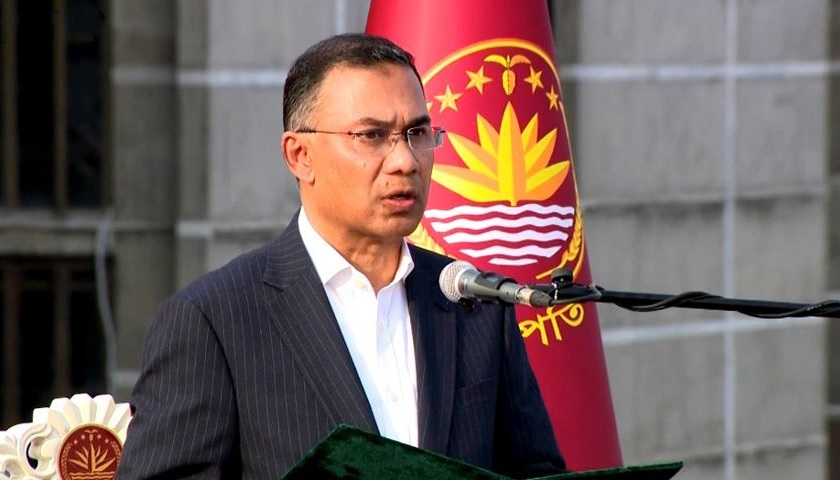
At such a time, Sheikh Hasina’s programme of surrendering before the judiciary together with her party’s leaders and workers is, in essence, a political programme for bringing the country out of mob violence and restoring stability. She has placed the responsibility for restoring that stability squarely in the government’s court. The Reuters report stated that, although Sheikh Hasina brought about enormous development in Bangladesh, there are allegations that certain institutions of the state were weakened during her rule. The allegations cited by Reuters are not without basis. Sheikh Hasina herself also said there that some mistakes had occurred because she had remained in power for a long time. By saying this, and thereby acknowledging the allegations contained in the Reuters report, she placed that political programme in the government’s court. It is, in essence, a firm pledge of cooperation in restoring, in the national interest, the institutions of the state that Yunus has dismantled. Whatever may happen in her personal life as a consequence of this political programme, through which she is leaving a place of safety and coming forward to face the possibility of death, she has placed herself on a high altar of patriotism. At the same time, she has extended towards the government the hand that can create a path towards restoring stability in the country. She has not uttered a single unconstitutional word in her programme. Nor has the time yet arrived for the government to make any formal statement on the matter. However, State Minister for Foreign Affairs Shama Obaed Islam, not in an official statement on behalf of the state but while speaking at an event, said that Sheikh Hasina would be brought back and publicly hanged. In a modern constitutional state, a public execution would be regarded as barbaric and as a form of mob justice. Her statement certainly cannot be the statement of the state. Shama Obaed comes from a family deeply rooted in Bengali nationalist and cultural traditions; her name recalls Shyama, another name for Kali, one of the ancient goddesses of the Bengali people. Around the neck of the goddess Shyama hangs a garland of bloodied human heads, and in her hand is a sword stained with the blood of human slaughter. Yet the moment her foot falls upon Shiva’s chest, Shyama bites her tongue in shame. Every Bengali speaker knows that Shiva signifies truth and beauty. Whatever Shama Obaed may say, she too will ultimately have to step upon the ground of truth.
This is because Sheikh Hasina has announced a political programme, not a programme of conspiracy. And the political path always proceeds along a road built with truth and beauty. Conspirators enter politics, and killers enter politics; therefore, in every country, one may also see an ugly group operating in the name of politics.
In any event, nearly two years after being removed from power, Sheikh Hasina has announced her first political programme, which she will begin implementing around December. There is still a long road ahead. Nor will this long road remain entirely undisturbed. Therefore, this is now a time to observe, at every moment, the beginning before the beginning.
The author is a journalist and recipient of the country’s highest state award, and Editor of Sarakhon and The Present World.