

10:52 pm, Saturday, 16 May 2026

Pakistan Hands Over JF-17 Fighter Jet Simulator to Bangladesh, Fueling Speculation of Expanding Military Cooperation

Sarakhon Report

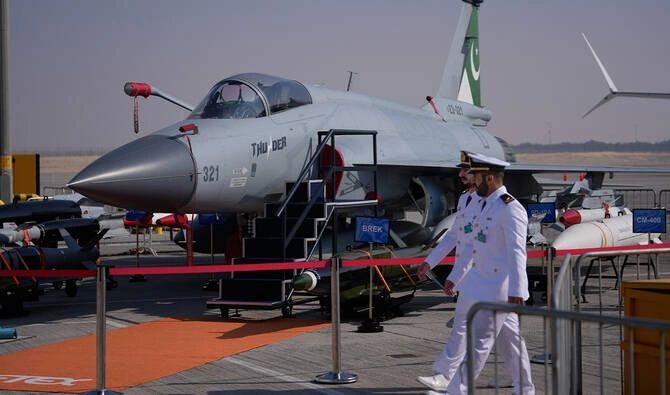
Pakistan has handed over a full-scale simulator of its advanced JF-17 Thunder Block 3 fighter aircraft to Bangladesh. According to military analysts, this is not merely the transfer of a training tool; it also signals an important development in South Asia’s military balance and in Bangladesh-Pakistan defense relations.

A report by Defense Security Asia said the move is also being viewed as part of preliminary preparations for a possible fighter jet acquisition agreement. Such simulators play a crucial role in preparing pilots, engineers, and support infrastructure before the procurement of combat aircraft.

First “Air Staff Talks” Held in Dhaka

In May 2026, Bangladesh and Pakistan Air Forces held their first formal “Air Staff Talks” in Dhaka. A high-level Pakistani delegation attended the meeting, after which the transfer of the JF-17 simulator came to light.

The Pakistani delegation was led by Air Vice Marshal Aurangzeb Ahmed, who currently serves as Operational Deputy Chief of Air Staff, Commander Strategic Command, and Director General Public Relations. Other members included Air Commander Shah Khalid, Air Commander Abdul Ghafoor Bajdur, Group Captain Mahmood Ali Khan, and Wing Commander Hassan Tariq Aziz.

Military experts believe the composition of the delegation and the positions held by its members indicate that the visit was not merely ceremonial. Strategic, commercial, and military interests were also involved.

Bangladesh Interested In Procuring JF-17 Jets Developed With China: Pakistan

Pakistan’s Presentation on the JF-17 Block 3

During the talks, officials of the Pakistan Air Force highlighted the multi-role capabilities of the JF-17 Block 3 fighter jet. The report also noted that the aircraft’s effectiveness was discussed in comparison to the recent tense situation between India and Pakistan.

Analysts say such military presentations are not only part of defense marketing but are also intended to send strategic messages to regional rivals.

Why the Simulator Matters

The simulator sent to Bangladesh is not an ordinary training system. It is a full-featured JF-17 Thunder Block 3 simulation platform capable of replicating real wartime conditions. Through it, pilots can gain experience in various missions and tactical exercises before flying the actual aircraft.

Experts say training skilled pilots for new fighter jets takes a long time. Sending the simulator before the delivery of the aircraft allows the training process to move forward more quickly. As a result, pilots can integrate into operational fighter squadrons with less delay and fewer complications.

Not only pilots, but also engineers and technicians responsible for maintenance will have the opportunity to gain hands-on experience with the fighter jet’s internal technologies through the system. This could simplify future logistics and maintenance operations.

An Early Sign of a Possible Deal?

In modern military procurement, simulators and training infrastructure are considered essential components of fighter jet acquisitions. Purchasing aircraft alone is not enough; trained personnel and effective technical systems are equally necessary.

With that in mind, analysts believe Pakistan’s transfer of the simulator may represent an initial and practical step toward potential discussions on Bangladesh acquiring JF-17 fighter jets from Pakistan.


07:46:44 pm, Saturday, 16 May 2026

Pakistan Hands Over JF-17 Fighter Jet Simulator to Bangladesh, Fueling Speculation of Expanding Military Cooperation

07:46:44 pm, Saturday, 16 May 2026

Pakistan has handed over a full-scale simulator of its advanced JF-17 Thunder Block 3 fighter aircraft to Bangladesh. According to military analysts, this is not merely the transfer of a training tool; it also signals an important development in South Asia’s military balance and in Bangladesh-Pakistan defense relations.

A report by Defense Security Asia said the move is also being viewed as part of preliminary preparations for a possible fighter jet acquisition agreement. Such simulators play a crucial role in preparing pilots, engineers, and support infrastructure before the procurement of combat aircraft.

First “Air Staff Talks” Held in Dhaka

In May 2026, Bangladesh and Pakistan Air Forces held their first formal “Air Staff Talks” in Dhaka. A high-level Pakistani delegation attended the meeting, after which the transfer of the JF-17 simulator came to light.

The Pakistani delegation was led by Air Vice Marshal Aurangzeb Ahmed, who currently serves as Operational Deputy Chief of Air Staff, Commander Strategic Command, and Director General Public Relations. Other members included Air Commander Shah Khalid, Air Commander Abdul Ghafoor Bajdur, Group Captain Mahmood Ali Khan, and Wing Commander Hassan Tariq Aziz.

Military experts believe the composition of the delegation and the positions held by its members indicate that the visit was not merely ceremonial. Strategic, commercial, and military interests were also involved.

Bangladesh Interested In Procuring JF-17 Jets Developed With China: Pakistan

Pakistan’s Presentation on the JF-17 Block 3

During the talks, officials of the Pakistan Air Force highlighted the multi-role capabilities of the JF-17 Block 3 fighter jet. The report also noted that the aircraft’s effectiveness was discussed in comparison to the recent tense situation between India and Pakistan.

Analysts say such military presentations are not only part of defense marketing but are also intended to send strategic messages to regional rivals.

Why the Simulator Matters

The simulator sent to Bangladesh is not an ordinary training system. It is a full-featured JF-17 Thunder Block 3 simulation platform capable of replicating real wartime conditions. Through it, pilots can gain experience in various missions and tactical exercises before flying the actual aircraft.

Experts say training skilled pilots for new fighter jets takes a long time. Sending the simulator before the delivery of the aircraft allows the training process to move forward more quickly. As a result, pilots can integrate into operational fighter squadrons with less delay and fewer complications.

Not only pilots, but also engineers and technicians responsible for maintenance will have the opportunity to gain hands-on experience with the fighter jet’s internal technologies through the system. This could simplify future logistics and maintenance operations.

An Early Sign of a Possible Deal?

In modern military procurement, simulators and training infrastructure are considered essential components of fighter jet acquisitions. Purchasing aircraft alone is not enough; trained personnel and effective technical systems are equally necessary.

With that in mind, analysts believe Pakistan’s transfer of the simulator may represent an initial and practical step toward potential discussions on Bangladesh acquiring JF-17 fighter jets from Pakistan.