Will an Iran-America Ceasefire Agreement Materialize?


A 14-point “Islamabad Memorandum of Understanding” has been signed under Pakistan’s mediation in order to find a path toward a ceasefire agreement between Iran and America.
A “memorandum of understanding” is a preliminary step toward an agreement. Once a memorandum of understanding is signed, it cannot be assumed that the matter will necessarily proceed all the way to an agreement, but generally it does move in that direction.
But the 14 points of this understanding on an Iran-America ceasefire themselves indicate that there is a certain haste within the matter. A question may also arise as to whether this haste is in keeping with Trump’s temperament, or whether it is meant to allow Trump to present himself as a hero at the G-7.
The discussion on the Iran-America peace agreement that was supposed to take place in Switzerland the day after the G-7 did not take place. The American Vice President also did not go there. Even a date for when that discussion may take place has not been announced.
Besides, businessmen have always understood the needle that determines the direction of world politics better than ordinary people do. Because the question of their profit and loss is greater than that of ordinary people. For that reason, even after the “Islamabad Memorandum of Understanding” was signed, oil companies and shipping businessmen are all sitting with a sharp eye on the next step. Oil companies, shipping businessmen, insurance companies—none of them has taken any decision out of the joy of the understanding.

Although the memorandum of understanding is a preliminary step, the biggest issue among its 14 points lies in Article 6. It says there that the United States and its regional partners will implement a plan of 300 billion US dollars for the reconstruction and economic development of the Islamic Republic of Iran. And America will make all arrangements for this. And within the very 60 days in which the memorandum of understanding is supposed to reach an agreement, America will begin releasing the funds. On the other hand, Article 11 says that America will release all of Iran’s frozen funds as soon as the memorandum of understanding becomes effective. And Iran’s central bank will control that money as it wishes.
In other words, as soon as the “Islamabad Memorandum of Understanding” becomes effective, a huge amount of money will come into Iran’s hands.
Western media, especially the Democrat-controlled media in America, are identifying the Islamabad understanding entirely as Iran’s victory. And what they want to say is that Trump, having been defeated, is coming out of the Iran war.
In reality, once a war is started, no one can ever come out of that war according to his own wishes. Just as Trump or America has no way to come out of this war easily, Iran too has no such way.
Because, in broad outline, the character of this war is that America started the war in order to create an “Iran” according to its own wishes. Just as America has done through regime change in many small countries of South Asia and Africa. This work is quite complex, because on the opposite side there is not only the government in power; a large section of the people is also there, and the interests of other states surrounding that state are involved as well. Therefore, naturally, the scope of America’s war is large. Because it has to fight a direct and indirect war against Iran’s government, its people, and all those whose interests are connected with it.

In contrast, Iran’s war is on a simple path. The main objective of its war is to resist the attacker and survive, and along with that to do the work of protecting, as much as it can in a wartime situation, the interests of those whose interests are connected with it. And here, for Iran, the first part is the larger one.
The reality of the war, along with Iran’s first part, has made several matters clear in Iran’s favor—matters against which it is almost impossible to wage war. Such as Iran’s geographical position, which has more or less become a cause of energy crisis for Asia, Europe, and the whole world. Although Europe says that it is learning to move away from fossil fuels, and that it will be able to do so quickly. But the reality is that this “quickly” may be quick for a state, but in the life of an individual it is a long time. On the other hand, the advantage of Iran’s geographical position has, as a result of the Iran war, become a cause of fertilizer crisis in the world. This is striking agriculture in the Western world, as well as agriculture in Asia, Africa, and everywhere else, and it will strike further. The price of food products has gone up. Therefore, even if the memorandum of understanding moves toward an agreement, the price of food on the plate will not easily become affordable. And both the poor and the middle class will have to suffer.
Therefore, what Iran has gained through the war is a kind of authority in the world. If any state gains such authority through any event, then how much of that it will directly and indirectly give up is also a major question. There is little opportunity to make this power appear smaller even in comparison with Iran’s so-called nuclear capability.
After that comes the question that, before the agreement, within the 60 days mentioned in the memorandum of understanding, a large portion of the 300 billion will go into Iran’s hands. And if the agreement is completed, then Iran will be able to free all of its frozen funds.
Even if America finds a path to come out of the war by keeping Iran—strengthened by this vast amount of money and by its geographical power, or geographically blessed position—away from its nuclear program, what will happen to peace in the Middle East?
The Islamabad Memorandum of Understanding says that military activities on all fronts, including Lebanon, are being declared permanently stopped with immediate effect. But when this memorandum was signed, and when Shehbaz Sharif displayed it, there was still the smell of gunpowder in the skies of Lebanon. There still is.
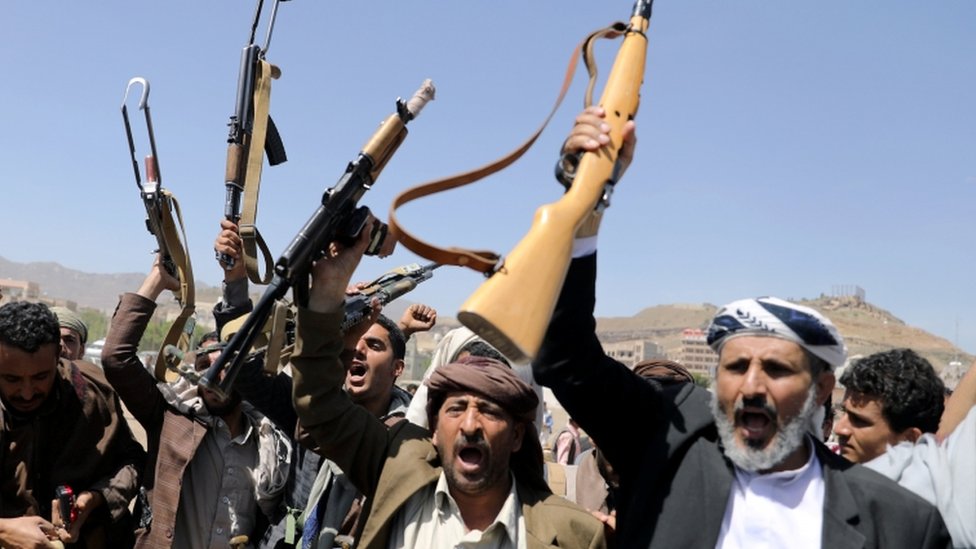
In a podcast immediately after the signing of this memorandum of understanding, the question that Tim Marshall raised is also the question of everyone who is interested in this war and who keeps track of the past and present of its course. Even if an agreement is reached according to the memorandum of understanding, will Iran stop giving support to Hezbollah, the Houthis, and Hamas?
Alongside this, another issue came to the forefront on the day of the memorandum of understanding. Immediately after this memorandum of understanding was signed, Ukraine’s attacks inside Russia increased, and Russia also increased its counterattacks. This sudden course of the Russia-Ukraine war is also not entirely outside the Iran-America ceasefire agreement.
Along with this, after the fall of Assad in Syria, the rise of Al Qaeda there, and Al Qaeda and Hamas in Afghanistan and Pakistan—all taken together, will the “Islamabad Memorandum of Understanding” actually be able to draw any straight line toward an agreement?
In 1971, the coming together of China and America through the mediation of Pakistan’s Foreign Minister Zulfikar Ali Bhutto and America’s Secretary of State Henry Kissinger is marked in the world as a game-changing landmark. What its result has been is not the subject of this article.

But this time, as far as can be understood so far, the only reason Trump has chosen Pakistan is that one of Iran’s main strengths is that the majority of the country is made up of Shia Muslims. In number, they are about 66 to 70 million. Shia Muslim unity is quite firm; again, it is in many ways a different kind of proud unity. After Iran, the second-largest Shia community is in Pakistan—which is around 17 to 24 million. Without this strength of Pakistan, it is not possible to move very far with Iran from any other direction. Even geographically.
But where the course of the war is in no way within religion, and where, rather, global energy, food, and security have come to the forefront, how far will Pakistan, as a small and poor country, be able to go as a mediator? Besides, just as Iran needed the Pakistani army in the 1970s, surely now their Islamic Revolutionary Guard no longer considers the Pakistan army necessary. Moreover, the political motivations of these two armies are also different.
Therefore, rather than whether Iran will emerge victorious or America will emerge victorious in the America-Iran ceasefire agreement, the still larger question is: will the “Islamabad Memorandum of Understanding” actually become the first step toward an agreement? Will the world quickly receive an Iran-America ceasefire agreement? Will the Middle East actually become peaceful?
The writer is a journalist honoured with the highest state award, Editor of Sarakhon and The Present World.