8:12 pm, Tuesday, 19 May 2026

Sheikh Hasina’s Two Historic Returns to Bangladesh

Swadesh Roy

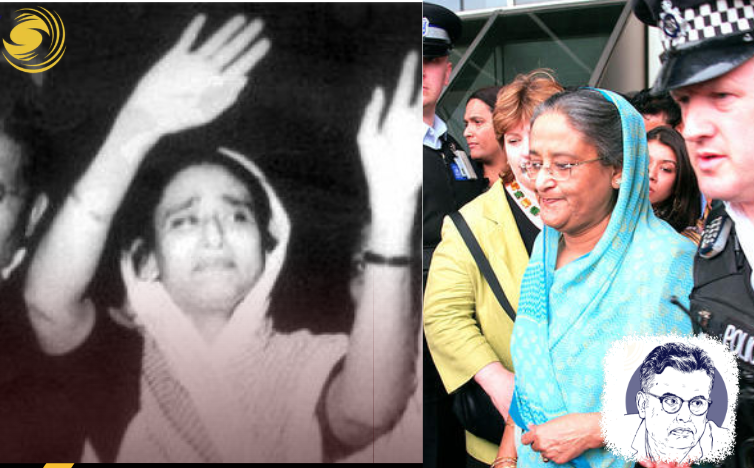
On the morning of May 17, 1981, the sky over Dhaka was slightly overcast, though by noon the heat had turned fierce—the heavy, humid heat of mid-May. It was not yet twelve o’clock when, upon arriving at Gulistan bus stand, one could hear bus conductors—especially those on BRTC buses—calling out loudly:

“Farmgate free, Farmgate free—come on, come on, Sheikh’s daughter is coming home!”

At that time, BRTC buses dominated the streets of Dhaka.

The man standing beside me noticed my confusion. Smiling, he said, “Don’t you understand? Bangabandhu’s daughter, Sheikh Hasina, is returning today.”

I looked at him curiously and replied, “But BRTC is a government bus service. Why are they offering free rides?”

The gentleman seemed to conclude that he had been speaking to a rather naïve person. With a trace of impatience in his voice, he answered, “Bangabandhu’s daughter is returning to Bangladesh. What does it matter whether the buses are government-owned or private? Who created this country?”

শেখ হাসিনার স্বদেশ প্রত্যাবর্তন দিবস আজ

Lowering my head, I boarded one of the old wooden-bodied buses running from Sadarghat to Rampura and got off at Rampura Bazar. In those days, the buses did not go all the way to the Rampura Television Station terminal. There I saw poet Asad Chowdhury searching for a rickshaw to take him to the television station. I walked up and shook his hand. He smiled warmly, his cheeks full of betel leaf.

Bengalis have always carried a special affection and respect for Asad Chowdhury—not only for his poetry, but also for one unforgettable line he delivered from Swadhin Bangla Betar Kendra during the Liberation War:

“They are killing people; let us kill beasts.”

Bengalis are, by nature, gentle and deeply rooted in simplicity. They cherish Baul songs, Bhatiyali melodies, kirtans, shrines, village fairs—the quiet rhythms of an unpretentious life. Yet even the most peace-loving people know how to fight when the moment demands it. The sons of Bengal did not see themselves as killers of men; they believed they were fighting beasts who slaughtered Bengalis. That single line from Asad Chowdhury awakened countless quiet young men—Rumi, Romiz, Asad, Romen, Bimal—and shook them free of hesitation. They picked up weapons to fight the Pakistani killers and their collaborators.
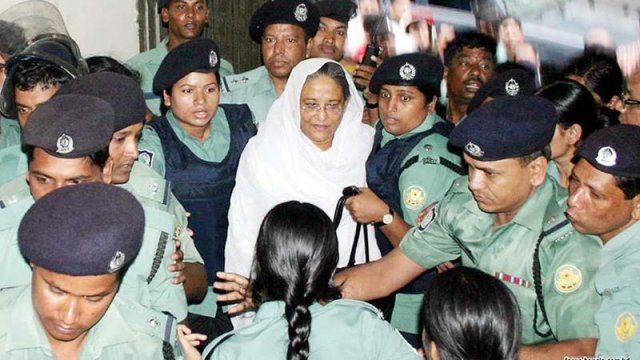
কেমন ছিল সাব জেলে শেখ হাসিনা ও খালেদা জিয়ার দুই ঈদ

Before climbing into the rickshaw, Asad Chowdhury leaned toward me and whispered, “The program ends at two. Then head straight to Manik Mia Avenue. If I can’t find a rickshaw, I’ll walk.”

The sun overhead was brutal, and the humid heat soaked through my denim shirt. Even so, I slowly made my way to House No. 361 on Rampura Main Road—a small one-and-a-half-storey house with a tiny lawn in front. My little niece was playing there. She ran to open the door and said excitedly, “Uncle, for the last two hours my only job has been opening the door!”

I asked, “Where are your mother and sisters?”

“My sisters didn’t go to school today,” she replied. “Mother is praying.”

As she led me upstairs by the hand, she said, “Do you know, Uncle? We only have two pitchers and one jug of water left in the house. We won’t get water again before four in the afternoon.”

Then she pointed toward the wetlands beyond the rooftop. I looked out and saw nothing but people—endless streams of men in lungis walking toward the city. While I was still staring, more people knocked at the gate. My little niece ran downstairs and told them apologetically, “Believe me, not only us—even the neighboring houses have no water left.”

শেখ হাসিনা প্রথমবারের মতো প্রধানমন্ত্রী হিসেবে শপথ নেন

After speaking with them for a while, I walked along the muddy road and boarded a boat from Rampura Bridge toward Gulshan. Every person on the boat was speaking about the same thing: Bangabandhu’s daughter was returning home.

The work that had taken me to Gulshan no longer seemed important. In those days, Gulshan was a place of silent red duplex houses beside vast dry wetlands. Yet through those wetlands too, people were streaming toward Dhaka—thousands upon thousands of men in lungis walking toward the city.

By evening, I could not even get close to Manik Mia Avenue. After eating at a small restaurant opposite Dhaka College, a few friends and I tried to move forward, but beyond Shukrabad there was simply no way through. By then, a fine drizzle had begun to fall.

There is one habit I have never escaped in my life: at times, I recite favorite lines of poetry to myself for hours. That day too, I found myself repeating again and again:

“As though he had locked away all songs that awaken sorrow inside a wooden chest…”

Close friends know this habit well and are rarely annoyed by it. Yet at some point, the storm and rain drowned out those lines. I no longer remember where the surging crowd carried me, nor how late into the night I finally stumbled back to my shelter, drenched by rain and storm, my shoes lost somewhere along the way.

But I still remember this much: just as the sky had broken open in rain, the city itself seemed to burst into the streets that day. Through the crowds, through the storm and water, one slogan echoed endlessly in my ears:

“Sheikh Hasina has nothing to fear—we are here, hundreds of thousands of brothers.”

And in the end, only two words remained:

“Sheikh Hasina. Sheikh Hasina.”

In reality, Dhaka had come to a standstill that day. It later became known that President and head of government Ziaur Rahman had canceled his scheduled program in Jatrabari and remained inside the cantonment throughout the day. He had been due to attend an event at Tarun Sangha in Jatrabari, but he never went.

That day changed countless perceptions and emotions. Much later, journalist Shafiqul Aziz Mukul told me another story from that night. The recently deceased engineer Mosharraf Hossain had arrived in Dhaka from Chittagong and was staying at the hotel opposite Rajmoni Cinema Hall—then considered one of the city’s better hotels. I had known Engineer Mosharraf for years because he was a close friend of editor Gazi Shahabuddin. In later years, during his old age and my middle age, we even exercised together regularly. Few people possessed his gift for remaining both composed and quietly humorous with so few words.

According to Mukul bhai, late that night, the then Awami League General Secretary, Abdur Razzak, suddenly entered Mosharraf Hossain’s room, lay across the bed, and let out a long sigh.

Sitting calmly on the sofa, Mosharraf bhai said, “Razzak, why are you upset? The people have found their leader. They have taken their leader away with them.”

What followed after 1981 was a long political and emotional journey. Whether Sheikh Hasina was right or wrong, those who believed in the ideals of Bangladesh’s Liberation War continued to stand beside her. They criticized her, became frustrated with her, argued with her—yet still saw her as the living symbol of Bangabandhu.
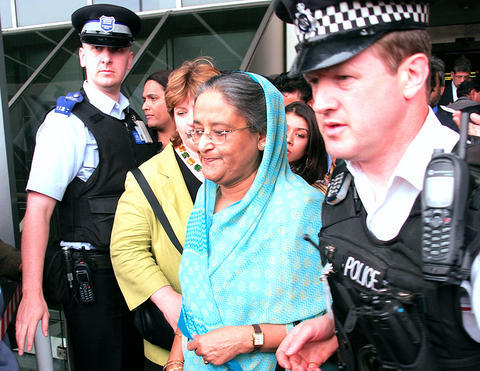
Former PM barred from taking flight - Taipei Times

That is why, despite becoming one of the most capable political leaders not only in Asia but arguably in the world, she could never fully transcend the identity of “Bangabandhu’s daughter” in the eyes of those who believed in the spirit of Bangladesh’s independence.

The second historic return came many years later. On April 22, 2007, I was sitting in the office of my elder brother and friend, Akhtaruzzaman, owner of Madonna Garments. While we were talking, television screens suddenly showed former Prime Minister Sheikh Hasina stranded at Heathrow Airport after Bangladesh’s caretaker government prevented her from boarding a flight home.

The television reporter, Aminul Haque Badsha, was not merely reporting the story; he was also making deeply offensive remarks about Sheikh Hasina. Ironically, Aminul Haque Badsha had once served as Bangabandhu Sheikh Mujibur Rahman’s press secretary. Why he adopted that position that day—and why he maintained it until his death—is something I will discuss elsewhere.

As a newsperson, I immediately felt the need to speak directly with Sheikh Hasina. I called her at once, uncertain whether she would answer or even agree to comment. Every journalist in Bangladesh knows that Sheikh Hasina has always been more accessible than most major political leaders.

She answered immediately.

Before I could say anything, she said:

“You want my statement, don’t you? Write this down: I am Sheikh Hasina. My country is Bangladesh, and I will return to Bangladesh. As long as the people of Bangladesh remain beside me, as long as ordinary people stand there, no power on earth can prevent my return to my country.”

I asked, “But legally, there seems to be no way for you to return.”

In a firm voice, she replied, “The power of the people is the ultimate law.”

We spoke a little longer after that.

I quickly ended the call and phoned the office to dictate the report. Beyond the official press release, our newspaper carried her immediate reaction—the first direct interview given in response to that unfolding crisis.

Soon afterward, the caretaker government was compelled to allow her return. On May 7, 2007, Sheikh Hasina returned to Bangladesh once again.

Like her first return in 1981, the moment carried a significance far beyond politics. To her supporters, it was another historic homecoming—proof that exile, political barriers, and state power could never sever her connection with Bangladesh and its people.

Writer: Award-winning journalist and editor of Sarakhon and The Present World.
05:28:00 pm, Tuesday, 19 May 2026

Sheikh Hasina’s Two Historic Returns to Bangladesh

05:28:00 pm, Tuesday, 19 May 2026

On the morning of May 17, 1981, the sky over Dhaka was slightly overcast, though by noon the heat had turned fierce—the heavy, humid heat of mid-May. It was not yet twelve o’clock when, upon arriving at Gulistan bus stand, one could hear bus conductors—especially those on BRTC buses—calling out loudly:

“Farmgate free, Farmgate free—come on, come on, Sheikh’s daughter is coming home!”

At that time, BRTC buses dominated the streets of Dhaka.

The man standing beside me noticed my confusion. Smiling, he said, “Don’t you understand? Bangabandhu’s daughter, Sheikh Hasina, is returning today.”

I looked at him curiously and replied, “But BRTC is a government bus service. Why are they offering free rides?”

The gentleman seemed to conclude that he had been speaking to a rather naïve person. With a trace of impatience in his voice, he answered, “Bangabandhu’s daughter is returning to Bangladesh. What does it matter whether the buses are government-owned or private? Who created this country?”

শেখ হাসিনার স্বদেশ প্রত্যাবর্তন দিবস আজ

Lowering my head, I boarded one of the old wooden-bodied buses running from Sadarghat to Rampura and got off at Rampura Bazar. In those days, the buses did not go all the way to the Rampura Television Station terminal. There I saw poet Asad Chowdhury searching for a rickshaw to take him to the television station. I walked up and shook his hand. He smiled warmly, his cheeks full of betel leaf.

Bengalis have always carried a special affection and respect for Asad Chowdhury—not only for his poetry, but also for one unforgettable line he delivered from Swadhin Bangla Betar Kendra during the Liberation War:

“They are killing people; let us kill beasts.”

Bengalis are, by nature, gentle and deeply rooted in simplicity. They cherish Baul songs, Bhatiyali melodies, kirtans, shrines, village fairs—the quiet rhythms of an unpretentious life. Yet even the most peace-loving people know how to fight when the moment demands it. The sons of Bengal did not see themselves as killers of men; they believed they were fighting beasts who slaughtered Bengalis. That single line from Asad Chowdhury awakened countless quiet young men—Rumi, Romiz, Asad, Romen, Bimal—and shook them free of hesitation. They picked up weapons to fight the Pakistani killers and their collaborators.

কেমন ছিল সাব জেলে শেখ হাসিনা ও খালেদা জিয়ার দুই ঈদ

Before climbing into the rickshaw, Asad Chowdhury leaned toward me and whispered, “The program ends at two. Then head straight to Manik Mia Avenue. If I can’t find a rickshaw, I’ll walk.”

The sun overhead was brutal, and the humid heat soaked through my denim shirt. Even so, I slowly made my way to House No. 361 on Rampura Main Road—a small one-and-a-half-storey house with a tiny lawn in front. My little niece was playing there. She ran to open the door and said excitedly, “Uncle, for the last two hours my only job has been opening the door!”

I asked, “Where are your mother and sisters?”

“My sisters didn’t go to school today,” she replied. “Mother is praying.”

As she led me upstairs by the hand, she said, “Do you know, Uncle? We only have two pitchers and one jug of water left in the house. We won’t get water again before four in the afternoon.”

Then she pointed toward the wetlands beyond the rooftop. I looked out and saw nothing but people—endless streams of men in lungis walking toward the city. While I was still staring, more people knocked at the gate. My little niece ran downstairs and told them apologetically, “Believe me, not only us—even the neighboring houses have no water left.”

শেখ হাসিনা প্রথমবারের মতো প্রধানমন্ত্রী হিসেবে শপথ নেন

After speaking with them for a while, I walked along the muddy road and boarded a boat from Rampura Bridge toward Gulshan. Every person on the boat was speaking about the same thing: Bangabandhu’s daughter was returning home.

The work that had taken me to Gulshan no longer seemed important. In those days, Gulshan was a place of silent red duplex houses beside vast dry wetlands. Yet through those wetlands too, people were streaming toward Dhaka—thousands upon thousands of men in lungis walking toward the city.

By evening, I could not even get close to Manik Mia Avenue. After eating at a small restaurant opposite Dhaka College, a few friends and I tried to move forward, but beyond Shukrabad there was simply no way through. By then, a fine drizzle had begun to fall.

There is one habit I have never escaped in my life: at times, I recite favorite lines of poetry to myself for hours. That day too, I found myself repeating again and again:

“As though he had locked away all songs that awaken sorrow inside a wooden chest…”

Close friends know this habit well and are rarely annoyed by it. Yet at some point, the storm and rain drowned out those lines. I no longer remember where the surging crowd carried me, nor how late into the night I finally stumbled back to my shelter, drenched by rain and storm, my shoes lost somewhere along the way.

But I still remember this much: just as the sky had broken open in rain, the city itself seemed to burst into the streets that day. Through the crowds, through the storm and water, one slogan echoed endlessly in my ears:

“Sheikh Hasina has nothing to fear—we are here, hundreds of thousands of brothers.”

And in the end, only two words remained:

“Sheikh Hasina. Sheikh Hasina.”

In reality, Dhaka had come to a standstill that day. It later became known that President and head of government Ziaur Rahman had canceled his scheduled program in Jatrabari and remained inside the cantonment throughout the day. He had been due to attend an event at Tarun Sangha in Jatrabari, but he never went.

That day changed countless perceptions and emotions. Much later, journalist Shafiqul Aziz Mukul told me another story from that night. The recently deceased engineer Mosharraf Hossain had arrived in Dhaka from Chittagong and was staying at the hotel opposite Rajmoni Cinema Hall—then considered one of the city’s better hotels. I had known Engineer Mosharraf for years because he was a close friend of editor Gazi Shahabuddin. In later years, during his old age and my middle age, we even exercised together regularly. Few people possessed his gift for remaining both composed and quietly humorous with so few words.

According to Mukul bhai, late that night, the then Awami League General Secretary, Abdur Razzak, suddenly entered Mosharraf Hossain’s room, lay across the bed, and let out a long sigh.

Sitting calmly on the sofa, Mosharraf bhai said, “Razzak, why are you upset? The people have found their leader. They have taken their leader away with them.”

What followed after 1981 was a long political and emotional journey. Whether Sheikh Hasina was right or wrong, those who believed in the ideals of Bangladesh’s Liberation War continued to stand beside her. They criticized her, became frustrated with her, argued with her—yet still saw her as the living symbol of Bangabandhu.

Former PM barred from taking flight - Taipei Times

That is why, despite becoming one of the most capable political leaders not only in Asia but arguably in the world, she could never fully transcend the identity of “Bangabandhu’s daughter” in the eyes of those who believed in the spirit of Bangladesh’s independence.

The second historic return came many years later. On April 22, 2007, I was sitting in the office of my elder brother and friend, Akhtaruzzaman, owner of Madonna Garments. While we were talking, television screens suddenly showed former Prime Minister Sheikh Hasina stranded at Heathrow Airport after Bangladesh’s caretaker government prevented her from boarding a flight home.

The television reporter, Aminul Haque Badsha, was not merely reporting the story; he was also making deeply offensive remarks about Sheikh Hasina. Ironically, Aminul Haque Badsha had once served as Bangabandhu Sheikh Mujibur Rahman’s press secretary. Why he adopted that position that day—and why he maintained it until his death—is something I will discuss elsewhere.

As a newsperson, I immediately felt the need to speak directly with Sheikh Hasina. I called her at once, uncertain whether she would answer or even agree to comment. Every journalist in Bangladesh knows that Sheikh Hasina has always been more accessible than most major political leaders.

She answered immediately.

Before I could say anything, she said:

“You want my statement, don’t you? Write this down: I am Sheikh Hasina. My country is Bangladesh, and I will return to Bangladesh. As long as the people of Bangladesh remain beside me, as long as ordinary people stand there, no power on earth can prevent my return to my country.”

I asked, “But legally, there seems to be no way for you to return.”

In a firm voice, she replied, “The power of the people is the ultimate law.”

We spoke a little longer after that.

I quickly ended the call and phoned the office to dictate the report. Beyond the official press release, our newspaper carried her immediate reaction—the first direct interview given in response to that unfolding crisis.

Soon afterward, the caretaker government was compelled to allow her return. On May 7, 2007, Sheikh Hasina returned to Bangladesh once again.

Like her first return in 1981, the moment carried a significance far beyond politics. To her supporters, it was another historic homecoming—proof that exile, political barriers, and state power could never sever her connection with Bangladesh and its people.

Writer: Award-winning journalist and editor of Sarakhon and The Present World.