8:24 am, Monday, 30 March 2026

The Blood-Stained Staircase in the Ruins: What Kind of March Is This?


Swadesh Roy

The modern path of statehood upon which the Bengali people had embarked through the Liberation War effectively came to an end in 1975 with the assassination of the Father of the Nation, Bangabandhu Sheikh Mujibur Rahman. After that, the Bengalis have never been able to return there in full.

Yet even afterward, among the vast number of Bengalis who carry the values of the Liberation War within them, who believe in Bengali nationalism, in Bangabandhu Sheikh Mujibur Rahman, in the Mujibnagar Government, in the contribution of the illustrious woman Indira Gandhi, and in secularism, there flowed a stream of blood in their hearts. Just as that was so, the staircase at House No. 32, soaked in Bangabandhu’s blood, also remained before their eyes and within their hearts.

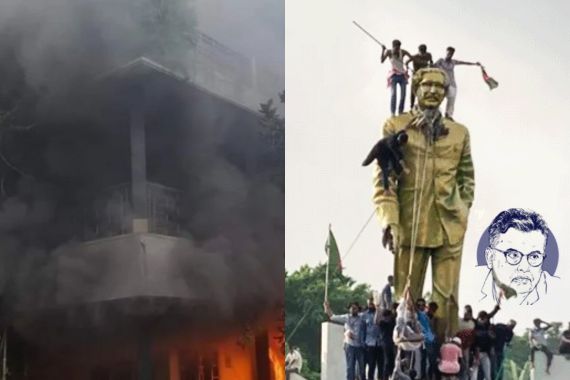
After the fall of Sheikh Hasina’s government through an urban guerrilla warfare meticulously designed on 5 August, the house at No. 32 has been demolished. The blood-stained staircase that had stood before our eyes is now gone. From now on, that staircase will remain only in the hearts of progressive Bengalis, modern Bengalis, Bengalis who stand on the side of the Liberation War. Ahead of the 12 February election, a different type of so-called pro-Liberation force has been artificially constructed. These are artificial creations, and they have no lasting existence. From generation to generation, the bleeding of that bloodline will only deepen.

Those who have broken that staircase have now multiplied from one into many, and they are misleading the Bengali people in various ways. They will continue to do so for many days yet. In history, such darkness descends from time to time.
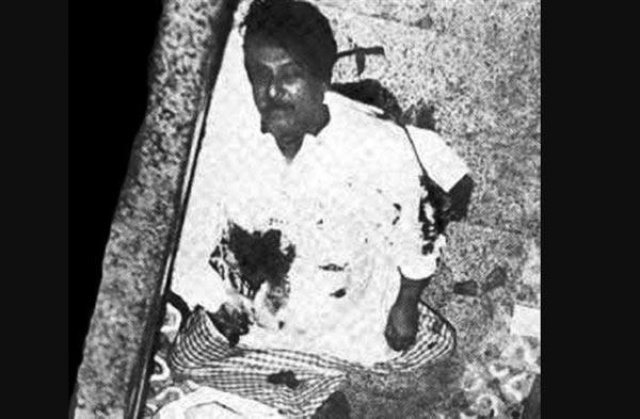
বঙ্গবন্ধু হত্যার প্রথম প্রতিবাদ হয়েছিল বরগুনায়

This darkness does not descend solely because of the actions of opponents. It also finds the opportunity to gather and harden because of our own mistakes and many of our own crimes. At the same time, one great quality of darkness is that unless darkness falls, one cannot recognize the ghosts and demons that live within us and those that come from other directions.

Had this darkness not descended, the Bengali people would never have known that among them such unworthy sons had been born. These are sons who could demolish with such demonic jubilation the house of the very man who gave them the address of their identity, who gave them a separate country so that they might emerge from poverty.

What Bangabandhu Sheikh Mujibur Rahman gave to the Bengalis of this land by creating Bangladesh can be understood if Bengalis simply cross the border for a moment and wander through the fields and lanes of India’s West Bengal and the alleys of Kolkata. The sight of malnourished children suffering from lack of food, and the famous “ghugni” street-food economy of West Bengal, will make the matter clear.

By seizing power through a meticulous design, Yunus over the past eighteen months has pushed Bangladesh in the direction of creating an economic character similar to that of West Bengal.

Many people believe that through the election of 12 February Bangladesh may have been able to emerge from Yunus’s meticulous design. May their assumption prove true. May the Bengali nation move forward. This is my wish. However, the reality is that through the election of 12 February Yunus’s meticulous design has stepped into another phase. In reality, it is an extension of that design. Those who think they have emerged victorious here are living in a kind of illusion. They themselves will understand this after some time.
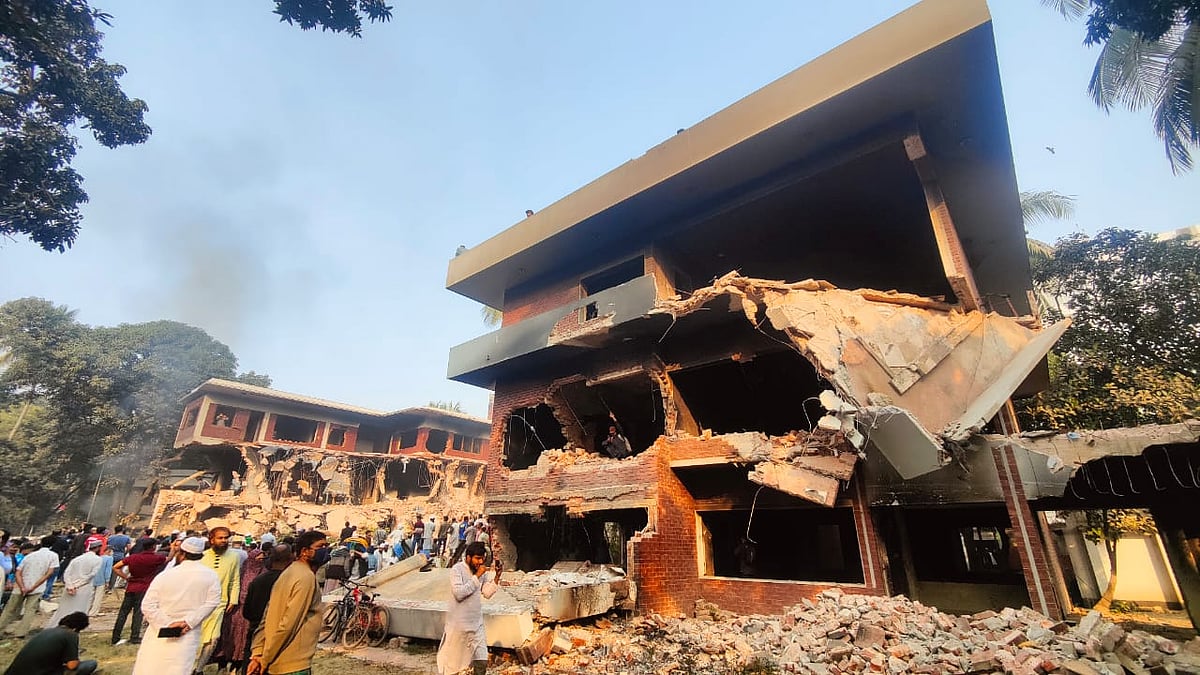
সকালেও ৩২ নম্বরের বাড়ি ভাঙা চলছে, গুঁড়িয়ে দেওয়া হয়েছে সামনের অনেকটা |  প্রথম আলো

Because what Yunus wanted was to press the reset button and change everything. Through the election of 12 February he has in fact been largely successful in accomplishing that task. Having done so, he has now stepped back and stands behind the scene.

Because of that reset button, from Bangladesh’s Liberation War the principal hero of the Liberation War, the Father of the Nation Bangabandhu Sheikh Mujibur Rahman, has been removed. Removed as well are the leaders who led the nine-month Liberation War, Syed Nazrul IslamTajuddin AhmadMansur AliKamaruzzaman and others. Even the Mujibnagar Government has been removed. Secularism has been removed. Bengali identity has been removed. Even how much of Rabindranath and Nazrul will remain, the future itself will reveal.

Where the literature, social consciousness, and cultural practices that grew out of the Bengali struggle for liberation will go can already be seen since 5 August in the courtyards of every university.

Thus this March has arrived in Bengali life with a different atmosphere. Yet Bengalis are not unfamiliar with such an atmosphere. After 15 August 1975 the Bengali people have seen many such Marches. The blood-stained staircase that has now been demolished had long been seen imprisoned. Those who today have demolished that house and that staircase in order to erase the memory of Bangabandhu, that is, the history of independence, have a lineage behind them. Their forefathers repeatedly celebrated the day of Bangabandhu’s assassination as “Deliverance Day” in this very country.

Yet even then the Bengali people have again and again awakened with their struggle for liberation, with their leader Sheikh Mujib, with their modernity, and with the modern mentality shaped by Rabindranath and Nazrul. After awakening, they have again had to burn in flames like the house at No. 32. It is as if this is the destiny of the modern Bengali. The poet Shamsur Rahman once gave voice to this long sigh: “How many more burnings of Khandava!”

Still, in a Bangladesh that stands within a meticulous fire, like the land that stood amid the blazing flames of the Khandava forest, a homeland meant for the coexistence of all, the month of March has once again arrived in the cycle of time. March is the month of Bengali independence.

A March in which the broken fragments of Bangabandhu’s statues lie scattered across the soil of Bangladesh. A March in which his blood-stained staircase is only a fragment within the rubble.

Standing before that rubble this March, or carrying that rubble within their hearts, the modern community of people in Bengal who believe in the Liberation War may reflect on several moments of history. In this very March the dark night of 25 March once descended. In this Bangladesh came the 15th of August. In this Bangladesh came the 5th of August.

From each darkness toward the path of light, the sons of Bengal have fought their own battles themselves. When one journeys toward light, one must pass through long darkness. Even the sun itself must complete a full cycle before it can give the light of day to the earth after night. Human life is the same. When it falls into darkness it must advance with the courage and patience required to complete its own cycle.
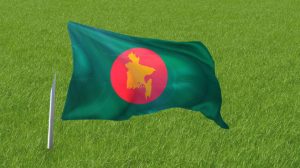
No matter how sorrowful and dark this March may be, the March of the Bengalis will once again arrive carrying light. In the words of the poet Al Mahmud:

Upon the deadly peak of Pahartali
Leapt that flame of fire,
The clothes of mourning of February
Was worn by its sister.

Those who leapt upon the peak of death in March of 1971, and those who after 1975 leapt upon the peak of death for Bengali identity, their successors will once again bring forth a radiant March, even while wearing the garments of mourning.

The poet Rafiq Azad wrote that the stream of blood from that staircase flowed from No. 32 into the Bay of Bengal. In reality, that blood is scattered across Bangladesh and across the Bay of Bengal. Therefore blood and garments of mourning have always been part of the path of the Bengali people.

Sometimes, in the life of any nation on earth, even on the days of victory a dark night descends. This is the destiny of history. At such times some nations must wear the garments of mourning. They must search for their stream of blood from the plains all the way to the sea.

Author: Journalist awarded the highest state honor, Editor of Sarakhon and The Present World.

06:51:42 pm, Thursday, 5 March 2026

The Blood-Stained Staircase in the Ruins: What Kind of March Is This?

06:51:42 pm, Thursday, 5 March 2026

The modern path of statehood upon which the Bengali people had embarked through the Liberation War effectively came to an end in 1975 with the assassination of the Father of the Nation, Bangabandhu Sheikh Mujibur Rahman. After that, the Bengalis have never been able to return there in full.

Yet even afterward, among the vast number of Bengalis who carry the values of the Liberation War within them, who believe in Bengali nationalism, in Bangabandhu Sheikh Mujibur Rahman, in the Mujibnagar Government, in the contribution of the illustrious woman Indira Gandhi, and in secularism, there flowed a stream of blood in their hearts. Just as that was so, the staircase at House No. 32, soaked in Bangabandhu’s blood, also remained before their eyes and within their hearts.

After the fall of Sheikh Hasina’s government through an urban guerrilla warfare meticulously designed on 5 August, the house at No. 32 has been demolished. The blood-stained staircase that had stood before our eyes is now gone. From now on, that staircase will remain only in the hearts of progressive Bengalis, modern Bengalis, Bengalis who stand on the side of the Liberation War. Ahead of the 12 February election, a different type of so-called pro-Liberation force has been artificially constructed. These are artificial creations, and they have no lasting existence. From generation to generation, the bleeding of that bloodline will only deepen.

Those who have broken that staircase have now multiplied from one into many, and they are misleading the Bengali people in various ways. They will continue to do so for many days yet. In history, such darkness descends from time to time.

বঙ্গবন্ধু হত্যার প্রথম প্রতিবাদ হয়েছিল বরগুনায়

This darkness does not descend solely because of the actions of opponents. It also finds the opportunity to gather and harden because of our own mistakes and many of our own crimes. At the same time, one great quality of darkness is that unless darkness falls, one cannot recognize the ghosts and demons that live within us and those that come from other directions.

Had this darkness not descended, the Bengali people would never have known that among them such unworthy sons had been born. These are sons who could demolish with such demonic jubilation the house of the very man who gave them the address of their identity, who gave them a separate country so that they might emerge from poverty.

What Bangabandhu Sheikh Mujibur Rahman gave to the Bengalis of this land by creating Bangladesh can be understood if Bengalis simply cross the border for a moment and wander through the fields and lanes of India’s West Bengal and the alleys of Kolkata. The sight of malnourished children suffering from lack of food, and the famous “ghugni” street-food economy of West Bengal, will make the matter clear.

By seizing power through a meticulous design, Yunus over the past eighteen months has pushed Bangladesh in the direction of creating an economic character similar to that of West Bengal.

Many people believe that through the election of 12 February Bangladesh may have been able to emerge from Yunus’s meticulous design. May their assumption prove true. May the Bengali nation move forward. This is my wish. However, the reality is that through the election of 12 February Yunus’s meticulous design has stepped into another phase. In reality, it is an extension of that design. Those who think they have emerged victorious here are living in a kind of illusion. They themselves will understand this after some time.

সকালেও ৩২ নম্বরের বাড়ি ভাঙা চলছে, গুঁড়িয়ে দেওয়া হয়েছে সামনের অনেকটা |  প্রথম আলো

Because what Yunus wanted was to press the reset button and change everything. Through the election of 12 February he has in fact been largely successful in accomplishing that task. Having done so, he has now stepped back and stands behind the scene.

Because of that reset button, from Bangladesh’s Liberation War the principal hero of the Liberation War, the Father of the Nation Bangabandhu Sheikh Mujibur Rahman, has been removed. Removed as well are the leaders who led the nine-month Liberation War, Syed Nazrul IslamTajuddin AhmadMansur AliKamaruzzaman and others. Even the Mujibnagar Government has been removed. Secularism has been removed. Bengali identity has been removed. Even how much of Rabindranath and Nazrul will remain, the future itself will reveal.

Where the literature, social consciousness, and cultural practices that grew out of the Bengali struggle for liberation will go can already be seen since 5 August in the courtyards of every university.

Thus this March has arrived in Bengali life with a different atmosphere. Yet Bengalis are not unfamiliar with such an atmosphere. After 15 August 1975 the Bengali people have seen many such Marches. The blood-stained staircase that has now been demolished had long been seen imprisoned. Those who today have demolished that house and that staircase in order to erase the memory of Bangabandhu, that is, the history of independence, have a lineage behind them. Their forefathers repeatedly celebrated the day of Bangabandhu’s assassination as “Deliverance Day” in this very country.

Yet even then the Bengali people have again and again awakened with their struggle for liberation, with their leader Sheikh Mujib, with their modernity, and with the modern mentality shaped by Rabindranath and Nazrul. After awakening, they have again had to burn in flames like the house at No. 32. It is as if this is the destiny of the modern Bengali. The poet Shamsur Rahman once gave voice to this long sigh: “How many more burnings of Khandava!”

Still, in a Bangladesh that stands within a meticulous fire, like the land that stood amid the blazing flames of the Khandava forest, a homeland meant for the coexistence of all, the month of March has once again arrived in the cycle of time. March is the month of Bengali independence.

A March in which the broken fragments of Bangabandhu’s statues lie scattered across the soil of Bangladesh. A March in which his blood-stained staircase is only a fragment within the rubble.

Standing before that rubble this March, or carrying that rubble within their hearts, the modern community of people in Bengal who believe in the Liberation War may reflect on several moments of history. In this very March the dark night of 25 March once descended. In this Bangladesh came the 15th of August. In this Bangladesh came the 5th of August.

From each darkness toward the path of light, the sons of Bengal have fought their own battles themselves. When one journeys toward light, one must pass through long darkness. Even the sun itself must complete a full cycle before it can give the light of day to the earth after night. Human life is the same. When it falls into darkness it must advance with the courage and patience required to complete its own cycle.

No matter how sorrowful and dark this March may be, the March of the Bengalis will once again arrive carrying light. In the words of the poet Al Mahmud:

Upon the deadly peak of Pahartali
Leapt that flame of fire,
The clothes of mourning of February
Was worn by its sister.

Those who leapt upon the peak of death in March of 1971, and those who after 1975 leapt upon the peak of death for Bengali identity, their successors will once again bring forth a radiant March, even while wearing the garments of mourning.

The poet Rafiq Azad wrote that the stream of blood from that staircase flowed from No. 32 into the Bay of Bengal. In reality, that blood is scattered across Bangladesh and across the Bay of Bengal. Therefore blood and garments of mourning have always been part of the path of the Bengali people.

Sometimes, in the life of any nation on earth, even on the days of victory a dark night descends. This is the destiny of history. At such times some nations must wear the garments of mourning. They must search for their stream of blood from the plains all the way to the sea.

Author: Journalist awarded the highest state honor, Editor of Sarakhon and The Present World.