

4:48 pm, Friday, 10 April 2026

Ceasefire Holds Uneasily as Iran, Israel and the U.S. Enter a Fragile Two-Week Pause

Sarakhon Report

A deal under strain

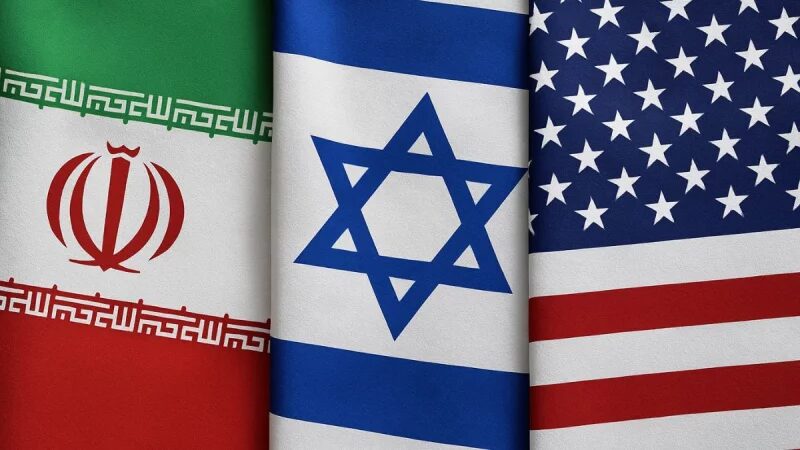
Iran, the United States and Israel moved into a tentative two-week ceasefire on April 8 after days of escalation that rattled the region and shook energy markets. The agreement immediately lowered the temperature at the top level of diplomacy, but it did not erase the reality on the ground. Reports of fresh attacks and conflicting statements from the parties showed how thin the margin remains between de-escalation and renewed fighting. The pause is real enough to matter, but not yet solid enough to reassure the wider region.

For governments watching from the Gulf, Europe and Asia, the significance of the ceasefire is larger than the battlefield itself. The conflict had already pushed up fears about shipping, oil flows and a wider regional spillover. A two-week window may now offer diplomats a narrow opening to test whether the crisis can shift from military action to bargaining. But the language around the truce remains notably vague, and that vagueness is becoming part of the story.

The first point of uncertainty is implementation. Iranian officials signaled they still expected to maintain leverage over shipping through the Strait of Hormuz, while questions also remained over Tehran’s uranium stockpile and the condition of facilities targeted during the conflict. From Washington’s side, officials framed the pause as a chance to step back from a much larger strike campaign. Israel, meanwhile, continued to signal that its broader security objectives had not disappeared just because a ceasefire was announced.

The US-Israel ceasefire with Iran presses pause on a costly war, but can  peace last?

That creates a familiar danger. Each side can publicly claim success, but if the terms are interpreted differently, the pause can become a staging area for the next round rather than a bridge to a settlement. Even isolated attacks or local clashes can quickly become political proof that the other side is acting in bad faith. In fragile ceasefires, symbolism matters almost as much as military facts, and April 8 produced too many mixed signals for anyone to call the situation stable.

What comes next

The next two weeks will likely be measured through three questions. First, does violence actually fall in a sustained way across the different fronts tied to the conflict? Second, do the parties move beyond slogans and start describing concrete next steps on shipping, nuclear issues and regional security? Third, can outside mediators keep the process alive if another incident breaks out? Without progress on those points, the truce risks becoming a tactical pause with no political destination.

Still, the agreement matters because the alternative had become sharply more dangerous. Markets had begun to price in a prolonged shock. Regional populations were bracing for more disruption. Allies and rivals alike were trying to calculate how far the war might spread. Even an imperfect pause gives space for governments, shippers and civilians to breathe. That alone explains why the announcement produced an immediate wave of relief.

Yet relief should not be confused with resolution. A ceasefire can freeze a crisis without solving it. The deeper disputes that pushed the conflict to this point remain unresolved, and hard-liners on all sides now have strong incentives to argue that pressure, not compromise, forced the pause. The story on April 8 was therefore not peace, but a test: whether a highly unstable truce can survive long enough to become something more durable, or whether the region has simply entered the next countdown.


06:25:48 pm, Wednesday, 8 April 2026

Ceasefire Holds Uneasily as Iran, Israel and the U.S. Enter a Fragile Two-Week Pause

06:25:48 pm, Wednesday, 8 April 2026

A deal under strain

Iran, the United States and Israel moved into a tentative two-week ceasefire on April 8 after days of escalation that rattled the region and shook energy markets. The agreement immediately lowered the temperature at the top level of diplomacy, but it did not erase the reality on the ground. Reports of fresh attacks and conflicting statements from the parties showed how thin the margin remains between de-escalation and renewed fighting. The pause is real enough to matter, but not yet solid enough to reassure the wider region.

For governments watching from the Gulf, Europe and Asia, the significance of the ceasefire is larger than the battlefield itself. The conflict had already pushed up fears about shipping, oil flows and a wider regional spillover. A two-week window may now offer diplomats a narrow opening to test whether the crisis can shift from military action to bargaining. But the language around the truce remains notably vague, and that vagueness is becoming part of the story.

The first point of uncertainty is implementation. Iranian officials signaled they still expected to maintain leverage over shipping through the Strait of Hormuz, while questions also remained over Tehran’s uranium stockpile and the condition of facilities targeted during the conflict. From Washington’s side, officials framed the pause as a chance to step back from a much larger strike campaign. Israel, meanwhile, continued to signal that its broader security objectives had not disappeared just because a ceasefire was announced.

The US-Israel ceasefire with Iran presses pause on a costly war, but can  peace last?

That creates a familiar danger. Each side can publicly claim success, but if the terms are interpreted differently, the pause can become a staging area for the next round rather than a bridge to a settlement. Even isolated attacks or local clashes can quickly become political proof that the other side is acting in bad faith. In fragile ceasefires, symbolism matters almost as much as military facts, and April 8 produced too many mixed signals for anyone to call the situation stable.

What comes next

The next two weeks will likely be measured through three questions. First, does violence actually fall in a sustained way across the different fronts tied to the conflict? Second, do the parties move beyond slogans and start describing concrete next steps on shipping, nuclear issues and regional security? Third, can outside mediators keep the process alive if another incident breaks out? Without progress on those points, the truce risks becoming a tactical pause with no political destination.

Still, the agreement matters because the alternative had become sharply more dangerous. Markets had begun to price in a prolonged shock. Regional populations were bracing for more disruption. Allies and rivals alike were trying to calculate how far the war might spread. Even an imperfect pause gives space for governments, shippers and civilians to breathe. That alone explains why the announcement produced an immediate wave of relief.

Yet relief should not be confused with resolution. A ceasefire can freeze a crisis without solving it. The deeper disputes that pushed the conflict to this point remain unresolved, and hard-liners on all sides now have strong incentives to argue that pressure, not compromise, forced the pause. The story on April 8 was therefore not peace, but a test: whether a highly unstable truce can survive long enough to become something more durable, or whether the region has simply entered the next countdown.