China Warns Philippines After New South China Sea Clash


Rising tensions in disputed waters
China issued a sharp warning to the Philippines after another confrontation between coast guard vessels in the South China Sea, intensifying tensions in one of Asia’s most contested maritime zones. The incident occurred near Second Thomas Shoal, where Philippine ships were attempting to resupply troops stationed on a grounded naval vessel.
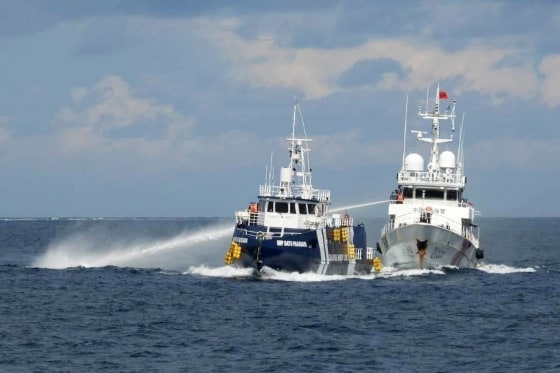
According to officials, Chinese coast guard ships attempted to block the Philippine convoy. Philippine authorities said Chinese vessels used water cannons and dangerous maneuvering to obstruct the mission. Beijing denied wrongdoing and claimed its actions were necessary to defend Chinese sovereignty.
The confrontation is the latest in a series of escalating encounters between the two countries. Over the past year, tensions have repeatedly flared around disputed reefs and shoals. Both sides accuse each other of provocative behavior and violations of international law.
Second Thomas Shoal has become a focal point of the dispute. The Philippines maintains a small military presence aboard the rusting BRP Sierra Madre, a World War II–era ship intentionally grounded there in 1999. Manila says the outpost is essential to maintaining its territorial claim.
China claims nearly the entire South China Sea through its “nine-dash line,” a sweeping boundary rejected by an international tribunal in 2016. The Philippines won that case, but Beijing has refused to recognize the ruling.
Regional governments and international observers worry that repeated confrontations could trigger a broader crisis. The United States has reiterated its commitment to defend the Philippines under their mutual defense treaty if armed forces or public vessels are attacked.
The latest incident also comes amid growing cooperation between Manila and Washington. Joint military exercises have expanded, and the Philippines has granted U.S. forces access to additional military bases.
For Southeast Asia, the dispute has become a test of regional stability. Many governments rely heavily on the South China Sea for fishing and trade, and they fear that intensifying geopolitical rivalry could disrupt maritime routes.
Analysts say the risk of miscalculation is rising as coast guard and naval patrols increase. Even minor incidents can escalate quickly when ships operate in close proximity in contested waters.
Diplomatic talks between China and Southeast Asian countries on a code of conduct for the South China Sea have continued for years but have yet to produce a binding agreement.
Despite the tensions, officials from both sides say they want to avoid direct military conflict. However, the pattern of repeated confrontations suggests the dispute is far from resolution.
Security experts say the situation illustrates how the South China Sea has become a key arena of global strategic competition. The region sits at the intersection of trade routes carrying trillions of dollars in goods each year.
The Philippines has increasingly turned to international partners for support, including Japan and Australia. Meanwhile, China continues to strengthen its presence with larger coast guard ships and extensive maritime patrols.
Many Southeast Asian nations are trying to balance economic ties with China against security partnerships with Western powers. That delicate balance is becoming harder to maintain as tensions rise.
For now, the latest confrontation appears contained. But analysts warn that repeated incidents could push the region toward a more dangerous phase of the long-running maritime dispute.